



h76e retweeted

Beijing’s Cold Shoulder Backfired. Sanae Takaichi Left Shenzhen With Her Head High.
By November 19, China News Service had reportedly pulled its video of Japanese Prime Minister Sanae Takaichi stepping off her plane in Shenzhen. The clip showed an unusually big drop from the aircraft door to the stair platform. The account that flagged the deletion offered no explanation from the agency, and the footage alone leaves the question of intent open. But if Beijing wanted Japan’s prime minister to look diminished on her first visit to China, the episode backfired. Viewers were asking how the host of an international summit could get something as basic as the stairs wrong. teapawt
Takaichi arrived on November 18 for the Asia-Pacific Economic Cooperation summit. There was a red carpet and an honor guard. The welcoming crowds and music that greeted other leaders were absent. Japan’s chief cabinet secretary said Tokyo understood that China had extended the customary courtesies. Japanese television put the arrivals side by side, and the difference was plain enough. Xi Jinping shook Takaichi’s hand twice during the summit. A formal meeting between the two leaders never took place.
An airport greeting can be calibrated down to the last bouquet. The stairs are a matter of safety. Taiwan’s Eastern Broadcasting Company estimated the drop at roughly 40 centimeters. Yasuhide Nakayama, a Japanese lawmaker and former vice defense minister, asked how the stairs had been positioned and what safety checks had been carried out. That question deserves a straight answer. Any government that invites foreign leaders onto its territory assumes responsibility for getting them safely off their planes.
On her way out of Shenzhen the next day, Takaichi observed the courtesies of departure with the same composure she had shown at the summit. There was something distinctly Japanese about how she carried herself. She shook Xi’s hand, thanked him for the invitation and treated the occasion with the respect Japan brings to these encounters. She could do all of that while holding her ground on the issue that had put her at odds with Beijing in the first place.
That issue was Taiwan. In Japan’s parliament a year earlier, Takaichi said a Chinese attack on Taiwan could create circumstances in which Japan might have to respond militarily. Beijing demanded a retraction. In Shenzhen, she reaffirmed Japan’s longstanding position under the 1972 joint communiqué and called China an important neighbor with which Japan should keep talking. She left without giving Beijing the retraction it wanted. A Japanese prime minister is entitled to tell Japan’s parliament what a war in the Taiwan Strait could mean for Japanese security. That is part of the job. Reuters
Beijing’s displeasure carries real costs. Reuters reported restrictions on critical mineral exports, a ban on Japanese seafood imports and advice to Chinese citizens against traveling to Japan. Those measures reach businesses and communities far from the summit hall. They also give governments across the Indo-Pacific a reason to pay attention. If Beijing can make a neighbor’s exporters absorb the cost of a prime minister’s remarks in parliament, every country with a large trade exposure to China has to ask what it might be pressured to keep quiet about. Reuters
Look at what Japan was doing that same week. Before Shenzhen, Takaichi sat down in Manila with the leaders of the United States, Australia and India. Their Quad statement opposed attempts to change the regional status quo through force or coercion and singled out arbitrary export restrictions as a concern. Hours after Takaichi returned to Tokyo, President Donald Trump called and briefed her on his talks with Xi and on the U.S.-China-Russia summit. According to Japan’s foreign ministry, he reaffirmed Washington’s commitment to the alliance. Anyone judging Japan’s international standing from the reception in Shenzhen should account for what its partners actually did that week. Ministry of Foreign Affairs of Japan
Takaichi showed the same independence with Washington. After the call, she made clear that Japan supported the International Criminal Court and held a different position from the United States. That mattered after President Trump had joined Xi and Vladimir Putin in a declaration warning against abuses of jurisdiction by the court and similar institutions. Tokyo could welcome a direct briefing from its closest ally and say openly where it differed. That is the conduct of a country that takes its alliances seriously and expects its own judgment to be taken seriously, too. Prime Minister's Office of Japan
At home, Japanese voters have every right to ask whether Takaichi’s approach will produce a more workable relationship with China. Public opinion was already divided. Deutsche Welle cited a Kyodo survey in which 54.7 percent approved of her firm stance toward Beijing. A separate Jiji survey, conducted before the trip, found more respondents disapproved than approved of her cabinet’s overall approach to China. Shenzhen’s effect on her approval will take time to measure. But the visit gave her supporters something concrete to point to. Their prime minister went to China, dealt civilly with Xi and came home without surrendering a position she had taken in Japan’s parliament.
A bilateral meeting would have been worth having. Japan and China have serious business to discuss, and a year of strained relations makes direct contact more important. But if the price of getting into that room was a public climbdown on Taiwan, Takaichi was right to leave without the meeting. Beijing could have used the summit to show that a major power can handle a disagreement with its neighbor. Instead, it left people arguing about a stairway and asking why a video had reportedly vanished. Japan’s prime minister gave them a better image to remember. She kept her manners, kept her position and went home with her head high.
ACI — Aric Chen | Insights


The Chinese Communist Party wants to see Sanae Takaichi fall down the stairs in front of the whole world! How could the CCP not know that Ms. Sanae Takashi has a knee injury? That’s exactly what the CCP’s intelligence agencies are for! Japanese Prime Minister Sanae Takaichi has publicly mentioned having a pre-existing knee injury, and there has long been online discussion suggesting that she has a knee replacement on one side due to conditions such as rheumatoid arthritis.
Could the CCP really be unaware of this? They deliberately engineered the situation: there appears to be a height difference of about 40 centimeters between the boarding gate and the platform, forcing Sanae Takaichi to turn sideways and hold onto the aircraft door to step over it.
The CCP may very well have intended for Ms. Takaichi to fall in front of the entire world, thereby making a spectacle of her and humiliating both her and Japan! Given the CCP’s vindictive, insidious, and despicable nature, this is the only reasonable explanation. The Chinese Communist Party must provide an explanation and issue an apology. Do you agree?


h76e retweeted

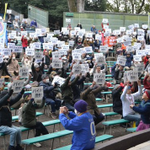
福島県の甲状腺検査や過剰診断について学ぶ企画展が開かれた。検査対象の地元高校生らが参加し、専門家に疑問をぶつけたほか、「学校で検査をやる必要はないのでは」「知事に話を伺いたい」などと意見を述べた。 huffingtonpost.jp/entry/stor…



h76e retweeted

第6回のダイジェスト
0:40
相本:メディアの役割は権力監視だと言っているのに、福島甲状腺検査の問題に切り込んでいるメディアはほとんどない。
3:00
相本:地元メディアは福島県庁や福島医大の顔色を伺いながら取材することが普通の状態になってしまっている。


h76e retweeted
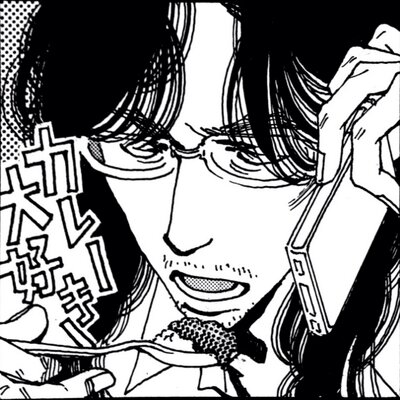
今回の第6回討論編で話題にしている、端野洋子さんの「内分泌科医の怖い話」の動画はこれです。討論編収録時はまだ未完でしたが現在すでに公開されています。どうか一人でも多くの甲状腺検査を受ける人にみていただきたいので、拡散お願いします。
Xで250万回以上表示された話題のコミックの漫画動画です。
医療の闇がわかります。
福島甲状腺検査の闇:『内分泌科医の怖い話』、甲状腺がんスクリーニングによる過剰診断をめぐる話。 youtu.be/5nzDvnDUw0Q?si=_OhT… @YouTubeより


h76e retweeted

ロシア軍がザポリージャ州コミシュヴァハ村の学校を攻撃:死傷者発生(更新)
2026年11月4日12:20(日本時間11月4日19:20)
11月4日正午現在、 11月2日にザポリージャ州コミシュヴァハで発生したロシア軍の空爆による死者数は37人に増加した。
ウクライナ国家非常事態庁 dsns.gov.ua/news/nadzvicaini…

h76e retweeted
ロシア軍がウクライナの学校に滑空誘導爆弾を大量爆撃して民間人31名が死亡、巨大な3トン爆弾投下の情報(JSF)
#Yahooニュース
news.yahoo.co.jp/expert/arti…
この攻撃、3トン爆弾でなければOKとはなりませんよ。500kg爆弾6発と重量は同じですからね。そして少なくとも9発が投下された。

h76e retweeted

【悲報】日経さん、存在しない事前協議で「中国に日本が批判された」とデマ記事を流し、記者会見前に片山大臣に名指しでブチ切れられてしまう「何も根拠に書いたのかこの場で説明して」
会見冒頭から片山財務相が
日経の記事について自ら切り出す
「まず、この日経さんの記事を否定したいんですけど」
続けて報道の前提に異議
「事前協議をやってないので
中国に批判されたようなことは全くありませんので」
さらに記者本人に
「何を根拠におっしゃっているのか
この場で言ってくれます?」
「これ署名記事だよね?」
と直接確認
記者は取材で確認したと説明するも
確認先を問われると
「それはちょっと言えないです」
その後、記者は人民銀行の発表を挙げて説明
しかし片山氏は記事の記述を再び問題視
「事前協議なんてやってないから」
大臣への質問が始まる前に
記者が自分の記事の根拠を
問われる展開になってしまう…

h76e retweeted

産婦人科医として、20〜30代で子宮頸がんになり子宮を失う人、亡くなる人を見てきました。日本の子宮頸がん死亡は年間約3,000人。英国では接種世代の死亡が5年間ゼロ。日本はマスコミ報道を機に接種が止まり、救えたはずの命があります。

「子宮頸がんの死者ゼロ」は可能、ワクチンが予想以上の実績
nikkei.com/article/DGXZQOSG2…

h76e retweeted

日本の専門家や厚労省は、この結果を大いに参考にして欲しい。
毎年3,000人近い命が失われている「子宮頚がんをゼロ」にする為に男子定期接種は必須。日本だけが遅れてはならない。攻めの予防医療と言うなら早急に実現すべき❗️
nikkei.com/article/DGXZQOSG2…


h76e retweeted

「僧侶が予備自衛官なんて不殺生戒に反するのでは?」と聞かれますが、私はこう考えています↓
①自衛隊の存在目的は、あくまで「有事を起こさせず、戦争を防ぐための抑止力」です。
②そして万が一、我が国が侵略を受けた際、国民と国家を守るために行動することは正当防衛であり、仏教の教え(執持刀杖論など)に照らしても矛盾するものではありません。
【結論】
この国の平和と安全を守るために、現実的な外交・防衛体制を支持し、自らもその一翼を担うことは責務です。
寧ろ、不殺生戒などというものに囚われて、何も行動しない方がよほど恥ずかしく、大きな罪ですね。

田村みょうけいです。
普段はお寺の住職ですが、予備自衛官をさせていただいています。
予備自衛官とは、普段は一般社会で自分の仕事をしながら、災害や有事の際は自衛官となり国防などの任務に就く、非常勤の国家公務員です。
平和はタダではありません。
私たちが知らないところで誰かが必死に努力し、外交や抑止力を維持することで、奇跡的なバランスの上で保たれているものです。
多様な意見があるのは当然ですが、自衛隊の訓練の邪魔をしたり、法律の適切な改正を妨げたり、「現政権が戦争をしようとしている」などと事実を捻じ曲げた印象操作をするのは、正直許せないと私は思う。
人権、自由、財産。
もし戦争になったら、こんな当たり前の日常も一瞬で奪われてしまうのです。
だからこそ、絶対に戦争を起こさせてはいけないんです!
そして、万が一の侵略からも国民の命と暮らしを守り抜けるよう、有事にしっかり備えることが不可欠です。
私はそう思って予備自衛官になりました。
「招集がかかったらどうするの?」と聞かれますが、その時は行きますよ。当たり前です。
私は決して強い人間ではありませんし、あまりにも微力です。
それでも、誰かの盾となり、この国を守りたい。