







ħugh 휴 retweeted

It's 2026. Your lab throws the biggest Halloween party to celebrate the Death of Mathematics. PIs are wasted in the coffee room, Phds and postdocs dance around a bonfire from obsolete preprints, even Reviewer 2 is having fun
And then the DJ (Fields medal) throws this banger 🎉
ħugh 휴 retweeted

My dear friends, I’d like to show you my latest toy project
Introducing Handwired: turn your regular JavaScript code into a neural net!
- no training
- exact outputs vs the JS program
- fully differentiable
All runnable in a browser, without GPU



ħugh 휴 retweeted

I’m sure that pressuring the current admin to treat the current primary engine of economic growth with the same urgency which they applied to tariffs and immigration and the Iranian fissile material stockpile will go fine and have no chaotic, difficult to predict effects

ħugh 휴 retweeted

A talking machine just solved NS and people are still talking about "science fiction".

This quoted post is unavailable.
ħugh 휴 retweeted

wow so much drama about navier stokes. had no idea things could blow up so infinitely in such a finite time.
ħugh 휴 retweeted
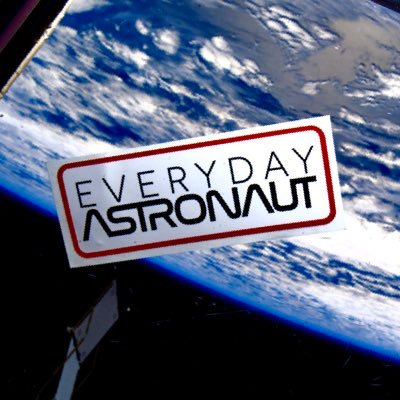
This photo of Earth is EXTRA spectacular for a good reason... let me explain. Most images you see of Earth from space are the daylight side of the Earth, and it's obviously very bright (see my last image), this means stars are too dim to be seen with that bright exposure setting (low ISO, high shutter and / or stopped down aperture).
BUT this image taken by the Orion crew looks so incredible because you can see the sun is BEHIND the earth, meaning it's night time on the side of the earth facing the crew in this image.
So how do you expose a night time earth from space? Same way you do on Earth! A mixture of opening up the aperture (F4 in this case), cranking the ISO (51,200 here), and using a relatively long exposure (1/4 of a second). We can see the settings used by looking at the exif data from the camera. What this means is our camera is also sensitive enough to see stars in the background of Earth, leading to an extraordinary image!!! GREAT WORK!!! These are the kind of images I've been so excited to see!


We see our home planet as a whole, lit up in spectacular blues and browns. A green aurora even lights up the atmosphere. That's us, together, watching as our astronauts make their journey to the Moon.

ALT A full disk image of Earth, as seen from the Orion capsule. The planet is a pale blue, swirling with white clouds and glowing slightly lighter blue in place from reflected light. From about 8 to 9 o'clock, a large brown landmass is Africa, with the Iberian peninsula twinkling with lights just where the planet curves. At the 1 o'clock spot, aurora glow in a thin green glow, just barely separated from the planet's surface. Earth is set against the black of space. Credit: NASA/Reid Weisman
ħugh 휴 retweeted

your finger press over ~10 ms closes a switch in a keyboard matrix, during which ~10¹³ electrons flow through pull-up resistors and scan circuitry. Firmware encodes the event, and a microcontroller emits a USB or Bluetooth HID report of a few dozen bytes.
the OS services an interrupt in a few us, maps scan codes to characters, and updates 10²~10³ bytes of state in DRAM, stored as charge from ~10⁸ electrons on capacitors refreshed every ~60 ms.
your browser constructs an HTTPS request of 1~5 kB, which the TCP/IP stack segments into ~1.5 kB payloads matched to the Ethernet MTU. These drive a network interface with SerDes operating at a few GHz, shoving 10⁶~10⁸ electrons per bit.
electrical signals propagate a few cm across copper traces, then drive optical transceivers where electrons jump a semiconductor bandgap to emit 10⁶~10⁸ photons per bit at telecom wavelengths. These photons traverse access, metro, and backbone networks, undergoing a dozen electrical <-> optical conversions at endpoints and regeneration sites.
these photons might further go through hundreds to thousands of kilometers of fiber, amplified every ~100 km by erbium-doped fiber amplifiers via stimulated emission, wavelength-routed by ROADMs, might even bounce off google's MEMS optical circuit switches a few times, and eventually reconverted to electrons by photodiodes at termination and routing boundaries.
at the data center, packets are reassembled and delivered to inference servers where GPUs perform matrix multiplications involving ~10¹² model parameters over milliseconds, with transistors toggling at 10¹⁶~10¹⁷ times per second.
those parameters were produced earlier by training runs lasting weeks to months, using ~10⁴ accelerators drawing who knows how many megawatts of power, shoving 10³⁰~10³³ electrons through transistor channels for the 10²³~10²⁵ floating-point operations.
the inference result is serialized into kilobytes of data and transmitted back through the same chain, again undergoing repeated electrical - optical - electrical conversions across access, metro, and backbone networks.
back on your phone or laptop or whatever, the browser parses the response, updates layout and rendering structures, and issues GPU draw calls that write millions of pixels per frame into a framebuffer at 60~120 Hz.
display interfaces stream multiple gigabits per second to an OLED or microLED panel, where the pixels emit roughly 10⁸~10¹¹ visible photons per frame, driven by ~microamp currents over ~microsecond switching intervals.
those photons traverse a few meters in nanoseconds, absorbed by your retinal photoreceptors, transduced into electrochemical signals, and interpreted by a ~20 W biological neural system.
end-to-end, you have astronomical numbers of highly coordinated electrons and photons, and dozens of conversions between them (ofc not including training), for a single thought from the little intelligence to appear on a screen and read by you.

I really don’t get why so many people can’t just even for a second appreciate how cool it is that we have sci fi intelligence simulators running around all over the place, even if they think it’s a net bad or they’re not very smart or this or that. Just take a second and appreciate how cool that is and then get back to your regular raging ok


ħugh 휴 retweeted

A Waymo-like app where you summon a Unitree robo-horse, hop on it, and have it gallop to your destination in the bike lane could reignite the 20th century spirit of invention we so dearly miss

ħugh 휴 retweeted

Using photogrammetry of an old TV's circuitry to generate an aerial view of a post-apocalyptic cityscape through @runwayml Gen-3 V2V. Did I ever mention I’m obsessed with experimentation?


ħugh 휴 retweeted

My grandfather built motors that powered big machines. In a lab not so different from his workshop, my colleagues and I uncovered the assembly of the bacterial motor. Today, this discovery has been published in @NatureMicrobiol #MolecularNodes #Discovery nature.com/articles/s41564-0…


ħugh 휴 retweeted

Ten months ago, we launched the Vesuvius Challenge to solve the ancient problem of the Herculaneum Papyri, a library of scrolls that were flash-fried by the eruption of Mount Vesuvius in 79 AD.
Today we are overjoyed to announce that our crazy project has succeeded. After 2000 years, we can finally read the scrolls:
This image was produced by @Youssef_M_Nader, @LukeFarritor, and @JuliSchillij, who have now won the Vesuvius Challenge Grand Prize of $700,000. Congratulations!!
These fifteen columns come from the very end of the first scroll we have been able to read and contain new text from the ancient world that has never been seen before. The author – probably Epicurean philosopher Philodemus – writes here about music, food, and how to enjoy life's pleasures. In the closing section, he throws shade at unnamed ideological adversaries – perhaps the stoics? – who "have nothing to say about pleasure, either in general or in particular."
This year, the Vesuvius Challenge continues. The text that we revealed so far represents just 5% of one scroll.
In 2024, our goal is to from reading a few passages of text to entire scrolls, and we're announcing a new $100,000 grand prize for the first team that is able to read at least 90% of all four scrolls that we have scanned.
The scrolls stored in Naples that remain to be read represent more than 16 megabytes of ancient text. But the villa where the scrolls were found was only partially excavated, and scholars tell us that there may be thousands more scrolls underground. Our hope is that the success of the Vesuvius Challenge catalyzes the excavation of the villa, that the main library is discovered, and that whatever we find there rewrites history and inspires all of us.
It's been a great joy to work on this strange and amazing project. Thanks to Brent Seales for laying the foundation for this work over so many years, thanks to the friends and Twitter users whose donations powered our effort, and thanks to the many contestants whose contributions have made the Vesuvius Challenge successful!
Read more in our announcement: scrollprize.org/grandprize

ħugh 휴 retweeted

We actually did it. Hardcore engineering is cool again.
People wouldn't even think of going into hardware a few years ago. Now I see deeptech startups left, right and center. People are making software stacks streamlined for hardware. People want to solder components on PCBs. People want to machine parts together. People want to touch computational grass. People are working on satellites, batteries, reactors, AI specific hardware. People want to work in megafactories. People want to work on brain chips. People want to work on commercial supersonic jets
Let's keep doing this, the vibes are all optimized and the knowledge is all out there🫡