

Psychiatrist. Assistant Professor @VUMCPsych using fMRI/TMS to study the circuit basis of co-occurring substance use and psychotic disorders. Mom.
Nashville, TN
Joined August 2018
- Tweets972
- Following782
- Followers1.2K
- Likes1.4K





Pinned Tweet
Excited to announce the Notice of Award for my K23, "Network-Targeted Neuromodulation for Nicotine Dependence in Schizophrenia" It truly takes a village, and I have the very best, with a mentorship team of @StephanHeckers @roscoebradyjr @cately00 @hilary_tindle @EdenEvins

Heather Burrell Ward, MD retweeted

Refractory #psychosis is one of the toughest challenges patients and clinicians face, and proper treatment often entails synergistic interventions from multiple disciplines. Can rTMS be helpful? ovid.com/jnls/hrpjournal/ful…

Heather Burrell Ward, MD retweeted

Excited to share this recently published article in collaboration with Dr. Tom Reese and colleagues in the Department of Addiction Psychiatry @VUMCPsych @vumcpsych_rsch. We evaluated the impact of an Addiction Consult Service (ACS) on discharge outcomes:
ovid.com/jnls/journaladdicti…

Heather Burrell Ward, MD retweeted

🧠 IASIC Speaker Series Presents: “High Stakes: Cannabis and Tobacco Co-Use and Psychosis Risk”
Join Heather Burrell Ward, MD, Director of Neuromodulation Research and Assistant Professor of Psychiatry and Behavioral Sciences at Vanderbilt University Medical Center, for the October IASIC Speaker Series.
Dr. Ward will examine the growing evidence on the co-use of cannabis and tobacco, its association with psychosis risk, and its impact on cognitive performance. This evidence-based discussion will provide valuable insights for clinicians, researchers, policymakers, and prevention professionals seeking to better understand the mental health implications of concurrent cannabis and tobacco use.
A nationally recognized investigator, Dr. Ward earned her medical degree from Duke University School of Medicine and completed psychiatry residency training at Brigham & Women’s Hospital–Harvard Medical School, followed by fellowship training in behavioral neurology and noninvasive brain stimulation at Harvard Medical School. She was also named a 2021 STAT News Wunderkind for her contributions to neuroscience and addiction research.
📅 October 19, 2026
⏰ 12:00 PM EST
Register here:
us02web.zoom.us/webinar/regi…
Please register, share, and invite others to join us!
#IASIC #CannabisResearch #Psychosis #Cannabis #Tobacco #AddictionScience #Neuroscience #MentalHealth #BrainHealth #SubstanceUseDisorder #MedicalEducation
🤖 Made with AI

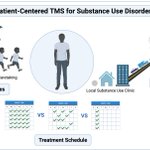
🎉 Very excited to share that our 3rd participant with OUD just completed a novel weekly(!) accelerated TMS 🧲🧠 protocol (Vanderbilt Integrated Community TMS for Opioid Recovery, VICTORY), where we deliver 3600 pulses of iTBS (1800 x 2) to L DLPFC once/week for 8 weeks.
This novel protocol tests TMS for people with OUD taking buprenorphine using a ⭐️weekly⭐️ patient-centered 🙋 schedule 📅 that aligns with outpatient treatment to optimize for convenience and efficiency.
This work would not be possible without the expertise of @VUMCPsych Kathryn Biernacki, our research assistants, our collaborators SynapticPsych, and the @VUMCPsych VISTA Recovery Clinic. Check out the protocol, just published in PLOS One: journals.plos.org/plosone/ar…

Heather Burrell Ward, MD retweeted

Achieving ≥50% smoking reduction within the first two weeks was strongly associated with long-term smoking abstinence in a smoking reduction trial using e-cigarettes, find Sitasnu Dahal et al.
academic.oup.com/ntr/advance…

Heather Burrell Ward, MD retweeted

💡 JAMA Insights: #NicotinePouches deliver nicotine through the oral mucosa and can produce nicotine levels comparable to cigarettes and #ECigarettes, with slower absorption.
Their use is increasing in the US and is associated with oral adverse effects, nicotine dependence, and frequent use with other nicotine products, with public health implications for nicotine exposure among adolescents and young adults.
ja.ma/4hJnNBp

Heather Burrell Ward, MD retweeted

Our first-in-human study of low-intensity focused ultrasound targeting the amygdala in MDD is now available on medRxiv.
We found convergent evidence of target/circuit engagement across multiple imaging modalities in an active-controlled study.
Important caveat: this is a preprint and has not yet undergone peer review. It is also a small early-phase study focused primarily on safety and target engagement—not clinical efficacy.
Why post it now? FUS neuromodulation is moving quickly, and we think sharing methods, safety observations, findings, and limitations early is important so others can learn from our work and build on it.
Very grateful to our team, our Veteran participants, and funders @NIH_Innovates @VAResearch @BBRFoundation @FUSFoundation
medrxiv.org/content/10.64898…

Heather Burrell Ward, MD retweeted
A meaningful milestone today: the first Veteran chose to participate in our new @DeptVetAffairs-funded clinical trial of low-intensity focused ultrasound for PTSD.
This study builds directly on our completed first-in-human work targeting the amygdala and moves us into a randomized, sham-controlled dose-finding trial in Veterans with PTSD.
Research like this is only possible because Veterans volunteer to participate. We are incredibly grateful to the Veteran who took that first step with us today.
Our goal: precise, noninvasive, non-drug treatments for PTSD.
clinicaltrials.gov/study/NCT…
#PTSD #FocusedUltrasound #Neuromodulation #Veterans
Heather Burrell Ward, MD retweeted
From Author to Editor - the start of a series from the Deputy Editor's Desk at the American Journal of Psychiatry (1/n)
I’m going to occasionally share some “Notes from the Editor’s Desk” about what I have learned from the editorial process at the American Journal of Psychiatry.
Nothing about individual submissions or confidential editorial decisions will be shared; just observations that may be useful to people deciding what to submit, how to frame their work, and how to make the importance of their science clear.
One of the most interesting parts of becoming an editor has been realizing how differently a manuscript can look from the other side of the process.
As an author, it is natural to focus on the details: the analyses, the revisions, the reviewer comments, the years of work behind a study.
As an editor, the first questions are broader: First, what is the central scientific question? Next... why is it important? What does this study add that we did not know before? And then ... will the answer matter to readers beyond the immediate (sub)specialty?
That shift in perspective is changing how I think about scientific communication. I have no doubt it will will change how I think about my own writing but that is a story for another time.
Send us your best work (and I'm going to define that, too. Stay tuned).

Heather Burrell Ward, MD retweeted
Pleased to share our new piece in @JAMAPsych: Focused Ultrasound Neuromodulation in Psychiatry—Promises and Challenges.
Focused ultrasound is opening a new space in psychiatric neuromodulation: the ability to noninvasively, reversibly, and focally engage deep brain circuits that have largely been beyond the reach of existing noninvasive approaches.
This promise comes with challenges. We discuss what the field still needs to resolve around mechanism, dosing, individual acoustic modeling, target engagement, safety, and standardization... and why (IMHO) labeling ultrasound parameters as “excitatory” or “inhibitory” is unlikely to be sufficient.
Most exciting is the broader opportunity: FUS may be more than a future treatment. By pairing precise perturbation of deep circuits with imaging and other measures of target engagement, it could become a powerful tool for prospective causal neuroscience in humans, allowing us to creatively test and refine circuit models of psychiatric illness.
There is a lot of work ahead, and while I hope this will be a treatment, whether FUS ultimately becomes a clinical treatment is an open question. Getting there requires rigorous mechanistic science, careful safety monitoring, standardized reporting, and thoughtfully designed clinical trials.
Very grateful to Drs. van 't Wout-Frank and Arulpragasam for the collaboration, and to the many colleagues helping move this field forward. #ultrasound!
Focused Ultrasound Neuromodulation in Psychiatry jamanetwork-com.brown.idm.oc…
Heather Burrell Ward, MD retweeted

#ICYMI: Researchers from groups underrepresented in science were disproportionately affected by the termination of more than 2,000 NIH grants on topics including health equity, per a report in @TheLancet.
49% of investigators who lost an equity-related grant identified as Black, Indigenous, or a person of color; sexual and gender minority investigators were 11x more likely than heterosexual cisgender colleagues to lose funding for a gender-related project: ow.ly/upUS50ZkMQh

ALT "NIH grant terminations fell harder on groups underrepresented in science, who were twice as likely to lose funding as White men." [Two scientists wearing masks and lab coats work together, one looking through a microscope while the other takes notes on a clipboard.]
Heather Burrell Ward, MD retweeted

This Wed, June 10 at the usual 1:30PM EST time slot, we hope you can zoom in for Kathryn Biernacki speaking on “Measuring and modulating reward processing in opioid use disorder." DM your email address if not on our list for the link.
Heather Burrell Ward, MD retweeted

Presenting "TMS at a Crosaroads: Substance Use, Safety, and Treatment Response" with @hbwardMD @EkhtiariHamed at the @ClinicalTMS Society Annual Meeting in Boston.
📅 9.05 am Saturday, June 6th
Will cover seizure risk, dosing, substance-specific considerations, and accelerated protocols.
#CTMSS2026 #TMS #Addiction

Heather Burrell Ward, MD retweeted

Study in @SOBP’s BP:CNNI links cannabis and tobacco co-use to lower brain performance in at-risk adolescents. spkl.io/60127B3XA
#MentalHealth #Psychosis #Psychiatry #PublicHealth
@hbwardMD
@VUMCPsych
Heather Burrell Ward, MD retweeted

Brain Connectivity & Dual Diagnosis 🧠
New research from MUSC ARC clinical colleagues! @jimprisciandaro Looking at a deep dive into the brain’s wiring in individuals with Bipolar Disorder (BD) and Alcohol Use Disorder (AUD)
#neuroscience #bipolar #alcoholusedisorder
1.🌟Excited🌟 to finally be able to share our latest publication in @NatMentHealth showing that cannabis🌿and tobacco CO-USE is associated with a 3-fold increased risk of developing psychosis 🧠 in individuals already at risk: nature.com/articles/s44220-0…
9. Thank you to co-authors Daniel Bello my stellar Honors Thesis student @VanderbiltU, Sophia Blyth, @racharabin, Jean Addington, Carrie Bearden, Kristin Cadenhead, Ty Cannon, Ricardo Carrion, Barbara Cornblatt, Matcheri Keshavan, Daniel Mathalon, Diana Perkins, Larry Seidman...
10. ...Bill Stone, Ming Tsuang, Elaine Walker, Scott Woods, @roscoebradyjr and thank you to @VUMCPsych and @VUMChealth @VUMCDiscoveries for promoting our work! news.vumc.org/2026/05/12/can….
