Pinned Tweet
The #Circassian national flag — a green field with 12 golden stars arranged in an arc resembling a bow and three crossed golden arrows at the center — is one of the most powerful symbols of Circassian unity.
The 12 stars represent the 12 principal Circassian tribes, all shown as equal with no hierarchy.
The three crossed arrows draw from Adyghe Khabze (the traditional moral code): they signal that Circassians do not seek war, but stand ready to defend themselves and their people. Green reflects the meadows, forests, and Islamic heritage of the homeland; gold symbolises a bright future and peaceful prosperity.
Adopted in the 1830s during the Russo-Circassian War, the flag remains a living emblem of resilience for the global diaspora.
#Circassians #CircassianFlag #Adyghe #HiddenNations
Can a nation exist without a state? Absolutely. But the distinction matters.
A stateless nation is a people with a shared sense of identity, history or political community that does not have its own sovereign state.
Kurds, for example, live across several countries and have a distinct national identity, language traditions and political movements.
But there is an important distinction: a stateless nation is not the same as a stateless person.
Under international law, a stateless person is someone who is not considered a national by any state under the operation of its law.
A stateless nation, by contrast, may include millions of people who hold citizenship in the countries where they live.
One term concerns nationality and legal protection. The other concerns collective identity and political status.
Confusing the two obscures very different realities.
How many stateless nations can you name?
#StatelessNations #Identity
1
42
There was a moment when an independent Kurdistan appeared in an international treaty.
In 1920, as the Ottoman Empire collapsed after World War I, the Treaty of Sèvres addressed the future of Kurdish-majority territories.
Articles 62–64 outlined a process for local autonomy and even the possibility of independence.
For the first time, Kurdish independence had a place in a major international peace settlement.
But the treaty never entered into force.
Article 64 made independence conditional: a majority of the Kurdish population in the designated territories had to express that wish, and the League of Nations had to consider the proposed state capable of independence and recommend it.
The subsequent Treaty of Lausanne (1923) replaced the Sèvres settlement. No independent Kurdish state emerged.
The borders of the post-Ottoman Middle East were redrawn, while Kurdish communities found themselves divided among several states.
A century later, the question remains: how different might the region's history have been if the promises of Sèvres had been implemented?
#Kurdistan #KurdishHistory #HiddenNations
You’ve probably never heard of Olonkho Day
But for the people of Yakutia (Sakha Republic), it’s the heartbeat of Sakha culture.
Olonkho is one of the world’s oldest oral epics, performed entirely by one storyteller who becomes every voice, every spirit, every god.
Some of these tales are tens of thousands of lines long, preserved only by memory and passed down through generations.
In 2005, UNESCO recognized Olonkho as a Masterpiece of the Oral and Intangible Heritage of Humanity.
Every year on November 25, Yakutia celebrates Olonkho Day, keeping their epic alive through music, theatre, and storytelling.
How much land does an energy project really occupy?
In Yamal, the answer cannot be measured by the footprint of drilling sites and pipelines alone.
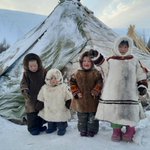
The #Nenets, one of the largest Indigenous reindeer-herding peoples of the Russian North, depend on seasonal migration routes and access to pasturelands. Some families travel with their herds across hundreds of kilometres each year.
A UN study found that oil and gas infrastructure in Yamal could occupy less than 1% of the territory while still disrupting traditional migration routes, reducing access to pastures and forcing some families to move.
This reveals a critical gap in how development is measured: a project may occupy little land on a map while transforming an entire way of life.
When energy infrastructure expands, whose definition of progress determines what is lost?
#Yamal #Nenets #IndigenousRights
What happens when a community is repeatedly described by others, but rarely gets to define itself?
Mariya Vyushkova, a Buryat researcher and activist, has drawn attention to the stereotypes surrounding Buryats and the way their history is represented.
Her work challenges the image of a community expected to remain obedient and invisible.
As Vyushkova has argued, the historical position of Buryats has often been shaped by the need to appear harmless.
Listening to people speak about their own communities is essential to understanding identity, power and historical memory.
Whose perspective is missing when we talk about a people?
#Voices #Buryatia #HiddenNations
A new Erzya-language publishing house, Kilango, has released its first free books. The goal is not only preservation but to make Erzya a language in which people want to read Shakespeare, discuss politics, and create new work.
Launch of the Erzya-language publishing house "Kilango" — first books now available for free
On November 21, a new Erzya-language publishing house, "Kilango," began its operations. It was founded by Bolyaen Syres, president of the League of Free Nations. The initiative aims not only to preserve the Erzya language but also to establish it as a medium for contemporary literature, education, and everyday life.
"I do not want the Erzya language to remain merely a language of folk songs, fairy tales, and memories of the past. I want our children to be able to read Shakespeare, Dumas, and Remarque in Erzya—for our language to be a vehicle for discussing love, politics, freedom, and everything else that concerns people across the globe," says Bolyaen Syres.
The first three books are already available for free: Oscar Wilde’s *The Selfish Giant*, Daniel Defoe’s *Robinson Crusoe*, and six of Aesop’s fables. They can be read online or downloaded in PDF, EPUB, and FB2 formats.
A key feature of the project is the inclusion of books designed for beginners, which can be read with a vocabulary of only about 250 Erzya words. The publishing house has established six levels of difficulty, allowing readers to gradually master the language through world literature. For the Wilde fairy tale, a study version—complete with a translation and an accompanying audio recording—has also been prepared.
All works are translated directly from their original languages, without relying on Russian translations as intermediaries. The books are published using the Erzya Latin-based script and are distributed under an open license.
"We are not just trying to save Erzya from extinction. We want it to evolve and grow richer—to become a language in which people *want* to read, write, and think," explains Bolyaen Syres.
Upcoming releases include *The Adventures of Pinocchio* and a collection of twelve stories titled *Scary Tales*. A language lives as long as it is spoken, read, written, and used to create something new. This is precisely the opportunity that Kilango offers to the Erzya people.
📖 Read and download books for free: Kilango
valks.erzja.info/ru/kilango/
#CaptiveNations #nations
Website: freenationsleague.org
Instagram: instagram.com/freenationslea…
Telegram: t.me/League_FN
Youtube: youtube.com/@freenationsleag…
Who decides whether a people is Indigenous? And why does the distinction matter?
Indigenous identity is not simply about being the first people to inhabit a territory. It is connected to historical continuity, distinct cultures and institutions, relationships ...
with ancestral lands, and a community's own sense of identity.
There is no single universal definition of Indigenous peoples in international law. The UN Declaration on the Rights of Indigenous Peoples places particular importance on self-identification and recognises their collective rights...
1
13
Being Indigenous is not a matter of cultural preservation alone. It also concerns political participation, control over cultural heritage, access to traditional lands and resources, and the right to maintain and develop distinct institutions.
A language, a place name or a traditional practice can carry generations of knowledge and collective memory.
The question is not whether Indigenous peoples can adapt to a changing world. It is whether they can do so without losing the right to define who they are.
What does meaningful recognition of Indigenous peoples look like in practice?
#IndigenousPeoples #CulturalHeritage
8
Livonian is a Finnic language once spoken along the Livonian Coast of the Gulf of Riga, on the northern Kurzeme peninsula in Latvia, and in the Salaca River valley.
Its last known native speaker died in 2013. With her death, a language that had survived for centuries on the Baltic coast effectively lost its living voice.
Livonian belongs to the same broad family as Finnish, Estonian, and Karelian, yet it developed in close contact with Latvian and other Baltic languages. Today it is maintained only through revival efforts, written records, and the work of a small community of learners.
The story of Livonian is one of many: a language whose speakers lived for generations in a specific coastal landscape, only for the chain of transmission to break within a single lifetime.
Correction: 2013 marked the death of the last known native speaker of Livonian, not the disappearance of the language.
Livonian is still spoken and actively revitalised. New generations are learning it, and some children are even being raised in the language today.
We thank those who brought this to our attention. Losing native speakers does not mean a language has lost its future.
3
35
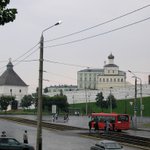
The Kazan Kremlin, a @UNESCO World Heritage Site, is a symbol of Tatar culture and was the historical seat of the Kazan Khanate
In Georgia’s Svaneti, artists and local businesses are attempting to reverse the long decline of the Svan language. Whether it is enough remains an open question.
Is a Svan-language renaissance under way, or is it too little, too late?
The language of Georgia’s mountainous Svaneti region has long been in decline. But a new wave of artists and businesses is trying to revitalise it.
oc-media.org/is-a-svan-langu…
A fragrant Kurdish tradition of clove apples has come to carry both intimate affection and public remembrance of Halabja and Anfal. Living culture and historical memory travel together.
An apple can say a lot without a single word. ❤️
In Kurdish culture, sêva mêxekrêj, or clove apples, have long been used to express feelings that can be difficult to say out loud. Traditionally, young women carefully pressed cloves into apples, covering the fruit before letting it dry for several weeks. The finished apple could then be given to someone they loved as a lasting keepsake.
But these fragrant apples carry stories beyond romance. Today, they also serve as a symbol of remembrance for the victims of the 1988 Halabja massacre and the Anfal campaign.
❤️ Discover the beautiful and bittersweet story behind this Kurdish tradition at the link: bit.ly/3WKQpDq

ALT A person is holding an apple covered in seeds, forming a heart shape. The background shows a table with patterned cloth and people sitting, slightly out of focus. Text on the image reads: "Gastro Obscura" and "In Kurdish Culture, an Apple Can Say What Words Can't." The Gastro Obscura logo is at the bottom left.
44
Assimilation is colonization that continues after the guns fall silent. Instead of open conquest, a dominant state works through schools, churches, and media to replace the languages, religions, and identities of smaller peoples with a single “civilized” or “state” culture.
In Canada and Australia, British authorities used residential schools to separate children from their families and ban native languages. France pursued the same goal under the name mission civilisatrice, turning local elites into “Frenchmen without France.”
Russia has pursued versions of this policy for centuries. Under the tsars it took the form of baptism campaigns and language bans (including against Ukrainian). In the Soviet period, early talk of equality gave way to systematic Russification through education, the army, and the press, aimed at creating a single “Soviet people.” Today, unified school curricula, restricted discussion of colonization history, and pressure on peoples such as the Tatars, Buryats, Udmurts, and Sámi continue the pattern. Even the occupation of Ukraine is justified partly through claims of linguistic and cultural unity.
The recurring formula is simple: linguistic uniformity equals political loyalty. The question is whether that formula still belongs in the twenty-first century.
Imagine a language spoken by only one person left on Earth. The day she dies, an entire way of seeing the world dies with her – knowledge of stars, plants, and rituals that lived only in memory, never in libraries.
Thousands of Indigenous and minority languages have already reached this point. Many more are close. Their speakers’ lands and lives were often the price of someone else’s expansion.
This account is about those peoples: the ones still here, maintaining their languages and traditions against long odds, and those who have already disappeared, leaving behind artifacts, fragments of stories, and silence.
We’ll share short, factual notes – sometimes about customs that sound almost fictional, sometimes about losses that are hard to measure. Together they form a picture of a world that is still far more diverse than most maps and headlines suggest.
If you know a story, language, or custom that belongs in this picture, tell us. Memory lasts longer when it is shared.
What regional capacity can tell us
What would it take for a region to function as an independent state?
A 2026 comparison of 10 Russian regions suggests none has every capacity in place.
Tatarstan appears closest; Kalmykia furthest. These differences reflect institutions and structures, not just geography.
#HiddenNations #SelfDetermination #PolicyAnalysis
Awareness is the first step
The Soviet Union's 1937 Census became a major catalyst and cover-up during Joseph Stalin’s Great Terror because the numbers exposed millions of missing citizens—revealing the catastrophic human cost of forced collectivization, man-made famines like the Holodomor, and early political purges...
The officials and statisticians who compiled the census—including census director Ivan Kraval and lead statistician Olimpiy Kvitkin—were arrested by the NKVD on charges of "wrecking" and counter-revolutionary activity. Many, including Kvitkin and Kraval, were executed in 1937. The census findings were suppressed and locked away in secret state archives for decades. The regime ordered a new census in 1939 designed to fabricate and produce the "correct" population figures dictated by the party line.
. . .
On the freezing morning of January 6, 1937, more than a million census takers fanned out across eleven time zones of the Soviet Union, knocking on doors from Leningrad apartment blocks to remote Siberian villages and Central Asian yurts. Ordered personally by Joseph Stalin to capture a sweeping portrait of socialist triumph, the one-day All-Union Population Census was designed to showcase rapid demographic growth under the Five-Year Plans. Three years earlier, Stalin had boasted to the Communist Party Congress that "life has become better, comrades, life has become more joyous," claiming the Soviet population was surging by three million people every year. Kremlin planners confidently expected the count to top 170 million. Instead, when early tabulations reached Moscow's Central Administration of National Economic Accounting (TsUNKhU) weeks later, senior demographers stared at a political death sentence: roughly eight to ten million citizens had vanished from the ledger.
Behind the locked doors of the statistical bureau, seasoned experts—including census chief Olimpij Kvitkin, deputy director Lazar Brandgendler, TsUNKhU head Ivan Kraval, and population specialist Mikhail Kurman—checked and rechecked the punch cards. The raw total came in at roughly 162 million people, far below official Kremlin projections.
The missing millions were no clerical accident. Between 1930 and 1936, Stalin's forced collectivization of agriculture, mass deportations of prosperous peasant families, and the catastrophic 1932–1933 famines across Ukraine, Kazakhstan, the Volga basin, and the North Caucasus had wiped out millions of lives while collapsing birth rates. Every regional tally mapped the geography of state-inflicted starvation—and to make matters even worse for the regime, a question on religious faith inserted into the questionnaire at Stalin's own insistence revealed that well over half of adult Soviet citizens still identified as believers after two decades of official atheism.
When Kraval and his colleagues submitted confidential memoranda explaining the demographic shortfall through famine mortality and declining births, Stalin erupted. In a dictatorship where official reality was dictated from the Kremlin, numbers that contradicted the leader's claims were treated as treason.
In the spring and summer of 1937, the NKVD secret police descended on the statistical agency. Stalin denounced the census as a sabotage plot engineered by "enemies of the people" to deliberately undercount the Soviet population and embarrass the state. Olimpij Kvitkin, who had spent decades building modern Russian demography, was arrested and executed by firing squad in September 1937. Lazar Brandgendler and TsUNKhU chief Ivan Kraval soon met the same fate, while Mikhail Kurman was sentenced to ten years of hard labor in the Gulag.
#archaeohistories
1
44