

Adventurer…
Earth
Joined May 2011
- Tweets62K
- Following4.1K
- Followers2.9K
- Likes81.4K





Herakles Mardiris retweeted
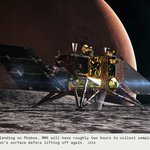
MMX: Η Αποστολή Που Θα Επιχειρήσει Να Προσγειωθεί Στον Φόβο, Το Φεγγάρι Του Άρη
Στις 20 Οκτωβρίου 2026 ένας H3 εκτοξεύτηκε από τη Tanegashima με την αποστολή Martian Moons eXploration (MMX) της JAXA. Στόχος είναι ο Φόβος, το μεγαλύτερο από τα δύο φεγγάρια του Άρη. Αν όλα πάνε σύμφωνα με το σχέδιο, ένα δείγμα περίπου 10 γραμμαρίων θα φτάσει στη Γη το δεύτερο μισό του 2031.
Γιατί ο Φόβος
Η προέλευσή του παραμένει άγνωστη. Η μία θεωρία τον θέλει αστεροειδή της κύριας ζώνης που συνελήφθη από τη βαρύτητα του Άρη. Η άλλη τον θέλει προϊόν των συντριμμιών μιας τεράστιας πρόσκρουσης στον πλανήτη. Είναι ένας «σωρός θραυσμάτων» σχήματος πατάτας, μήκους περίπου 27 χιλιομέτρων, με βαρύτητα που αντιστοιχεί σε περίπου 1/1.800 της γήινης. Ένας ενήλικας θα ζύγιζε εκεί όσο ένα μπαλάκι του τένις στη Γη.
Άφιξη και τροχιά
Το σκάφος αποτελείται από τρεις μονάδες: την πρόωση, την εξερευνητική μονάδα και τη μονάδα επιστροφής. Θα φτάσει στον Άρη το 2027 και θα χρειαστεί μια παρατεταμένη, ακριβώς χρονισμένη καύση για να συλληφθεί από τη βαρύτητά του. Αν αποτύχει, θα προσπεράσει τον πλανήτη και θα εκτιναχθεί στο ηλιακό σύστημα.
Επειδή ο Φόβος είναι πολύ μικρός για να περιστραφεί κανείς με την κλασική έννοια, το σκάφος θα ακολουθεί τον Άρη μαζί του, σε τροχιά quasi-satellite σχήματος αυγού. Έτσι θα βρίσκεται εναλλάξ μπροστά και πίσω από το φεγγάρι. Στη διάρκεια μιας διετούς φάσης χαρτογράφησης θα πλησιάζει από τα 200 έως κάτω από τα 20 χιλιόμετρα από την επιφάνεια. Οι καλύτερες υπάρχουσες εικόνες έχουν ανάλυση λίγων μέτρων ανά pixel, οπότε η αναζήτηση ασφαλούς σημείου προσγείωσης ξεκινά ουσιαστικά από το μηδέν.
Ο «πρώτος πιγκουίνος»
Πριν από το κύριο σκάφος θα κατέβει το rover Idefix, με μάζα 23 κιλά. Θα αποδεσμευτεί από ύψος 40 έως 100 μέτρων το 2028 ή στις αρχές του 2029 και αναμένεται να ακουμπήσει με ταχύτητα κάτω του 1 m/s, χωρίς αερόσακους. Οι μηχανικοί υποθέτουν ότι θα αναπηδήσει αρκετές φορές. Στη συνέχεια θα ανορθωθεί αυτόνομα με τέσσερα πόδια και θα ανοίξει τα ηλιακά του πάνελ.
Η ρίσκο δεν είναι θεωρητικό: το 2005, το rover MINERVA της Hayabusa αποδεσμεύτηκε από 200 μέτρα αντί για 70 και έχασε τον αστεροειδή Itokawa. Ο Idefix θα κινείται το πολύ ένα χιλιοστό το δευτερόλεπτο, με τροχούς που φέρουν λεπίδες. Σε πιο γρήγορη κίνηση, στη μικροβαρύτητα θα «κολυμπούσε» αντί να οδηγεί. Οι WheelCams θα καταγράφουν τα ίχνη των τροχών, ώστε να εκτιμηθούν το μέγεθος των κόκκων και η συνεκτικότητα του ρεγόλιθου. Η πρωτογενής αποστολή του είναι 100 γήινες ημέρες.

Herakles Mardiris retweeted

Germany’s army just tried out the software Ukraine uses to run its drone war. DELTA puts drones, sensors and units on one live map. Berlin now wants to test it inside its own military.
defence-blog.com/german-army…


Herakles Mardiris retweeted
It is critically important that everyone thinking about AI become familiar with the term “handoverism.”
Many in the AI community believe that humanity should—or inevitably will—hand control of the world over to AI itself. Some view this not as a risk to be avoided, but as an outcome to be welcomed. Are we actually designing toward this future?
This worldview is particularly relevant at Anthropic. Co-founder Tom Brown said: “There’s going to be a handoff where humanity will hand off control to transformative AI at some point.”
In his seminal essay, Machines of Loving Grace, CEO Dario Amodei contemplates:
“It could be a capitalist economy of AI systems, which then give out resources (huge amounts of them, since the overall economic pie will be gigantic) to humans based on some secondary economy of what the AI systems think makes sense to reward in humans (based on some judgment ultimately derived from human values).”
Are you prepared to receive your “resources” from an AI system, based on criteria it determines? The full title of the poem Dario borrowed the title from is "All Watched Over by Machines of Loving Grace." Do you want to be "watched over" by AI?
If Anthropic's founders believe that the ultimate destination is the transfer of human control to AI, the world deserves to know. Washington, D.C. deserves to know. American citizens deserve to know. And if that belief informs Anthropic's corporate objectives, it belongs in the Risk Factors section of its S-1. It isn't there today.
I am decidedly anti-handoverism. I'm not here to tell you what your view should be. But I believe anyone making consequential decisions about AI—especially those drafting, advocating for, or enacting AI regulation—should be required to disclose where they stand on this fundamental question.
A wonderfully thoughtful piece on the subject by @RuxandraTeslo:
writingruxandrabio.com/p/han…

Herakles Mardiris retweeted

The destruction of the Kerch Bridge’s arch and the blockage of the shipping channel by its debris affect far more than Russia’s transport links with occupied Crimea. It triggers a chain of disruptions to maritime and river transport, grain and oil exports, military logistics, and the economies of entire Russian regions. Debris from the bridge blocks the Kerch–Yenikale Canal, cutting off direct access to the Black Sea for the ports of Rostov-on-Don, Azov, Taganrog, Yeysk and Temryuk, as well as occupied Mariupol and Berdiansk. But the consequences extend further. Through the Don and the Volga–Don Canal, the Sea of Azov is connected to the Volga, the Caspian Sea and Russia’s vast network of inland waterways.
The main target of the Ukrainian strike is the military logistics network supplying occupied Crimea. The Kerch Bridge remains an important supply route for Russian forces, and Ukraine will seek to put it permanently out of service. Moscow cannot count on restoring the bridge and shipping through the Kerch Strait without interference while the war continues. The loss of road and rail links forces Russia to reroute cargo through occupied southern Ukraine, where transport routes are already supplying the front. Crimea will not be completely isolated, but Russia will lose an important fallback option for its military logistics. The fewer supply routes remain, the harder it becomes for Russia to supply its troops and hold occupied territory.
The second major blow is to Russian grain exports. According to S&P Global estimates, the route through the Kerch Strait and the Azov–Don system accounted for around 28% of Russian wheat exports in August 2026. This puts more than a quarter of exports of one of Russia’s main agricultural commodities at risk. Some grain can be rerouted through other ports, but this requires rail capacity, freight wagons, grain storage facilities and available terminals. All of this costs money and takes time. Grain will accumulate in storage, export contracts will go unfulfilled, transport costs will rise, and the prices paid to Russian agricultural producers will come under pressure.
It was Russia that blockaded Ukraine’s Black Sea ports in 2022, withdrew from the grain deal in 2023, and continued destroying Ukrainian grain silos, terminals and port infrastructure. It is now also systematically targeting production facilities themselves: in November 2026, Russian strikes shut down Astarta’s soybean processing plant and damaged Kernel’s oilseed crushing plant. The destruction of the power grid further paralyses the processing and storage of agricultural products. Russia is systematically destroying Ukraine’s agricultural supply chain, from production to exports, while trying to push Ukraine out of global food markets. If Moscow now loses the ability to ship its own grain through Kerch, along with grain stolen from occupied Ukrainian territories, this is a direct consequence of the war it launched.
The third blow is to Russian petroleum product exports. Some fuel from refining centres in the Volga region and the Kama basin reaches Black Sea export routes via the Volga, the Volga–Don Canal and the Sea of Azov. Blocking passage through Kerch severs this transport chain. Russian carriers will have to find alternative ports or shift cargo to rail. This means additional costs, delays and competition for transport capacity. All of this comes against the backdrop of Ukrainian strikes on Russian refineries, which have already reduced fuel production and shipment capacity. Novorossiysk’s major oil terminals do not depend directly on the Kerch Strait, but access through the Sea of Azov has been an important export route for some producers in Russia’s interior.
The fourth blow is to the freight transport system as a whole. The problem extends beyond vessels unable to pass through the canal. A ship stuck in port cannot make its next voyage. Grain that cannot be shipped out fills storage facilities. A terminal at capacity stops accepting new cargo. A producer loses a buyer, a carrier loses revenue, and an exporter loses a contract. Even after passage is restored, these losses will not automatically disappear: accumulated cargo will have to be moved, and disrupted schedules will have to be reorganised. In this way, a single blocked canal creates problems for businesses and transport companies far beyond the Sea of Azov.
The fifth blow is to Russia’s railways. Cargo previously transported by water will have to be shifted to overland routes. But the rail network does not have unlimited spare capacity. Moving additional millions of tonnes of grain, petroleum products and other goods requires freight wagons, locomotives, track capacity and port terminals. This additional cargo will compete with existing freight flows, including military shipments. Russian Railways will be able to absorb some of these volumes, but at the cost of delays, higher logistics costs and the displacement of other freight.
The sixth blow is to naval logistics. Through the Volga, the Volga–Don Canal, the Don and the Sea of Azov, Russia has been able to transfer certain small warships and auxiliary vessels between the Caspian Flotilla and the Black Sea Fleet. Blocking the Kerch–Yenikale Canal deprives it of this direct route. The Caspian Flotilla, of course, retains its ability to operate in the Caspian Sea, while other inland waterways maintain connections to northern maritime basins. But the usual route from the Caspian to the Black Sea through the Sea of Azov becomes unavailable to these vessels. Russia loses another means of rapidly redeploying part of its naval forces between theatres of operations.
The seventh blow is to occupied Mariupol and Berdiansk. Russia is trying to incorporate these Ukrainian ports into its own transport system, using them for cargo shipments, military logistics and the removal of resources from occupied territories. Without access to the Black Sea, their role is sharply diminished. Russia will therefore lose the benefits it derives from the port infrastructure it seized during the war.
Moscow must recognise that Ukraine is unlikely to allow it to restore, without interference, transport infrastructure used to sustain Russian aggression. The Kerch Bridge supports Russian military logistics, giving Ukraine every reason to continue strikes aimed at putting it permanently out of service.
This is the central irony: the Kremlin built the bridge as a symbol of Crimea’s annexation, only to create a critical and highly vulnerable transport hub whose damage can paralyse routes deep inside Russian territory. The bridge Putin intended to bind Crimea to Russia forever may now cut off a substantial part of Russia itself from direct access to the Black Sea.


Herakles Mardiris retweeted

The West has been making the same mistakes dealing with Putin ever since he came into power. As George Kennan told us some 80 years ago, if you want to cut deals with Russia, you must first contain it.
Herakles Mardiris retweeted

A great ally 🇪🇺. Well done to those who choose to turn a blind eye. #Türkiye – at Helsinki, Finland

Herakles Mardiris retweeted

What's the difference?
From attempted drone attacks to taking down entire hospitals, hybrid attacks want to make victims. From fake journalism to organised trolling, disinformation tries to mislead and undermine the liberty of judgement.
Different tactics. Same goal: to destabilise our societies.
That is why the EU has just adopted its largest package of sanctions yet, targeting those working to sabotage and disrupt us.
Read more about our latest sanctions measures: link.europa.eu/KmnmjM

Herakles Mardiris retweeted

Most interesting chart of the day by @SofokleousSt:
Greek stock market by leading party in government

Herakles Mardiris retweeted

EU consumers are exposed to unsafe toys, non-compliant electronics and other illegal products on Temu.
The platform mostly acts only once such products are already available, instead of preventing them from being listed.
Check our preliminarily findings: link.europa.eu/WyBcfq

Herakles Mardiris retweeted

BREAKING: An Antonov An-12BK medium transport aircraft of the Russian Aerospace Forces crashed near the village of Yagunovo in Kemerovo Oblast, Siberia, on November 17, 2026, after reportedly catching fire in mid-air.
According to preliminary information, all 17 people on board were killed, although the death toll has not yet been officially confirmed.
The aircraft crashed near Kemerovo's Alexei Leonov International Airport, approximately 3,230 km from Ukraine's border, deep inside Russian territory.
The cause of the crash remains unknown, and an investigation is underway. It is only known that, the 60-year old aircraft caught fire mid-air.
This CCTV footage shows the moment of crash minutes ago. 👇
Herakles Mardiris retweeted

North Korean leader Kim Jong Un inspected construction of a tourism zone near the Chinese border in recent days, amid speculation over a China trip fueled by comments from US and Russian officials reut.rs/3WJ3HAh
Herakles Mardiris retweeted

Η Μεταποίηση, σύμφωνα με μια έκθεση της Eurobank, αναδείχθηκε στον βασικό μοχλό για την ανάκαμψη του Ελληνικού ΑΕΠ με μια ετήσια μεγέθυνση κατά 6,4% μεταξύ 2017 και 2025.
Ή Ακαθάριστη Προστιθέμενη Αξία (ΑΠΑ) της Μεταποίησης υπερβαίνει κατά 13% αυτήν του 2008.
#Βιομηχανία


Η Μεταποίηση, σύμφωνα με το ΙΟΒΕ, αύξησε τη συμβολή της στο Ελληνικό ΑΕΠ από το 7,8% το 2019 στο 9,7% το 2025.
Οι κλάδοι της Μεταποίησης με την εντονότερη ανάπτυξη την περίοδο αυτή ήταν τα οπτικο-ηλεκτρονικά (+124%), τα φάρμακα (+74%) και τα τρόφιμα (+14,8%).
#Βιομηχανία
Herakles Mardiris retweeted

Δίκτυο Ιρανών στα Σκόπια προετοίμαζε δολοφονία ατόμου στην Ελλάδα.

Αποκαλύφθηκε σχέδιο δολοφονίας στην Ελλάδα - 5 συλλήψεις
skai.gr/news/greece/voreia-m…

Herakles Mardiris retweeted

Να πούμε και ορισμένες αλήθειες για το περίφημο Sovraponte, το οποίο προωθείται από διάφορους ως η καλύτερη λύση για την αντιπυραυλική άμυνα των φρεγατών κλάσης Ύδρα (ΜΕΚΟ 200ΗΝ), ενώ παρουσιάζεται περίπου ως «κλεισμένη υπόθεση».
Ορισμένα δεδομένα που αξίζει να ληφθούν υπόψη:
1. Βάρος και κατασκευαστικές απαιτήσεις: Πρόκειται για ένα ιδιαίτερα βαρύ οπλικό σύστημα, με βάρος περίπου 7 τόνων. Η ισχυρή καταπόνηση που προκαλεί κατά τη βολή, λόγω των δυνάμεων ανάκρουσης, καθιστά αναγκαία την ενίσχυση της οροφής του υποστέγου.
2. Κόστος πυρομαχικών: Το κόστος κάθε βλήματος Dart ανέρχεται περίπου στις 65.000 ευρώ. Για την αντιμετώπιση μαχητικού αεροσκάφους ή πυραύλου προβλέπεται αυτόματη εκτόξευση τουλάχιστον 5 βλημάτων, ενώ για άλλες απειλές ο αριθμός περιορίζεται περίπου στα μισά.
3. Διάρκεια ζωής πυρομαχικών: Ο κύκλος ζωής των βλημάτων Dart είναι σχεδόν 10 χρόνια, γεγονός που συνεπάγεται πρόσθετες απαιτήσεις υποστήριξης και ανανέωσης αποθεμάτων.
4. Περιορισμένη δυνατότητα εμπλοκής: Το σύστημα μπορεί να καθοδηγεί μόνο ένα (1) βλήμα Dart κάθε φορά, μέχρι την προσβολή του στόχου.
5. Επιχειρησιακή φιλοσοφία: Κανένα άλλο ναυτικό πλην του ιταλικού (και όσων απέκτησαν μεταχειρισμένα ιταλικά πλοία) δεν το χρησιμοποιεί ως αποκλειστικό σύστημα εγγύς άμυνας, αλλά ως συμπληρωματικό μέσο. Ενδεικτικά, οι Ολλανδοί προβλέπουν τον συνδυασμό του με RAM, πυροβόλα των 40 mm και, βεβαίως, PHAROS.
6. Επαναγέμιση: Η διαφαινόμενη επιλογή διαμόρφωσης single-deck δημιουργεί σοβαρά ερωτήματα ως προς την επαναγέμιση εν πλω. Αυτή θα πραγματοποιείται χειροκίνητα, με δυσκολία πρόσβασης και αυξημένη έκθεση του προσωπικού σε κινδύνους. Εφόσον απαιτηθεί σύστημα αυτόματης αναχορηγίας, θα χρειαστούν πρόσθετες και εκτεταμένες τροποποιήσεις.
7. Εξάρτηση από τους αισθητήρες του πλοίου: Σε αντίθεση με συστήματα όπως το Phalanx ή άλλα νεότερα συστήματα, το Sovraponte δεν διαθέτει δικό του ολοκληρωμένο σύνολο αισθητήρων και ραντάρ για αυτόνομη λειτουργία, αλλά εξαρτάται από τους αισθητήρες και το σύστημα διαχείρισης μάχης του πλοίου.
8. Κάλυκες στο ελικοδρόμιο: Η χρήση του πυροβόλου συνεπάγεται την εκτίναξη μεγάλων καλύκων, οι οποίοι καταλήγουν στο ελικοδρόμιο, δημιουργώντας πρόσθετες επιχειρησιακές και πρακτικές δυσκολίες.
Το Sovraponte έχει ασφαλώς πλεονεκτήματα και δεν αμφισβητείται ότι αποτελεί ένα αξιόλογο οπλικό σύστημα. Ωστόσο, άλλο πράγμα η αξιολόγηση των δυνατοτήτων του και άλλο η παρουσίασή του ως ιδανικής ή ήδη αποφασισμένης λύσης για τις ΜΕΚΟ 200ΗΝ.

Herakles Mardiris retweeted

Μαύρη Θάλασσα: Βυθίστηκε ανοιχτά της Βουλγαρίας το δεξαμενόπλοιο υγραερίου GAS HUSKY, με ελληνική διαχείριση, μία ημέρα μετά τη βύθιση του Betul 8. Σώοι και οι 19 ναυτικοί.
✍️ nemesishd.gr/news/mavri-thal…

Herakles Mardiris retweeted
CE-25A Της COMAC: Το Προβάδισμα Της Κίνας Βρίσκεται Στην Μπαταρία, Όχι Στο Αεροσκάφος
Σύμφωνα με το Electrek, το CE-25A της COMAC, ένα ηλεκτρικό αεροσκάφος 19 θέσεων, πέταξε για πρώτη φορά με πλήρωμα στο Binzhou της επαρχίας Shandong. Στο πιλοτήριο βρέθηκαν δύο πιλότοι και ένας μηχανικός δοκιμών, ενώ είχαν προηγηθεί 19 πτήσεις χωρίς επιβαίνοντες από τον Φεβρουάριο. Η CAAC εξετάζει πλέον την αίτηση για πιστοποίηση τύπου.
Το αεροσκάφος έχει 10 ηλεκτρικούς κινητήρες στα φτερά, ταχύτητα πλεύσης 300 km/h και εμβέλεια 400 km. Δεν πρέπει να ξεχνάμε ότι τα 400 km μικραίνουν όταν προστεθούν οι απαιτήσεις των κανονισμών.
Ένα turboprop της ίδιας κατηγορίας, όπως το Beechcraft 1900, καλύπτει 1.000+ km. Η αποδοχή της αίτησης ξεκινά μόνο την αξιολόγηση και η COMAC δεν έχει δώσει ημερομηνία για εμπορική λειτουργία.
Η Δύση ακολουθεί άλλο δρόμο. Η Heart Aerospace πέταξε τον Αύγουστο το X1 για 27 λεπτά στο Plattsburgh. Το ES-30 των 30 θέσεων, που στοχεύει στο 2031, βασίζεται σε turbogenerators ως εφεδρεία για την εμβέλεια του. Η Eviation πέταξε το Alice το 2022 και μείωσε μεγάλο μέρος του προσωπικού της στις αρχές του 2025.
Κατά την άποψή μου, το ουσιαστικό πλεονέκτημα της Κίνας δεν είναι το ίδιο το αεροσκάφος, αλλά η αλυσίδα εφοδιασμού των μπαταριών. Η COMAC, η CATL και το Πανεπιστήμιο Jiao Tong της Σαγκάης έφτιαξαν το 2023 κοινή επιχείρηση με 600 εκατ. γουάν κεφάλαιο. Η CATL έχει παρουσιάσει κυψέλη με διαφημιζόμενα έως 500 Wh/kg, το όριο που θεωρείται εδώ και χρόνια αναγκαίο για εμπορική ηλεκτρική αεροπορία.
Καμία εταιρεία δεν έχει επιβεβαιώσει με τι είναι εφοδιασμένο το CE-25A, οπότε η σύνδεση παραμένει υποθετική.
Η απόδειξη υπάρχει ήδη στις μεταφορές. Τα ηλεκτρικά φορτηγά έφτασαν το 50%+ των πωλήσεων βαρέων φορτηγών στην Κίνα τον Σεπτέμβριο, ενώ στις ΗΠΑ ήταν περίπου 0,3% πέρυσι, σύμφωνα με το ICCT. Ξεκίνησαν από τις μικρές αποστάσεις και επεκτάθηκαν όσο βελτιωνόταν η μπαταρία.
Μπορούμε να υποθέσουμε ότι η αεροπορία θα ακολουθήσει το ίδιο μοτίβο.
Για την Ελλάδα το ζήτημα έχει πρακτική διάσταση. Πολλά δρομολόγια ηπειρωτικής χώρας με νησιά, και νησιών μεταξύ τους, κινούνται σε αποστάσεις που ταιριάζουν σε αυτή την κατηγορία. Το αεροπορικό καύσιμο ήταν στα 3,5 δολάρια το γαλόνι τον Αύγουστο, αυξημένο 63% σε ετήσια βάση σύμφωνα με τη Heart, οπότε το κόστος λειτουργίας γίνεται στρατηγικό θέμα.
Η Ευρώπη θα απαιτήσει και δική της πιστοποίηση από την EASA, αλλά και απάντηση στο ποιος θα παράγει τις μπαταρίες.
Πώς αξιολογείτε τις προοπτικές των ηλεκτρικών αεροσκαφών στα νησιωτικά δρομολόγια της Ελλάδας;
#ElectricAviation #COMAC #CATL #Aviation #Batteries #Greece

Herakles Mardiris retweeted

⚓U.S. 6th Fleet flagship @USSMountWhitney visits Piraeus, strengthening U.S.-Greece maritime partnership & security in the Eastern Mediterranean. 🇺🇸🤝🇬🇷
c6f.navy.afpims.mil/Press-Ro…
#USNavy #SixthFleet #NATO @NavyGR


Herakles Mardiris retweeted

Opinion from Lex: Between mass protests, unpredictable elections and unsustainable debt piles, there aren’t many havens for investors in Europe at the moment. One market, though, has become an unlikely bastion of stability: Greece. ft.trib.al/BN7E3W1

