

I study and write about the moment people choose: a doctor, a stock, a brand. Author, Nobody Wants a Doctor & Message Market Fit. New story every Sunday.
Get the book →
Joined September 2009
- Tweets2.2K
- Following82
- Followers1.2K
- Likes15K






Pinned Tweet
You think you know why you choose.
The stock you bought.
The brand you wear.
The doctor you trust.
But you can't tell if any of them is good. Nobody can. So you judge what's standing in front of them: who called back, how the name sounded, how it felt to walk in.
And everyone who has ever chosen you did the same.
Your clients. Your customers. None of them could judge how good you are. They judged a phone that rang four times, a price they had to ask for, a name they couldn't repeat at dinner.
I learned this inside a hospital.
I spent my first ten years in healthcare ops, leading teams of more than seventy people and implementing a version of the Toyota Production System across an eleven hospital system. Then I helped open a clinic for the most chronically ill patients a health system has. Good doctors. Real time with every patient. Everything those patients needed.
It filled slower than the plan said it would.
Nothing was wrong with the medicine. The people who needed us most never got close enough to see the medicine. They saw a referral that went cold somewhere between their doctor's office and our door. So we left the medicine alone, left the marketing alone, and fixed the handoffs: what the referring doctor said, how fast we called, whether a person answered, whether the visit was booked before anyone hung up.
The panels filled. The cost of care fell by nearly a third.
I've spent the last ten years in marketing, 80+ engagements across MedTech, healthcare, SaaS, legal and consumer brands, testing that one idea anywhere I could and writing two books about it.
It's held every time.
A practice with better medicine loses to the one that calls back.
The brand a friend can explain in one sentence outsells the better one she can't.
A company changes what it calls itself, and the stock reprices before anything in the business has changed.
What you sell still matters.
It's just not what anyone judges first.
You'll choose something this week without knowing if it's good. So will the people choosing you.
I write about that moment, with one longer story every Sunday at nobodywantsadoctor.com/sunda…

4
448
Jonathan Hoffsuemmer retweeted

Phase 1 of the longevity market is over.
Phase 1 was access arbitrage: sell a bigger lab panel or a trending molecule, and early adopters paid just to get in the door. Now access is commoditizing fast.
Phase 2 is when longevity becomes the baseline:
1. Raw data stops being a moat unless it changes a real clinical decision.
2. Starting a protocol is table stakes; proving that metabolism, strength, or sleep improved six months later is the product.
3. Static playbooks lose to learning systems where the 10,000th patient gets a smarter plan from what was measured across the first 9,999.
Monday at 12:00 PM PT, I'm on the HLTH Main Stage for "When Longevity Becomes the Baseline" with Dawn Mussallem, Naveen Jain, and Heather Landi.
If you're in Vegas this week, come join us.

ALT This image is a caricature illustration of a person with dark hair wearing a dark shirt. Text on the image reads: "Speaker: Dr. Anant Vinjamoori, MD, MBA, Chief Medical Officer, Hims." Below is the logo for "Hims & Hers.
Old-school analysis reads the numbers in the 10-K. The new edge reads which industry the company chose to say it’s in.
24
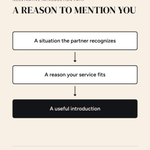
Getting onto a partner’s list can feel like getting into the market.
You are still waiting for a reason to be mentioned. Put the situation that makes your service useful beside your name.
Help the partner recognize the moment when an introduction would make sense.

ALT An illustrative introduction path moves from a situation the partner recognizes, to a reason the service fits, to a useful introduction.
23
Dr. Ames gave the tour for a year before she noticed what it was doing.
It was a good tour. The exam rooms, the little lab, the room with real chairs instead of an exam table. The two membership tiers on a card. Twenty minutes, and at the end she’d come in, ask if they had any questions, and they’d say the office was lovely.
A lot of them didn’t join. “Lovely” was the word in the thank-you emails, and lovely was losing to whatever they already had.
So one Thursday she skipped it. A man named Walt came in with his wife because his doctor of twenty years had retired and the replacement hadn’t looked up from the screen once. Dr. Ames sat down across from him, asked what had made them look, and then did the hardest thing in medicine. She didn’t say anything.
Eleven seconds in, she had a question ready. A good one. She kept it.
At about forty seconds Walt finished the story about the screen. At a minute he said the new place takes nine days to call back. At a minute and a half he looked at his wife, then at the floor, and said he’d been getting a tightness in his chest on the stairs for a month and hadn’t told anyone, and he wasn’t sure he would have told the man who didn’t look up.
That was the reason for the visit. It was never going to come out on the tour. She examined him before they left.
Doctors interrupt about eleven seconds in. That’s the median from recorded visits, and the fear behind it is that people will talk forever. They don’t. Left alone, most people finish what they came to say in under two minutes. What comes out at the end is often why they came.
A meet-and-greet is the first visit before the first visit, and the same rule holds, only more so. The person across from you has already read the website. They know the model. They came to answer the two things a website can’t: will this person understand me, and will I feel foolish here. A tour of the lab answers neither.
Walt and his wife joined that afternoon. She said later that the other office was nicer. Nicer lost to ninety seconds of quiet.
Monday
Time your next first conversation. Ask what made them look, start a clock in your head, and don’t speak for ninety seconds. Don’t fill the pauses. Just wait.
When they stop, ask what else, and wait again. Write down what came out at the end. That’s what they’ll talk about on the drive home, and it’s the only part of the visit they were grading.
One of these every Sunday, free, at nobodywantsadoctor.com/story
54

Three sources of a definition: the founder, the analyst, the customer. Only the last one gets repeated, so start there.
37
You can be proud of a device and say where it should not be used.
Keep the intended use, testing conditions and support requirements close to the claim. A buyer examining those limits is doing the work a responsible partner should do.
Give them enough to rule you out for the right reason. That also gives them a sounder reason to choose you.
26
Every new tool asks a clinician to stop doing something.
Name what they get to stop.
That’s the pitch.
33
Jonathan Hoffsuemmer retweeted

The strongest predictor of extraordinary work is whether the person had ever obsessed over something pointless; we saw this pattern across 5,000 startup meetings, and near-identical signals showed up across everyone from scientists to athletes.
We’ve met people who spent years optimising their fantasy football algorithms, or memorised every player in the NBA at 11, or collected thousands of train tickets, or built a Lego replica of their school; none of these activities really had much point.
What they were demonstrating was the hardest skill in any field; the mental capacity to stay focused on a seemingly boring task for much longer than it deserves. The path to genius is mostly insane levels of repetition, and people who achieve it have a broken off-switch. It is tough to fake having spent years obsessed with boring things that didn't matter.

You speak from the place that listens.
message market fit

Each word you say is planned by a small patch of brain above your left ear, about a quarter of a second before you say it. It sits in a temporal lobe region textbooks describe as only for listening. Our paper today in @ScienceMagazine: science.org/doi/10.1126/scie…
@UCSF @NeurosurgUCSF

1
176
A task board can show everyone what is moving while leaving the important decision invisible.
Put the reason beside the work. Name the buyer difficulty it addresses and what would count as progress.
Your team should be able to question a priority without having to guess how it became one.

ALT A blank illustrative work card contains fields for the buyer difficulty, decision, owner and evidence of progress.
46
Health tech sells the platform because the platform is what the company built. The roadmap, the integrations, the dashboard the whole team spent a year getting right.
The people buying it are thinking about something smaller. The nurse who charts the same thing twice. The unit manager covering a second shift because someone called out. The CFO who has to defend the line item next quarter.
None of them wake up wanting a platform. They wake up wanting one specific part of their week to stop going wrong.
So the pitch that wins starts with the Thursday it fixes, told in the words of the person living it.
Name the day.
Name the problem that goes away.
Then show the platform.
43
Somewhere tonight a person is reading your membership page with a calculator open.
They can’t find the number, so they do what people do with a price they have to ask for. They assume it’s the expensive kind and close the tab.
They never call. You never hear about them. Your inbox says demand is soft.
The fee was fine.
The silence around it cost you the patient.
1
1
75

The person who chose the product may never be the person who uses it.
A welcome email written to the buyer can leave the user wondering what is expected of them. The reasons for buying may be new to them, too.
Make the beginning useful to the person doing the work. They are starting a relationship somebody else agreed to.
36
Your pilot proved it works.
That was never what the pilot was for.
It was supposed to find a budget line.
1
56