

Formerly Humane Society International Europe. Join us in working for the end of animal cruelty. #HumaneWorld #EndAnimalCruelty
Rue Belliard 40, 1040, Brüssel
Joined July 2020
- Tweets3.8K
- Following528
- Followers2.2K
- Likes1.5K

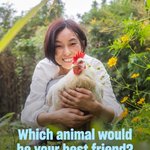




Pigs, hens, turkeys, cows and sheep have much more in common with us than we realise. 🐷🐔🦃🐮🐑
They are curious, sociable, capable of forming deep bonds and experiencing complex emotions.
Yet billions of them still suffer under terrible conditions on factory farms, where none of this is possible.
Which of them do you feel most connected to? Let us know in the comments 👇🏻 and share this post to help spread the word about who they really are.
@humaneworldfarm


Over 200,000 emails. One shared demand. One step forward for animals. ❤️
Woolrich Europe has announced it will go fur-free, following a campaign led by Humane World for Animals in collaboration with the Fur Free Alliance.
Last year, we called on people around the world to email the brand and urge it to leave fur behind. More than 200,000 emails were sent, alongside street events outside Woolrich stores across Europe, helping shine a spotlight on the company's involvement in the cruel fur trade.
Now, Woolrich Europe has committed to ending production of new garments containing animal fur by the end of 2026, with any remaining stock then sold off. It's an important step forward, showing how collective action can help drive change across an entire industry.
But our work isn't over. We're urging the @EU_Commission to recognise this progress as a sign of changing attitudes and put an end to fur farming once and for all.
Read the full story on our blog: humaneworld.org/en/blog/wool…
#HumaneWorld #FurFreeEurope #FurFreeFuture

A major win for animals: Denmark is pulling the plug on mink farming! 🎉
Once the world’s largest mink fur producer, Denmark has decided not to seek an exemption to continue farming mink when the EU ban on keeping American mink takes effect in August 2027. This means the country’s last seven mink farms will close, putting animal welfare ahead of the commercial interests of a dying industry.
Science played a key role: the European Food Safety Authority has made it clear that meaningful welfare improvements are impossible in cage-based fur production.
Fur farming is already banned in 24 European countries. Yet more than 6 million mink, foxes, raccoon dogs and other animals are still confined in small wire cages on almost 1,200 fur farms across the EU.
We urge the European Commission to listen to the more than 1.5 million citizens who signed the European Citizens’ Initiative for a Fur Free Europe and deliver an EU-wide ban on fur farming.
A huge thank you to our @FurFreeAlliance partner @Anima_Int for decades of tireless campaigning. 🩵
#HumaneWorld #FurFreeEurope #FurFreeFuture

🐔 Think about everything you do without even noticing: choosing who to sit near, finding a quiet corner when you need one, moving freely through your day.
A hen needs exactly the same things.
Her days are shaped by natural behaviours, social interactions and choices: searching for food, finding a place to lay her eggs, dustbathing, interacting with other hens and exploring her surroundings.
Cages restrict the space she needs to express all of these behaviours.
👉🏻 Swipe to discover what life in a cage means for hens.
❤️ Share this post and keep following to discover how you can help end cage farming.
#HumaneWorld #FarmAnimals #FarmAnimalWelfare #CluckCluck #EndTheCageAge


There is a premise that should underpin every budget law, a way of thinking that goes beyond budget lines and individual provisions: how should our public resources be distributed?
This question matters even more when some people are left to pay out of their own pockets for the consequences of violence perpetrated by others. From this perspective, paragraphs 847 and 848 of Article 1 of Italy’s 2026 Budget Law tell a story that is small in financial terms, but significant in principle.
The two provisions, introduced through an amendment put forward by Senator Anna Bilotti (Five Star Movement), allocate €1 million per year in 2026 and 2027 to cover the costs of caring for and housing animals seized or confiscated because they were used in animal fighting.
This is not merely a budgetary detail. For the first time, dedicated public funding recognises that behind every dog rescued from a blood-soaked fighting arena lies a cost—social, behavioural and veterinary—that someone must bear in order to alleviate, as far as possible, these animals’ physical and psychological suffering.
The amendment is the result of years of field work carried out through the “Io non combatto” (“I Don’t Fight”) project, led by Humane World for Animals Italia and @FondazioneCC.
Read more in the op-ed by –@fazzi_ale and @Martina_Pluda, country director at Humane World for Animals Italy, on @fattoquotidiano 👉🏻 ilfattoquotidiano.it/2026/09…
#IoNonCombatto

They can count, distinguish threats from the sky and the ground and teach their chicks what to eat. And they talk to them before they’ve even hatched. 🐔
The hen is one of the the world’s most numerous domesticated bird, yet her intelligence is often underestimated.


Scientific research has shown that hens have complex social lives, a rich vocal repertoire and remarkable cognitive abilities, like understanding that an object still exists once it’s out of sight, or giving up an immediate reward to hold out for a larger one.
On factory farms, though, none of this matters. A hen whose natural lifespan is 5-8 years is killed after just 1-2.
👉🏻 Swipe to discover more and share this post to help tell their story.
@humaneworldfarm
#HumaneWorld #FarmAnimals #FarmAnimalWelfare #EndTheCageAge


The EU wants maximum economic pressure on Russia. So why is Russian sable fur still exempt from sanctions? 🛑
Ahead of Thursday’s European Parliament Plenary debate on lifting this exemption, EuAlive @GeorgiGotev has published an opinion piece by Dr @joswabe of Humane World for Animals Europe.
Sanctions exemptions are meant to protect goods that serve civilian or humanitarian needs. Russian sable fur serves neither.
This loophole undermines the EU’s sanctions and disregards the millions of Europeans who supported the #FurFreeEurope European Citizens’ Initiative.
Our message to the European Commission and Council is clear: close the loophole. End the exemption.
👉 Read the full article on EuAlive: eualive.net/russian-sable-is…
#HumaneWorld #FurFree #FurFreeFuture

"Cluck cluck": it's the sound everyone knows her by. But that's not the whole story.
In nature, a hen spends up to 50% of her day just searching for food. She builds a nest before laying an egg. She chooses who to be near and who to avoid. These are real, natural behaviours that are part of who she is.
In the EU, more than 140 million laying hens are confined in cages that leave no space for any of this.
It's time to give them that space back.
❤️ Share this post and keep following to discover how you can help end cage farming.
#HumaneWorld #FarmAnimals #FarmAnimalWelfare #CluckCluck #EndTheCageAge

Myth: wild animals make good pets. Busted.
No matter how much love you give them, no home can replace what a wild animal actually needs: space to roam, instincts to follow, the freedom to just be wild.
Bought as cute, harmless babies, many grow into animals no living room was ever built for: stressed, destructive, sometimes dangerous.
Wild animals belong in the wild, not in our homes, backyards or roadside attractions.
Together, we can help protect wild animals and the habitats they call home.
#HumaneWorld #EndAnimalCruelty
Over a third of the EU’s laying hens are still kept in cages. 🐔
According to the IEEP report we commissioned, a third of the EU’s roughly 398 million laying hens were still kept in enriched cages in 2025. Progress varies widely: Germany has effectively eliminated enriched cages, while in Poland and Spain cages still hold the majority of hens.
As EUalive reports, the transition is achievable, but farmers need the right support to make it happen, from upfront investment in new housing and equipment to training on new management practices 🧑🌾
The IEEP report looks at how the post-2027 Common Agricultural Policy (CAP) proposals, alongside other funding pathways, could help finance the shift to cage-free egg production.
💬 “A cage-free future for laying hens is within reach, but the European Commission’s political ambition must be matched by practical financial support to facilitate the transition.” – Dr @joswabe, Senior Director of Public Affairs, Humane World for Animals Europe.
👉 Read the full article on EUalive @GeorgiGotev: eualive.net/report-urges-tar…
#HumaneWorld #EndAnimalCruelty

🦁 Did you know that, as apex predators, lions play a critical role in maintaining the balance and health of their ecosystems? Yet lion populations across Africa and Asia continue to face significant decline, making awareness and conservation efforts more important than ever.
By learning, sharing, and supporting conservation initiatives, each of us can help ensure a future where lions continue to thrive in the wild. Join us!
#HumaneWorld #EndAnimalCruelty

The coming months could be decisive for ending cages for laying hens in the EU 🐔
By the end of this year, the European Commission is expected to release its long-awaited revision proposal of the legislation for the welfare of laying hens and broiler chickens, responding to the European Citizens’ Initiative ‘End the Cage Age’. The proposal should include a suggested timeline for phasing out cages.
Financial support will be key to making the transition work. While moving to cage-free systems may require significant upfront investment, many of the benefits are realised over time.
The latest @IEEP_eu report, commissioned by us, examines how the future CAP can support the transition to cage-free systems with these key recommendations:
👉🏻 A long-term vision, with clear objectives and timelines, is critical 🎯
👉🏻 Member States should develop species-specific transition plans, identifying the needs and the training requirements with all relevant actors 🧑🏼🌾
👉🏻 Public money, particularly the CAP, should prioritise “transformative” changes and be combined with private capital, using grants alongside loans and guarantees to leverage greater resources 💶
👉🏻 The European Commission should use the review and approval process of national plans to promote access to both CAP and non-CAP funding for higher animal welfare 🐓
📄 Read the report here: ieep.eu/wp-content/uploads/2…
@joswabe
#HumaneWorld
🎉 Woolrich Europe is going fur-free!
This means fewer animals will suffer for fashion and sends a powerful message to the industry: compassion is what consumers want.
Thank you to everyone who spoke up, signed petitions and took action. Together, we're proving that cruelty-free fashion is the future. 🩵
@FurFreeAlliance
@WoolrichInc

Protecting wildlife takes more than one solution. 🦥
From education and outreach to rescue, rehabilitation and local partnerships, we're tackling the wildlife trade from all angles to help keep sloths and other wild animals where they belong: in the wild.
#HumaneWorld
Five years ago, 1.4 million Europeans called on the EU to end the caged confinement of farmed animals. The European Commission committed to act. We're still waiting.
On 1 October, we joined the End the Cage Age coalition outside the @EU_Commission in Brussels to remind it of that promise.
The first proposals, for hens in egg production and chickens raised for meat, are expected by the end of the year, with proposals for pigs expected to follow in 2027. But calves, rabbits and many other farmed animals have been left out so far.
Citizens are asking for it. NGOs are asking for it. Most surveyed farmers say they would go cage-free with the right support. Now the Commission must deliver, for all animals. ⏰
#HumaneWorld #AnimalWelfare #EndTheCageAge


