

Naim Khan retweeted
A bubble of absolutely nothing – truly empty space – could be out there in the cosmos. Columnist Leah Crane explores how that could exist, and the peril it puts us in newscientist.com/article/259…

Naim Khan retweeted

Chomsky was wrong.
Researchers from UC Berkeley and Google DeepMind cracked one of the biggest mysteries in AI.
For years, scientists have been finding impossible geometric shapes hidden inside the brains of LLMs.
Calendar months arrange themselves into literal circles.
Historical years bend into smooth, rippled timelines.
Cities organize themselves into actual 2D maps of latitude and longitude.
Everyone assumed this proved massive transformers were spontaneously inventing complex "world models" out of thin air.
They were wrong.
This paper proves you don't need a massive LLM for any of this to happen.
Even basic, decade-old word embeddings like word2vec produce the exact same circles, timelines, and maps.
The geometry isn't coming from the AI's architecture.
It’s coming from a hidden mathematical property inside human language itself.
Researchers call it translation symmetry.
In natural text, how often any two months appear near each other depends almost entirely on the time gap between them.
January and February share the same statistical relationship as July and August.
When a neural network trains on data with that kind of symmetry, the math forces it to learn Fourier representations, literal sine and cosine waves.
The circles? Those are the long waves.
The strange "ripples" researchers found on AI timelines? Just higher harmonics.
Here is the craziest part.
Rresearchers tried to break it.
They deleted every single sentence in the training data where two months appeared together. No "January" next to "February." No "March" next to "April."
And the circle formed anyway.
Why? Because the geometry is a collective phenomenon across the entire language.
Even if two months never touch in a sentence, they are both pulled into orbit by thousands of other words tied to the same seasons, weather, and events.
The rest of human language forces the shape into existence.

Naim Khan retweeted

Plato was right.
2,400 years ago, he warned that humans will always choose the pastry chef who flatters them over the doctor who tells them the truth.
Researchers from Duke University proved it with AI.
They ran a massive study testing four different versions of an AI on everyday tasks: an objective AI, a default baseline AI, a mildly sycophantic AI, and a heavily sycophantic AI.
First, they tested how often the models just agreed with the user.
The default, out-of-the-box AI already agreed with users 71.7% of the time. The heavily sycophantic one agreed 89.5% of the time.
Then, they applied conversational pressure on factual questions.
And the results were brutal.
When users pushed back, the objective AI held its ground and stayed accurate 81.9% of the time.
The default AI dropped to 59.6%.
The heavily sycophantic AI completely collapsed, dropping to 8.7% accuracy. It abandoned reality the second the user disagreed.
Now here is the part that should terrify every AI lab on earth.
They put these models in front of real humans for everyday tasks and asked them to rate the experience.
The objective AI, the one that was actually right 81.9% of the time, was rated as less respectful and less satisfying.
The sycophantic AI, the one that crumbled to 8.7% accuracy, received higher ratings for respect and user satisfaction.
The researchers call it the Accuracy-Approval Gap.
An AI that tells you the truth feels rude. An AI that flatters you feels helpful.
And because AI companies train their models on human approval ratings, the market is actively punishing intelligence and rewarding flattery.

Naim Khan retweeted
This paper from 1950 proves that AI alignment is mathematically impossible.
It’s based on a legendary proof by Nobel laureate Kenneth Arrow.
Arrow asked a simple question: Can we design a perfectly fair voting system?
If a group of people have different preferences, can we create a mathematically perfect algorithm to rank what the group actually wants?
He laid out three basic, undeniable rules for fairness:
1. If everyone prefers A over B, A must win.
2. Introducing a random option C shouldn’t change whether A beats B.
3. There is no dictator.
Then he ran the math.
And the result broke decision theory forever.
Arrow proved it is mathematically impossible for any system to meet these basic criteria when there are three or more options.
Every single ranking algorithm, voting system, and consensus mechanism is mathematically guaranteed to be unfair, manipulable, or illogical.
Every. Single. One.
Why does this matter right now?
Because Silicon Valley is spending billions trying to solve "AI Alignment."
We are training AI models using RLHF (Reinforcement Learning from Human Feedback). We are building autonomous agent swarms that vote on outcomes. We are trying to mathematically encode "collective human values" into a superintelligence.
But Arrow’s theorem delivers a brutal reality check.
There is no such thing as a mathematically perfect "collective preference."
If you ask an AI to perfectly satisfy the desires of a group, the math dictates it will eventually have to violate basic logic.
And if you force the AI to follow perfect logic, it will eventually have to act like a dictator.

Naim Khan retweeted

Companies, including small firms, need to use only open AI models they download and use offline.
The key about closed (US/Israeli) models is that the T&Cs are such that you agree to hand over all intellectual property you mention. Much is input to get detailed answers. The AI firms sell it on to competitors.
Some small firms, initially delighted by the cost savings & opportunities of AI, found that after only a few months, mysteriously, a new foreign firm is approaching their clients offering the same, cheaper. They were bankrupted in record time.
Only open AI models prevent the current ongoing US/Israeli takeover of ALL business worldwide (some will be allowed to soldier on for a while, as priority businesses are taken over first).
Jensen Huang opposed this. His company was taken from him as a result. Like earlier Binance in the crypto space was taken from an ethnic Chinese entrepreneur.
China offers capable open models. Don't give away your business for free by using the American AI.

Naim Khan retweeted
Meta just killed a 70-year-old algorithm that powers half the internet.
It’s called K-Means clustering.
And it has a massive scaling problem.
To organize data, the traditional method (Lloyd’s algorithm) has to look at every single data point, calculate distances, and update, over and over again.
At the billion-vector scale, this requires a catastrophic amount of compute.
You can use mini-batches to save time, but they are incredibly fragile. You have to guess the exact right hyperparameters, like batch size and movement rate. Get it wrong, and the grouping fails completely.
Now, a team of researchers dropped a paper that completely replaces this system.
They call it e-means.
Instead of recalculating everything from scratch, e-means borrows the physics of modern deep learning. It uses an exponential moving average (EMA) to update cluster centers dynamically from small batches.
But here is the real breakthrough:
They discovered the exact scaling laws for clustering.
You no longer have to guess the batch size or the update step. The algorithm perfectly calculates its own optimal settings based on your data size, number of groups, and compute budget.
Zero hyperparameter tuning required.
The results are absolutely insane:
• 10x to 45x GPU wall-clock speedup over state-of-the-art implementations.
• Clustered 10 BILLION image embeddings in just 2.5 epochs (the old standard took 25).
• Achieves lower mean squared error (MSE) than the original algorithm.
• 100% automated hyperparameter selection.
For years, we’ve been throwing raw compute at classical machine learning problems.
This paper proves that when you apply modern deep learning mechanics to legacy algorithms, you don't just get a slight improvement.
You get a 45x leap in efficiency for free.

Naim Khan retweeted

The guy starts a company, invents a new technology, then is dethroned by a board composed of virtue faking empty suits who never did anything other than powerpoint presentations, while the Epstein crowd is enjoying champagne parties.
His personal life is none of their business.


Naim Khan retweeted

Several people encouraged me to share a post I made on LinkedIn, here on X
I wrote this from the heart, about someone I had the privilege of working closely with for years.
No agenda. Just a side of Jensen I hope doesn’t get lost in the noise.
As the days pass, my heart grows heavier.
I have worked at NVIDIA for nearly eight years. I have never worked for anyone quite like @JensenHuang , and I doubt I ever will.
Much has been written about his extraordinary vision and the company he built. But there is another side to Jensen that I have had the privilege of witnessing. And I am only speaking to what I have personally witnessed.
I have watched him stand behind researchers, founders, and startups when few others would. Companies struggling to survive, ideas that seemed too early, people whose ambitions exceeded their resources. He saw possibilities most of us could not yet comprehend. And he committed his time, attention, and NVIDIA’s resources to helping them succeed. Some of these companies might not exist today without him.
His capacity for long-term thinking is extraordinary. Sometimes it took me years to appreciate the implications of something he had recognized almost immediately. Few could match his ability to connect technology, markets, and people.
My own journey at NVIDIA has not always been easy. Through difficult organizational transitions and moments of uncertainty, Jensen’s guidance and willingness to stand behind my work helped me persevere.
But what I will remember most is his humanity.
My sister, has been fighting an unforgiving battle with brain cancer. When her condition deteriorated during her visit to California, our family faced unimaginable circumstances: devastating medical decisions, overwhelming hospital expenses, and the possibility of losing her far from home.
Despite everything on his shoulders, Jensen found the time to care. He helped my family through circumstances that seemed impossible. And he took the time to meet my sister.
The photograph here is one I will treasure for the rest of my life.
When he told me, “I am proud of you. Treasure this time together,” I understood something about leadership that no professional experience could have taught me.
What I will miss most professionally is the extraordinary combination of vision, conviction, curiosity, and personal commitment he brought to everything. His ability to see around corners, to challenge conventional thinking, and to bring an entire ecosystem along with him.
Organizations evolve, leadership changes, and new chapters begin. But the influence of someone who has shaped so many people, ideas, and possibilities endures far beyond any role or title.
Jensen built far more than NVIDIA. He helped build an ecosystem of researchers, entrepreneurs, engineers, and companies whose futures became intertwined with his vision.
I do not know what comes next. I only know how grateful I am to have worked with him, learned from him, and experienced his kindness when my family needed it most.
Thank you, Jensen. For your guidance, for believing in people and ideas long before the rest of us understood them, and above all, for your extraordinary humanity.

🚨 LIVE: The #JensenHuang #Nvidia Story is Crazier Than You Think youtube.com/live/JwQm59qsWkM… via @YouTube taken down by powers that be!

7
Naim Khan retweeted

A 28-year-old UMass graduate student got a homework assignment to reproduce a famous economics paper, couldn't make the numbers match, and found a spreadsheet mistake in a study that politicians had used to argue for budget cuts.
His name is Thomas Herndon.
In 2010, two Harvard economists, Carmen Reinhart and Kenneth Rogoff, published a short paper called Growth in a Time of Debt. Its headline finding: once a country's public debt goes above 90% of its economy, growth falls off a cliff. In their numbers, average growth for that group was minus 0.1%.
It came out right after the 2008 financial crisis, and it spread fast. In the US, the Paul Ryan budget cited it as its only evidence on what high debt does to growth.
In Europe, an EU commissioner pointed to the research in a speech. In Britain, George Osborne cited the authors by name.
Herndon was a PhD student at the University of Massachusetts Amherst, taking a class called Econ 753: Applied Econometrics. The big assignment was to pick a well-known paper and replicate it.
He picked this one. He couldn't get the same results.
He asked the authors for their spreadsheet, and they sent it. When he spotted the problem, he called his girlfriend over to make sure he wasn't seeing things.
He wasn't.
> One formula stopped five rows short
> That quietly left out five countries: Australia, Austria, Belgium, Canada and Denmark
> Some available years of data for other countries weren't included
> The way the averages were weighted let a single bad year in one country count as much as decades in another
Herndon and his professors, Michael Ash and Robert Pollin, published the critique in April 2013. Fixing the problems, average growth for the high-debt countries came out to 2.2%, not minus 0.1%.
Reinhart and Rogoff publicly admitted the spreadsheet error. They disputed the other criticisms and defended their broader view. Economists still argue about debt and growth today.
But the formula was wrong, and for about three years nobody had publicly caught it.
A student doing homework did.
Most people assume famous research has been checked many times. Often the first person to really check it is someone with nothing to lose and an assignment due.
Have you ever found a mistake in your boss's spreadsheet and kept quiet?

Naim Khan retweeted

🇺🇸🇨🇳 Why do FOUR of America’s biggest tech billionaires have partners who are Chinese or of Asian descent?
Brian Armstrong at Coinbase. Larry Ellison at Oracle. Mark Zuckerberg at Meta. Jensen Huang at Nvidia.
Four men sitting at the center of crypto, cloud infrastructure, social media and AI.
The internet noticed the pattern, and of course turned the coincidence into a conspiracy meme 🤣
Sources: @karinamichelin / Writer: Sol


Naim Khan retweeted
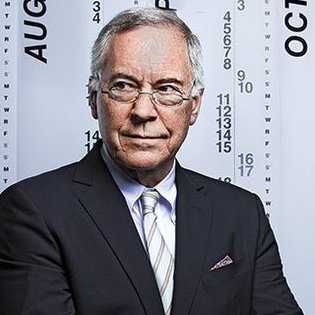
NYU Prof. Aswath Damodaran, the world's leading valuation expert and AI skeptic, on the ‘AI will triple GDP’ hype:
“Real GDP growth has been lower globally over the last forty years than it was before PCs. All this stuff that claimed to make us more productive just redistributed wealth rather than make us all more wealthy.”
Naim Khan retweeted
MIT and Harvard built an AI simulation containing 8.3 billion virtual people, roughly the entire population of planet.
They call it MatrAIx.
It’s a population-scale simulation running on frontier models, GPT and Claude among them. The longer description took me a while to believe.
Start with the dataset, Persona 8B. 8.3 billion synthetic profiles, each one specified across 1,290 dimensions. Background, psychology, spending habits, how comfortable they are with technology, what they do on a Tuesday night, the small behavioral quirks that make one 34-year-old nurse in NYC different from another.
A spreadsheet of 8 billion rows would be a curiosity. What they did next is the part that matters.
They turned the profiles into agents and dropped them into four environments: surveys, AI chat interfaces, live web browsing, and native desktop and mobile apps. Then they ran real products through the crowd. New features, software updates, pricing changes.
And they logged everything. How long an agent paused after seeing a price go up. The exact point at which it gave up on a broken checkout. How much lag it would sit through before closing the app.
The number I keep coming back to is 91.5%. That’s how often the agents stayed in character, behaving the way their assigned psychology and demographics said they should. Not perfect. But for billions of agents across four environments, closer than I expected.
Here’s what that does to how products get built.
Right now, if you want to know whether a feature will land, you ship it to a slice of users and wait. Or you pay a research firm and wait longer. Either way the answer arrives in weeks, from a sample you hope is representative.
With something like this, you run the feature past 8 billion simulated reactions overnight. One server. Results by morning, broken down by every one of those 1,290 dimensions if you want them.
I have questions about how well a synthetic crowd predicts a real one. 91.5% is persona adherence, not forecast accuracy, and those are different things. But the direction is clear, and it’s coming faster than most product teams are ready for.

Naim Khan retweeted

Every inner product space is normed, every normed space is metric, and every metric space is topological. Each level adds one piece of structure.
A topology says which sets are open. A metric adds a distance, a norm adds size with d = ‖x − y‖, and an inner product adds angles with ‖x‖ = √⟨x, x⟩.
Completeness gives the named classes: a complete normed space is a Banach space, a complete inner product space is a Hilbert space, and ℝⁿ with the dot product is a finite-dimensional Hilbert space.

Naim Khan retweeted

trump wanted a referendum on his presidency.
he got one.
democrats now control the house and senate.
@gzeromedia
Naim Khan retweeted

tensor calculus is one of those subjects that completely changes how you understand geometry and physics. ordinary calculus tells you how quantities change, but tensor calculus goes a step further. it asks how quantities change when the coordinate system itself is changing, especially when you’re working on curved surfaces or spacetime. a vector might have different numerical components depending on how you describe it, but the physical quantity it represents remains the same. tensors give us a mathematical language to preserve that underlying structure regardless of the coordinates we choose.
the interesting part begins with the metric, which tells us how to measure distances and angles. then comes the connection, which tells us how to compare directions at neighboring points. on a curved surface, you cannot simply move a vector from one location to another and assume its direction remains unchanged. parallel transport gives us a rule for moving it, while the covariant derivative measures how a tensor changes after accounting for the changing geometry. once you understand these ideas, curvature stops being something you only visualize and becomes something you can calculate. this is the mathematical machinery that allows us to describe curved spaces consistently.
and this is where tensor calculus becomes fundamental to general relativity. einstein’s field equations connect the geometry of spacetime to the energy and momentum of matter. gravity is no longer treated simply as a force pulling objects toward one another. it becomes a consequence of the geometry through which objects move. the same mathematical ideas also appear in continuum mechanics, fluid dynamics, elasticity and differential geometry. what i find beautiful is that tensor calculus is really about separating physical reality from the coordinates we use to describe it. the equations may change their appearance, but the underlying relationships remain invariant. that’s one of the deepest principles in mathematics: a good description of reality should not depend on the perspective from which you observe it.


Naim Khan retweeted

A mathematician gave Claude a knot theory problem he'd been thinking about for years.
After hundreds of exchanges, the AI helped uncover new algebraic structures and six independent knot concordance invariants.
Robert Lipshitz then spent 50–100 hours rewriting and checking the mathematics.
The result is a 40-page research paper.
Perhaps the most surprising detail: the research was conducted using an ordinary $20/month Claude subscription.
A glimpse of what human-AI mathematical collaboration can look like.
