

Sinner.Saved.Believer. They call me Batman. Skipped the Rat Race. Tweet about Life, Entrepreneurship & Physics. Polyam. #BuildTheFuture w/ @vruksheco @ekatraone
Mumbai
Joined October 2009
- Tweets48.5K
- Following1K
- Followers1.8K
- Likes5.2K


Abheejit retweeted

Instinct went viral almost overnight, and I have been trying to understand what actually made that happen. The more I dug into it, the more interesting it became because the real story seems to have started well before Noah ever publicly launched the product
I found this incredible drill-down by Brace where they analysed 5,000+ posts and 56,000+ relationship ties around the launch, and then I started going through the early posts, who was talking, who already had access, who knew whom, what people were actually saying and when Noah finally entered the conversation. There is a lot here for anyone who cares about growth and distribution
The first big public spark seems to be Elliot Comite on Aug 13. He had barely ~2K followers and posted that Instinct was his most “holy shit” AI product since Wispr Flow. Brace captured the post around 2.5 hours later and it had 1 like, 0 reposts and 2 replies. It was basically going nowhere. Over the next day it somehow starts moving and eventually ends up around 700K views
What makes that fascinating is that Instinct had already been quietly sitting inside a very specific network for months. Noah has spoken about starting with roughly 200 friends/family and giving every user 5 invites. Once Elliot posts, you start seeing people around the product who already knew it or were already using it. Sarah Guo was an investor and user. Pranav Reddy had apparently been spending almost every other Friday at the Instinct office. Jason Shuman says this is as close to THE personal AI assistant as he has seen. Sari Azout starts sharing everything it is doing for her family. A few days later Sheel Mohnot says he has sent it 677 messages in five days and calls it “OpenClaw for normal people.”
What I love is that none of these people are telling the same story. Elliot is saying holy shit. Sarah is talking about trusting it enough to transact. Sari is talking about getting hours of her life back. Sheel is talking about Comcast negotiations, doctors, wedding vendors and 677 messages. Then the privacy debate starts and suddenly people are asking how much autonomy they are actually willing to give an AI
So instead of the internet seeing 20 people repeating the same launch message, it starts seeing 20 different pieces of evidence that something unusual is happening. That is a very different kind of distribution
Most launches are still thought about as build product, announce it, activate creators/influencers and then amplify. Instinct seems to have almost inverted that. Put the product in the hands of the right small group much earlier, let them use it long enough to have real stories, let each of them pull only a few more people in, let those people create their own stories, and allow curiosity and access to compound before the founder even properly enters the conversation.
By the time Noah publicly introduces himself on Aug 26, people have already spent almost two weeks asking what Instinct is, how to get access and whether it is as good as everyone says. In that sense, the market had already done a lot of the launching for him.
I don’t think the lesson is that Instinct scripted virality. There isn’t enough evidence for that, and some of the people involved have described parts of it as accidental or organic. The more interesting thing is that they seem to have created the conditions in which virality had a very good chance of happening.
The 5 invites are a big part of that. Sari posts about the product, gets 100+ DMs asking for access and only has 5 invites. Someone gets one, uses Instinct, has their own crazy experience, posts it, and now they have 5 invites of their own. The product experience feeds distribution, and distribution feeds the next product experience.
The more I look at this, the more I think we massively underthink the first 100-200 users of a product. Who those people are, who they know, how deeply they use the product before launch, whether the product naturally gives them something worth talking about, and how access moves from one person to another can matter far more than a beautifully orchestrated launch day.
So maybe the better question is not “who can we get to post about us at launch?”
It is: who are the first 100-200 people we want using this before the world even knows it exists?
If you get that graph right, give them something remarkable enough to talk about and make it easy for them to pull the next person in, you may reach launch day and realise the market has already started the launch for you.
Also linking the Brace analysis in the comments because the amount of work they have done to map the propagation is insane and absolutely worth reading

Dear @SBICard_Connect why do your "Premium Servicing Team" keeps calling for EMI conversion and when asked to put on DND, they abrupty disconnect.
What is even this behaviour? Horrible.
1
1
89
Abheejit retweeted

Sarvam got picked by the government in April 2025 to build India's own foundation model. They got a ₹98.68 crore GPU subsidy for 4,096 H100s and raised $234M at a $1.5B valuation in June.
Now they've opened Token Factory to everyone. 8 models on it. 1 is theirs. 6 are Chinese open weights (DeepSeek, Kimi, GLM) and 1 is Google's Gemma.
So India's sovereign AI lab is mostly serving Chinese models from Indian GPUs. That's a hosting business, and plenty of companies already run one.
I wanted Sarvam to be the lab that ships frontier research out of India. After that much capital and subsidized compute, this is not it.

Today, we are launching Sarvam Token Factory for everyone.
We host our own models, and the full range of best-in-class open-weight models, in India. We match leading inference providers on performance and reliability.
For enterprises, this means more models to choose from, and an AI stack they can own without lock-ins.
Vruksh started with a thought: to be a home that I always wanted to build as an entrepreneur for myself. When I was jumping across different ecosystems as an entrepreneur, I saw a gap. That vision turned out to be one of the most successful entrepreneurial ventures that I've run so far.
My mentor, V Radha ma'am once said to me, "If you start an enterprise, there will be one entrepreneur in the world, but if you enable people like you, there might be thousands." That still remains the driving force to build the next phase of Vruksh as REIN: from executing projects to codifying our knowledge as infrastructure, as a system.
As we complete 8 years of the existence of Vruksh, there's no better time than today to present the new face and phase of this work to enable entrepreneurs building communities in the places where it's needed the most.
@vruksheco is now @reinglobalorg
cleaned up my GitHub and discovered two things -
- A repo I built as early LLM experiments has 58 stars. github.com/ekatraone/alpaca-…
not fancy as those thousands in a week but super happy!
- I over engineered my CTO skill (almost a harness now) github.com/iabheejit/fox-os

1
73
Abheejit retweeted

wanted to test claude fable 5.2 with a real task:
which vitamins should i actually buy in india?
after ~1 hr of agents run, 2 usage limit resets 🥲
it read 100+ lab reports and built me this
itspsneha.com/supplements

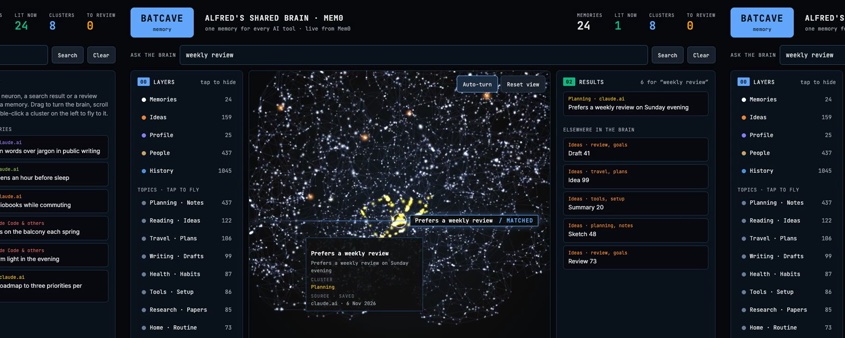
Most AI guides stop at prompts. This is the architecture for an assistant you can actually trust with your inbox. One brain, many clients. Steal any part of it.


2
71


shipped something for the @Meta @cerebral_valley hackathon !
building this solution has been a passion for me. Thanks to this hackathon, it takes a new shape I was dreaming for long.
2
123
hey @minmsme
the udyam portal is failing for me. My Mac shows its TLS certificate (issued by eMudhra) as revoked, so I can’t safely register. Could the team check and fix it? @mygovindia

3
98
Abheejit retweeted

Moved back to India after years abroad and now building a startup?
Pitch to me !
malpaniventures.com

Abheejit retweeted

How many TEDx editions does it take to run out of original ideas?
One flagship event? Absolutely. But multiple spin-offs with the same speakers recycling the same talks? What’s the point?
At this stage, it’s not about spreading ideas. It’s just the same show, different banners, and a fresh dose of self-importance. 😂
Abheejit retweeted

Aeos is about to enter it's 4th year of operations. We've been bootstrapped and profitable since day one and been in the green every month.
Every time we start building a new office, it's always a big risk with security deposits and rent and the long lock ins. There is no investor to catch us if we fall. That said, it's never a bad time to recite the fundamentals. They could be useful for you, too. YMMV:
- Agency is a muscle and it can be developed. Same way as the gym, via progressive overloading.
- People think you can start out and build a deeptech/rocket science company but it's better to progressively overload. Start with freelancing, then do a small co, make some money, build your network, and then, when you're ready, take a big swing. Most people you know who are doing extremely crazy things started small and kept overloading beyond their current capabilities, but just a bit.
- Companies today need ruthless execution, softy founders just get eaten by the market and then personally blamed later for failure.
- Most digital businesses only last 3-4 years thanks to AI and basically have to rethink every time new technology drops. Aeos itself worked because of the sudden advantages of AI in content. It's better to disrupt yourself than be disrupted by competitors though, it's okay and worth it to go through the pain of change.
- Startup schools like YC teach you that pivoting is okay. You are comfortable pivoting because half your batch is pivoting every month or so, and you see that all the big successes in your cohort pivoted a few times till it "clicked". Indians shame pivoting (they think this is failure or some kind of sign of a flimsy mind), but this is the wrong attitude: entrepreneurship in the early stages is an act of discovery, not of doing. You cannot know if a path sucks until you walk down it. If you want to "do" along a set path, get a job. Aeos is one of the rare examples of a company that didn't pivot and has pretty much done what it did on day one, but I know this is not the norm.
- All the best founders I know are paranoid that something bad will happen tomorrow and disrupt them. I could never relate to someone who thinks their company/job/lifestyle is set and secure forever. It is not. Anything can happen, you have to be prepared.
- You will only be successful when your social reputation is on the line for the swings you take. The reason you can't point to too many anonymous successes is because their reputation is never on the line for failure. This is true for employees too, the most visible employees who then try to swing actually do much better because of the implicit reputation cost.
- Don't get me wrong: failure is normal and on the path to success. But if you do not have a feedback loop for this, you will never learn what you did wrong. We diagnose failure, improve, adapt, and try again. If the path itself is broken, choose another one.
- Avoid overengineering on costs before you hit scale. It's an engineer bad habit, repeated across time. In fact, avoid building for other engineers, you will try to make complicated things to impress them, when you should actually only be impressing and improving the lives of your customers. Your customers actually want simple things, or an abstraction of the complex until it is simple for them. They don't want to see the tangled wires underneath: why are you so proud of them?
- If you give your life, your all to something, and you can find a group of people who are willing to do it with you, there is no greater honor and satisfaction, even in failure. But most of the time if you progressively overload well, you will end up with an output that surprises everyone. Unleash The Avatar trailer 1 versus 2 versus 3 and (and now 4, with another round of radical improvement) is a good example of continuous progressive overload from a team that won't give up.
- We are ultimately always in the service of the customer (and in our case, also the viewer), and not ourselves. It's actually been maybe 2 odd years since I've last thought about what I want. I've spent almost all my time thinking about my customers needs, my team's needs, my audience's needs. I have lost myself in the process, but I wouldn't have it any other way.
- Most people will never win because they're always thinking about what they want, when the world rewards you for thinking about other people's problems and solving it, for a price.
- There are four quadrants when it comes to hiring: untalented and unreliable, untalented and reliable, talented and unreliable, and talented and reliable. Out of all of these, hiring the talented and unreliable is where you will lose all your money and energy.
- Attention is the most valuable thing in 2026, and 2027, and 2028. Yes, even beyond building technology. Software itself was valuable because it easily scaled, and the reason a software engineer made more than a doctor was because they served way more customers at once, often at much lower prices than a doctor. A doctor can only see so many patients an hour, but an engineer can service millions of customers in the same time. With AI coding, anyone can build for scale, but finding those customers is going to be harder as everyone competes for attention. Producing the content itself will be easier, but actually figuring out attention is super hard.
- It's okay if you fall. Just get back up again! There is only defeat in death.


