

Bogotá, Colombia
Joined August 2009
- Tweets3K
- Following708
- Followers226
- Likes1.2K






Llevo 30 minutos usando codex por primera vez para coding y ya me desesperó lo lento que es comparado con claude code... #MiPlata
57
Si Durante todo el almuerzo en @BogotLa pusieron a @andrescepeda, es un mensaje político? 😂😂
29
imbautista.eth retweeted

So San Francisco. An @openclaw run vending machine.
Met @cvander who built it.
At @frontiertower which is a high rise in San Francisco stuffed with startups.


imbautista.eth retweeted

No me lo puedo creer. 275.000 euros.
Eso es lo que ha costado la web y app infoDANA.
Ha tenido menos de 1000 visitas y 700 descargas.
A 275 euros la visita.
Todo lo que está mal:
- No es de código abierto
- Las cookies y el tracking no cumplen LSSI-CE ni RGPD
- No cumple criterios básicos de accesibilidad
- Coste desproporcionado para una web informativa
- Dinero público sin retorno claro para la ciudadanía
Me parece perfecto que se haga una web y una app para esto.
Pero necesitamos gente con conocimientos técnicos para definir bien los requerimientos y los presupuestos.
Porque con la programación ya vamos tarde.
Y con la IA, si seguimos así, vamos a estar en la edad de piedra.

ALT Mapa interactivo de infoDANA Recuperación con la Comunitat Valenciana resaltada, varios municipios marcados con puntos y un panel lateral amarillo que muestra una inversión total de más de 8.196 millones de euros, desglosada en seguros, infraestructuras, agua, ayudas a empresas, personas y agricultura. Mucho número grande, muchos iconos y un mapa serio que transmite “esto ha costado un dineral” incluso antes de leerlo.
imbautista.eth retweeted

A few random notes from claude coding quite a bit last few weeks.
Coding workflow. Given the latest lift in LLM coding capability, like many others I rapidly went from about 80% manual+autocomplete coding and 20% agents in November to 80% agent coding and 20% edits+touchups in December. i.e. I really am mostly programming in English now, a bit sheepishly telling the LLM what code to write... in words. It hurts the ego a bit but the power to operate over software in large "code actions" is just too net useful, especially once you adapt to it, configure it, learn to use it, and wrap your head around what it can and cannot do. This is easily the biggest change to my basic coding workflow in ~2 decades of programming and it happened over the course of a few weeks. I'd expect something similar to be happening to well into double digit percent of engineers out there, while the awareness of it in the general population feels well into low single digit percent.
IDEs/agent swarms/fallability. Both the "no need for IDE anymore" hype and the "agent swarm" hype is imo too much for right now. The models definitely still make mistakes and if you have any code you actually care about I would watch them like a hawk, in a nice large IDE on the side. The mistakes have changed a lot - they are not simple syntax errors anymore, they are subtle conceptual errors that a slightly sloppy, hasty junior dev might do. The most common category is that the models make wrong assumptions on your behalf and just run along with them without checking. They also don't manage their confusion, they don't seek clarifications, they don't surface inconsistencies, they don't present tradeoffs, they don't push back when they should, and they are still a little too sycophantic. Things get better in plan mode, but there is some need for a lightweight inline plan mode. They also really like to overcomplicate code and APIs, they bloat abstractions, they don't clean up dead code after themselves, etc. They will implement an inefficient, bloated, brittle construction over 1000 lines of code and it's up to you to be like "umm couldn't you just do this instead?" and they will be like "of course!" and immediately cut it down to 100 lines. They still sometimes change/remove comments and code they don't like or don't sufficiently understand as side effects, even if it is orthogonal to the task at hand. All of this happens despite a few simple attempts to fix it via instructions in CLAUDE . md. Despite all these issues, it is still a net huge improvement and it's very difficult to imagine going back to manual coding. TLDR everyone has their developing flow, my current is a small few CC sessions on the left in ghostty windows/tabs and an IDE on the right for viewing the code + manual edits.
Tenacity. It's so interesting to watch an agent relentlessly work at something. They never get tired, they never get demoralized, they just keep going and trying things where a person would have given up long ago to fight another day. It's a "feel the AGI" moment to watch it struggle with something for a long time just to come out victorious 30 minutes later. You realize that stamina is a core bottleneck to work and that with LLMs in hand it has been dramatically increased.
Speedups. It's not clear how to measure the "speedup" of LLM assistance. Certainly I feel net way faster at what I was going to do, but the main effect is that I do a lot more than I was going to do because 1) I can code up all kinds of things that just wouldn't have been worth coding before and 2) I can approach code that I couldn't work on before because of knowledge/skill issue. So certainly it's speedup, but it's possibly a lot more an expansion.
Leverage. LLMs are exceptionally good at looping until they meet specific goals and this is where most of the "feel the AGI" magic is to be found. Don't tell it what to do, give it success criteria and watch it go. Get it to write tests first and then pass them. Put it in the loop with a browser MCP. Write the naive algorithm that is very likely correct first, then ask it to optimize it while preserving correctness. Change your approach from imperative to declarative to get the agents looping longer and gain leverage.
Fun. I didn't anticipate that with agents programming feels *more* fun because a lot of the fill in the blanks drudgery is removed and what remains is the creative part. I also feel less blocked/stuck (which is not fun) and I experience a lot more courage because there's almost always a way to work hand in hand with it to make some positive progress. I have seen the opposite sentiment from other people too; LLM coding will split up engineers based on those who primarily liked coding and those who primarily liked building.
Atrophy. I've already noticed that I am slowly starting to atrophy my ability to write code manually. Generation (writing code) and discrimination (reading code) are different capabilities in the brain. Largely due to all the little mostly syntactic details involved in programming, you can review code just fine even if you struggle to write it.
Slopacolypse. I am bracing for 2026 as the year of the slopacolypse across all of github, substack, arxiv, X/instagram, and generally all digital media. We're also going to see a lot more AI hype productivity theater (is that even possible?), on the side of actual, real improvements.
Questions. A few of the questions on my mind:
- What happens to the "10X engineer" - the ratio of productivity between the mean and the max engineer? It's quite possible that this grows *a lot*.
- Armed with LLMs, do generalists increasingly outperform specialists? LLMs are a lot better at fill in the blanks (the micro) than grand strategy (the macro).
- What does LLM coding feel like in the future? Is it like playing StarCraft? Playing Factorio? Playing music?
- How much of society is bottlenecked by digital knowledge work?
TLDR Where does this leave us? LLM agent capabilities (Claude & Codex especially) have crossed some kind of threshold of coherence around December 2025 and caused a phase shift in software engineering and closely related. The intelligence part suddenly feels quite a bit ahead of all the rest of it - integrations (tools, knowledge), the necessity for new organizational workflows, processes, diffusion more generally. 2026 is going to be a high energy year as the industry metabolizes the new capability.
Bogotá se suma a una práctica mundial de estacionamiento en vía para una movilidad más organizada - Zona de Parqueo Pago Bogotá zonadeparqueopago.gov.co/not…

43
imbautista.eth retweeted

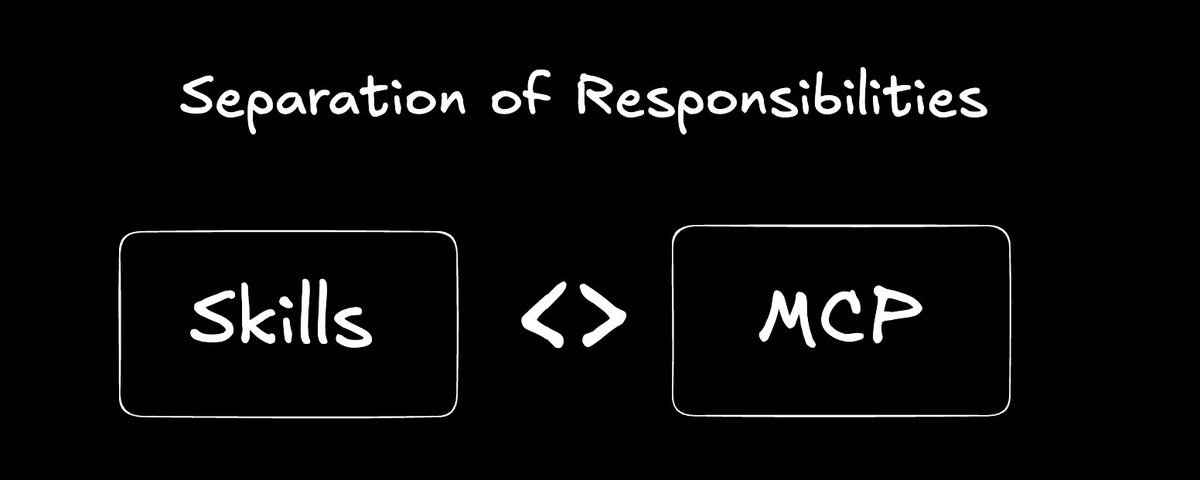
Skills vs MCPs: separating their responsibilities
My first X article tackles a topic that could improve agentic execution flows.
Hope it resonates and sparks good debate

La Terminal de Transporte ofrece carga para vehículos eléctricos con 70 minutos de parqueo gratis - Zona de Parqueo Pago Bogotá zonadeparqueopago.gov.co/not…

30
No solo perdió la música… el emprendimiento también…
Consejo de oro: “empiece donde esté…”
Yeison Jiménez | Ser el #1 de música popular en Colombia | Ep. 17 youtu.be/8ZpH1xaRzn0?si=mvCr… via @YouTube
586

Si quieren conocer de la industria musical... no duden en escuchar el capítulo 12 y 13 de este podcast... que cagada que ya no vayamos a tener mas episodios... youtube.com/@CaminoAlExito_Y…

23

imbautista.eth retweeted

1️⃣ Derrocar a un dictador suena moralmente justo. Nadie llora por un tirano. Pero el derecho internacional no se construyó para proteger a los buenos, sino para contener a los poderosos. Por eso prohíbe la fuerza casi sin excepciones: no porque ignore la injusticia, sino porque sabe que, si cada país decide a quién “liberar” a balazos, el mundo vuelve a la ley del más fuerte.
2️⃣ El problema no es Maduro. El problema es el precedente. Cuando la fuerza militar se usa para cambiar gobiernos sin reglas claras, la soberanía deja de ser un límite y se vuelve un estorbo. Hoy es “derrocar a un dictador”; mañana será “corregir una elección”, “proteger intereses”, “restaurar el orden”. El derecho no absuelve dictaduras, pero tampoco legitima cruzadas unilaterales.
3️⃣ La pregunta incómoda no es si un tirano merece caer, sino quién decide cuándo y cómo. Porque la historia enseña algo brutal: sacar al dictador es fácil; construir justicia después, no. Y cuando la legalidad se rompe en nombre del bien, casi siempre lo que sigue no es libertad, sino caos, violencia y nuevas víctimas. El derecho existe para recordarnos eso, incluso cuando incomoda.


imbautista.eth retweeted

Confirmado. Mañana en la tarde.

Queremos hacer un Recap del 2025 con @freddier next week.
Cuáles son sus temas mas esperados?
imbautista.eth retweeted
I've never felt this much behind as a programmer. The profession is being dramatically refactored as the bits contributed by the programmer are increasingly sparse and between. I have a sense that I could be 10X more powerful if I just properly string together what has become available over the last ~year and a failure to claim the boost feels decidedly like skill issue. There's a new programmable layer of abstraction to master (in addition to the usual layers below) involving agents, subagents, their prompts, contexts, memory, modes, permissions, tools, plugins, skills, hooks, MCP, LSP, slash commands, workflows, IDE integrations, and a need to build an all-encompassing mental model for strengths and pitfalls of fundamentally stochastic, fallible, unintelligible and changing entities suddenly intermingled with what used to be good old fashioned engineering. Clearly some powerful alien tool was handed around except it comes with no manual and everyone has to figure out how to hold it and operate it, while the resulting magnitude 9 earthquake is rocking the profession. Roll up your sleeves to not fall behind.
imbautista.eth retweeted

Slowly, then all at once

You can now edit slides created with Nano Banana Pro on Manus
Not regenerate. Edit. Click on text and change it. Point to a visual and adjust it. Select multiple areas and update them all at once.
It's what AI presentations should have been from the start.
manus.im/blog/edit-slides-cr…