

Coding for 15+ years | Sr. Software Engineer | IIT Kanpur alumnus | CP: 99.5+ %ile | Tweets: Computer Science, Maths & Psychology | Expertise: Problem Solving
Sweden
Joined January 2021
- Tweets3.2K
- Following93
- Followers2.7K
- Likes4.4K




I've been mentoring students and professionals for over a decade.
Based on this experience, I've created an (almost) exhaustive list of the most impactful rules & concepts.
Make 2024 your best year: 👇

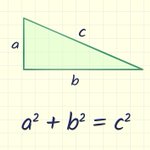
Yes, x = a + b ✅
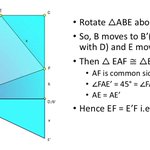
A simple visual proof would be to fold it along the lines AE and AF, then points D & B meet on EF.
Mathematically, it can be easily proven by moving △ABE as shown below. Then △EAF and △E'AF are congruent.
Hence proving: x = a + b

2
9
331
Irony: social media influencers mocking a kid with dreams.
Not even an original mocking, copied from elsewhere😅
Only someone with an "aim", has the possibility to achieve it. So, probably he or someone like him.
For anyone trying to pull him down, why not first reply with the IIT you graduated from.
We can choose 1 of the 3 horizontal lines and 2 of the 4 lines meeting top vertex.
So number of triangles
= ³C₁ * ⁴C₂
= 3 * 6
= 18 ✅
4
309
The complexity of this problem is surely being underestimated.
For those interested in the answer,
its possible but numbers are huge.

6
165

One region was lost due to symmetry.
If you move any one point on circle slightly, you'll find 1 more region emerge in the center.
Hence, resulting in 31 regions.
5
45
It would be 31 ✅
The series that forms is:
1, 2, 4, 8, 16, 31, 57, 99, 163, 256, ...
It can be derived using ⁿC₄ + ⁿC₂ + 1 ☑️
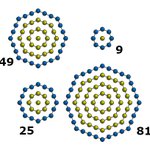
If wondering why it appeared like 2ⁿ for initial terms, the answer lies in the Pascal's triangle:
teapawt.net/intelocode/status/1375…

The coefficients are the numbers in Pascal's triangle (which is extremely easy to create). In any row, just add the two adjacent values and it gives the value below.
This allows to skip the tedious calculation and find next expansion just by using the current one.

2
13
353
An interesting way to check if the given alphabet is vowel using bit manipulation.
Have a look if you understand how it works !

1
10
822
There are 9 rows and 9 columns, so total rectangles
= Σ9 * Σ9
= 45 * 45
= 2025 ✅
Explanation:
Out of 9 rectangles in rows (or columns), "k" continuous rectangles can be selected in "10-k" ways (k ∈ [1,9]).
Hence, resulting in 1+2+...+9 = Σ9 ways to select from rows/cols.
1
9
162
Right, glad that you mentioned.
Initially, I wrote "such year had never occurred for 4 digit years", then while rephrasing/editing seem to have missed that part.
1
25