

🕉️ Ignis · Probat · Aurum Entrepreneur | Business Development | Tech | Leadership | Public Affairs | Founder, @jacoralltd Retweets ≠ Endorsement.
Abuja, Nigeria
Joined August 2012
- Tweets48.1K
- Following738
- Followers2.9K
- Likes60K


Steady effort builds resilience no audience can measure. Learn, adapt, make smarter choices, stay grounded. Let progress become the answer; explanations are optional.
4
Good morning Nigerians.
Peter Obi is coming ✌️

NIGERIANS, GO AND VERIFY (4)
Building a Healthy Nation: Our Health Sector Record in Anambra
Peter Obi
In the previous instalment of this series, I discussed our investments in education and explained why we considered human capital development central to the progress of Anambra State. Another sector that received considerable attention under our administration was healthcare. We understood that education gives people the tools to build their future, while good healthcare enables them to live healthy and productive lives.
When we assumed office in 2006, the healthcare system in Anambra faced serious challenges. Our health institutions required rehabilitation, medical equipment was inadequate, many communities lacked accessible primary healthcare facilities, and several medical training institutions had not secured accreditation. We therefore decided to approach healthcare as a comprehensive development priority, rather than concentrate resources on a few prominent hospitals.
Under our Anambra Integrated Development Strategy (ANIDS), we invested simultaneously in primary, secondary, and tertiary healthcare, medical training, maternal and child health, medical equipment, and partnerships with religious and private institutions.
Our approach was simple: healthcare should be accessible to people wherever they live, and the quality of treatment they receive should not depend on their status or whether they live in a city or a rural community.
Building a Teaching Hospital and College of Medicine
One of our most significant achievements was the establishment of the Chukwuemeka Odumegwu Ojukwu University Teaching Hospital at Awka.
We initiated, constructed, equipped, and secured accreditation for the institution, building it virtually from scratch. When I discovered that the state university was admitting medical students without having a teaching hospital through which they could complete their training, possibly with the intention of assigning them elsewhere, I considered the situation unacceptable. We therefore embarked on the construction of a modern teaching hospital to address this deficiency.
We constructed more than 25 buildings and provided facilities for the College of Medicine, laboratories, pathology, accident and emergency services, pediatrics, male and female wards, special wards, consultant clinics, and other essential departments.
We also provided vehicles, including ambulances and staff buses, to support the hospital and the College of Medicine as part of the accreditation requirements.
The objective was not merely to build another hospital but to establish an institution capable of providing specialist healthcare while training the next generation of Nigerian medical doctors.
Rehabilitating General Hospitals
We also recognized that a teaching hospital alone could not meet the healthcare needs of the population. General hospitals had to function effectively because they provide the essential link between primary healthcare and specialist treatment.
We rehabilitated and resuscitated 15 general hospitals across the three senatorial zones of Anambra State. We undertook substantial improvements in their buildings, wards, equipment, and general facilities.
In 2013, we provided ₦400 million for the ongoing renovation of 11 selected general hospitals, alongside other healthcare interventions.
Our intention was to ensure that people did not have to travel unnecessarily long distances to obtain basic secondary medical care.
Taking Primary Healthcare to the Communities
We believed that the best healthcare system is one that prevents illnesses and treats people early, rather than one that waits until minor health problems become emergencies.
That informed our extensive investment in primary healthcare. We built over 120 primary healthcare centers across communities in the 177 autonomous communities of Anambra State and rehabilitated existing facilities.
21
Jerry Agulanna retweeted
I honestly don’t get what all the fanfare is about. Releasing citizens who were arrested after expressing their anger is not an extraordinary presidential achievement.
For the first time in a long while, Nigerians are openly and boldly confronting a sitting President over the consequences of his leadership.
What concerns me right now is the conduct of the Red Chamber. Senatorsshould be holding the executive accountable, not competing to lick ass and sing “On Your Mandate We Shall Stand.”
Perhaps it’s time the Red Chamber was reshuffled.
I look forward to a Nigeria where the National Assembly demonstrates genuine independence, exercises its constitutional oversight powers and, where the constitutional grounds exist, can democratically initiate the removal of a sitting President.
The legislature must serve the people, not the occupant of Aso Rock.


Jerry Agulanna retweeted
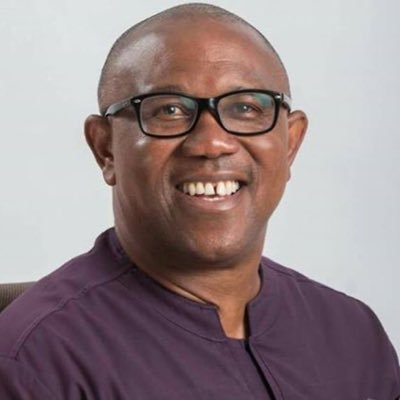
WASHINGTON, DC : PRESENTING NIGERIA’S DEVELOPMENT AND DEMOCRATIC FUTURE ON THE GLOBAL STAGE.
Yesterday, Monday, November 16, I arrived in Washington, DC, for a series of significant meetings and engagements with congressional leaders from both the U.S. House of Representatives and the Senate, as well as other influential American figures. These discussions focused on vital matters affecting Nigeria’s development, the well-being of our people, and the future of our democracy.
I began the day with a substantive interview with renowned American television commentator Glenn Beck. Our conversation addressed Nigeria’s challenges, the pressing need for accountable leadership, the responsible management of our vast human and natural resources, and the opportunities to establish Nigeria among the world’s leading nations.
I also met with prominent American leaders, including Congressman Marlin Stutzman, Congresswoman Beth Van Duyne, Congressman Todd Tiahrt, Suzanne Bock Grisham, retired U.S. Army Colonel Albert V. Short, and other esteemed stakeholders.
One of the day’s principal highlights was my address on Capitol Hill, during which I underscored the urgent importance of international cooperation and support for Nigeria’s advancement, particularly in the areas of national unity, security, economic prosperity, and the welfare of our citizens.
Our conversations also addressed the protection of Nigeria’s emerging democracy and the strengthening of democratic institutions to ensure elections are free, fair, transparent, and credible, accurately reflecting the will of the Nigerian people.
Nigeria has immense potential to emerge as a leading nation within the global community. What is urgently required is accountable leadership, responsible stewardship of our resources, resilient institutions, and an authentic commitment to the security, unity, and well-being of every Nigerian.
Throughout these engagements, my message remained unequivocal: Nigerians must determine Nigeria’s future. Every vote must be counted, the rights of every citizen must be safeguarded, and the people’s will must consistently prevail.
I remain encouraged by these engagements and firmly committed to working with Nigerians at home and in the diaspora, alongside our international partners, to build a peaceful, secure, united, and prosperous Nigeria.
Our journey continues. Our determination remains steadfast.
A New Nigeria is POssible! -PO


good governance should be measured by what changes in the lives of ordinary people, not the number of promises made during a campaign."
21
Jerry Agulanna retweeted
NIGERIANS, GO AND VERIFY (2)
Building the Institutions of the State
Peter Obi
In Series 1, I explained the philosophy that guided our administration in Anambra State: governance as a public trust, anchored on character, competence, capacity, and compassion. I also introduced the Anambra Integrated Development Strategy (ANIDS), our comprehensive framework for achieving balanced and sustainable development across all sectors.
But a development vision, however noble, cannot succeed without strong institutions to drive it. Before the government could effectively deliver on its promises in education, healthcare, infrastructure, security, and other sectors, we had to first restore the machinery of government itself. We could not build a prosperous state on a cracked and unstable foundation.
This was why one of our foremost priorities under ANIDS was to rebuild, strengthen, and reposition the institutions of government. When I assumed office, the physical and administrative architecture of governance was in a deplorable condition. Our task was not simply to construct buildings but to restore the institutions, systems, and structures through which government could function effectively.
We therefore began systematically rebuilding the infrastructure of governance across the executive, legislature, judiciary, civil service, and local government system.
Restoring the Seat of Government
The Government House in Awka, the state capital, had been vandalised and burnt by reactionary forces in 2004. We therefore had to rebuild, re-equip, and furnish it, restoring its dignity and functionality as the seat of executive government.
In the same vein, we rehabilitated the Governor’s Lodge in Amawbia and constructed a new Governor’s Lodge in Onitsha. These investments were intended not merely to provide accommodation but to strengthen executive presence and facilitate effective governance across the state’s major administrative and commercial centres.
Strengthening the Legislature and Judiciary
We rehabilitated the Anambra State House of Assembly Complex in Awka, providing our lawmakers with a more conducive and decorous environment in which to discharge their constitutional responsibilities. We also provided legislators with vehicles to facilitate the effective performance of their legislative duties.
We recognised that a functioning democracy requires strong institutions, including an effective legislature and an independent judiciary, each operating within its constitutional mandate.
In strengthening the judiciary, we provided brand-new vehicles to High Court judges. This was the first time such provision had been made for them in the history of the state. We also provided vehicles to magistrates for the first time since the creation of Anambra State.
These interventions were intended to strengthen the administration of justice, improve mobility, and enable judicial officers to discharge their responsibilities more effectively.
Rebuilding the Civil Service: The Chief Jerome Udoji State Secretariat Complex
Before our administration, many Ministries, Departments, and Agencies (MDAs) operated from scattered rented apartments, while civil servants lacked a centralised and decent working environment. This untidy arrangement undermined coordination, efficiency, and the dignity of public service.
We addressed this situation by constructing the two-phase, ultra-modern Chief Jerome Udoji State Secretariat Complex, comprising Blocks 1 and 2. The project brought the MDAs together under one roof, improved administrative coordination, and provided civil servants with a more suitable environment in which to serve the people.
The complex was named after Chief Jerome Udoji, the first indigenous Chief Secretary (the equivalent of today’s Secretary to the State Government) of the Eastern Region during the First Republic. This was also a recognition of his contribution to public administration and the civil service tradition.
Jerry Agulanna retweeted
That’s precisely the problem with the South African government. Diplomacy must never be confused with weakness. We deserve an envoy who will defend Nigeria’s national interests firmly and unapologetically.
Nigeria must never beg to be respected.
Jerry Agulanna retweeted
To get Good governance in Nigeria be like Nigerian government work.
Just give us good governance for God’s sake
Jerry Agulanna retweeted
The judiciary must never become a tool for political manipulation. If APC believes it has the support of Nigerians, then face the opposition at the polls.
Peter Obi, Kwankwaso and every eligible candidate must be allowed to participate in a free, fair and credible election.
Democracy must not be decided by political manoeuvring behind closed doors.
Let the people decide.
Jerry Agulanna retweeted
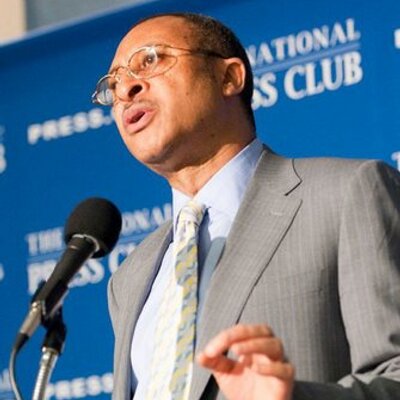
The only man who will tell you exactly what he has done and still encourage you to verify his claims, knowing full well that you will find the evidence. Peter Obi is the very definition of transparency, accountability, and confidence in human form.


Jerry Agulanna retweeted

Guys the INEC Chairman Prof. Joash Amupitan will have no place to hide if he rigs the 2027 election. It will be a total clearance.
Himself, the Wife and Family Members phone numbers.
08035074099
08033803961
08033491931
08036946550
You can say hello to them.
Ladies and gentlemen, I present to you his wife, Prof. Rachel Yemisi Amupitan.
Work at University of Jos
Residence G62 Otun Quarters, Aiyetoro Gbede, Kogi State
Now you know where to go and say hi to her. I will share their Abuja family residence address soon.
Jerry Agulanna retweeted
List of RECs (Assigned State | Name | Phone numbers)
North Central
-Benue: Aminu Kasimu Idris (0703 084 1229)
-Kogi: Shehu L. Wahab (0803 604 8515 / 0818 806 9859)
-Kwara: Dr. Ahmed Yushau Garki (0803 686 4908)
-Nasarawa: Mohammed Abubakar Sadiq (0803 700 3879)
-Niger: Dr. Agundu Oliver Tersoo (0806 233 2992)
-Plateau: Prof. Samuel G. Egwu (0803 715 9018 / 0805 572 1224)
North East
-Adamawa: Mohammed Bulama Nura (0803 613 3341)
-Bauchi: Alhaji Umar Ibrahim (0803 525 9082)
-Borno: Ibrahim Abdullahi (0706 661 6665)
-Gombe: Mukhtar Gajiram Umar (0803 287 7150)
-Taraba: Dr. Sa’ad Umar Idris (0806 561 8951 / 0805 454 2665)
-Yobe: Abubakar Ahmed Ma’aji (0803 311 9968)
North West
-Jigawa: Prof. Muhammad L. Bashar (0805 986 7395)
-Kaduna: Prof. Saidu Babura Ahmed (08034536755)
-Kano: Amb. Abdu Abdussamadu Zango (0809 211 9754)
-Katsina: Prof. Yahaya Makarfi (0805 469 9205)
-Kebbi: Abubakar Sarkin Pawa Dambo (0806 555 1901)
-Sokoto: Umar Yusuf Garba (0803 701 2175 / 0808 888 9916)
-Zamfara: Dr. Isah Mahmuda (0901 696 3773)
South East
-Abia: Prof. Sylvia Uchenna Agu (0803 560 8711)
-Anambra: Mrs. Queen Elizabeth Agu (0803 575 7191)
-Ebonyi: Mrs. Onyeka Pauline Ugochi (0803 428 3489)
-Enugu: Dr. Chukwuemeka J. Chukwu (0803 267 6845)
-Imo: Chukwuemeka Ibeziako (0803 343 0009)
South South
-Akwa Ibom: Prof. Anugbum Onuoha (0803 309 3908)
-Bayelsa: Mallam Isah Shaka Ehimeakhe (0802 372 4320)
-Cross River: Prof. Gabriel Yomere (0803 754 4206)
-Delta: Sir Etekamba Udo Umoren (0803 670 2619)
-Edo: Obo O. Effanga (0803 324 8854)
-Rivers: Dr. Johnson Alalibo (0803 377 1182)
South West
-Ekiti: Dr. Bunmi Omoseyindemi (0802 320 6303)
-Lagos: Prof. Ayobami Salami (0803 376 1041)
-Ogun: Mrs. Saseyi Feyijimi Ibiyemi (0803 360 4033)
-Ondo: Dr. Agboke Mutiu Olaleke (0803 743 5880)
-Osun: Barr. Oluwatoyin Babalola (0803 590 3481 / 0903 903 3195)
-Oyo: Dr. Tella Adeniran Rahmon (0803 362 8435)
-FCT: Dr. Hale Gabriel Longpet (0813 479 8299)
More details of each of them are being produced including their family and acquaintances.
Next would be the details of all the University Professors assigned as returning officers for each state & FCT.
Jerry Agulanna retweeted

So thousands of Anambra first class graduates was getting 1,000,000 Naira (12,000,000 today) start up grants in Anambra under Obi?
Yet he left money in the Bank!
Omo!

INEC has announced a nationwide BVAS mock accreditation exercise for November 28.
nice one, but Nigerians need more than assurances. We need transparency, credible testing and clear evidence that the weaknesses exposed in 2023 have been addressed completely.
The credibility of the 2027 elections starts now.
32
Jerry Agulanna retweeted

“I will embark on a Grant revolution with 7 trillion naira to 4M Entrepreneurs targeting 35.4M jobs in one year”
~~ Obi Peter.
Jerry Agulanna retweeted
NIGERIANS, GO AND VERIFY (1)
Introduction: Governance as a Public Trust
Peter Obi
When I took office as Governor of Anambra State, our beloved state was at a critical juncture. Leadership had become increasingly disconnected from the people, and many of the essential institutions needed to support a modern society were weak, ineffective, or absent altogether. We understood that governance could not continue according to established habits. It needed to be reconceived as a solemn public trust founded on transparency, prudence, accountability, and demonstrable results.
Our governing philosophy rested on four principles: character, competence, capacity, and compassion. We understood that leadership was not a platform for self-promotion, political slogans, or the pursuit of personal acclaim. Its purpose was to improve the circumstances of ordinary citizens. It meant converting public resources into concrete benefits and ensuring that government’s foremost responsibility was to serve the people. Achieving this demanded more than good intentions; it required a clear vision, careful planning, and disciplined execution.
Among our earliest findings was that the state lacked a unified development plan to direct its priorities and determine how resources should be allocated. We therefore promptly created the Ministry of Economic Planning to establish the institutional foundation for deliberate, coordinated, and sustainable development. After completing the necessary groundwork and consultations, we launched the Anambra Integrated Development Strategy (ANIDS).
At that time, the Millennium Development Goals (MDGs) were being pursued worldwide across eight clearly defined priorities: eliminating extreme poverty and hunger; achieving universal primary education; advancing gender equality and empowering women; reducing child mortality; improving maternal health; combating HIV/AIDS, malaria and other diseases; promoting environmental sustainability; and fostering a global partnership for development.
We adopted ANIDS as our overarching development philosophy and strategic framework for advancing these objectives, tailoring them to the distinctive circumstances, needs and development priorities of Anambra State. Instead of viewing the MDGs as remote international benchmarks, we worked to convert their aims into practical policies, programs and measurable results that would produce tangible improvements in the lives of our people.
We also undertook a deliberate effort to redefine the state’s identity, changing its public image from ‘Home for All’ to ‘The Light of the Nation’. This was not merely a change in slogan; it reflected our resolve to restore public confidence in government, renew civic pride and show that Anambra could serve as a model of purposeful leadership and development.
The ANIDS Blueprint: A Comprehensive Framework for Development
ANIDS served as the foundation for our commitment to broad-based and balanced development. We did not accept the idea that government could focus on a single sector while leaving others behind. We recognized that education, healthcare, infrastructure, security, agriculture and capable public institutions were mutually dependent. Advancement in one area could not be sustained without commensurate progress elsewhere. Accordingly, we pursued development across every sector, guided by defined priorities, disciplined planning and prudent stewardship of public resources.
Central to this vision was the restoration of the dignity of the Anambra person. We understood that dignity could not be restored through rhetoric alone. It was evident in the condition of roads and other infrastructure, the availability of healthcare, the quality of education, the performance of public institutions and the way government treated its workers, pensioners and traditional institutions.