
Most recently Chairman and Councillor Suffolk County Council; previously Geologist. Irish national, US/ GB citizen. All thoughts are my own.
Suffolk England
Joined April 2015
- Tweets1.7K
- Following656
- Followers390
- Likes5.7K






Pinned Tweet
This is tragic and not just for farmers and those who would wish to farm in the future. The implications of net zero extend beyond all conceivable limits and will, if allowed to continue, destroy those things that are of most real value to all of us.

A tenant farmer in the Cairngorms says land that sold for £500 an acre a few years ago now goes for £5,000. He is being moved off ground his family has worked for generations, because he cannot outbid the people buying it. The buyers are corporations, and they have no intention of farming a single acre of it.
Here is how the trick works. A company keeps emitting carbon exactly as before. Same factories, same flights, same supply chain, same product. Then it buys a Scottish hillside, plants some trees, and announces to the world that it is now carbon neutral, or, if it is feeling brave, carbon negative. The emissions never fell. It simply bought a landscape to point at.
Take BrewDog. In 2020 it bought a 9,300-acre Highland estate, propped up with public grant money, and promised a million trees and the crown of the world's first carbon negative beer business, removing twice the carbon it emitted, forever. By 2023 roughly half of the 500,000 trees it had managed to plant were dead, killed by drought, with critics noting the planting was drying out the peat and releasing carbon of its own. The advertising regulator ruled its carbon-negative claims misleading. In 2024 it quietly dropped the badge and dismissed the entire carbon credit market as a flood of cheap schemes whose benefit was "questionable, maybe even non-existent." Then it sold the estate to a firm whose actual business is selling carbon offsets.
That is the whole model in one story. Public money in. Dead trees out. A green halo worn for four years and then dropped. The farmer who used to be on that land, gone. The hillside passed to a company that exists purely to sell other people the right to keep polluting.
This is no fringe case. In one recent year, half of every estate sold in Scotland went to investment funds, corporations and charitable trusts rather than anyone who would farm it. A third of the deals for plantable land are now done off-market, in secret, precisely so the local community never gets the chance to bid.
So this is what net zero looks like on the ground. A man who produced food is priced out of his own glen. A corporation that produced emissions buys the glen, calls itself a force for good, and sells the carbon. The land stops feeding anyone. Nobody's emissions actually went down by a gram.
The food was real. The farmer was real. The carbon saving is a line in a slide deck.
And we have somehow decided the villain in all this is the man with the sheep.

Jessica Fleming retweeted

People ask me why I'm so obsessed with ruminants. I've given it some thought, and my conclusion is that I'm not obsessed enough.
A cow walks onto a wet hillside that grows nothing a human can eat, puts her head down, and comes back with steak, butter, cream and a pair of boots.
She does it with a 150 litre fermentation tank she carries inside her, stocked with more bacteria than there have ever been people, which she feeds, waters and keeps at blood heat herself. Grass goes in. The bacteria take apart the one thing no animal can digest, and she lives on what they make. Then she digests the bacteria as well. Nothing is wasted. Even the fat comes out the far side rebuilt into something stable enough to fry in.
Fuel: rain and sunlight. Emissions: next year's grass. She repairs herself, builds her own replacement every spring, and improves the ground she is standing on while she works. The finest engineers alive have spent billions trying to copy one chamber of her stomach in a steel shed, and so far they have made a paste.
We have leaned on that machine for everything. The word capital comes from cattle, because a herd was the first bank. Domesday Book is written on sheep, and so was every deed in England for 500 years. Ruminants clothed our armies, lit our houses and carried our laws. Civilisation is a thing that happened to people who kept them.
And they are such good company about it.
A sheep remembers fifty faces for two years, which is forty-six more than I manage. A cow has a best friend, and her heart rate drops when that friend is beside her. A goat that cannot solve a problem will turn and look to you for help, as a dog does, and then ignore your advice. Let a herd out onto spring grass after a winter indoors and half a tonne of animal will skip.
They ask for grass, rain, and to be left to get on with it.
After ten thousand years of feeding, dressing and housing us, they will still walk over to the gate to see who you are.
So no, I will not be calming down.

Where else is this happening? Shame on the industries that have no duty of care and abandon responsibility for the cheap rubbish from which they profit.
There is a mountain of unworn clothes in the driest desert on earth, large enough to be photographed from space. It grows by 39,000 tons a year and almost none of it will ever rot.
The Atacama, in northern Chile, is a place where it may not rain for a decade. On its edge is a duty-free port called Iquique. Every year about 59,000 tons of clothing arrives there from Europe, America and Asia. It is last season's stock that never sold, and the bags people leave at charity shops.
Dealers pick through it for anything they can resell across South America. Two thirds of it is worthless. Nobody will pay to ship it back out, so lorries drive it into the desert at night and tip it.
The local landfill refuses to take it. The reason given is that the clothing does not biodegrade and is full of chemicals. Most of it is polyester, which is plastic, and in a place with no rain and no soil life it will lie there for centuries. Some of it is set alight, and the smoke drifts over a town of 100,000 people.
In 2025 a Chilean court ruled that the dumps had done serious damage to the land.
For most of history this could not have happened. Clothes were wool, linen and leather. They were worn out, handed down and patched, and at the very end a rag merchant paid for the scraps. In Yorkshire, from 1813, old woollens were shredded and spun into new cloth. Anything left went on the fields, where wool breaks down in months and feeds the grass.
Nobody ever had to find a desert for worn-out wool. We invented a fabric that cannot die, and then we started making it to be thrown away.

Net zero is driving the willfull destruction of the natural world, a greater con could not be imagined.

UK 🇬🇧
The Drax net zero con-trick - where a massive polluter has become a net zero manipulator. Yet more net zero environmental destruction masquerading as “saving the planet”.
The Labour government is trying to force through an extension that would give Drax an estimated £1.8bn in taxpayer funded subsidies on top of the £11bn it has already received.
Drax has burned an amount of wood equivalent to 300 million trees. Burning wood creates 18% more CO2 emissions than coal.
And here’s the con trick: Drax is a sneaky way of exporting our CO2 emissions. We pay billions of pounds to cut down ancient forests in the US and Canada, ship the wood across the Atlantic in diesel tankers, then burn it in a Yorkshire-based power station.
And here’s the kicker - the CO2 emissions tally is not counted against the country that burns it, but the country that grows it. So Drax emissions are counted against the countries who grow and export the wood for Drax - like Canada and USA…not UK who burn it. So the UK can reduce CO2 figures by importing the burning wood grown elsewhere.
A gigantic net zero con-trick.

How vile. But this behaviour is now backed by the planning system which is implementing net zero at any price, even that of the natural world.

The premise of being ready by 2030 is falling apart fast.

Jessica Fleming retweeted

WOOL ISN'T WORTHLESS 🐑💚
Can we talk about how ridiculous it is that such an incredible natural material is so often undervalued?
Let's get a few things straight 👇
Wool is a natural, renewable fibre
It's biodegradable under suitable conditions, unlike many synthetic fibres
It's breathable, insulating and useful for clothing, carpets and insulation
Many sheep need shearing for their welfare, whether the fleece is worth much money or not
Yet for some farmers, the return from selling wool doesn't even cover the cost of shearing
Think about that
We live in a world increasingly concerned about plastic, synthetic materials and sustainability
And here we have a natural fibre growing on the backs of British sheep
Surely we can find more ways to value it
British wool deserves a future, not a waste pile 🐑🇬🇧

Some rare good news. Well done AMASS.

BREAKING: GALWAY COUNTY COUNCIL REFUSES BELLVILLE SOLAR FARM
Galway County Council has this morning REFUSED planning permission for @power_capital 's 239 hectare Bellville Solar Farm (26/61362), citing 11 separate reasons including insufficient legal consent for the land, unresolved risk to Lough Corrib SAC, and a "deficient and incomplete" archaeological assessment.
A huge thank you to everyone who took the time to make a submission, raise concerns and stand up for their community.
Today, we celebrate. Well done to all the community.

Jessica Fleming retweeted

Reaching Net Zero by 2050 would require mining 4.5 million tons of copper, 940 million tons of nickel, 9 billion tons of graphite, and 4 million tons of germanium.
At current global mining rates, that scale of extraction would take more than 1,000 years.
Mining capacity cannot be multiplied by orders of magnitude in just 24 years. Permitting timelines alone are measured in decades, and energy inputs rise as deposits degrade.
Most constraints are physical, not political.
Net Zero targets violate material reality.
They're never going to happen.
Jessica Fleming retweeted

📰📰Suffolk County Council News: Cllr Tristan Gale Cabinet Member for Planning meets East Suffolk communities who are suffering from a colossal amount of major energy infrastructure projects
Cllr Gale said: "It is imperative that we continue to listen to communities across Suffolk and understand first-hand how major infrastructure projects are affecting people's lives, local environments and the places we all care about.
"Suffolk has the highest concentration of National Strategic Infrastructure Projects in the country. It is wholly unacceptable for us to find ourselves in the position that our beautiful countryside and coastal towns become the backstop for this government to carve up Suffolk at the detriment of our local communities
"We will continue to objectively engage with project promoters and government, while fighting for the interests of Suffolk's communities and environment. We will work to ensure that the impacts of these developments are the best deal that we can get for our residents making sure that opportunities to reduce disruption and improve coordination are always explored.
"As further infrastructure projects land in Suffolk, it is essential that communities remain at the heart of the conversation and that those responsible for delivering projects take ownership to minimise the impacts." 📰📰
suffolk.gov.uk/council-and-d…
It is difficult to oppose these useless and destructive schemes, the net zero accounting methods badly need to be reexamined to make sense from both social and environmental perspectives.

Thing is, Omnes Capital and their CEO Serge Savista can use their Irish subsidiaries to impose huge personal cost on the families in our parish. The Omnes subsidiaries submit slip-shod hide the ball plans for their solar plant, and the targeted community has to dig deep and pay for experts and assorted counsel to defend our community from these absentee SolarLords who have zero stake in our community and couldn’t give a crap about the costs it imposes on us. To be clear, the financial costs are real, the non-financial costs are even greater.
‘Hundreds of submissions against Monivea solar farm’ galwaybayfm.ie/galway-bay-fm… via @gbayfm

Jessica Fleming retweeted
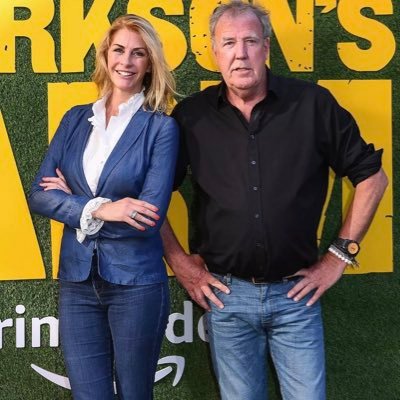
How the public can help back British farming!🇬🇧
British farming will not be saved by warm words on Back British Farming Day and forgotten in the supermarket aisle the rest of the year. The public already trusts farmers. The practical test is whether that trust becomes a market - and a political signal - that making food here, to British standards, is still worth doing.
1. Buy British on purpose -
Look for clear UK origin, the Red Tractor logo, and the British Lion mark on eggs. “Packed in the UK” is not the same as grown or reared here. Where price allows, choose British meat, dairy, potatoes, cereals, veg and fruit first. Consumer demand is what keeps supermarket buyers committed to UK supply. Awareness of Red Tractor is now around three-quarters of adults - use the mark.
2. Shorten the chain -
Farm shops, farmers’ markets, veg-box schemes, pick-your-own and direct meat boxes put more of the retail price with the producer. Ask who grew it. Most local sellers will tell you.
3. Eat with the British seasons -
Asparagus in spring, berries in summer, brassicas and roots in winter, British apples in autumn. Seasonal buying reduces pressure for out-of-season imports and matches what UK growers can actually supply well.
4. Ask when you eat out -
Pubs, cafés, restaurants and workplace canteens respond to customers. “Is the beef British?” and “Do you use British milk and eggs?” are fair questions. Repeat custom for places that can answer yes is more powerful than a one-off complaint.
5. Push public kitchens -
Schools, hospitals, care homes and councils buy food at scale. Many people already think those kitchens should serve more UK-grown food. Write to the head teacher, governors, trust or councillor. Public procurement that prefers British produce to equivalent standards is one of the highest-leverage changes available.
6. Cut waste -
Wasted British food wastes the farmer’s work, water, feed and fertiliser. Planning meals, storing produce properly and using leftovers is unglamorous support, but it is real.
7. See a farm -
Open Farm Sunday and farm open days close the gap between field and fridge. People who understand how food is produced are more likely to pay for standards rather than only for the lowest sticker price.
8. Amplify farmers, not just slogans -
Follow actual farmers and organisations such as the NFU. Share what they are dealing with — weather, disease, input costs, labelling — without turning every post into a culture war. Quiet, factual support reaches people who will never attend a rally.
9. Tell your MP -
Trade deals, import standards, planning for reservoirs and livestock buildings, seasonal labour, and whether public money rewards food production as well as environmental goods all get decided in Westminster and the devolved capitals. A short, specific email beats a vague social-media pile-on.
A note on cost -
Household budgets are tight. Nobody should be lectured for buying what they can afford. The useful habit is a hierarchy: British when the difference is small; British for the items where standards matter most to you (often meat, eggs and dairy); local or seasonal when you can. Even switching a few weekly staples adds up across millions of baskets.


Jessica Fleming retweeted

A Burnham claimed yesterday that the 2016 vote for Brexit ushered in a decade of low growth.
He’s right that there’s been low growth, though not just in Britain, which suggests Brexit is not quite the explanation he thinks it is.
I think Brexiteers hard pressed to show that Brexit has been good for growth.
But Remainers lack evidence it has crippled or undermined growth.
In the decade from mid-2016 til mid-2026, the UK had the 3rd biggest growth in real GDP (13%) of the G7. Well behind the US (27%) and Canada (20%) but ahead of France (12%), Italy 10%, Germany 8%, and Japan (6%).
I think we can all agree Japan made a big mistake leaving the EU.
Jessica Fleming retweeted
Europe calls biomass "clean" but the reality is brutal.
To power its "green transition," the EU is burning millions of tons of wood pellets every year, shipped in from the US and Canada.
Europe is cutting down forests halfway around the world, grinding them into pellets and shipping them across the Atlantic to burn in its power stations.
Unsurprisingly, the total emissions here are higher than simply burning coal, according to peer-reviewed studies by the EU's own scientific advisors. But countries like the UK, Denmark and the Netherlands do it anyway, because it technically counts as zero carbon emissions.
Burning forests and calling it "green" isn't climate policy, it's creative accounting.

Jessica Fleming retweeted

1st September at Old Hall Farm, Woodton Nr Bungay, Rebecca Mayhew, Sarah Juggins and I will be addressing 'Countryside Matters'.


This is deliberately not disclosed in discussions about so called renewable energy, neither is the cost of the various props needed such as more extensive transmission systems; new substations, battery storage and synchronising condensers, for a start.

Wind and solar deliver some of the most expensive electricity because they need near full gas backup to keep the grid steady.
A 100 megawatt wind farm still needs roughly 100 megawatts of fast start gas power behind it - another $100 million cost.
Consumers pay for the backup, developers collect the subsidies, and that's before counting the fiberglass blades that can't be recycled, the concrete bases that can't be reused, and the rare earth mining that makes it all possible.
They call it 'clean energy' but it's built on coal, gas, concrete - and deceit.

Jessica Fleming retweeted

It’s probably worth saying at this point something I’ve said before, lest it gets lost in the sands of time and political rhetoric about immigration and illegal entry, and how we got to this point.
I was an immigration officer in the 1970s and 1980s. The power to grant or refuse leave to enter was vested to me in law under the authority of a Chief Immigration Officer. Anyone arriving without a valid passport (and a visa if required) was refused entry at the border, detained, and removed on the next available ship or aircraft whence they came. This was under the Immigration Act 1971 (still
In force although amended massively by successive governments ever since). It was some 20 - 30 years after the 1951 ECHR and the 1951 Refugee Convention was signed.
Nobody claimed asylum. Nobody claimed human rights. No country refused to take people back. Those who had destroyed their passports were removed on a letter, signed by me.
Fast forward 50 years and now anyone who arrives at the border without a passport or a visa automatically claims asylum or human rights. Immigration Officers of today (or Border Force Officers) are thereby disempowered to send them back before their asylum claims or human rights claims are considered. And their appeals are dismissed. They cannot be detained in the meantime because under the Hardial Singh principles immigration detention is only lawful if there is a realistic prospect of removal within a reasonable period of time. Which there isn’t of course. So the only option available to the officer is to grant temporary permission whilst these applications are considered. And if the applicant claims to be destitute they must be given support and accommodation at public expense. Because failure to do so would put the government in breach of A3 of the ECHR (inhuman and degrading treatment). And even if the applicant is eventually refused protection - and loses their appeal - we need to get a passport to remove them on. And they often refuse to comply with the documentation process. Even if they do many countries still refuse to issue them with a passport and refuse to take them back. And even after all this they can abscond and if ever caught start the whole process again.
This is where we are and so far no government has been able to break the Gordian knot that ties the hands of our officers. In order to do that they would have to reverse decades of laws and judgements - and demur from long held well intentioned international conventions. And probably look at the British Constitution itself to curtail the opportunity of political opponents to use the courts to thwart the will of Parliament.
This is not to criticise or favour any political party or policy. It is simply a matter of record to inform the next generation of politicians and the civil servants charged with the duty of implementing any new laws or policies they may introduce.
And to ask why - if we did it back in my day - why can’t we do it now?
I even wrote a book about it. I hope someone keeps a copy for posterity - or even history - when thinking about how to fix this seemingly intractable problem.
amzn.eu/d/06wM4s2h

