

Stockholm
Joined December 2010
- Tweets1.4K
- Following122
- Followers188
- Likes2.2K



Jan Tryggvason retweeted

Capitalism has a win condition. Socialism does not.
Here's why, explained so simply a 10-year-old could get it. It starts with a book written in 1944 by an Austrian economist named Friedrich Hayek: The Road to Serfdom.
Imagine a classroom of 30 kids. One day the teacher says: "From now on, I decide what everyone eats for lunch, which games you play at recess, and who sits next to whom. It's fairer that way."
First problem: the teacher doesn't know what you like. You hate carrots. Your friend is allergic to peanuts. Lucas wants to play football, Emma wants to draw. 30 kids, 30 different wishes. Nobody can know all of that, not even the smartest teacher on Earth. Hayek called this the knowledge problem. The information needed to run an economy is scattered across millions of heads, and it can't be gathered in one office.
Second problem: the kids start fighting. "Why does he get the window seat?" "Why football again?" Before, everyone just chose for themselves. Now every choice is a fight, because every choice is made for everyone.
Third problem: the class can't agree on a plan, so someone says "we need one person in charge who just decides." This is Hayek's key insight. Planning doesn't fail because planners are evil. A plan needs everyone to agree on the same goals, and free people never agree on everything. So the plan needs force to work.
Fourth problem, and it's the scariest one: who wants that job? The kind kid doesn't want it, because the kind kid doesn't want to force 29 people to eat carrots. The job attracts the one who likes giving orders and doesn't mind punishing those who disobey. Hayek wrote a whole chapter on this, called "Why the Worst Get on Top." It doesn't happen by accident. It happens by selection.
Here's the trap. When the person who controls your lunch also controls your job, your home, your shop and your newspaper, they control your whole life. You can't say no, because there's nowhere else to go. Controlling the economy doesn't mean controlling one part of life. It means controlling the means to every goal you have.
That's the road to serfdom. Nobody votes for a dictator. People vote for "someone should fix this," then for "give them more power to fix it," and one day they wake up with no one left to say no to.
The USSR, Maoist China, Cambodia, North Korea, Cuba, Venezuela. These are different countries with different cultures and languages, and the story has the same ending every time. When a script produces the same ending every time, it isn't bad luck. It's the script.
Now capitalism. Back to the classroom. Instead of one teacher deciding everything, every kid can trade. You give me your carrots, I give you my apple, and we both walk away happier. Nobody needs to know what everyone wants, because prices do that job. A price is a message telling millions of strangers what's scarce and what's wanted, with no one in charge.
That's the win condition. In capitalism, you get rich by making something other people freely choose to buy, so your success depends on serving others. In a planned system, you get ahead by pleasing whoever holds power. One rewards usefulness. The other rewards obedience.
And this isn't theory. Two centuries ago, almost every human being was extremely poor. In 1990, about 38% of humanity still lived in extreme poverty. Today it's under 10%. More than a billion people escaped it in a single generation. It happened when China, India, Vietnam and South Korea opened up to markets, trade and private enterprise. The largest reduction in poverty in human history came from letting people trade.
So why do so many people hate capitalism?
Because what they hate usually isn't capitalism.
They hate the bank that got bailed out with their taxes while they lost their house. They hate the giant company that writes the regulations so no startup can compete with it. They hate rent they can't afford because building new homes has been made nearly impossible. They hate the lobbyist who gets a subsidy while the small business owner drowns in paperwork.
Look closely at each one, and you'll find a state handing out privileges. A bailout is not the market. The market would have let the bank fail. A regulation written by incumbents is not competition. It's protection from competition. None of this is capitalism. It's cronyism, which is what happens when businesses stop competing for customers and start competing for politicians.
People see the symptom and blame the wrong cause. They say "capitalism failed" and ask for more state. That gives more power to the same people who created the problem, and it puts us right back on Hayek's road.
The answer to bad capitalism isn't less freedom. It's less privilege. That means fewer bailouts, fewer protected incumbents, fewer permits, and more people allowed to build, compete and trade.
Capitalism has a win condition: make things people want. Socialism has an end condition: someone has to be in charge. And history keeps showing us who ends up in that chair.

Jan Tryggvason retweeted

Tesla Model Y just became the best-selling car in Germany
An American EV beat the Volkswagen Golf in its own home market. The Golf has been Germany's best-selling car every year since 1981
September registrations:
Tesla Model Y: 8,038
Volkswagen Golf: 6,580
Model Y took #1 across all cars, not just EVs, and Model 3 ranked #6 overall
Tesla's German registrations jumped 268.7% year over year to 12,552
Tesla is taking on Germany's biggest automakers on their home turf, and winning

Jan Tryggvason retweeted
Tesla just took the top two spots in Europe's entire car market
September 2026:
#1 Tesla Model Y: 40,971
#2 Tesla Model 3: 25,057
#3 Volkswagen Golf: 18,088
The two best-selling cars across every brand and every fuel type were Teslas
Tesla recorded 66,035 registrations in total for the month, representing around 98% of the market

Jan Tryggvason retweeted

Varför vi inte har självkörande taxi tjänst i Sverige 🇸🇪
Alla som vill är fria att ladda ner denna videon och dela på era egna sociala medier.
Jan Tryggvason retweeted

European petition for EU-wide approval of Tesla FSD (Supervised) with the same capabilities as in the US — no Europe-only speed-offset restrictions and no forced name change. Sign and share the petition!
c.org/QRNq4B5Q5W
@elonmusk @Tesla @teslaeurope @EU_Commission @wholemars @SawyerMerritt


Jan Tryggvason retweeted

Här kommer en liten guide till alla er som ska ut och flyga. 🛫
1. Vid säkerhetskontrollen, förbered er lite och lägg alla nycklar, telefon, skärp och anda lösa grejer i jackficka på vägen fram så kan ni bara lägga upp jackan på bandet sen när ni kommer fram. Och ta den när ni är klara på andra sidan. Då slipper alla andra stå och vänta i evigheter för att inte ni vill förbereda er lite utan ska stå och pilla med detta framme vid bandet.
2. På planet; släng snabbt upp väskan i ert overhead compartment och sätt er ner! Om ni ska ha hörlurar, kuddar och skit så går det bra att plocka ner dessa efter man lyft eller varför inte medan man går i gången mot sin plats.
Och kom sen ihåg dessa enkla steg nästa gång ni ska ut och flyga.
Tack för er omtanke och flyg säkert!
Unless you don't actually need to focus on driving at all

We've been saying for years that controlling the basic functions of your car through physical buttons or controls is easier and safer than using touchscreens. The latest round of vehicle safety tests confirms this:
euroncap.com/press-media/but…
Alltid varit min tanke med just ETF och månadssparande. Man kommer att få betala rejält med courtage osv efter åratal av sparande + vinst, även om man har köpt via noll courtage från början med Nordnet.

Var går brytpunkten för när en ETF lönar sig? Jämfört med Avanza Global tar det drygt 14 år innan ETF:en är billigare. ETF:er är sällan bra för månadssparande.
smaspararguiden.se/jour/var-…

"Efter att Magdalena Andersson återfått uppdraget bjöd C in S, V och MP till en gemensam lägesgenomgång tillsammans med andra samhällsaktörer. Genomgången är tänkt att ske på fredag."
De jobbar snabbt lol. Känns som att det borde vara lite mer sense of urgency.

Sverige står utan regering och Centerpartiet kvar vid sina röda linjer. Nu svarar näringslivsföreträdare partiledaren Elisabeth Thand Ringqvist – och säger vilka rödgröna förslag de motsätter sig. 100.se/artiklar/analys/cente…

Alex borde ta ett snack med bedrägeriavdelningarna på Klarna, Walley mm samt Postnod så skulle han förstå
dn.se/sverige/alex-schulman-…


Jan Tryggvason retweeted
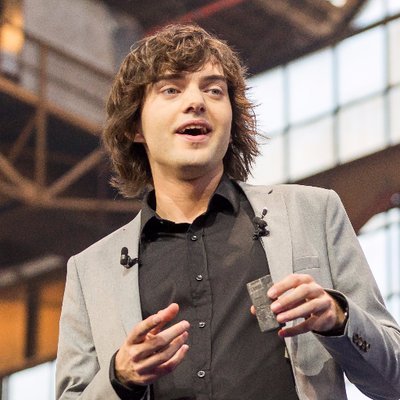
Pretty wild times at our Guatemala projects.
In just two weeks, we extracted 593 (!) truckloads of trash that would otherwise have flowed into the Caribbean.




Jan Tryggvason retweeted

Why are ketchup bottles often labeled "tomato ketchup"? Is this not redundant?
Tomato ketchup is the latecomer. For most of ketchup’s life, the word did not mean “sweet red stuff for fries.” It meant a dark, salty, shelf-stable sauce that tasted like the ocean, a forest floor, or a barrel of walnuts.
When Heinz stamped Tomato Ketchup on a bottle in 1876, it was not being fussy. It was warning you that this one had fruit in it.
The name comes from Hokkien Chinese kê-tsiap (also written kôe-chiap): a fermented fish brine from coastal Fujian, cousin to the fish sauces of Southeast Asia. British and Dutch traders met versions of it in the 1600s, liked the punch of salt and umami, and carried the idea home. They did not have the same fish, or soybeans. So they improvised.
“Ketchup” became English for any long-keeping savory liquor you could bottle. The star of 18th- and 19th-century Britain was mushroom ketchup: whole mushrooms packed in salt until they wept a dark juice, then boiled with mace, pepper, and sometimes anchovy. The result is thin, almost black, closer to Worcestershire than to anything you would put on a burger. Geo Watkins still bottles it in the UK; chefs use it in gravies and stews, not as a dip.
Walnut ketchup was a household staple too. Jane Austen’s circle kept a green-walnut recipe—pounded unripe walnuts, vinegar, salt, then cloves, mace, nutmeg, horseradish, and shallots. Cookbooks also offered oyster, cockle, peach, plum, and cucumber versions. Ketchup was a method, not a flavor.
Tomatoes arrived late, and first in America. James Mease of Philadelphia published a “love apple” ketchup in 1812. Early tomato versions were thin, watery, and prone to spoiling; the fruit’s high water content fought preservation. Heinz fixed that in 1876 with ripe red tomatoes, more vinegar, and more sugar—thick, sweet-sour, and stable enough to sit on a shelf. The label Tomato Ketchup was a product differentiator in a market still full of mushroom and walnut bottles. The tomato version won.
The others did not vanish; they just stopped being what most people meant by the word.
They are still around. Mushroom ketchup remains a British cooking sauce. In the Philippines, banana ketchup is not a novelty. Food chemist María Orosa developed it in the 1930s so the country would not have to rely on imported tomatoes; saba bananas, vinegar, sugar, and spices, dyed red so it looked like the American bottle people already expected. Wartime shortages made it essential.
It is still the default on tortang talong, fried chicken, and the sweet hot-dog spaghetti that defines Filipino-American fast food.
So the bottle says “tomato” because, for a long time, that was the surprising part. Ketchup started as fish. It spent two centuries as mushrooms and walnuts. The red squeeze bottle is just the version that conquered the picnic table—and even that one has a banana-colored cousin that refuses to leave.


Jan Tryggvason retweeted

Kleiner Vergleich Starship mit Space Shuttle:
- Space Shuttle konnte in seinem 307m³ Frachtraum 24 Tonnen in niedrigen Erdorbit bringen.
- Starship kann in seinen 1000m³ mehr als 100 Tonnen Nutzlast befördern.
Die Wiederverwendbarkeit des Space Shuttle scheiterte an den Kosten für die Wiederaufbereitung nach einer Landung: Dies betraf vor allem die Triebwerke und den Hitzeschild.
Der eigentliche Test bei Starship ist daher nicht die Frage, ob es Orbit erreicht und Booster & Schiff am Tower gefangen werden können, sondern ob die Raptor-Triebwerke und die neue Hitzeschildtechnologie wiederholte Starts aushalten.
Größenvergleiche in den Bildern:

