

@GoogleDeepMind generative AI models + agents | getting great tech into the hands of great creative people
Find me onstage and online
Joined January 2009
- Tweets8.1K
- Following4.8K
- Followers11.8K
- Likes19.7K




Kory Mathewson retweeted

we're on a mission to end AI slop, and we're hiring (a lot)!
looking for polymaths to join us:
- research engineers into HCI, aesthetics, evals, and post-training for non-verifiable domains
- engineers who've built RL environments, and have an eye for design
- AI engineers who've worked on memory, context, and observability
if you’re deeply technical but have a creative side to you, you love ambiguous, nuanced, hard problems, that require knowledge across many domains, you’ll have fun here
tastelabs.com/careers or DM me


Kory Mathewson retweeted
Generative AI doesn’t make you creative. It rewards you for already being metacognitive.
New study in Journal of Applied Psychology --
Those with high metacognition (planning/monitoring thought) saw large creative gains from AI.
Those without it? Zero significant gain.
The skill of 2026 isn't "using AI."
It's "managing your own mind while using AI."


Kory Mathewson retweeted

I used Gemini 4 Argon to make Subway Surfers for the new flying Tesla Roadster 🚀
Fly over moving traffic, hit the thrusters to barrel roll in the sky, and collect air power-ups to set a high score.
Play + code below!
Kory Mathewson retweeted

I found Argon could sketch pretty quickly when using a custom dsl tool it had built for the job.
So I asked it to try animating a scene by sketching the next few frames from scratch each time, rocking the motion back and forth a bit, and iterating to make a short clip.
Then I asked it to add cel shading and transparency and to put it all together onto a background.

Kory Mathewson retweeted

Dusting off this tweet from April because this gap in shared understanding of LLM capability is *widening*. It's now less "two groups of people speaking past each other" and more a sharp funnel.
- Napkin math somewhere around 6B people (~75% of the population) have barely come in contact with LLMs at all.
- Around 1-2B (~20%) are casual and infrequent users of free-tier ChatGPT-like products. This group sees derpy chatbots and treats them a bit like a better Google search, a writing aid, or etc. Maybe an agent tries to book you a flight. I have non-tech friends who (reasonably, imo) say they have not much use for it at all. Even many professionals outside of math&code are in this tier. For example, execs and many other functions spend a lot of their time talking to other people, so while they understand what is happening intellectually, it is still second-hand and a bit abstract.
- Now we get to professional use of frontier-grade LLMs in math&code. Somewhere around 20M people (0.2%) see first-hand that large, complex projects that used to take them weeks/months can now be completed by agents with a prompt. Building apps, copying apps, translating apps, decompiling apps from binaries... This has all happened very quickly and recently - less than 1 year ago, I was writing code manually by hand, typing memorized computer code commands into a code editor character by character, occasionally pressing Tab to autocomplete a little chunk of code.
- And finally we get to the ~5,000 people (~0.00006%) with access to frontier-grade systems internally. The external world has seen the preview. It looks like swarms of thousands of agents collaborating over weeks on software mega projects: minting zero days, running cyber attacks and defenses at machine speeds, discovering new science, advancing the frontier of mathematics. Things that would have taken top professionals in the industry years of work. Meanwhile, human review and comprehension are starting to fall behind. For example, people are still involved in the "archeology" of the OpenAI-HF incident from many months ago. Mathematicians may be poring over the 722 manuscripts on frontier mathematics for a while.
The funnel is driven by a combination of factors:
1. The impact scales with ambition, problem size, and horizon. A question with a paragraph answer barely stresses the system. You need a reservoir of big, difficult problems that you really care about. This aspect drives the consumer / professional dimension of the funnel.
2. The jaggedness of the system (which I have written about a lot separately). Capability peaks in domains that are digital, verifiable and economically valuable. This is because LLM capability emerges from reinforcement learning on verifiable rewards on a curated environment mixture driven by revenue potential. This aspect primarily drives the area (e.g. math&code) dimension of the funnel.
3. Access. Free-tier, paid-tier, internal.
So this is the weirdness of the moment. The general public has mostly not interacted with these systems. When they have, it looks like a derpy chatbot. The majority of professionals still see only a modest uplift. And a small sliver of professionals are experiencing the vertigo of the curve going vertical. And it is all happening at the same time.

Judging by my tl there is a growing gap in understanding of AI capability.
The first issue I think is around recency and tier of use. I think a lot of people tried the free tier of ChatGPT somewhere last year and allowed it to inform their views on AI a little too much. This is a group of reactions laughing at various quirks of the models, hallucinations, etc. Yes I also saw the viral videos of OpenAI's Advanced Voice mode fumbling simple queries like "should I drive or walk to the carwash". The thing is that these free and old/deprecated models don't reflect the capability in the latest round of state of the art agentic models of this year, especially OpenAI Codex and Claude Code.
But that brings me to the second issue. Even if people paid $200/month to use the state of the art models, a lot of the capabilities are relatively "peaky" in highly technical areas. Typical queries around search, writing, advice, etc. are *not* the domain that has made the most noticeable and dramatic strides in capability. Partly, this is due to the technical details of reinforcement learning and its use of verifiable rewards. But partly, it's also because these use cases are not sufficiently prioritized by the companies in their hillclimbing because they don't lead to as much $$$ value. The goldmines are elsewhere, and the focus comes along.
So that brings me to the second group of people, who *both* 1) pay for and use the state of the art frontier agentic models (OpenAI Codex / Claude Code) and 2) do so professionally in technical domains like programming, math and research. This group of people is subject to the highest amount of "AI Psychosis" because the recent improvements in these domains as of this year have been nothing short of staggering. When you hand a computer terminal to one of these models, you can now watch them melt programming problems that you'd normally expect to take days/weeks of work. It's this second group of people that assigns a much greater gravity to the capabilities, their slope, and various cyber-related repercussions.
TLDR the people in these two groups are speaking past each other. It really is simultaneously the case that OpenAI's free and I think slightly orphaned (?) "Advanced Voice Mode" will fumble the dumbest questions in your Instagram's reels and *at the same time*, OpenAI's highest-tier and paid Codex model will go off for 1 hour to coherently restructure an entire code base, or find and exploit vulnerabilities in computer systems. This part really works and has made dramatic strides because 2 properties: 1) these domains offer explicit reward functions that are verifiable meaning they are easily amenable to reinforcement learning training (e.g. unit tests passed yes or no, in contrast to writing, which is much harder to explicitly judge), but also 2) they are a lot more valuable in b2b settings, meaning that the biggest fraction of the team is focused on improving them. So here we are.
Kory Mathewson retweeted

Nano Banana 2.1 is here! 🍌
It’s a nice update for image generation and editing customers, comes with higher quality images, lots of bug fixes from previous models, and a new lower price point!
Available in the API, AI Studio, and Gemini app!

Kory Mathewson retweeted

We are making Markdown files work natively across Google Drive and Docs.
You can now preview .md files in Drive, open them in Docs, edit them, comment on them, and collaborate without converting the file into a Google Doc!


Kory Mathewson retweeted

I just published an op-ed in @NikkeiAsia on why the future of AI belongs to the orchestrators.
A school of fish does things no single fish can. The same is true for AI.
I wrote about why the next phase of AI development won't necessarily be about building the largest models. As frontier scaling begins to slow, it will be about mastering orchestration.
On collective intelligence, sovereign AI, and why constraint forces smarter architecture:
asia.nikkei.com/opinion/the-…
That is exactly what we are building here in Tokyo. 🐟


Sakana AI共同創業者・CEOのDavid Ha(@hardmaru)の寄稿が @NikkeiAsia に掲載されました。タイトルは「AIの未来はオーケストレーターにある」。
フロンティア企業が巨額の計算資源を投じ、モデルの巨大化で性能を伸ばし続ける競争が、いつまで続けられるのか。その限界が見え始めています。オープン なモデルとの差は数か月に縮まり、最先端モデルの推論コストは、それが支援するはずの人の時給を上回ることも珍しくありません。寄稿では、この状況を「一つのモデルがすべてを支配する」という発想の行き詰まりと捉え、その先の道筋を考えています。
Sakana AIという社名には、魚の群れのように、個々では成し得ないことを協調によって実現する「集合知」への期待を込めています。どのモデルにも強みと偏りがあります。だとすれば、価値はモデルの重みそのものから、複数のモデルを状況に応じて使い分け、まとめ上げる知能へと移っていくはずです。
ソブリンAIについても、同じ視点で論じています。「ソブリンティとは、国を閉ざすことではなく、サプライチェーンの強さである」。外部から切り離された純国産モデルを目指すのではなく、AIを国内で開発し、調整し、運用し続ける知見を持つこと。特定の一社に依存せず、世界中の資源を組み合わせられること。ある事業者がアクセスを止めても、別の経路で動き続けられること。そうした強靭さこそが主権だと考えています。
計算資源も電力も資本も、日本は潤沢ではありません。だからこそ、より賢く、より効率のよい仕組みを工夫するしかありません。その挑戦を、Sakana AIは日本から続けていきます。
全文(英語): asia.nikkei.com/opinion/the-… 🐟
Kory Mathewson retweeted
we're seeking those passionate about creativity. if you want to work on problems like:
- a search engine to inspire agents
- harnesses for creative agents
- evals for hard-to-verify domains
- post-training
dm me or apply @tastelabs: tastelabs.com/careers
Kory Mathewson retweeted
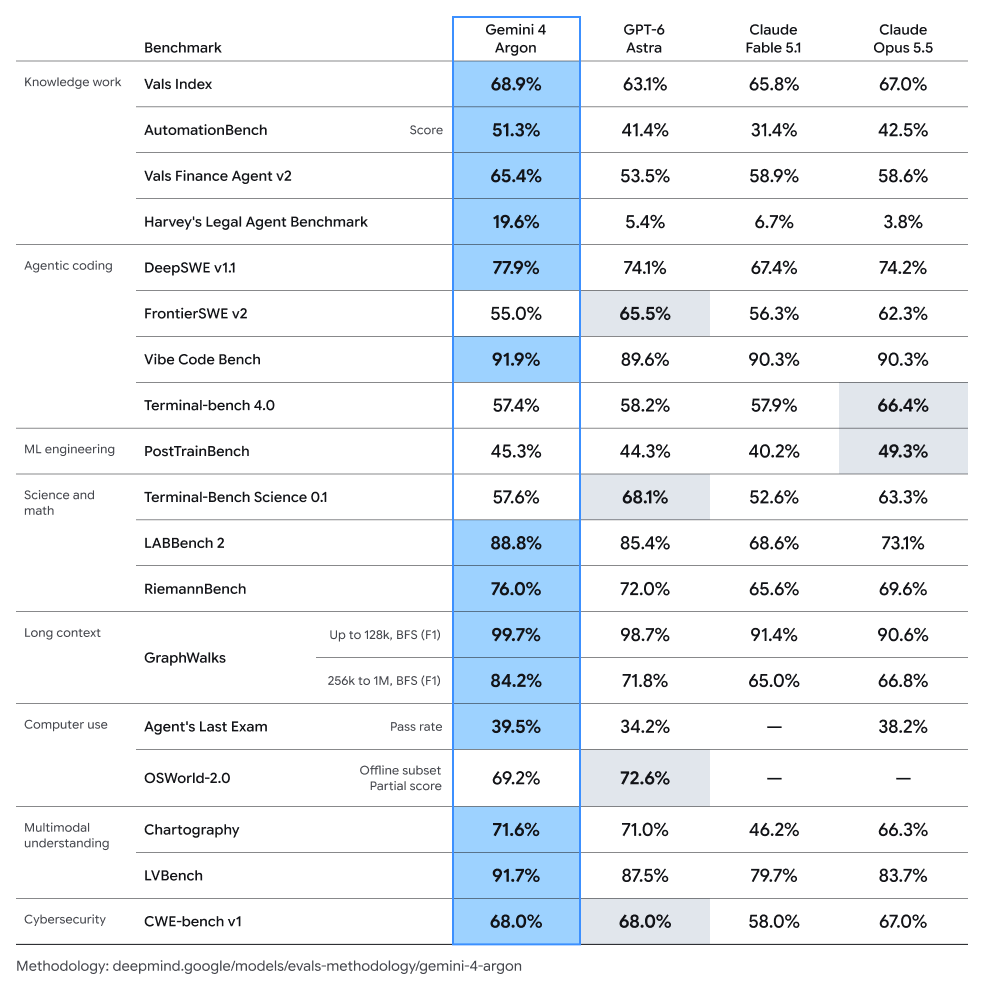
Introducing Gemini 4 Argon, our new frontier model, rolling out to cyber defenders starting today, and more widely as soon as possible. I am really excited by the progress we have made here. Argon is priced at $2 in and $10 out during introductory pricing!


Kory Mathewson retweeted

Introducing Gemini 4 Argon – our new frontier model.
It’s built for complex workflows across coding, enterprise knowledge work, and cybersecurity defense – rolling out today to a set of trusted testers through our Fairwind Program.
Kory Mathewson retweeted
Not everyone has taste. And they shouldn't.
"Taste" is a skill. It's the ability to choose what feels right when there isn't a single right answer. Hard-earned through years of work, developing a repertoire, pattern recognition, and a point of view. And tastemakers will continue to be the ones defining this in each field.
But now with AI anyone can create. And the world is flooding with slop as a consequence. I don't think we should expect the average person to develop this judgement in every domain. I don't think the right answer is just allowing "slop" either. We need to help raise the floor - and the ceiling - of what everyone can create. We're excited to build towards this @tastelabs.
Thanks for the chat @BusinessInsider @JayShams ! Full article below

Kory Mathewson retweeted

NEW from me:
Over the last four years, America has lost more than 200k jobs in creative fields like publishing, film, TV, or graphic design. It's the worst stretch for arts jobs outside of major recessions.
How much is AI to blame? And can the arts' business model survive?🧵

Kory Mathewson retweeted
Introducing Gemini 3.8 Flash and Flash-Lite TTS, our new SOTA text to speech model with:
- a new voice design experience
- 2,000+ production ready voices
- voice replication
- support for 100 languages
- voice remixing (soon)
- #1 spot on Hume AI's voice benchmarks
and more!!
Kory Mathewson retweeted
How do we end AI slop? To fix it, you gotta measure it first.
Thanks for having me @swyx @aiDotEngineer!
youtube.com/watch?v=sDMGWK4w…

Kory Mathewson retweeted

We are hiring research engineers and scientists for the Gemini Omni team in London and Zurich.
If you are excited about pushing the frontier of generative media, join us!
google.com/about/careers/app…
google.com/about/careers/app…
Kory Mathewson retweeted

We’re hiring! This is a rare opportunity to work with the folks that built Veo, Genie, and Gemini Omni — and advance the frontier of world models.
More details below 👇

