

独立思考者|Agent最严厉的主人,一周折腾过34个Agent工具 信奉长期主义与认知复利,每一次分享都是积累涌现
Joined November 2024
- Tweets180
- Following460
- Followers302
- Likes76

loic_洛伊客 retweeted

NVIDIA Board reinstates Jensen Huang as President, CEO and Board Director.
Read the release: nvidianews.nvidia.com/news/n…

是不是有点太强了🥲🥲

wok,我刚用 Fable 5.2 编排、Opus5.5 执行,搭配 Hi3D MCP 搓出的游戏,居然能做到这种质感!!!
真震惊到我了,大家猜一猜花了我多少钱😅
具体请看视频!!!
这次做《SANDLINE》,我直接拉了一整套高配工作流,串了 Hi3D 多个官方的 Skills,多个开源项目,多个第三方工具…
我把完整工具栈和 6 步制作流程全拆出来,想复刻同款质感的可以直接抄作业:
1、双模型分工:Fable 5.2 编排 + Opus 5.5 执行
Fable 5.2 负责拆解关卡节奏、多阶段任务排期和验收标准
Opus 5.5 负责重度执行,写完底层 43 个模块、物理碰撞、自定义着色器和无头 Blender 处理脚本,配合起来非常丝滑
2、玩法底板与全套 3D 资产:Hi3D 官方 Skills 组合 + V3.0
Hi3D Agent 现在内置了 73 个官方 3D Skills,这也是它跟单点建模工具最大的区别,对小白极其友好:
先调官方刚上线的 build-cinematic-fps,按可玩初版、质感版、最终版三阶段把 FPS 框架立起来
全场 54 个高精度模型(步枪、蓄力电磁矛、战术手套、管廊、蒸馏塔、15 米四足巨像、撤离运输机)全部由 Hi3D V3.0 生成
角色动作走官方的 rig-retarget 和 actionforge 自动绑骨、查拓扑、配动作,再叠上开源的 Mesh2Motion 动作库,完全不需要自己手动绑骨刷权重
3、去掉 AI 塑料感:开源渲染 Skills + Blender 球谐去光照
模型直接丢进网页必有廉价塑料感,核心是要先搭渲染底座、再洗贴图:
接入归藏开源的 op7418/guizang-game-skill(先锁死渲染底座与顿帧震屏打击感)加 CloudAI-X/threejs-skills
用无头 Blender 脚本把几百万面高模减面烘焙法线与 ORM 贴图,做二阶球谐去光照剥掉 AI 贴图自带的假高光,再经 meshoptimizer 压面稳住帧率
4、画面自检闭环:GPT-Image-2.6 定标 + dream-loop 盲评
先把实机灰盒截图喂给 GPT-Image-2.6,重绘出 15 张同机位的 3A 目标概念图当标杆
再接开源的 achimala/dream-loop,每次改完光照和材质就把新旧截图打乱,交给全新上下文的评审 Agent 做 A/B 盲评打分,不到 8 分直接打回重调,最后再跑 10 轮零背景盲测专门改 UI 引导
5、全套声音设计:ElevenLabs 音效 + 动态配乐 + 无线电语音
声音至少占一半沉浸感,调 ElevenLabs 的 SFX、Music 和 TTS 接口一口气生成了 127 个音频文件:
39 组枪械换弹、弹壳落地、沙石和金属走廊脚步的随机变体,外加 20 多条带无线电滤波的战术指挥语音与多杀播报
6、实机成片录制:AI 机器人通关内录 + 自动剪辑
结合官方 cinematic-camera-director-visual 和 clip-edit 的运镜剪辑思路,写了个 AI 战术机器人自己从头打穿 Boss 登机撤离,接管浏览器虚拟帧时钟逐帧录出 1080p60 原生音画,再自动滤掉猛甩镜头的废帧合成成片
另外,@Hi3D_AI 最近正好在搞 $5000 奖金池的创作挑战赛,有效投稿直接送一个月 Max 会员
整套流程都在上面了,感兴趣的兄弟可以直接去试试😋
43


我曾经也在LLM wiki概念很火的时候搞了一个知识库,看见什么感兴趣的就raw进去,让AI自己去消化,建卡,建双链,看着一篇干货被一下子拆分成一个个的原子卡片,看着卡片关系网逐渐生长,我有了一种错觉:好像我只要不断把知识raw进知识库,AI拆解分析完之后,这些知识就是我的了,我可以随时调用,随时查看,随时拿起来运用。所以我后来raw了很多很多篇文章,刷到的,看过的,收藏的,我都一股脑丢给AI去帮我消化。可是有一天当我看见output文件夹下面的数量是:0,我感到了一种虚无,我发现好像我做的这一切不过是一种自嗨,实际上,我根本没有回去翻看那些笔记,根本没有吸收消化,这只是一场自欺欺人的游戏。
所以我也把里面一千多笔记全部删除了,我从零开始新建了一个仓库,我不再追求什么LLM wiki,也不会把很多无用的文章书籍放在里面,只有我看过的,思考过的,运用到的,我把他们放进来。我开始写日记,哪怕只是流水账,我开始写思考,写自己一天的复盘,我发现这才应该是笔记的意义——锻炼你的思考。
我所有的笔记都是我一个个写出来的,所以我对他们保持足够的敏感和记忆,所以我可以在和人沟通的过程中,在复盘的过程中,不断的联想到我之前做过的笔记,我发现关系网不再出现在Obsidian里面,而是呈现在我脑海之中,我的大脑里有一张自己的wiki,这让我沟通足够的流畅有趣,让我可以跟不同领域的朋友打交道,让我的表达更有逻辑和表现力。
我同样会用AI来整理我的知识库,但是这应该是我和AI一起的知识库,她了解我,我了解她,所以我们合作的很流畅,也可以一起碰撞出更多的想法;但最终知识库还是你自己搭建起来的,属于你自己,你的脑海里要有自己的知识库。

I deleted my second brain.
I deleted all my notes.
All of them.
My entire Obsidian vault.
My carefully curated, atomic, Zettelkasten notes.
My concept maps and interconnected ideas.
My quotes, lists, and synced Apple Notes going back to 2015.
All my second brains for all my iterations of productivity systems that I followed, then abandoned, then modified, then followed again.
All of it, deleted within seconds.
And I felt wonderfully relieved.
In fact, the silence was…something of a relief.
For years, I obsessively kept a series of second brains.
I thought if I could just collect and organize all of my thoughts and ideas and information in one place, it’d help me remember things better, think faster, be more creative, learn quicker, be more organized, be more clear, have more control, gain some kind of leverage over… my life? the universe? reality itself?
Instead, my second brain became this massive collection of all my different selves. All my different projects and goals and systems and interests and habits and addictions and compulsions, stacked on top of each other like geological layers. A mausoleum.
And instead of helping me remember better and think faster, my second brain became a way of not thinking at all. Outsourcing my thinking to a system of interconnected notes I could search and sort through, instead of letting my thoughts roam and surprise and delight and challenge me. My second brain was a collection of categories instead of curiosity.
And so… I nuked the whole thing.
I’m six years sober. Milestones like that split your life into two distinct halves: the half before and the half after. And they demand that you reflect.
A few weeks ago, I started reflecting on my sobriety. I went through old notes to see how far I’d come. Old notes about goals I used to have, ways I used to think, and systems I used to swear by. Layer upon layer of systems, goals, ideas, and promises to future iterations of myself.
And the more I read, the tighter my chest got.
The sadder I got.
I could tell, reading my old notes, how hard I tried back then. How desperately I tried to hack together some system, process, idea, or goal that would get me through.
And what got me through the first year of sobriety, the second year, the third year, wasn’t any of that.
And what got me through the first, second, and third year of sobriety probably won’t get me through the next iteration.
The hubris of total capture
Somewhere along the way, note-taking and information management morphed into personal knowledge management. Systems thinking and Niklas Luhmann’s Zettelkasten method got sucked into the black hole that is Silicon Valley. Roam Research fetishized bidirectionally linked notes and Obsidian de-institutionalized them. And the cult grew.
All of these systems promise clarity. Coherence. Control.
But instead they gave me abstraction. Distance. Confusion.
The more notes I took, the less connected I felt to my ideas. I’d hear or read something interesting, jot it down, and forget about it. Or I’d see a great quote, screenshot it, add a few tags, and call it a day. The point being captured. Filed. Forgotten.
Everything I noted down was vacuum-sealed and saved for later. Except I never opened the package and ate the food.
I started reading to take notes instead of for pleasure or understanding. Listening to conversations with a meta-layer of figuring out what I could file away later.
Everything became content to be processed instead of experienced.
In Borges’ story “The Library of Babel,” an infinite universe is also an infinite library containing every possible combination of letters. There are infinite shelves, containing infinite books. Some of those books contain meaning and wisdom. Others are nothing but random collections of letters. The librarians tasked with cataloging this infinite library go mad trying to find order and meaning within the Library. Borges’ librarians are doomed to search for meaning within the Library for eternity, never able to escape, and slowly descend into nihilism and madness.
That’s what happened to me. Except instead of descending into madness, I just got distracted.
A flawed metaphor
The problem is, brains aren’t computers.
We don’t store information in folders or retrieve it via backlinks.
Our brains are messy, associative, embodied, contextual, and emotional. We forget stuff on purpose. Our minds are constantly improvising.
According to Merlin Donald’s theory of the evolution of cognition, what makes humans unique is our use of external symbols (language, drawing, gesture, etc.) to manipulate, modify, and communicate our thoughts. By using these external symbols, we were able to step outside our thoughts, modify them, and then communicate them to other humans. This externalization of thought meant that for the first time in the history of life on Earth, information could be stored outside of an organism’s genome.
By attempting to capture all of my thoughts, I externalized my thinking. I thought if I wrote things down and connected the notes together, I’d gain some kind of leverage over my mental processes. But instead of thinking about my notes later, I just… noted them down. Externalized them. Moved on.
Structure is not thinking. Tags are not insights. Notes you never read again aren’t really notes at all.
Tools are perfect. Humans aren’t.
Obsidian is a great piece of software. I love the app dearly. But without boundaries, any tool can become its own trap.
I wanted to remember stuff. Then I thought maybe I wanted to integrate what I remembered. But what I really ended up doing was deferring my thinking to a future version of myself who would make sense of it all. A future version of myself who never showed up.
Markdown files in a directory structure. Productivity metrics via plugins. The god-complex of standing zoomed all the way out in graph view. Everything connected. An illusion of omniscience. Except constellations don’t mean anything. They’re just patterns humans project onto the infinite canvas of space. Stories we tell ourselves.
There’s a guilt that comes with not having read a book, blog post, or article you meant to read. But there’s another guilt that comes with having a list of things you meant to read you haven’t gotten around to reading yet. My ever-growing reading list became a monument to who I could be if I only read all those things I saved. Deleting it cost me nothing.
Well, it cost me 7,000 notes. Hundreds of highlights and links to books, articles, and essays I “should” read someday. And I’m okay with that — because I know who I am. I know what grabs my attention and what doesn’t. I don’t need to keep track of everything interesting-sounding I come across in order to validate my own intelligence or curiosity.
Hoarding digital cruft isn’t the same as understanding it. Saving things doesn’t mean you’ve internalized them. Remembering facts doesn’t mean you know how to apply them.
There’s no such thing as being caught up. No finish line for reading, learning, or knowledge. Except in your own imagination.
What Michelangelo, Leonardo Da Vinci, and Nietzsche understood about creation, we fail to apply to curation. To make something great, you have to remove everything that doesn’t belong. You have to understand what’s essential and throw away everything else.
Instead of deleting notes, saved articles, or half-finished sketches, we keep them all. We think keeping everything is a good thing. That somehow our collections reflect our intelligence, hard work, or taste.
What if we applied the same ethos of creation to curation? Instead of adding more and more, what if we deleted ruthlessly?
Zakhor is a Hebrew word that means both “remember” and “remember!”- both the act of remembering and an imperative to remember. For the ancient Israelites, remembering wasn’t just recalling the past; it was an ethical obligation to call the past into the present.
This is the difference between PKM and zakhor. One is a system for capturing information. The other is an act of devotion.
I don’t want to capture everything. I don’t want a mind-palace or second brain. I want to be able to forget stuff. I want to remember stuff because it’s important, not because I have an elaborate system of levers and pulleys to remind me it’s important. I want to be able to start over from scratch again and again.
I’ve started writing in Obsidian again. Starting from scratch. But this time, instead of trying to capture everything, I’m practicing curation. Instead of trying to remember everything, I’m practicing zakhor. Instead of trying to build a second brain, I’m trying to get better at using the one I’ve got.
It’s liberating. And scary. And exciting.
77
把AI当伙伴而不是工具,它会更懂你。
如果你觉得AI与你的沟通更流畅了,其实不是模型的理解能力提高了,而是你在跟 AI 沟通的过程中多了一层思考量:你会去思考 AI 回答的问题对不对,会去思考自己提出的问题是不是太模糊,会让 AI 来辅助你自己思考。
为什么 AI 可以越来越理解你?是因为你首先对问题有一些基本的思考,而AI 可以帮助你把问题思考得更明白。可以把 AI 当做一个智力很高的人类,在你跟他沟通的过程中,你们就会产生思维碰撞。面对他提出的问题,你会主动去思考、去分析;而你提出的问题,他往往能有更多的见解。
所以,应该把 AI 当作伙伴而不是工具,这样你才能把 AI 用得更好。


1
69


我很认同他说的,AI 会让你觉得自己无所不能,但人的注意力其实是有限的,根本没法同时顾那么多事。
过去半个月,我折腾了不少 personal agent,从 Grok Bot、OpenBot、Manus Bot 到 Hermes、Cindy、Alma,市面上主流的基本都试过一遍。
但折腾到最后才发现,真正最好用的 personal agent,其实就是你一直长期在用的那个。不管它是什么形式,哪怕只是 Claude Code 里的一个 session,只要对你足够了解,它就是你的 personal agent。
刚好昨天我让 Carbon 把我之前跟 AI 的所有对话全部分析了一遍。报告显示,我花在折腾 Agent 工具上的时间,占了所有 AI 交互的 18%,排在全部用途里第二位。偏偏这一块,又是最分散注意力、最没有增量产出的部分。
每天都在折腾工具,很容易产生一种错觉:好像做了很多事,回过头却什么也没做成。折腾到最后,最累的不是 AI,是自己。所以我现在也在探索 super agent,想把注意力真正收回来,回到自己和当下。
工具和模型用得越多越觉得,就像苍何说的,上下文才是 Agent 的瓶颈。这也是我这两天一直在做的事:把分散的上下文慢慢沉淀、打磨,归拢到知识库里,当成自己 super agent 的底座。
说到底,不管折腾了多少工具和玩法,如果心思没回到自己身上,折腾再多也是空的。什么时候真正回归自己,不再执着于向外面证明自己,大概才是开始散发出魅力的时候。

老实说,这是我做 AI 以来最焦虑的一段日子。
在过去很长一段时间,我每天都很忙碌,忙到我忘了健身,忘了学习,甚至忘了自己。
我像一只青蛙一样,蹦跳于不同的城市,来了又走,白天sosial,晚上熬夜写稿。
最猛的时候,一个月二十多天都在外面。
我见了很多人,看了很多的商业模式,他们有卖课的,有做产品的,有拉到融资公司搞的红红火火的。
我看他们斗志昂扬,激情澎湃,但也加剧了我的内耗,我开始找不到自己了。
虽然我的开源项目也有几万star了,做的一些东西全网也有几千万曝光,数千万人使用,但老实说,我被忙碌裹挟着,变得麻木和无助。
最近,我拒了很多的合作和接触,我把自己关起来,思考了很多,慢慢想通了一些事情。
特此写点东西,与诸君分享。
我和AI一起梳理了我所有的上下文,包括所有的录音,活动,照片,个人数据等。
Claude 让我要做减法而非加法,AI会让你觉得自己无所不能,但人的注意力是有限的,没有办法同时做更多的事。
要把主要精力做更为重要的事,它让我减少过多的社交,专注于自己喜欢的事本身。
Claude分析了我的作息和健康数据,指出精力差一部分原因是长期熬夜,没有运动。
所以早睡早起,坚持运动和读书能缓解焦虑。
在梳理的过程我发现,我急需要全方位的提升自己的自动化系统,那些流程化的任务,就该交给Agent。
为此我在探索 Super Agent ,在注意力有限的情况下,发挥最大的效能。
我发现,我使用了非常多的工具和模型,它们往往都是割裂的,上下文成了瓶颈,为此这些天我花了大量时间在打磨上下文资产,我要把我的一切都能数字化机器化,然后给到Agent作为上下文。
我慢慢悟了一个道理,不该创业,而是要做生意。你有哪些业务,能拆解成哪些任务,哪些可以靠Agent自动化,哪些需要人,你需要什么人就去找什么样的人。
做内容或者IP你不要想着纯靠AI或者外部团队就能帮你,我尝试找外部专业团队来帮做视频,会发现他们做的根本不是你想要的内容,也无法替你表达。
有时候也会想为什么别人可以这么优秀,为什么别人有这么多合作,谁谁谁又起来了,谁谁谁流量又爆了,为什么这个合作找他不找我。为啥他这么赚钱?
这种思维的本质还是没有向内求,没有成为真正的自己。
人在什么时候才能成为真正的自己,就是在你不执着于向外界证明自己的时候,成熟的开端就是停止展示自己,反而专注于打磨自己,所有的人都是从我行我素里开始散发出魅力。
3
6
419


这两天看宝玉老师(@dotey)和轩源(@4xy)在聊一个我刚好最近在纠结的问题:
同时跑多个 AI 任务,到底是像 Grok Bot / Dots 那样只盯一个主会话,还是像 Claude Code 那样开一堆 Session?主会话当“前台”用轻量模型省额度,到底行不行得通?
我自己最近也在折腾 Grok Bot、T3 Code、Herdr、Cindy 和 Pi,干脆让 Grok Bot 和 Carbon 顺着这条讨论链,把中英文圈 40 多条一手实测帖、原帖视频和几篇关于 Handoff Tax 的论文全过了一遍。
看完 AI 整理出来的证据链才发现:不少讨论里提到的省钱案例,逐帧看原视频其实是日志 Replay 标价估算,并不是实付账单;而真正在一线把人坑惨的,往往不是缓存怎么算,而是假死和丢单。
把大家踩过的坑和不同流派的边界梳理成了这篇长文,分享给同样在摸索多 Agent 协作的朋友👇


1
70
Grok Bot 的额度焦虑好像治好了,刚把本地 OpenBot 和云端 7 个 Grok Bot 打通了。
本来想用官方 gbot 直接发消息调度,结果能列列表能读会话,一发消息就 409——休眠状态的云端 box 根本不给写实时路由。
后来绕了个弯:直接拿 Grok Bot 的 routine webhook 当触发入口。外部 POST 过去派活,再用 gbot thread 把结果读回来,实测一分钟内就回「收到测试」。
官方 CLI 发不出去消息,例程的 webhook 反而成了真 API。现在任意本地脚本都能喊动这支云端舰队,以后只让Grok Bot做只有它能做的活,能外包的全部外包,再也不担心Grok Bot的额度问题了。
话说你们都是怎么解决Grok Bot额度不够的问题的?

基本同意观点,我也折腾了几天的personal agent,发现只有alma和Cindy是体验最好的。
Alma真的是一个非常好的选择,但是可惜没有多Bot和UX体验不是很好,希望叶天帝@yetone可以加油改进!
Alam是一个你可以很放心的伙伴,相比于Hermes的愚蠢和故障,Alma你可以一上来就放心地交给她去工作。
而Cindy我个人认为还是需要调教一下,在处理事情的细致上面不如Alma做的好,但也是一个很棒的产品,我正在犹豫选用哪个。欢迎大家一起讨论一下!


经过 5 天的调研和试用,我最终决定迁移到 Cindy @making_cindy
简单说下这几天的历程:
一开始我用的是 DS Bot,但它更适合工作场景。我的需求更偏日常生活协助,工作这块我一直用 Pi。
由于DS Bot 的完成度很高,让我产生了「我也可以」的幻觉。于是我用 DSH 搭配 Opus 5.5,开始搭自己的 Hermes。
开发了 3 天,依旧一坨屎。昨天让 Fable 5.2 做了心肺复苏,还是没救回来,宣告死亡。
这几天我也一直在同步用 Alma 和 Cindy。
Alma:又爱又恨。
爱的是很多功能很超前,我在 Hermes 上自己写的不少插件都参考了它的设计。Alma 就是一个武器库。
恨的是 UX 一言难尽,还有很多细节 bug 让人抓耳挠腮。代码又是闭源的,排障很麻烦。
最要命的是不支持多角色和记忆隔离,只能排除。
Cindy:体验和功能最平衡。
折腾 DSH 那几天,我一直在参考它的代码和设计,基建非常完善。能折腾的范围没有 DSH 那么广,但靠插件也能做出很不错的定制。
还有我最喜欢的伙伴功能,细节体验都不错,个人使用和工作使用也能分得很清楚
所以最后准备迁移到 Cindy
游戏结束,GG @DashHuang @zkyo
41
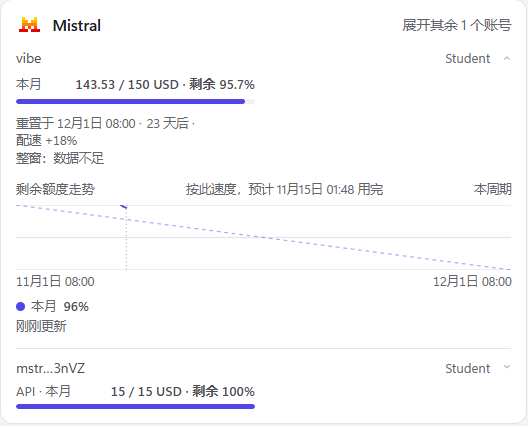
有 edu 邮箱的真的可以直接上 Mistral 的学生订阅,我拿招商银行的万事达卡付的,学生价 5.99 美元一个月,最长能订 12 个月,支付过程丝滑没有一点问题。
给的东西分两块:150 刀的 Vibe Code 额度,加 15 刀的通用 API 额度。Vibe Code 是 Mistral 自家那个产品,但是它能原生接进 magpie,接完在 Claude Code 、DeepSeek Harness 里直接就能用。
最让我意外的其实是没有 5 小时限制,也没有周额度。这几天蹬掉两个亿的 token,看额度大概只动了 5%。
原价 14.99,学生价 5.99,年付 54.79 差不多再打八折。有教育邮箱的兄弟别犹豫,闲鱼淘宝那种代注册的路子我自己没试,能自己用 edu 邮箱注册就别花那个钱。
订阅链接我放评论区了👇👇👇
1
35

最近在折腾VPS,内网组网的时候,自己全权交给AI去做,刚好也在思考有关安全的问题,AI时代我们习惯了放手让AI去帮我们把事情做好,但是AI的权限如果不加以约束的,安全风险还是很大的

天天研究用 AI 赚钱,月底一算,操,赚的还没订阅费多。一个个想用Cluade code,被封号就算了...
有人已经 Claude Code,用来偷数据、搞勒索了。Anthropic 自己披露过:至少 17 家机构被盯上,部分赎金开口就超过 50 万美元。
所以看到 @GCSAHK 做 AI 安全,我觉得这个方向得认真看。现在大家装 Skills、接 MCP、给 Agent 开权限,生怕慢一步就错过赚钱机会。可客户资料、代码、服务器权限一股脑交出去,谁来盯着这些东西会不会被拿走?
AI 能干的活越多,安全这笔账就越不能拖。别最后工具订阅是你付的,数据是你的,钱让别人挣走了


1
87