Lawyer just trying to get by.
Delhi/ Bangalore/Mangalore
Joined May 2009
- Tweets15.6K
- Following892
- Followers1.1K
- Likes2K







Lzafeer Ahmad B F retweeted

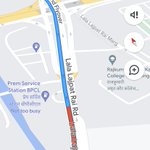
Why is there no traffic police in Delhi ever to manage traffic, the entire city is choked with no police official in sight to manage traffic. @DelhiPolice. We find them only hiding at places for challans,the entire traffic has been left to operate on its own wisdom.
Surprised ROnaldo hasn't found a way to follow himself.

🚨🇵🇹 𝗡𝗘𝗪: A journalist investigated which Portugal players follow each other on social media, claiming the results may reveal divisions within the squad.
Bruno Fernandes follows and is followed by all 26 members of Portugal’s World Cup squad.

1
351
Lzafeer Ahmad B F retweeted

this made me emotional. we have come a long way from the time when nehru, infuriated by the constant sound of the siren, would intentionally ram his thar roxx into the passing ambulance.

#WATCH | Prime Minister Narendra Modi's convoy gives way to an ambulance during the roadshow in West Bengal's Siliguri
(Source: DD)
Lzafeer Ahmad B F retweeted

There's a physicist at Stanford named Safi Bahcall who modeled this exact principle and the math is wild.
He calls it "phase transitions in human networks." When you're stationary, your probability of a lucky event is limited to your existing surface area: the people you already know, the places you already go, the ideas you've already been exposed to. Your opportunity window is fixed.
When you move, your collision rate with new nodes in a network increases nonlinearly. Double your movement (new conversations, new cities, new projects) and your probability of a serendipitous encounter doesn't double. It roughly quadruples. Because each new node connects you to their entire network, not just to them.
Richard Wiseman ran a 10-year study at the University of Hertfordshire tracking self-described "lucky" and "unlucky" people. The single biggest differentiator wasn't IQ, education, or family money. Lucky people scored significantly higher on one trait: openness to experience. They talked to strangers more, varied their routines more, and said yes to invitations at nearly twice the rate.
The "unlucky" group followed the same routes, ate at the same restaurants, and talked to the same 5 people. Their networks were closed loops. No new inputs, no new collisions.
Luck isn't random. Luck is surface area. And surface area is a function of movement.
The lobster emoji is doing more work than most people realize. Lobsters grow by shedding their shell when it gets too tight. The growth requires a period of total vulnerability. No protection, no armor, soft body exposed to the ocean.
That's the cost of movement nobody posts about. You have to be uncomfortable first. The new shell only hardens after you've already moved.

Lzafeer Ahmad B F retweeted

The Rupee was 44 to a dollar in 2004 (NDA) today it has closed over 60. Where will it stop!


Lzafeer Ahmad B F retweeted

A really honest and vulnerable moment from the #UCLToday crew to open today's show 🥹❤️
Lzafeer Ahmad B F retweeted

Three years ago, I was at the Lemon Tree Bengaluru for the Volleyball League. And every morning I would finish breakfast & pop out to reception to pick up a copy of the TOI and the Economic Times. After watching me the first two days, this charming lady on duty would see me and immediately pick them out to give me.
One day, I just wanted the TOI, as the crossword then did not appear in the Sunday ET, and when she came with both, I told her I didn't need the ET.
She refused to understand, & didn't want to take back the other paper. And then I realized that like my darling son Neel and all in the autism spectrum, she struggled when a set routine was disrupted.
I apologized immediately, took the ET as well & was rewarded with a smile that just blew me away.
Thank you Lemon Tree Hotels for making a workplace for all. You have a supporter & customer for life

The most radical innovation at Lemon Tree Hotels had nothing to do with room design or pricing. It was about who stood behind the reception desk, who cleaned the rooms, and who served breakfast
In a dialogue between the HR department and the CMD, Patu Keswani, they decided to hire 2 differently-abled people. "It was an experiment. The team was not sure how the new staff members would integrate with the rest of the team or if they could do the job," says Aradhana. The impact of this small gesture was apparent when Mr. Keswani was approached by a very emotional mother of one of these persons with an invitation to attend his wedding. The possibility of this nuptial would have been negligible if the boy had no job. By merely giving an opportunity, everything changed. And, the business continued to gain from the services of 20+ differently-abled resources. Since that day, there has been no looking back.
What started as an experiment evolved into one of the most ambitious inclusion programs in the global hospitality industry. Currently, ~13% of Lemon Tree employees are from this disadvantaged segment of the population, although the company targets and often achieves a rate closer to 20% in many properties.
"This is not charity, it is our business model" became Lemon Tree's mantra. The numbers backed it up. Employees with disabilities showed lower attrition rates (12% v/s industry avg of 50%). They demonstrated higher loyalty, better attendance, and often superior performance in their designated roles. The deaf employees in housekeeping communicated through visual cues and checklists, often resulting in more thorough cleaning. Staff with Down syndrome, working in consistent routines, excelled in laundry and food service roles.
Lemon Tree Hotels has been presented the National Award by the President of India for 'Best Employer of Persons with Disabilities' in 2016 and 2011, and a third National Award in 2012 for being a 'Role Model in providing a Barrier Free Environment to Persons with Disabilities'.
The business case was compelling. In an industry plagued by 50-100% annual turnover, Lemon Tree's inclusive hiring created a stable, dedicated workforce. Training costs dropped. Service consistency improved. And something unexpected happened—guests noticed. The genuine warmth from employees who had been given opportunities they couldn't find elsewhere created an authenticity that no amount of hospitality training could replicate.
The ripple effects went beyond the hotels. Lemon Tree partnered with NGOs to create training programs. They developed visual communication systems that became industry standards. They proved that infrastructure changes for accessibility—ramps, visual alerts, modified workstations—cost less than the savings from reduced turnover.
By making inclusion a business strategy rather than a CSR initiative, Lemon Tree didn't just change lives—it changed the economics of hospitality employment in India.
This is awesome!
Src – Empor top, no reco







Lzafeer Ahmad B F retweeted
When people think of menswear crafted with a high-degree of workmanship, they think of places such as France, Italy, and the UK. Some may think of Japan. But few will think of India, even though some of the most incredible workmanship is happening there now. Let me show you. 🧵

Lzafeer Ahmad B F retweeted

Cards against humanity’s website explaining why they’re suing Elon is pretty fucking good