

22, Artist drawing🎨, loves coffee, DM for commissions 🔞 art (SFW too)
under your bed
Joined April 2019
- Tweets1.2K
- Following560
- Followers258
- Likes4.1K



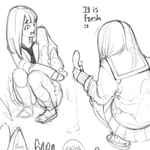




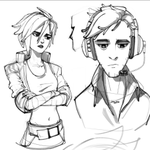


Komaro x Ume (wholesome)
KOMARO!! MUST PROTECT!!
#seitokainoana #EvenTheStudentCouncilHasItsHoles #KomaroMichinoku


MARS🔞 retweeted

“The Meaning of Paying for Manga”
There was a time, in the late 1990s, when I believed that all manga should be sold and purchased.
Today, I no longer think that way.
Manga can be distributed in many different ways.
Some manga can be free.
Some can be supported by advertising revenue.
In some cases, the manga and comics themselves may function as promotion or publicity for something else.
However, I still believe that the core of the manga industry must be supported by readers who choose to pay for it.
But that raises an important question: What does the reader gain?
The creators and publishers receive revenue, so it is easy to understand why they benefit.
But what does the person who buys the manga actually receive?
If the answer is simply, "You should pay because the law says so," then people may pay, but something still feels missing, right?
Why does it sometimes feel less satisfying than when people used to read piracy manga for free?
Perhaps because, if payment exists only to gain access to the content itself, then the experience is incomplete.
And I believe this is where the future of manga services must evolve.
First, there is the value of ownership.
When you buy a printed manga tankōbon volume, you gain something physical.
Anyone who has collected books understands the pleasure that comes from that.
The joy of a manga tankōbon volume is not only in the short time spent reading it.
In many ways, it is the years it spends sitting on your bookshelf afterward that matter even more.
For a long time, I believed printed books would eventually disappear.
Now I believe the opposite.
I believe printed books should exist forever.
Because the pleasure of physical ownership is real.
Even in a future centered around digital services, we should continue exploring ways to preserve that sense of ownership and attachment.
Books will remain important, but digital platforms should also think creatively about how physical collections and digital experiences can support each other.
There is another point that deserves attention.
Human beings often enjoy spending money on things they truly love.
When we share a meal with someone we care about, we often want to pay.
When we love a pet, we want to buy things for that pet.
The idea that "everyone prefers everything to be free" is not only simplistic—it misunderstands human nature.
When people spend money on a manga they love, the happiness does not come only from reading it.
There is also joy in the act of supporting it.
The moment of purchase itself can be meaningful.
In some ways, it is similar to buying a car.
The excitement is not only in driving it later—the moment of purchase is often one of the happiest moments.
Of course, it would be naïve to assume that people will happily pay simply because spending money feels good.
That would be no different from assuming that everyone automatically prefers things to be free.
If readers are paying, the industry must provide real value of service in return.
Platforms that are funded by consumers have the ability—and the responsibility—to do that.
After all, if consumers are paying the bills, then consumers should matter more than advertisers.
And I believe we can imagine services that are much better than the ones that currently exist.
This is the central point I want to make.
Paying for manga is about more than buying a book.
It is about more than receiving a service.
When you pay for manga, you are helping to build and sustain a system.
That is my core argument.
But what kind of system?
A system called manga culture.
When readers support manga, they help create a world where manga culture can flourish within their own country.
And what does that mean?
It means manga conventions, cosplay events, dōjinshi culture, and independent manga and comic creators.
It means communities of readers, critics, journalists, and commentators.
It means a healthy relationship between creators and audiences(readers and fans), where readers are not merely spectators but participants whose voices matter.
It means districts and cultural spaces that become gathering places for fans.
It means the growth of related industries—animation, games, merchandise, film, and many others—that enrich the manga experience and create opportunities for new creators.
It means living in a society where loving manga is respected rather than dismissed.
It means seeing your country's creators recognized around the world.
It means feeling proud when works born from your own culture reach global audiences.
These are the things that readers ultimately receive.
They may not arrive immediately.
But when someone chooses to save some lunch money and buy a manga volume instead of spending it elsewhere, they are contributing to something much larger than a single purchase.
They are helping build a system.
A MANGA CULTURE!
YOUR OWN MANGA CULTURE!


Based

'Dr. STONE' artist Boichi:
"Pirated manga readers are not our opponents. They are our future audience. They are proof that demand already exists."
Boichi says many manga fans around the world still lack access to legal manga because some countries have no publishing infrastructure, translation systems, or distribution networks
"Telling manga fans in those countries, 'You should buy manga,' is meaningless if there is no actual way for them to buy it."
He argues that affordable digital manga services are key to expanding the industry globally and creating opportunities for future creators


1
212
MARS🔞 retweeted

Hello! I’m a manga artist from India.
It has always been my dream to serialize my own manga in Japan, and now that dream has finally come true! ✨
My Japanese debut series, Kung Fu Kung Fool, has officially started serialization today on KADOKOMI!
It’s a series packed with action and comedy, so I’d be really happy if you could give it a read 🙇🏻✨
▼ Below the English translation of Kung Fu Kung Fool 👇🏻


This sucks, I really need a VPN to see ANYTHING in here
"Due to local regulations" BS is really Head hurting.
I guess I have to buy a VPN subscription
2
2
186
MARS🔞 retweeted

Japan elected a manga artist to its national parliament to fight Western-style political correctness.
Ken Akamatsu — creator of Love Hina and Negima! — won a seat in the House of Councillors in 2022 on a platform of protecting creative freedom.
He continues to push back against overseas censorship pressures in 2026.
In March, Senators Ken Akamatsu and Taro Yamada publicly clarified that Prime Minister Sanae Takaichi’s government is not interested in censoring the internet under the excuse of “protecting children.”
It's great to see Japan fighting back against Western censorship pressure!


