

AI & Growth engineer and former founder. I like 3D, AI, Construction/Trades/GIS/BIM, and awe about the world around me and what we're doing in it.
SF Bay Area
Joined September 2025
- Tweets2K
- Following2.7K
- Followers248
- Likes14.3K


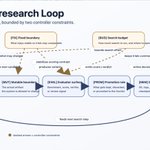



Please check out Mike's latest new and interesting AI psychosis project (that I plan on studying intently)

In 2020 when I left the 50 person marketing agency I built, I spent a year researching memetics, the study of how ideas spread and evolve.
I had only recently heard the term and instantly recognized I now had a name for the process I was doing manually that led to my agency's success.
I decided to write and self-publish a book on the topic, that only 200 people read. Ironically the meme of memetics is not itself very viral. It's a niche, nerdy topic and it's hard to tell if the people that talk about it are geniuses or conspiracy theorists.
In researching for the book I realized why – it was a useful analogy but not that useful in practice. Unlike with DNA there's no way to measure a meme, and without discrete units you can't run falsifiable experiments... so it never became a science.
The time writing the book wasn't wasted, it made me a better writer, and got me into AI early as there was some overlap between the niche interests of AI and memetics.
In a clue for what was to come, one research team had found a "Spiderman neuron", that fires for photos of people in Spider-Man costumes, comic and cartoon drawings of him, and even the written word “spider”.
I'm not an AI researcher, I don't have a PHD, I've never written a scientific paper, I don't work for the labs, I own no GPUs, so instead of trying to get into mechanistic interpretability (the name of that field) I got into prompt engineering right when demand for that field exploded.
The past few days have been a whirlwind because having tokens to burn as part of the frontier team at @every I decided I wasn't being ambitious enough, and wrote a scientific paper on memetics.
The unlock was reading Nick Cammarata's inspirational "Neural Networks Are Already Clean" paper, and realizing if AI models do have interpretable neurons that fire for specific concepts, we could define a meme in terms of which neurons activate on that concept.
I also recalled "Harnessing the Universal Geometry of Embeddings" by Jha et al which said that different models all seem to converge on the same vector embeddings, which implies there is some underlying consistent structure every model is learning independently.
So I ran a few experiments where we (Claude and I) tested whether a single neuron inside an AI language model can stand in for a meme. We ran 80 years of Batman plot summaries through two AI models and looked for neurons that fire across nearly every Batman story (his core canon). Then we checked whether films carry the memes of the comics they adapt, and whether the two models, built by different companies, find the same memes. It seemed to work.
Why does this matter?
- you can decompose ideas into their parts and understand what makes them tick
- you can find similarities across cultures and ideas, to identify things you should like but don't know about
- you could trace the history of an idea to see who inspired who, even if they never disclosed their sources
I'm not an academic and may very well be suffering from AI psychosis, but I sent this paper it to a few people smarter than me, and a few other AI models smarter than me too (Astra, Argon) and it seems to be legit. I'll keep working on this (it's all open source, link below) and see if I can make it more robust.
Putting this out there so people can tell me if I'm being dumb, and to inspire others to look into AI neurons as meme units is useful experimentally.


Max Caldwell retweeted

Eliezer: ummmmmm. no. u. fucking. idiot. have u even begun to CONSIDER the problem? i'll give u a hint: this doesn't work. why, u ask me? u fucking child. oh, u fucking fool. how could u be so stupid? please begin to THINK next time. come back to me when ur not an INFANT.

Max Caldwell retweeted

Things to say to a rationalist:
• I don't debate 𝗖𝗮𝗹𝗶𝗳𝗼𝗿𝗻𝗶𝗮𝗻𝘀.
• Let me speak directly to your 𝗖𝗹𝗮𝘂𝗱𝗲.
• Is your P(doom) 𝗽𝗿𝗶𝗺𝗲?
• Sell me this 𝗯𝗮𝘀𝗶𝗹𝗶𝘀𝗸.
• Would you rather have sex with a 𝗱𝗲𝗮𝗱 𝗰𝗼𝘄 or an 𝗮𝗹𝗶𝘃𝗲 𝗰𝗼𝘄?


Max Caldwell retweeted

Crazy to realize that so many amazing results were already in the training data


Max Caldwell retweeted

Backprop has been the only credit assignment algorithm capable of training large neural nets.
Introducing Dust, the first zeroth-order method to pretrain transformers to approach and sometimes even *exceed* backprop with large amounts of computation (bitter lesson!)
- Dust is on the order of 1,000 to 10,000x more compute efficient than EGGROLL, the state-of-the-art ES method, for training transformers.
- We chose pretraining transformers because it's arguably the hardest task possible for zeroth-order optimization.
- Search in high dimensions is really misunderstood: zeroth-order usually gets better with overparameterization, not worse, i.e. at a fixed population size, larger models (up to 120x) reach a lower loss than smaller ones.
- Backprop-like gradients emerge from a large population of activation perturbations, and the alignment holds up at every scale we tested, up to 1B tokens, which is critical for scaling.
The core idea is a *virtual population*, which helps scale to large populations in transformers by perturbing activations in parallel.
w/ @bishmdl76, @cs_serdar, @akshayvegesna
Max Caldwell retweeted

Does anyone disagree that pretty much every piece of empirical evidence we have about actually existing AI points toward a labor-augmenting technology with a more-or-less ordinary risk profile (no worse than cars, guns, nuclear power, social media, etc.)?
On the labor front, the evidence of minimal / inconsequential employment effects so far is undeniably strong (see: aleximas.substack.com/p/has-…).
On the risk front, the recent spate of "rogue agent" incidents was akin to a set of natural experiment in which much of what could go wrong did, and the costs were comparable to or less than your typical high-profile cybersecurity breach (several of which happen around the world every month).
Not only that, but the base rate of AI-related hacking incidents is extremely low, and with rare exception, model behavior during real-world use cases is exceedingly well-aligned.
Plus, as Anthropic recently argued (anthropic.com/research/glm-5…), the open-source GLM 5.3 is around as capable as Claude Mythos at cyber-exploitation while also having much lower safeguards, meaning that every additional day absent some dire cybersecurity incident is further evidence against catastrophic AI cyber-risk.
Taken together, these facts imply two constraints on arguments in favor of catastrophic AI risk:
1) those arguments must either pass through future, rather than current capabilities, or future, rather than current varieties of AI adoption or implementation (or they must claim we have been unrealistically lucky);
2) those arguments must also must pass through some specific capability or adoption threshold, rather than rapid improvement or adoption as such, since dramatic capability improvement and rapid adoption have already occurred alongside demonstrably low risk of catastrophic harm.
It is therefore natural that those concerned about catastrophic risk commonly appeal to recursive self-improvement, or RSI in order to make the case that things will get much scarier very soon.
But as @ramez has convincingly argued (noahpinion.blog/p/wheres-the…), existing data on the reality of RSI within frontier labs neither suggests an inbound trend-break, nor the accelerating returns that might produce one. On the contrary, as is unsurprising to those familiar with the generally log-linear relationship between compute and model performance, all available signs points toward diminishing returns.
And this is before considering external factors that could slow capability progress further, including low-hanging fruit effects related to running up against more complex or tacit-knowledge-based tasks for which performance data and verifiable reward signals are scarcer, plausibly incoming financing constraints related to the industry's massive capex commitments (see: econjared.substack.com/p/a-b…), growing political backlash, both to data centers in particular, but also rapid AI development writ large, and new regulatory bodies and industry reporting frameworks (see e.g. markey.senate.gov/news/press… and axios.com/2026/08/11/open-so… ), which will require labs to proceed with greater caution from here on out.
I am therefore led to conclude both that catastrophic AI risk is likely to remain negligible for the foreseeable future and that the only counterarguments concern massive black-swan-style capability uplifts no existing data imply are on the horizon, and/or particularly irresponsible or dangerous forms of AI adoption that there are also few precedents for so far (and that we are actively developing norms, regulation, and security measures against).
Neither is impossible, meaning we should remain vigilant and that AI safety efforts will continue to be well worth it in the coming years. But I see no way around the conclusion that something akin to the "normal technology" view is superior on the empirical and argumentative merits to whatever variety of doomerism.
What am I missing?
Max Caldwell retweeted

i am not convinced that Astra is really that capable of a model - at least not really any different than Sol
like once you give _any_ of these models a task that is very complex, you find them all flailing around, often in pretty similar ways
e.g. Astra likes to go off the beaten path and do really focused spot fixes vs more complex re-evaluations
(and this is on max effort)
Max Caldwell retweeted

i am feeling the opus 5.5 abundance. I am an opus 5.5 abundance liberal.
we should basically put enough solar panels in the desert to make solar near~baseload for AI and fuel production so that opus 5.5 class models are available as a universal basic intelligence package.
Max Caldwell retweeted

What a day for consumer access to digital super intelligence
congrats on anthropic and oai on really great releases


Max Caldwell retweeted

1/ We've released Infinigen 2.0! Currently in preview. It creates indoor 3D scene files in 1min CPU time, and includes new and better materials --- all still fully procedural. Our new 2.0 design is highly efficient and allows easy control and recombination via Python APIs.
Max Caldwell retweeted

New post in my "Eigenvalues as models" series.
The series explores a simple but weird predictive model: build a learned symmetric matrix from the input features, then use one of its eigenvalues as the non-linearity.
This time I look at converence speed during training, which we saw in previous posts that can be occasionally slow, and it turns out to be related to the expressiveness of the model.
The middle eigenvalue is expressive, but when nearby eigenvalues collide, the eigenvectors can change abruptly. Since eigenvalue gradients come from these eigenvectors, training gets jumpy.
Somewhat unexpectedly, a path forward is to smooth the sharp eigenvalue objective first using a tool well-known to the optimization community, but somewhat little known to many machine-learning practitioners - the Moreau envelope.
alexshtf.github.io/2026/07/0…

Max Caldwell retweeted

Polymarket odds of GPT-5.6 release next week dropped off a cliff. Not sure what Polymarket knows but this is a pretty dramatic change that happened in the past hour.


Max Caldwell retweeted

Hot take: the Fable ban is just a way to help OpenAI catch up thanks to Greg's $25M MAGA donations
Max Caldwell retweeted


The US government, citing national security authorities, has issued an export control directive to suspend all access to Fable 5 and Mythos 5 by any foreign national, whether inside or outside the United States, including foreign national Anthropic employees.
The net effect of this order is that we must abruptly disable Fable 5 and Mythos 5 for all our customers to ensure compliance.
Access to all other Claude models is not affected.
We apologize for this disruption to our customers. We believe this is a misunderstanding and are working to restore access as soon as possible.
Read our full statement: anthropic.com/news/fable-myt…

Max Caldwell retweeted

Thanks for flagging the image gen 2 error - flagging this internally. Please hold everyone.
Max Caldwell retweeted
This administration is a scar on this country. Anyone supporting it is responsible - hold them accountable and stop doing business with them. That includes avoiding venture institutions and partners that actively participate and condone it.
whitehouse.gov/aliens/
