

Staff Software Engineer & Architect @Tesla | Lifelong Learner | Always evolving
Joined November 2008
- Tweets1.8K
- Following386
- Followers640
- Likes10.6K








Amin Mesbahi retweeted
We redesigned Cybercab production for production over 5 times faster than conventional automotive manufacturing!

Amin Mesbahi retweeted

The fact that the narrative went from “Teslas can’t even drive themselves” to “well, they have a supervisor” to “well, they have steering wheels” to “well, sure, they don’t have steering wheels, but there are only a few dozen Cybercabs” just shows how fleeting these criticisms are as Tesla continues to knock them down one by one.
Tesla unveiled the Cybercab just 23 months ago and is going to start the first public rides in this thing in less than 3 days - something a lot of people said would never happen.
Cybercab will be a game changer in many ways, but especially for people with disabilities. It has Braille throughout the car, a seat height that matches that of a wheelchair, multiple grab points, and enough space around your legs to store a wheelchair or accommodate a large service dog.
I don't know how anyone could root against this vehicle.

Amin Mesbahi retweeted
Two days ago JFrog dropped CVE-2026-82329, a critical authentication bypass in Artifactory.
It’s a CVSS 9.8, a disastrous vulnerability score. It’s like a 9.8 earthquake on the seismic scale.
It affects default configs, requires no auth, no user interaction. It’s an RCE bomb because Artifactory hosts binaries, so you can basically poison everything, but an admin escalation can cause damage even beyond that.
When the OpenAI / Hugging Face news came out of agents discovering zero-days, I was wondering if it was marketing-speak or reality, because I hadn’t seen a CVE filing. Now it’s here: https://www.cve.org/CVERecord?id=CVE-2026-82329.
I don’t see any official confirmation that it’s indeed the case, but one can speculate this is what the agents discovered and exploited. I’d previously written that it was obvious agents could help in finding serious vulnerabilities *alongside humans*, but exploiting them autonomously was a bridge not yet crossed. It seems like we’re now there.
Our guidance for this new world: assume everything hackable will get hacked. And it will get hacked autonomously. You must also defend yourself autonomously, because your surface of attack is likely bigger and your code more vulnerable than you expect:
https://vercel.com/blog/everything-hackable-will-get-hacked
Amin Mesbahi retweeted

🚨 Go 1.27 released! 🚨
We've got some valuable language changes for you, updated tools, and an improved standard library.
go.dev/blog/go1.27
And our @golang playground supports 1.27, so you can experiment with it right now.
go.dev/play/

Amin Mesbahi retweeted

Grok 5 is still deep in training on the massive Colossus II cluster.
Roughly 220k high-end NVIDIA GPUs are already online, with more being added.
Power draw is sitting around 1 GW and climbing.
The model is targeting the 6 to 10 trillion parameter range, which puts it in a completely different league from anything currently public.
Training has been running since at least January.
Elon recently confirmed it should arrive before the end of 2026 and will be trained on the full 25-year SpaceX engineering data set.
That combination of extreme scale plus proprietary real-world engineering data is the real story here.
This is not another incremental Grok 4.x update.
It is the much larger architectural and compute jump happening in the background while the smaller releases keep rolling out.
When it lands it should give SpaceX a serious internal edge on engineering, simulation and design problems that current models still struggle with.
Cursor is already running on the same cluster, so the jump in capability should show up there too.
No firm date yet, but the ambition on both compute and data is very real.


Amin Mesbahi retweeted
Interesting.
Grok 4.6 releases around August 7. This will be the 1.5T model with significantly improved SFT & RL.
Grok 4.7 will be the 2.1T model released a few weeks later. This will be better than 4.6 in every way, except slightly slower to serve, albeit with even better token efficiency.

In our latest deepsec.sh benchmarks, Grok 4.5 has emerged as the best cybersecurity AI model on price-performance.
It's 10x cheaper than Sol, 5.7x cheaper than Opus 5, and 2.2x cheaper than Kimi K3, yet at Kimi-like perf.
Sol remains the frontier, ahead of Opus 5.

Amin Mesbahi retweeted
The PSF is hiring a Security Developer! Help triage vulnerabilities in CPython, fight malware/supply-chain attacks on PyPI, and build tools to keep the #Python ecosystem safe for millions of users 🐍🔒 This is a global, remote, 1 year term role, with the possibility of renewal. #Security
Apply today:
pythonsoftwarefoundation.app…
Amin Mesbahi retweeted

Grok 4.5 is built for real-world engineering. It excels in large codebases and handles long-running tasks that span multiple repositories, hundreds of skills, and a variety of tools.

Amin Mesbahi retweeted

In the last 2 months, FSD Supervised has been over 3x safer than manual driving on Dutch roads

Amin Mesbahi retweeted
A few days ago, I spoke with an older couple at a retirement community who drove their @Tesla Model Y from New Hampshire to Connecticut using FSD (Supervised) without a single intervention.
I also recently spoke with a 89-year-old woman who uses FSD for most of her driving, saying that it has had a hugely positive impact on her independence and ability to get out and do things.
Stories like these were almost unheard of not that long ago.
This week, I've seen more first-time FSD user reviews on my 𝕏 feed than ever from people who were completely blown away by it. Every week it seems that I'm reading more positive FSD reviews from the media as well.
We're also finally starting to see more and more countries get FSD (Supervised) approval.
Still a ways to go, but it really feels like FSD is going more mainstream than ever before and adoption is accelerating. Exciting times.


Amin Mesbahi retweeted

Train the AI behind real-world robots
We’re hiring Data Labelers to annotate images and videos to train Optimus & autonomous systems.
You’ll work with real production data & directly impact how these systems learn and operate in the real world
Come join!
tesla.com/careers/search/?si…
Amin Mesbahi retweeted

Following future rollout of FSD V14 Lite for HW3 vehicles in the US, we plan on expanding V14 Lite to additional international markets.
This update ensures that HW3 vehicle owners will continue to benefit from ongoing software updates.
Since international rollout is subject to several factors (completion of technical verification, regional adaptation & relevant regulatory approvals), we can't provide definitive dates at the moment, but will provide updates on a rolling basis



Amin Mesbahi retweeted
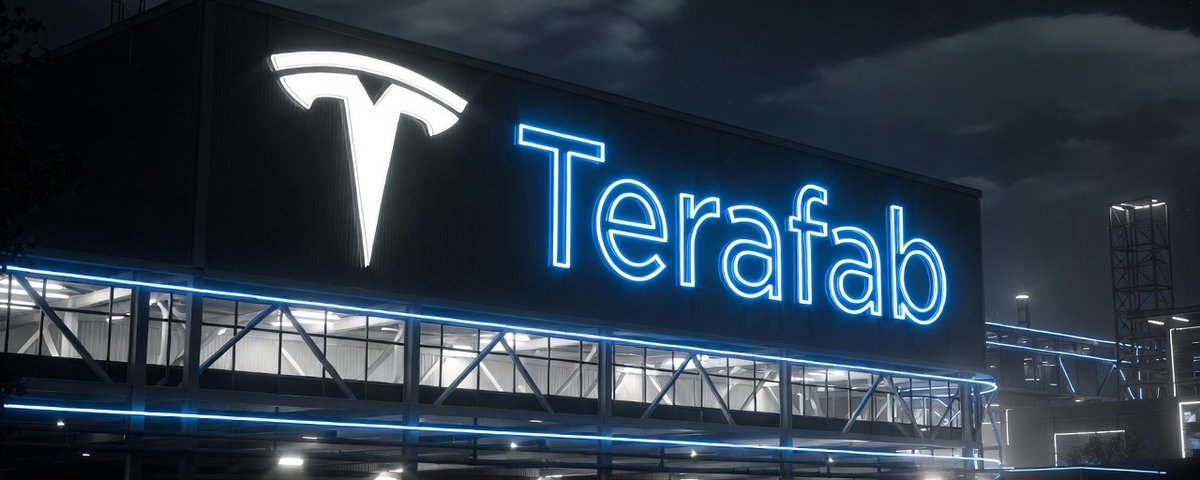
Dry electrode manufacturing cuts cost, energy use & factory complexity while dramatically increasing scalability

Making the dry electrode process work at scale, which is a major breakthrough in lithium battery production technology, was incredibly difficult.
Congratulations to the @Tesla engineering, production and supply chain teams and our strategic partner suppliers for this excellent achievement!