

Systems, psychology, & compounding growth Founder @ TripleLever Built AppSumo’s founder series (5M+ views) Writing "Making Connections" on growth & connection👇
Austin
Joined August 2009
- Tweets2.8K
- Following2.3K
- Followers2.4K
- Likes4.4K




For years, I thought “stress” and “pressure” were the same thing.
Then I heard how Tim Grover (Michael Jordan and Kobe Bryant’s trainer) explains it:
“Stress is just pressure you refuse to deal with.”
The to-do list you keep putting off turns into stress.
Add a deadline, stakes, or someone holding you accountable, and that same list turns into pressure. And pressure gets things done.
The trick is the dose.
Too little pressure and you only do what you’re already capable of. That’s boredom.
Too much and the work outruns your ability. That’s anxiety and burnout.
The goal is the middle, the flow zone. Stretched, but not strained.
So when I feel stressed, I ask which side I’m on.
Too much pressure? Ask for help.
Too little? Add some. Recent example, I got a group of founders together to post short-form videos, and we tracked it in a shared Google Sheet for accountability.
Billie Jean King said “pressure is a privilege.” I finally get it. Most of the time, we get to choose our own.
Every time I'm stuck, I ask one question:
"What would have to be true?"
It almost always shows me the path I was missing.
I got it from @RogerLMartin, who co-wrote Playing to Win with A.G. Lafley, the former CEO of Procter & Gamble.
Most of us plan forward. We start with what's true today and argue about it...
But Martin starts at the end.
Pick where you want to end up, then ask what would have to be true to get there.
I can't tell you how many times I've used this to highlight a new path that I otherwise wasn't seeing.
Instagram had 13 employees when Facebook bought it for $1 billion.
Most companies go the other way.
The team grows, and each person starts doing a little less than they're capable of. Researchers call it social loafing (the group project effect, basically).
Motivation drops, and coordination eats whatever's left.
When I was at @appsumo, our CEO @aymanalabdul was obsessed with revenue per employee.
Looking back, that was his fight against social loafing. He kept asking what if we had the highest revenue per employee of any tech company. (and then it happened)
Pixar leans on the same kind of question.
Their best movie ideas all started as a "what if."
What if toys were alive? What if a fish got lost at sea?
It also shows up in their Braintrust, the peer feedback meeting Ed Catmull writes about in Creativity, Inc.
The key is that the Braintrust has no authority. It gives feedback, but the director ultimately decides what to use.
Feedback come in as "what if" or "would it be clearer if," so nobody gets defensive about their idea.
That phrasing is the whole trick.
Most team meetings run on "what is." What is the status? What is the update?
The better question is what if.
These celebrity endorsements are getting out of hand...
Calling it "sports trades" instead of sports betting since they're prediction markets.
And being regulated by the CFTC instead of state gambling law opens up loopholes like:
- Lowering legal age from 21 to 18
- Operating where sports betting is banned (states like Texas)
- Skipping the ad rules and self exclusion programs a licensed sportsbook has to carry
Put $20 on a game through DraftKings and state law calls it gambling. But risk the same $20 on the same outcome through Polymarket and federal law calls it a financial contract.
But the reality is most people (especially young people) lose $$ on these apps.
The WSJ went through 1.6 million Polymarket accounts and found: 70% of users lost money, and 0.1% of accounts took 67% of the profits.
18 to 21 year olds have traded close to $4 billion just on sports contracts on Kalshi alone this year.
Celebrities have promoted sportsbooks for years. What's different now is that it's framed as a financial product, and it's everywhere you look.
Bank of America found Gen Z is twice as likely as the average American to call sports betting an "investment."
To be clear, I'm not against gambling.
But what doesn't sit right is calling it investing to a generation that mostly isn't investing anywhere else.
More than half of 18-29 year olds don't own a single stock (including a 401k).
And more than half of American workers can't cover a $500 emergency expense.
Where is the celebrity endorsement for yolo'ing into an index fund and letting it compound for 30+ years...?!
Overwatering harms more plants than under-watering.
Widening highways makes traffic worse.
Active traders make the least money.
Every time, adding made it worse.
And yet, we still add.
The "additive bias" is our brains' tendency to try to solve problems by adding (instead of removing).
It's everywhere.
Our calendar, meetings, our "priority" list...
A banger line from Essentialism I think about constantly:
"You cannot overestimate the unimportance of practically everything."
It's okay to remove things.
Be like @RickRubin
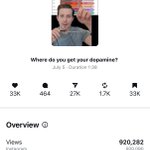
In an unexpected turn of events, this "rise of dopamine" video I made got 900K views and proceeded to rise my own dopamine. #dopedealer

Mitchell Cohen 🌱 retweeted

"If you spend your time chasing butterflies, they will run away. But if you spend your time creating a beautiful garden, then the butterflies will come to you. However, if they don't come, at least you have yourself a beautiful garden."
I read this quote in my friend @mitchellcohen's newsletter a few days ago.
Not sure who originally said that, but I am telling you networking works the same way.
You can go to 1,000 conferences and send 2,000 cold emails trying to get clients, or you can become so good and reputable that clients come to you.
If you try to become good and reputable, at least you'll learn a craft and build a reputation for yourself.
In my 2025 book Beyond Slides I call this tactic "upside-down networking"...

any good examples of people building communities on @beehiiv now?

we launched Community on @beehiiv in mid-July and have already smashed through all of our Q3 goals (with a month to spare)
adoption has been MUCH stronger than even I anticipated
and it makes sense… Community on @beehiiv is different. it’s natively integrated with your newsletter, podcast, website, products, and everything else your audience wants
sneak peek at some features we’re launching in the next few weeks:
> Luma integration for IRL events
> native paywalls and upgrades
> community manager role
> streamlined onboarding
> community badges
> member directory
> improved search
> PWA support
and a whole lot more…
what'd I miss @alifyavaliji ?
The most useful thing I do each morning, I stole from a football coach.
Before he won any Super Bowls, Vince Lombardi was coaching basketball, and prior to every practice he'd have each player take a pledge.
Everyone stood behind the line while he told them:
“God has ordained me to teach you young men about basketball today. I want all those who want that training to step across that line.”
Basically he wanted every player to make a decision each day.
To be COMMITTED to practice. Not just show up.
The “zen master” Coach Phil Jackson wrote about the power of conscious commitments in his book Sacred Hoops.
When you think about it, we all have access to this daily decision.
Whether it’s showing up to work, a practice, or anything…We’re going to show up. The question is HOW.
Here’s a recent example that made it click for me.
I just got back from traveling to Spain and Portugal for a few weeks.
But 2 weeks before we left, I made a commitment to myself to get 2 weeks ahead of all my work.
(If I can’t take time off my business, then I really just have another job.)
Because of this commitment, each day before the trip I showed up, and crossed “the line” (aka opening my laptop) but with this intention.
After a few days I was sort of blown away.
Not only was I getting more done… but even better, I was riding the momentum of getting ahead and feeling GREAT.
Contrast that with just sort of showing up without any commitment. Huge difference.
I realized this was always available, but not until I made the commitment.
As Lombardi said, "The quality of a person's life is in direct proportion to their commitment to excellence, regardless of their chosen field of endeavor."

I used to think self love was just forward thinking…
"What can I do today so FUTURE Mitchell is better off?"
This of course is what the internet would have us believe.
In theory this sounds great. Reminding myself “Discipline = freedom!” while chugging Jocko Fuel.
But in practice, it turns me into a to-do list junkie, which is the polar opposite of self-love...
Creating this loud manager voice who is never happy, always nagging me for more stuff I "should" do.
That voice is there to protect me. I don’t want to completely ignore it.
But I also don’t want to blindly take orders from it.
Because we all have two voices in our head. One speaks from love, one speaks from fear.
The fear voice is LOUDER and never really shuts off. Psychologists explain this is due to our negativity bias, since our brains weigh threats and negative input more heavily than positive ones.
This was helpful back in the day when our threats were real life and death (being chased by a tiger). But not so helpful today, when our “threats” are a flight delay and not enough sugar in our double macchiato.
So to make space for the other, more supportive voice, I start with the 10% question:
“What would 10% more self love look like right now?”
I picked this up in a meditation class. The instructor asked, "What would it feel like to have 10% more softness in your body right now?"
I immediately noticed my shoulders were up by my ears. I dropped them, melted into the chair a little, and right away felt the difference. Wow.
The best part is that 10% is always available. And often grows to much more.
The other night I was choosing between working more and watching the Rafa documentary a friend highly recommended. I basically never watch TV, especially on a weeknight.
But after I asked the 10% question.. I closed the laptop, lit a candle, took a shower, and watched the first episode. (Ah self 𝗅̶𝗈̶𝗏̶𝖾̶ luxury!)
But worth noting, there’s a paradox of trying to do this self love thing.
Often the most effective way to do it…
Is to “do” nothing at all.
As Anne Lamont said, "Almost everything will work again if you unplug it for a few minutes, including you."

When I started my business, I focused on 3 things.
(My LLC wasn't one of them.)
In fact, I ignored almost everything the internet tells you to do first. No website, LLC, or even business bank account at first.
Instead, I obsessed over 3 questions:
1. 𝗪𝗛𝗔𝗧 is the highest-quality, narrowest result I can deliver?
2. 𝗪𝗛𝗢 are the clients I want to work with? (Founders at first, then I found niche in VCs.)
3. 𝗛𝗢𝗪 𝗙𝗔𝗦𝗧 can I ship it?
That replaced my old W-2 income in 4 months.
Then I did the boring stuff...filed the LLC, elected S-corp status, opened the bank account, got an EIN and a bookkeeper.
Somewhere along the way, my sense of TIME shifted.
With a W-2, you sell your time, and you think in years. (aka i said yes to anything)
Now I sell a narrow result on monthly retainer. So I think in months. (and can say no to more things)
Put simply:
A job sells your time. A business sells a result.
And once you start thinking in results, you start wondering what else you could build.
This isn't just me.
@stripe just put out a report called "The Age of the Solopreneur", showing more people doing exactly this.
And reaching real revenue faster than they used to. With AI, I think it only accelerates.
(I partner with founders and VCs to grow their audiences through content and newsletters, so I get a front-row seat to this.)
I spent hours figuring out the setup side, but put everything in my newsletter (link in bio).


Racecar drivers pit stop before the tank is empty.
But the rest of us laptop drivers, weirdly, neglect the pit stop.
If you work in front of a screen, it's easy to turn ON.
But the hard part...
Is turning OFF.
Aka non-sleep deep rest (NSDR), for those who speak Huberman.
I’ll be real here, I’m still very much figuring this one out.
Aside from meditation, it’s hard for me to just flip a switch and relax on command.
But one thing that's been helpful is checking in with how I feel before I try to rest. (Even a 30-second check-in on a bathroom break keeps it top of mind.)
I often think about this Mood Meter, from @drmarcbrackett, founding director of the Yale Center for Emotional Intelligence.
It maps emotions on two axes: energy and pleasantness.
So I just ask myself:
1. Am I feeling high or low energy?
2. Am I feeling positive or negative?
The point is to notice the feeling, not judge it.
For whatever reason, naming where I'm at makes it easier for me to start to actually turn off.
---
Ps. I did a deeper dive on turning fully ON and OFF in my latest newsletter (Link in bio)

We went from playing sports, to watching them, to gambling on them.
@tedgioia calls it the rise of dopamine culture.
Every category made the same jump: slow, to fast, to pure dopamine.
We want more, with less effort, and we want it now.
Best reflection question on this i stole from @natfriedman:
"Where do you get your dopamine?"
The takeaway isn't to "quit" dopamine... Instead, it's being more intentional with it. Using our brain's wiring to our advantage instead of against us.
I like starting with these questions:
1 - Where do you get your dopamine?
2 - What does your brain naturally reward? Compress it into 3 verbs.
I remind myself of Wooden's principles multiple times a week.
Especially when comparing myself to others (more often than I'd like to admit).
Love how his lessons are applicable to life, business, and sports.
Looking for venue in Austin to host small event with ~40 SaaS founders ($10M+ ARR) in February.
Any suggestions on great spots here in town? My dms are open!
Big year!

263% growth rate this year. My top recommendations for 2026. making-connections.beehiiv.c… via @mitchellcohen

Maybe everyone is doing this already,
But I just reviewed my credit card and wow, these small saas / ai subscriptions ADD up.
I literally just canceled $350 in monthly subscription costs.
Worth the 10 minutes to:
1️⃣ Review last 30 days credit card charges (monarch money is also helpful for this)
2️⃣ Search gmail to figure out what some of these are (or just search the exact dollar amount)
3️⃣ When in doubt just cancel everything (can also add back later)
That's the best BF/CM bargain you'll find. 💸
Just found THE LinkedIn playbook 🚀
You can literally just copy and paste:
----
“The new [AI model] just killed [traditional thing that's still alive].
This update replaces a $5,000/mo [role] in 6 minutes.
It's INSANE.
Most [ICP] struggle with [pain]… but I built a Mega-Agentic-Superhuman-CEO-AI that automatically:
- writes 20 posts
- sends 100 DMs
- builds a landing page
- scrapes all of linkedin
- starts a whole new business
- heals your childhood wounds
- optimizes your circadian rhythm
All on AUTOPILOT.
Comment “slop” and I’ll send you the thing that took me 4000 hours and is worth $19,997 even though it's just a google doc.
P.S. Once you comment, I'll grab your email via DM and will send you offers to buy my courses forever, even if you unsubscribe."
Wild that “I Wish” came out 30 years ago…
and Skee-Lo never wanted to be a rapper.
He wanted to be a comedian.
So while every ’90s rapper was flexing cars, money, and status… he did the OPPOSITE:
- He joked about being short
- He joked about not fitting in
- He joked about not having a car
Which turned "I Wish" into a global hit. Viral before "viral" existed.
Crazy part is that he also recorded it in a cheap LA studio and laid the whole song in a ONE session.
Short list of things you don't need:
The perfect plan
To pretend you're something you're not
To play the same game as everyone else
Sometimes the biggest breakthroughs come from the idea you almost don’t take seriously.
Ship the thing only you can make.
Even if (*especially* if) it's the opposite of what everyone else is doing.
You never know which experiment will pop.
(And shout out to Leoshi.)
