

Scientist @ILRI Mazingira in Nairobi - modeling emissions from #livestock in Africa. PhD @virginia_tech #remotesensing & modeling soil #tillage. Views=mine
Nairobi, Kenya
Joined May 2016
- Tweets1.1K
- Following1.5K
- Followers427
- Likes485







Pinned Tweet
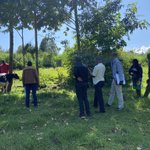
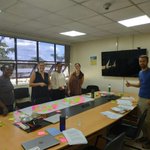
First week of field work with @kcsap_project in #Kericho,Kenya. We are working with KSCAP to assess mitigation of GHGs from dairy systems in Kenya.We conduct farmer surveys on dairy practices and measure productivity (heart girth and milk yields) @ArndtClaudia @linus_erick @ILRI


Mike Graham retweeted

We are missing a big chunk of African #GHG emissions because there's no category for it! Read more in our latest paper on emissions from traditional #livestock enclosures or "bomas" in #Kenia.
Link to paper:
authors.elsevier.com/sd/arti…


Mike Graham retweeted

Great opportunity to join our team @ILRI @Mazingira_ILRI. Research will be testing mitigation strategies for enteric methane emissions using chambers.

🌍 Join us at the Mazingira Centre, @ILRI! We're seeking a Post-Doctoral Scientist in Ruminant Nutrition & Enteric Methane Emissions. Contribute to sustainable livestock research in Africa. Apply now: ilrijobs.wordpress.com/2024/… #JobAlert #Sustainability #ResearchJobs
Mike Graham retweeted

🌍 Join us at the Mazingira Centre, @ILRI! We're seeking a Post-Doctoral Scientist in Ruminant Nutrition & Enteric Methane Emissions. Contribute to sustainable livestock research in Africa. Apply now: ilrijobs.wordpress.com/2024/… #JobAlert #Sustainability #ResearchJobs
Mike Graham retweeted
Exciting Postdoc Opportunity! Check out this #Postdoc position within our HABITAT project, focusing on biodiversity research & modeling livestock GHG emissions in Kenya.
🌿 We're hiring! #Postdoc needed for HABITAT project at @BangorUni & @ILRINairobi. Specializing in biodiversity research & modeling skills. Apply now: jobs.bangor.ac.uk/details.ph… #ResearchJobs #AcademicTwitter Deadline: 06-02-2024
Mike Graham retweeted
We're hiring a postdoc to work on pasture #biodiversity, #SoilHealth, #GHG emissions and grazing management in mixed smallholder farms in Kenya! Joint position between @BangorUni and @ILRI.
🌿 We're hiring! #Postdoc needed for HABITAT project at @BangorUni & @ILRINairobi. Specializing in biodiversity research & modeling skills. Apply now: jobs.bangor.ac.uk/details.ph… #ResearchJobs #AcademicTwitter Deadline: 06-02-2024
Mike Graham retweeted

The Earth right now is far warmer than the previously measured record for this time of year.
Even with a growing El Niño, the pace and size of the uptick that we've seen this year is pretty shocking.

Mike Graham retweeted

As @FAO launches this report on #Methane emissions in #livestock and #rice systems during GC-SLT. I want thank our 54 co-authors, who dedicated their time & expertise to develop this report, in particular, co-leaders @ErmiasKebreab @civiltalker @junmurase, FAO LEAP Secretariat & co-chair @ThanawatTiensin


Mike Graham retweeted

This is extremely misleading! Methane from livestock isn't as bad as methane from FF BUT the livestock are still disrupting the natural carbon cycle (where the decomposing plant material would go back directly as CO2) and converting that CO2 to a short-lived but potent GHG.

Methane emissions from cattle and fossil fuels differ fundamentally and should not be conflated.
Methane emitted by cattle is part of a natural or biogenic cycle. Cattle transform existing carbon in the form of plants and fibrous material into methane through their digestive process. Once released, this methane breaks down after about ten years and becomes water and CO2 molecules. The CO2 and H2O are cycled back into new plant material and the cycle continues.
Fossil fuel emissions, unlike those from livestock, release long-sequestered carbon back into the atmosphere, disrupting the natural carbon cycle.
By lumping emissions from livestock together with those from fossil fuels, cattle are unfairly vilified when in reality they are an important tool for ecosystem restoration and a source of nutrient-dense sustenance.

Mike Graham retweeted
@Mazingira_ILRI. Please listen to our podcast to learn about livestock systems and their challenges in Africa

Mazingera Centre lead @ArndtClaudia joined @icow_ke founder Su Kahumbu and Bernard Kimoro of the @kilimoKE on the Ash Cloud #podcast @Ash_Sweeting to discuss the differences between sustainable agriculture in the Global North and South.
Listen here: podcasts.apple.com/us/podcas…
Mike Graham retweeted
Tune in to our latest podcast on African Livestock Systems! Join our Team-Lead @ArndtClaudia, alongside @BKimoro, Head of Climate Change and Livestock Sustainability at the State Department of Livestock, and the founder of @iCow_ke, @SuKahumbu. 🎧🐄🌍 #Livestock #Sustainability

@Mazingira_ILRI. Please listen to our podcast to learn about livestock systems and their challenges in Africa
Mike Graham retweeted

🌎 ❌ We are crossing more and more planetary boundaries.
Today, six boundaries are crossed. Two more are closing in on transgression.
Decisive policy action can change this as we have shown with the recovery of the ozone layer.
Read more: buff.ly/3Znyu2P

Mike Graham retweeted

#IPCC's latest report 👉 bit.ly/SRYRpt23 shows that current policies are not on track to limit #globalwarming to 1.5°C.
Tomorrow, the @UN Secretary-General @AntonioGuterres convenes a Climate Ambition Summit at #UNGA to accelerate ambition, credibility & implementation.

Mike Graham retweeted
Read here a recent interview with our Postdoc Yuhao Zhu and scientist @sonja_leitner on our South-South collaboration between African and Chinese scientists to reduce #GHG emissions in Kenya's smallholder farms.
@ILRI @ArndtClaudia @CGIAR @TAHMO_World
chinaglobalsouth.com/2023/09…

Mike Graham retweeted
Please follow our lab through our new account @Mazingira_ILRI to learn more about our research on #climatechange #mitigation and #sustanability in African #livestock systems!

Follow my lab through our new account @Mazingira_ILRI to learn more about our research on #climatechange #mitigation and #sustanability in African #livestock systems!
@ILRI @ArndtClaudia @LutzMerbold @model_farmer

Mike Graham retweeted
Follow my lab through our new account @Mazingira_ILRI to learn more about our research on #climatechange #mitigation and #sustanability in African #livestock systems!
@ILRI @ArndtClaudia @LutzMerbold @model_farmer – at Nairobi, Kenya
Mike Graham retweeted
Earth just had its hottest three months on record - @WMO & @CopernicusECMWF
Limiting human-caused #GlobalWarming requires #NetZero CO2 emissions.
Limiting warming to 1.5°C & 2°C involves rapid, deep & in most cases immediate #GHG emission reductions.
➡️bit.ly/WMOPRHt
Mike Graham retweeted
Our latest publication shows that #N2O emissions from sheep excreta in #Kenya are 10-times lower than #IPCC defaults. Without local data, #GHG inventories might overestimate emissions from African #livestock.
@ArndtClaudia @ILRI @Project_ESSA
sciencedirect.com/science/ar…
Our paper on #GHG #emissions from sheep excreta was published today! Excreta #N2O emissions were 10 times lower than IPCC defaults, highlighting the need for local mitigation data from African #livestock. #mazingiracentre @ILRI #AfricaClimateSummit23
sciencedirect.com/science/ar…

Mike Graham retweeted

Excited to attend and speak at the Climate-smart Approaches to enhance Ruminant/Livestock production efficiency and Food production systems (140401) at Science Summit at United Nations General Assembly (UNGA78) sched.co/1QCrL @scienceunga #sciencesummitunga @sched
Mike Graham retweeted
Latest findings from our @ILRI @MazingiraCentre _Measured N2O emissions from sheep excreta lower than IPCC defaults
Our paper on #GHG #emissions from sheep excreta was published today! Excreta #N2O emissions were 10 times lower than IPCC defaults, highlighting the need for local mitigation data from African #livestock. #mazingiracentre @ILRI #AfricaClimateSummit23
sciencedirect.com/science/ar…