

Artist/ Photographer/ Explorer, entrepreneur & Overland adventurer, alchemist, generating Monkey Tree Projects...
London, and adventures..
Joined February 2008
- Tweets9.9K
- Following1.9K
- Followers783
- Likes4.1K




Sara Haq retweeted

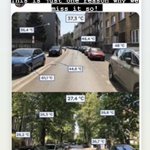
A Japanese immunologist spent 20 years proving that the chemicals trees release into the air walk into your bloodstream, hunt down your stress hormones, and arm your immune system in ways no therapist or pharmaceutical has ever matched, and most of the data has been sitting in Japanese medical journals for two decades waiting to be translated.
His name is Qing Li.
He is a clinical professor at Nippon Medical School in Tokyo and the president of the Japanese Society of Forest Medicine. The Japanese government has been funding his research since 2004, and the body of work he has produced is the reason forest bathing is now an officially prescribed clinical therapy in Japan and Korea.
The story actually starts in 1982, when the Japanese Ministry of Agriculture, Forestry and Fisheries coined the term shinrin-yoku to describe the practice of slow, mindful walking in a forest. They did it for a practical reason.
Japan was urbanizing fast, stress-related illness was climbing, and the country had thousands of square kilometers of forest sitting unused. The idea was to give people a reason to walk into the trees... They had no idea what was actually happening to the human body during those walks until Qing Li ran the first proper experiment in 2005.
He took twelve healthy adult men on a three-day, two-night trip to a forest park. They walked for a few hours each day. Nothing strenuous. No prescribed routes or breathing exercises. They simply walked slowly through the trees, breathing the air, looking at the forest.
Li drew blood and urine samples before the trip, on the second day, on the third day, on day seven after returning home, and again on day thirty.
The numbers that came back from the lab were not what anyone expected.
The activity of a specific type of immune cell called the natural killer cell, which is the cell your body uses to hunt down cancer cells and virus-infected cells before they can spread, had jumped by roughly 50 percent during the forest trip. The actual number of natural killer cells circulating in the bloodstream had increased significantly.
Three different anti-cancer proteins that those cells produce, called perforin, granzymes, and granulysin, had all risen sharply. And the effect did not disappear when the men went home. The immune boost was still measurable on day seven and was still partially present on day thirty.
Two hours a day in a forest had upgraded the immune system for a full month.
Li ran the same experiment with women a year later and found nearly identical results. Then he ran it with a control group who took a three-day trip through an urban area with the same amount of walking, the same hotel quality, and the same diet.
The urban group showed no measurable change in natural killer cell activity at all. The forest was doing the work, not the vacation.
The mechanism turned out to be a class of airborne molecules called phytoncides. Trees produce these compounds to defend themselves against insects, bacteria, and fungi. Pine, cedar, oak, and cypress trees release them in particularly large amounts, especially in warmer weather and after rainfall.
When you walk through a forest, you are inhaling those molecules into your lungs and absorbing them through your skin, and once inside your body they appear to directly stimulate the production and activity of the very immune cells Li was measuring in his lab.
Roughly 50 percent of the health benefit of a forest walk, according to Li's data, comes from the chemistry of the air itself. The other half comes from what the forest is doing to your nervous system.
This is where it stops being only about the immune system and starts being about stress.
A separate Japanese research team measured cortisol, the body's main stress hormone, in 84 participants across 35 different forest sites. They drew samples before and after a 30-minute walk in each forest and compared them to control walks in matched urban environments. The cortisol levels of the people who walked in the forest were lower than the cortisol levels of the people who walked in the city by a significant margin. Their heart rates were lower. Their blood pressure was lower.
The activity of their parasympathetic nervous system, which is the part responsible for rest and recovery, had gone up. The activity of their sympathetic nervous system, which is the part that drives fight or flight, had gone down.
Then a researcher at the University of Michigan named MaryCarol Hunter ran the cleanest version of this experiment ever done. She recruited participants from a city and told them to take a nature pill three times a week for eight weeks.
They were free to choose the time, the place, and the duration of the nature experience, as long as it was outside, in daylight, and free of phones, conversations, and aerobic exercise. They sent her saliva samples before and after each session so she could measure cortisol changes accurately and rule out the normal daily drop in stress hormones that happens to everyone.
The result was that participants experienced a 21.3 percent drop in cortisol per hour spent in nature, with the biggest payoff happening between minutes 20 and 30 of the walk.
After that, the cortisol kept dropping, but more slowly. The threshold dose for measurable stress relief was just 20 minutes outside in something that looked and felt like nature.
What none of this means is that nature is a substitute for therapy or for medication when someone genuinely needs them. Therapy treats different things than a walk does, and Li himself has been careful in interviews to call forest bathing a complementary intervention rather than a replacement for clinical care.
But what the research has settled is that the human body has a physiological response to being among trees that operates on the same biological systems modern medicine is trying to reach with drugs and clinical protocols, and that response is fast, measurable, and free.
The strangest part of Li's work is the implication he keeps repeating in interviews. The average person now spends more than 90 percent of their life indoors. Their cortisol stays elevated. Their natural killer cells stay sluggish.
Their parasympathetic nervous system rarely gets a chance to take over. The system that was tuned by millions of years of life under a canopy of trees is being asked to run permanently inside a box made of drywall and screens.
Your body has not forgotten what it is supposed to do in a forest. It is waiting for you to walk into one.

Sara Haq retweeted

So let me get this straight for a minute:
Some professionals claim that there are hundreds of mental disorders in the brain. They claim there are thousands of symptoms and they all overlap. They claim they might be caused by genetics, but can’t find a gene. Might be caused by chemical imbalances, but can’t find any proof. Might be innate, but can’t prove it. Might be transmissible, but can’t prove that either. They can’t develop any tests and never have done. No brain scans or blood tests can differentiate anyone. They claim that toxic medication, imprisonment, and electrical currents directly to the brain will help people with these disorders.
ON THE OTHER HAND:
Another opposing group of professionals claim that this seems far-fetched, and it’s much more likely that humans go through hard times and traumas in their lives which change their thinking, behaviours and emotions. Extreme traumas cause extreme changes, trauma responses and coping mechanisms to kick in for survival. They don’t advocate for any medications or dangerous treatments. They don’t agree that people should be locked up for months or years. They don’t suggest that there are any definitive tests, because everyone is so unique.
And yet it’s the SECOND group of professionals who are seen as radical, unscientific, dangerous, conspiracy theorists and unprofessional.
Can you see how twisted this has become?
The group claiming there are hundreds of unprovable mental illnesses that require cocktails of medications, imprisonment and ECT are framed as the ‘safe’ professionals, but the ones suggesting we should listen to humans and try to help them without further harming them are the ‘unsafe’ professionals.
The ones giving their patients more and more drugs, increasing dosages, trial and error with human bodies and lives are the ‘trusted professionals’ - but the ones suggesting that maybe there is nothing biologically wrong with the patient, and they are traumatised or distressed and need compassion and support are ‘grifters’ and ‘dangerous’.
This is how powerful the grooming is around this topic.
The person being paid to diagnose people with unproven mental disorders and then prescribe harmful medications and treatments whilst ignoring their trauma is a ‘professional’ - but the person advocating for careful, humanistic approaches where we validate and listen to people’s distress is ‘unprofessional’.
How did you all fall for this?
🙃🙃🙃
Sara Haq retweeted

The venn diagram of new age spiritualists, wellness industrial complex, clean girl aesthetics, toxic positivity, neo-liberal selfcare, white feminism is a circle. Rooted in & perpetuating eugenics via white supremacy & ablism. And settler colonising geo-political global south 1/2

Sara Haq retweeted

In systemic work, there’s no end in how much you can learn and your knowledge / practice deepen (actually that’s anything), but where I’ve seen the magical leadership emerge and actually be able to really start to do anything without reverting to business as usual, is because of the orchestrators, and often because orchestration is so hard and takes so much extra effort, others often protect themselves and see them as personality traits of certain people rather than keep capabilities critical for everyone to develop if they want to be leaderful in this work, rather than just smart. It’s beyond developing your own smarts, tasks and practice and it takes lots of extra effort.
The work of translation, communication, connections, can be as simple as open communication, making connections, translating individuals pieces of work to see the new possibilities and interdependences, it’s full of deliberation, lots of communication, administration and it isn’t the work of one person to do all of that, the continual dance of orchestration across these domains more and more thoroughly, rigorously and thoughtfully is where anything special happens.
The emotional energy of leadership beyond your own tasks, completing work in isolation that is good but doesn’t dance with the people, and adjacent possibilities around it, is vast. That’s why delegation isn’t about, could someone do that task for you, this capabilities required are far more sophisticated and if this isn’t the domain of leaderfullness you feel you can leap into, then I’ve seen really high high quality deeply skilled work in a very specific domain can complement the above energy in a really powerful way.
This work isn’t highly resourced, or doesn’t have the time, or benefit from ten different people going from research, to copy, to practice, to design, to visuals in a long elongated cycle we often see if more formal corporate work and departments, so the deep multifaceted skills and the orchestration capacity dancing together sharing the deep emotional, organising load and labour is where the magic happens. It takes deep work with ourselves as to whether we want to do that, or whether we want a clearer more linear management paradigm in other types of work, we have to reckon with that, and really step in and up if we want to do this type of work.
Sara Haq retweeted
It’s time for my monthly and annual thread that nobody will read or action, lots of people will say, but I’m going to do it anyway because who knows right. So, a lot of us agree at varying degrees of what’s next that the goals of the current economy, and how we attribute value, or what we value is not fit for purpose. Right, so we know we need to move beyond financial return as the main metric, we know we need to go beyond GDP, we know we want to return and retain as much wealth of all capitals at the scale of the community, street, neighbourhood. We have all the right language of knowing something very different is very urgently needed next. Now, the what and the how, well there is lots of what’s, and what comes next won’t look precisely like any of them, but a bit like a lot of them, and you won’t really be able to attribute it to one thinker or model.
So even ‘the what’ has a fair deal of framing, models, detail now. There is A LOT more of ‘the how’ that needs to be discovered, right and that’s what the long, large, regenerative money needs to go into, lots and lots of the discovery of the how, in lots and lots of experimental, deep and rooted ways. Plenty and plenty of people who are primed for that, who are scrabbling around in a 20th century model of giving, not discovery of the next systems we will need to craft, shift, disrupt, build out of utter crisis. Land is a huge part of what so many of those people need, but many other types of assets too, to build out demonstrations, to discover the how of the next economy, next systems, what comes next basically — whatever you feel best calling it.
Now, the really ridiculous thing is everyone doing that is being pushed back into the same business models, the same need to create business plans, and the same ideas that got us into this mess for any investment at all. Which is counter to how we discover those next pieces, but people are obsessed that this how they understand investment, risk, how to move money. This means that those trying to do any of that future work, are having to stop anything interesting to satisfy 20th century models, create business plans they know will not work in the cascading crises the next two decades will bring, to persuade people who will see it all as risky.
So, it can’t be emphasised more, that those doing this work need to be deeply trusted, and expanded rapidly and encouraged to move out of the safe zone that investors and funders force them into, because they only working within the existing frame of risk, and what is possible. So, if you are worried about what’s happening, what’s coming and don’t want to wait until utter crisis, and you don’t want to make progressive work, stop, create old dependable plans, that are basically not fit for purpose for the future — and waste more time and energy, of people trying to force through and break out of the shackles of now. You know you need to invest differently, we don’t need 100 more reports, round tables, programmes, blogs. Here is a reminder of a number of high impact easy to do things in 2024, I know at this stage you’re all sick of me saying the same stuff but here we go:
1. 10 year funding, double average revenue of last three years, so they can build, discover, and have a bit of a buffer.
2. Discovery capital investment, so next models can be demonstrated, give at least 10 year payment break so that there is time and space to implement and build the models proposed out, that you often don’t believe are possible.
3. Buy up the land and assets, and get them out of the extractive development market, without endless business plans that follow old models and patterns, force people don’t pointless journeys, and in the mean time they lose the assets, to that market, and waste all their time and energy, fighting a fight they can’t win, telling a business plan story, that is nonsense for what is coming.
These are very simple things. Do it in 20-30 places with people working on transition .. – at Solihull, England
Sara Haq retweeted

Please listen and feel the words of my good friend Rev. @MuntherIsaac in #Bethlehem. We wish you a peaceful Christmas.
Sara Haq retweeted
Some of this most critical and propositional work of our time is happening @CIVIC_SQUARE , I’d really encourage folks to apply and spread the word

We are excited to share an open set of connected commissions for architectural illustrators and visualisers who may have individual capacity or as a team to work alongside our architects and @CIVIC_SQUARE team in early 2024.
APPLY: bit.ly/PublicSquareArchCS


Sara Haq retweeted

I could never imagine that I would ever create a post comparing psychiatric hospitals in different countries but here it goes: I had the ‘opportunity’ to experience psychiatric ‘care’ in both England and The Netherlands and differences are astonishing.
1. Twenty years ago I would say it was the same.
They hold you against your will if you experienced a ‘psychosis’, give you zyprexa (Olanzapine) as first choice of treatment and release you back into the community as a person with disability. It’s horrible.
2. Back in England there is this mental health act that deprives you of your freedom automatically if you have had a psychosis, even if you come and ask for help yourself. They just section you and you end up begging for the rest of your ordeal: ‘please, please, release me! I have a life outside this hospital! I have a family and a job!’
No, they hold you tight until you loose your job.
It happened to me.
I love England. I miss it so much, it hurts every day that I am not in Sheffield, with my friends for life, the hills, the Peak District, the pubs, British sense of humour, roast on Sunday, the language, the people.
But mental health services are just horrible. They dehumanise you and stigma is unprecedented.
2. I can’t talk about the whole Netherlands but Friesland is a different story.
The maximum stay in a hospital is about two weeks. Once you are out of ‘psychosis’, they let you go.
They make sure that you continue to receive care after the hospital.
They listen to you and take your side effects from antipsychotics into account.
You don’t stand begging for attention, asking someone to take you for a walk. It’s automatically planned into your daily activities: a walk, sport, art therapy, etc.
I was surprised how quiet hospitals are here until I realised that no one is screaming from despair.
There is no stigma.
I will tell more in other posts.
What is your experience with psychiatric hospitals?
#Psychiatry #psychosis #mentalhealth #bipolar – at Leeuwarden, Nederland

Sara Haq retweeted

TONIGHT: Rehumanising The Ends w/ @JoyWhite2 @acaaugustin Andre Anderson & Yusef Bakkali
On tensions & possibilities of human/loving ends relationships & narratives. On tangible, nuanced, beautiful & interdependent expressions of working class communities
rehearsingfreedoms.com/event…

ALT Photos of Joy, Andre, Alex and Yusef. Text reads: Headshot of Dr Joy White. Photo of Andre Anderson sat down. Headshot of Alex Augustin. Headshot of Dr Yusef Bakkali.
Sara Haq retweeted

Great chat with @TheArtsCatalyst about the Soil Futures Gathering happening in Sheffield this Friday. Piece by @Nibbly_Pig.
"A shared meal is usually when the most expansive and inspiring conversations happen."
nowthenmagazine.com/articles…
Sara Haq retweeted

It was an honor to interview Joanna Moncrieff for Psychology Today, as I’ve been a fan of her work for some time. I came away with the impression of someone with almost supernatural equanimity and poise in the face of increasingly personal attacks @joannamoncrieff @PsychToday

ALT image of a Psychology Today post that reads: “Beyond the chemical imbalance theory of depression: A psychiatrist’s lonely battle to dismantle a broken system” alongside an image of a distressed woman in nightgown. The post can be read at https://bit.ly/3PFmPI0
Sara Haq retweeted
2 DAYS TO REHEARSING FREEDOMS FESTIVAL ✨🔥🫀 Oct 11 - Nov 11
rehearsingfreedoms.com/progr…
@tweetskindeep @Kwajotweneboa @kelechnekoff @CopwatchNetwork @NExclusions @Gargi_at_home @SoSowemimo @PantheaLee @we_level_up @thebrownhijabi @NdefoNkem @LDNRentersUnion @johnpringdns @YomiSode

ALT A Rehearsing Freedoms graphic showing the festival venues and contributors listed underneath. Venues are 'ICF @ Block 336', 'HJL Dream Space' and 'Avalon Cafe'
Sara Haq retweeted

[1/6] Great panel coming up for the #RehearsingFreedoms Festival! It will discuss the the relevance of our economic climate and austerity on Muslim health. See 🧵 for some ideas of the discussion.
Join us and please share this around! rehearsingfreedoms.com/event… @HJusticeLdn

The fantastic @IndigoDaya inspiring and powerful work @dropthedisorder
#ad4efestival23 #slicesilence
