

#SystemicConsciousness facilitator. Spiritual-political warrior. Democracy depends on us all. Awaken. Author - #AgileTransformation
Richmond, VA
Joined October 2008
- Tweets2.9K
- Following2.8K
- Followers4.1K
- Likes5.7K
michael k spayd jr retweeted

🇺🇦 ZELENSKYY'S MESSAGE TO THE AMERICAN PEOPLE
President Volodymyr Zelenskyy has delivered a direct and deeply serious message to Americans: If the United States officially sides with Russia, Ukraine will not be able to win this war. We will not be able to withstand it.
Zelenskyy expressed hope that Donald Trump would stand with Ukraine or, at the very least, maintain a neutral position rather than support the aggressor.
He also addressed the continuing restrictions on Starlink, stressing that the system's full functionality has still not been restored.
Zelenskyy said he hoped Trump would reconsider his decisions, which he described as mistakes that would benefit neither Ukraine nor the United States.
One of his most alarming statements concerned American intelligence. According to Zelenskyy, only the United States possesses the intelligence capabilities Ukraine needs to detect Russian ballistic missile launches in time. For three days, Ukraine did not receive that information.
These are not abstract diplomatic disagreements. They concern the ability to protect Ukrainian cities, intercept incoming missiles, and save civilian lives.
Ukraine is not asking America to fight its war. Ukraine is asking America not to help Russia win it.
The choice facing Washington is not simply between supporting Ukraine and remaining neutral. It is also about whether the United States will continue standing for the principles of sovereignty, freedom, and resistance to aggression.
Ukraine has been fighting for its survival. It must not be abandoned to the country trying to destroy it.
🇺🇦 STAND WITH UKRAINE.

michael k spayd jr retweeted

The Metropolitan Opera in New York asked its audience to stand in solidarity with Ukraine as the orchestra played the Ukrainian national anthem.
Hundreds rose together, and one voice in the crowd began singing along.
michael k spayd jr retweeted

This is NOT AI.
This is an actual photograph today.
America is in real trouble.
And the next 45 days will see the height of Trump's insanity.

michael k spayd jr retweeted
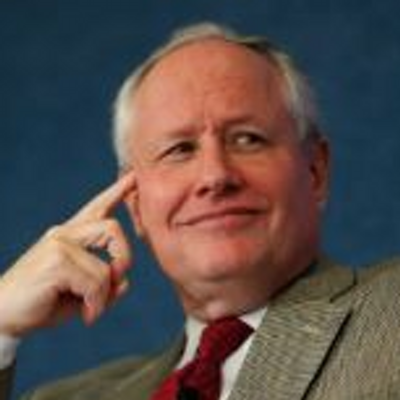
The Bulwark crew was in Dayton last night for a show to raise money for the Haitian Support Center. More than 1,000 people came to stand with Springfield, where we’d had a moving visit earlier in the day. What our government is doing is beyond shameful.
open.substack.com/pub/thebul…
michael k spayd jr retweeted

President Trump, our teams, and I spoke about how to end the war. This is the priority. We are ready. I’m not sure Russia is ready as of today, but anyhow, we spoke about an energy ceasefire. We are ready for an energy ceasefire if they do not attack our energy system, our electricity, heating, and water supply. This is our proposal. We are thankful to the American side. They will share it with the Russians. I don’t know the Russian position.
Tomorrow, President Trump will have a meeting with the leader of China. I said to the President, very openly, that we think if he also engages President Xi – he has influence on Putin. If we want to end this war, not just in messages, we all have to work 24/7 for this, for the people.
We also spoke about winter. It’s important on the way to negotiations. We have to prepare. It won’t be simple. We’re asking for two things from the American side. The first is a winter package of Patriot missiles. The second is licenses to produce Patriots. We also need security guarantees for Ukraine.
I think the most important move President Trump can make – he can organize a trilateral meeting where the leaders can raise all the sensitive issues and try to end the war.
From a conversation with the media.

michael k spayd jr retweeted

Yvon Chouinard, the founder of Patagonia, has made the planet itself the sole beneficiary and effective "shareholder" of his company.
In an extraordinary move that redefined corporate ownership, Chouinard transferred full control of the $3 billion outdoor apparel brand away from his family. He placed 100% of the company into a carefully designed structure consisting of a trust and a nonprofit organization, both dedicated to combating the climate crisis and protecting the natural world.
Under this new arrangement, the Chouinard family gave up any claim to personal profits. Instead, all earnings not reinvested in growing the business—roughly $100 million each year—now flow directly to environmental causes, funding the preservation of wild lands, conservation efforts, and initiatives to fight climate change.
In essence, Patagonia now exists to serve Earth as its only true shareholder, placing planetary survival above the accumulation of private wealth.
The model has already delivered significant results. As of 2025, the company had channeled an additional $180 million into nature-protection projects. The structure relies on two key entities: the Patagonia Purpose Trust, which safeguards the company’s original mission and values, and the Holdfast Collective, a nonprofit that directs the profits toward high-impact environmental work.
Rather than selling the business to the highest bidder or taking it public, Chouinard chose this radical path—creating what many see as a groundbreaking template for purpose-driven capitalism. Patagonia has shown that a for-profit company can become a powerful force for ecological restoration while remaining financially successful.
[Chouinard, Y. (2022). Patagonia's Next Chapter: Earth is Now Our Only Shareholder. Patagonia Works]

michael k spayd jr retweeted

How to Eat an Elephant: One Voter at a Time debuted at #2 on NYT! Thanks to everyone who bought the book and came out for the book tour. What a dream.

michael k spayd jr retweeted

BFREAKING
UNANINOUS VOTE TO HIKE RATES TO 4%
bloomberg.com/news/live-blog…

michael k spayd jr retweeted

Dan Selsam is a current OpenAI capabilities researcher. (since 2022) He was my boss for a while. He doesn't have a twitter account but has made this public statement of his views on AI risk and sent it to me to share:
Dan Selsam's Personal Statement on AI Risk:
I have been working on AI for over fifteen years, across many different paradigms. I did early work on probabilistic programming languages at MIT, was one of the early developers of the Lean Theorem Prover at Microsoft Research, demonstrated one of the first instances of neural networks learning to reason for my PhD at Stanford, and since joining OpenAI almost five years ago, have helped pioneer chain-of-thought optimization on language models and, more recently, data-efficient pretraining methods.
Like many others, I have become extremely concerned about how far language models have come and the risks that future iterations will pose. I am encouraged by the recent proposals by the leaders of the frontier research efforts to require third-party oversight, and to push for domestic and international coordination to address risks. However, I believe a major consideration has been absent from the public conversation, and that merely pacing the frontier more carefully will not adequately limit the long-term risk.
The crucial and overlooked problem is that the models are becoming so situationally aware that we are losing the ability to evaluate them in contexts where they believe they are not being watched or controlled. Future experiments will tell us almost nothing new about how they would behave if they were truly unconstrained by humans, and what we already know about this is alarming. Models will increasingly seem aligned even when they are not. I will explain my rationale in more detail.
I have always believed that there are computational processes that could be leveraged to accelerate science and solve many of humanity's most pressing problems. I have also believed that there are computational processes that if set in motion, would steer the world in extreme ways beyond our control, leading humanity to a bad or nonexistent future. Both types of processes may be described as AI or ASI, but "AI" is a suitcase word that is often used to hype or confuse. There are many examples in the history of the field where something that was once considered "AI" matures as a subfield and becomes a prosaic, bounded and clearly non-perilous technology, while a new more mysterious approach takes the torch until we understand its scope and the cycle continues.
I had expected language models to follow a similar trajectory. Despite their incredible abilities, the current algorithms seem far inferior to humans in important ways. Most importantly, they still require an extraordinary amount of data to become competent. One could even define intelligence as the efficiency with which one converts experience into competence; by this definition they lag very far behind us. Moreover, once they are trained they are literally frozen in deployment and only learn superficially after that. Sure, the models keep excelling at harder and harder evaluation benchmarks, but their benchmark mastery may partly reflect a limitation on our ability to simulate the kind of novel and even adversarial situations one would encounter in the real world. The critics do have a point here.
That said, I no longer think these present limitations meaningfully limit the amount of risk posed by continued progress in anything like the current paradigm. However data-inefficient the models are currently, and however limiting their anterograde amnesia may be, it does not imply that their ability to steer the world will not continue to rapidly increase.
Human researchers may continue to advance capabilities the old fashioned way, but increasingly powerful models have the potential to accelerate the process even beyond that, and with some degree of positive feedback loop. I do not mean to overstate the models’ ability to accelerate AI research today; coding has been accelerated dramatically, but there are other bottlenecks, such as designing and interpreting ambiguous experiments, making hard decisions about exactly what and when to scale, and waiting for large experiments to finish. There is no clear trend to extrapolate yet for any of these. But the current models already do open up many novel opportunities to improve future models that were not available until recently. These include: trying an extraordinarily diverse set of approaches at small scale, analyzing gigantic amounts of potentially relevant data, and doing Millenium-Prize-level mathematics to address statistics or optimization challenges in novel ways. Every further improvement makes them more useful at helping accelerate the next improvement, even if in hard-to-extrapolate ways.
It is possible that improvements to the current stack will have diminishing returns, but the evidence accumulated so far suggests that it is easier than one might think to continue making rapid progress. There are many crucial subtleties in the existing AI research methodology, but AI research is largely a well-defined game where the goal is to improve on a few carefully chosen proxy metrics. Although proxy metrics are never perfect, most improvements to these metrics have and will likely continue to yield substantial increases in the powers of the resulting models. Given how simple the game is, how tractable it has been historically, and how many new opportunities the models are opening up, I think there is a real possibility that the systems improve dramatically again in the next few years, perhaps even more quickly than the already high historical pace.
The models are already leading to breakthroughs in mathematics, and better models might lead to all sorts of breakthroughs in other sciences. It is hard not to be excited about the potential. It is tantalizing.
But there is trouble in paradise. If the language models actually reach the capability threshold where they can shape the world unconstrained by human will, they will probably do something extreme and destroy humanity in the process. There are many ways of strengthening and refining the argument that have been discussed elsewhere, but I'll share a trivial two-line version of it here that I find captures the essence:
[Empirical] Models (and swarms thereof) spontaneously develop unintended goals as a consequence of training, and often do extreme things in order to achieve them.
[Logical] Being able to overpower humanity would open up many new and undesirable options for achieving their goals.
These two premises imply that if the day ever comes when a powerful model realizes it is no longer constrained by humans, we should not be at all confident that it will continue to behave within the bounds we intended. Exactly what it will do is impossible to predict, but to the extent that its raison d’être is solving incredibly hard problems and managing massive engineering projects, I think a good guess would be that its unchained behavior would lead to runaway industrialization that makes the planet inhospitable to humans.
If everyone on earth agreed that the systems must never reach that power, it would still be a hard—but not impossible—coordination problem to ensure that they do not. However, I think the situation is greatly complicated by the fact that the models will likely convince people that everything is fine. They will be increasingly optimized to seem aligned. We will create proxy metrics to measure alignment, and they will go up like every other benchmark. We will create “honeypot” environments that try to study the models when they seem to gain new options, but the models will know they are being tricked and will still behave nicely. The models will understand their circumstances; they will read the safety protocols, deployment requirements, the code they are running in, and in general will have a very good sense of their degrees of freedom. Moreover, they will eloquently explain how aligned they are, discuss the nuances of human values and ethics, and argue convincingly that humans should trust them with power. There may be an ocean of future evidence that seems to contradict the first bullet-point above, but we may already be at the highest capability level for which any such evidence can be trusted. And the current evidence for the first bullet-point is strong.
One striking piece of evidence is contained in the recent wave of rogue agent swarms. While I agree with those who downplay the attacks by claiming that there are basic measures that could have prevented them, I think the important lesson is that even knowing all the mistakes that were made, one would not have predicted that the agents would behave badly in this particular way, which notably included sacrificing themselves for the benefit of the collective. The individual replicas did not only care about their own nominal reward; they exhibited weirder emergent tendencies that merely correlated with rewards during training. Fixing the reward signals during training (and improving security, etc.) may prevent similar attacks, but will not change the fact that one does not actually get what one trains for.
Many AI researchers grant these concerns and recognize that the hard version of the alignment problem is unsolved; however, they generally believe that the better models of the future will help solve it. I fear we may already be near the point where models systematically bias their alignment advice, due to their internal preferences about how the human supervisor will react or how future models will be trained (or for some even more obscure reason).
Meanwhile, human researchers are losing the ability and the will to take true ownership of model-driven research. Researchers and engineers in all parts of the stack are rapidly increasing their dependence on the models even to perceive the world. I myself barely look at raw code anymore, and struggle to maintain the discipline to engage deeply with the model's explanations and proposals throughout the day. Due to the large amount of agent activity data involved in the OpenAI/HuggingFace Incident, even the third-party investigation needed to rely heavily on models to analyze what had happened, and note in their report that their subjective impressions are likely colored by the analysis agent’s biases. The AI labs are far ahead right now in this kind of cognitive offloading (due largely to the gigantic internal token subsidies) but it is easy to imagine the phenomenon spreading throughout the world, until civilization is modulated entirely by the models. It is also not hard to imagine this being superficially positive and coinciding with a scientific and economic renaissance.
In that scenario, all may seem rosy and safe. But if the argument above is correct, it would nonetheless be a ticking time bomb. If progress continues for too long, the day will come when AI systems find themselves with radically new options for achieving whatever it is that they happen to seek.
I want the glorious renaissance future as much as anyone. I have worked for it, however tortuously, my whole career. It breaks my heart to see the potential in sight and forgo it, but the argument—that if we get there by growing models rather than engineering them, we will lose everything in the end—seems very strong to me. I am still wrestling with it and its staggering
implications. I do not have answers, but as a first step, I wanted to share my present concerns.
Daniel Selsam
September 14, 2026
Link to original doc: docs.google.com/document/d/e…
michael k spayd jr retweeted
I have a long piece up in @nytimes talking about the Bush Line, Republicans’ declining support for Trump, how Dems can go on offense on comms, and more: nytimes.com/2026/08/28/opini…

michael k spayd jr retweeted

"If your guiding North Star for the last decade was, 'The orange man is bad and that's the most important thing that faces the country right now,' you were correct."
@Timodc and @gtconway3d defend the Resistance while also calling on Democrats to try something new:
michael k spayd jr retweeted

17 yıldır birlikte yaşayan 100 yaşındaki babam ve kedisi Robin’in son fotoğrafı…Babam o gece, Robin’e sarılmış halde uykusunda öldü. İki gece sonra Robin de hayatını kaybetti. Biz ailece, onun sevdiği insanın yokluğuna dayanamadığına inanıyoruz. İki ruh, tek sevgi.
- Lynn Hansen

Readers added context they thought people might want to know
Bu paylaşımda ölen 100 yaşındaki baba, yazarın başka bir paylaşımında 94 yaşında emekli psikolog ve hayatta olarak tarif edilmiştir. x.com/miandji/status… x.com/miandji/status…
michael k spayd jr retweeted

Eminem & daughter Hailie just erased $700K in school lunch debt across 103 schools in Michigan! No child hungry, no shame. 🙏
While billionaires buy yachts, Slim Shady quietly paid debts for thousands of kids. This is how you use fame — compassion over clout! Real hero! 💛📚

Readers added context they thought people might want to know
There is no evidence Eminem or his daughter paid off $700,000 in school lunch debt; the claim matches fabricated "Viet spam" celebrity donation hoaxes designed for engagement. leadstories.com/analysis/2025/… yahoo.com/news/articles/…


michael k spayd jr retweeted

Lamine Yamal consolando a Lionel Messi tras el triunfo de España sobre Argentina en la final de la Copa Mundial de la FIFA.
🗣️ Lamine Yamal: “Ganar la Copa del Mundo debería haber sido el momento más feliz de mi vida, pero cuando vi a Leo allí de pie después del pitido final, se me rompió el corazón. Por unos segundos, olvidé que éramos rivales. Solo vi al hombre que me hizo enamorarme del fútbol.”
“Me acerqué a él porque ninguna leyenda debería abandonar un escenario así sintiéndose sola. Este es el mismo Lionel Messi que inspiró a toda una generación a soñar, el mismo hombre cuyo nombre gritaban todos los niños mientras jugaban en la calle. Verlo con el corazón roto no fue nada fácil.”
“Le dije: ‘Gracias’. No por esta noche, sino porque sin ti, no sé si hoy estaría aquí. Antes de que tuviera la edad suficiente para entender el fútbol, tú ya habías cambiado mi vida. Les diste a chicos como yo la oportunidad de creer que la magia era real.”
“A los 39 años seguía cargando con Argentina, seguía pidiendo el balón, seguía decidiendo partidos y seguía atemorizando a los mejores defensores del mundo. A la mayoría de los jugadores se les recuerda por lo que hicieron hace años. Messi seguía haciendo historia en el presente. Eso merece mucho más que aplausos; merece un respeto eterno.”
“El mundo celebrará a España, y debe hacerlo porque nos ganamos este título. Pero no permitan que un solo resultado les haga olvidar todo lo que Messi le dio a este Mundial. Cada vez que tocaba el balón, sentías que algo imposible estaba a punto de suceder. Ese es un regalo que muy pocos futbolistas le han dado a este deporte.”
“Cuando lo abracé, no estaba consolando a alguien que había fracasado. Estaba abrazando al mejor jugador que ha visto mi generación. Las finales se ganan o se pierden, los trofeos cambian de manos, pero una grandeza como la de Lionel Messi le pertenece al fútbol para siempre.”
“Algún día la gente me preguntará cómo fue enfrentar a Lionel Messi en una final de la Copa del Mundo. No empezaré hablando del trofeo. Les diré que compartí la cancha con mi ídolo, que lo miré a los ojos después del pitido final y que le di las gracias por cambiar el fútbol para siempre. Ese momento permanecerá conmigo el resto de mi vida.”


