



THIS BEAUTIFUL VIEW. THIS BEAUTIFUL WOMAN. AND NONE OF IT HAD TO BE FILMED IN REAL LIFE.
The woman in this video is AI-generated. The scenery, the movements and the entire atmosphere can be created using artificial intelligence.
And here’s where things get interesting: people are turning AI-generated videos into online businesses.
You don’t need:
An expensive camera.
A professional model.
Flights or luxury hotels.
A film crew.
You can start with a laptop, a few AI tools and a creative idea.
How much does it cost to start?
$0–$30/month to experiment with basic tools.
$30–$100/month for more advanced AI video generation.
$100–$300/month for a more complete content-production setup.
How can you make money?
Grow a TikTok, Instagram or YouTube account.
Build an AI influencer with a recognizable identity.
Get paid through brand partnerships.
Promote products using affiliate links.
Sell AI-generated content to businesses.
Some established creators and virtual influencers can make thousands of dollars monthly, but beginners can earn absolutely nothing for months.
The biggest opportunity isn’t simply generating an attractive AI woman.
It’s building a character, attracting millions of views and turning that attention into a business.
You don’t necessarily need to become an influencer anymore. You can create one.


2
719
SOMEONE COULD BE MAKING MONEY FROM A GIRL WHO DOESN’T EVEN EXIST. 🤯💰
Videos like this are changing how people think about content creation.
With AI tools, creators can generate a realistic-looking virtual influencer, create poolside and travel videos, and publish content without booking hotels, hiring models or buying expensive camera equipment.
And the business model is surprisingly simple:
📱 Step 1: Create a consistent AI character.
🎬 Step 2: Publish short videos on TikTok, Instagram and YouTube.
📈 Step 3: Build an audience and monetize through sponsorships, affiliate links and digital products.
The startup costs can look like this:
• $20–$100/month for basic AI tools
• $100–$300/month for a more advanced workflow
• $500+ if you also invest in editing, promotion and testing different formats
What about earnings?
A new account might make $0 for months. An established virtual influencer with a valuable audience could potentially generate hundreds or thousands of dollars monthly — but results vary enormously, and there’s no guaranteed income.
The biggest opportunity isn’t just generating a pretty face.
It’s building a recognizable character, creating videos people watch, and turning attention into a business.
The face can be artificial. The business still needs to be real. 🤖💸


THIS GIRL MIGHT NOT EVEN BE REAL… AND SOMEONE COULD BE BUILDING A BUSINESS AROUND HER. 🤯💰
AI can now generate realistic-looking people, put them in beautiful locations and turn simple prompts into videos that look like travel or lifestyle content.
And here’s where the money comes in.
You don’t necessarily need a camera, a model, expensive locations or a production crew anymore.
You can create an AI influencer, build a TikTok, Instagram or YouTube audience, and potentially monetize it through:
💰 Brand deals — companies pay creators to promote products.
📈 Affiliate marketing — earn commissions when viewers buy through your links.
🤖 Digital products — sell presets, guides, templates or AI workflows.
🎬 Content services — create AI videos for businesses that need ads but can’t afford traditional production.
The startup cost can be surprisingly low:
• $0–$50/month to experiment with basic tools
• $50–$300/month for a more serious content workflow
• $500+ if you invest in paid tools, editing or promotion
And the earnings? They can range from $0 to thousands per month depending on your audience, content quality and monetization strategy. Most beginners shouldn’t expect quick profits.
The interesting part is that you’re not just making videos.
You’re building a digital character that can become a recognizable brand.
The real investment isn’t the AI model.
It’s learning how to make content people actually want to watch. 🤖💸
3
8
1,270
EVERYONE HAS SEEN THE NEW TESLA ROADSTER BY NOW… BUT HAVE YOU REALIZED WHAT TESLA IS ACTUALLY TRYING TO BUILD? 🚀
This thing doesn’t just accelerate.
In the new demonstration, the Roadster launches off a ramp, flips in midair and lands back on its wheels. Tesla is combining electric-car engineering with technology developed alongside SpaceX.
And the numbers are absolutely ridiculous:
⚡ 0–60 mph in under 1 second — Tesla’s claimed performance for the thruster-equipped version.
🏎️ 230+ mph — the reported top-speed target.
🚀 Cold-gas thrusters — technology designed to provide thrust and help control the car’s movement.
🗓️ 2028 — the production target announced by Elon Musk.
💰 $50,000 — the reservation deposit listed for the Performance version, not the full car price.
And there’s a catch: the most extreme Rocket configuration is invitation-only and isn’t approved for public-road use. Tesla still has to turn this spectacular demonstration into a production vehicle.
The Roadster was first announced in 2017. Nearly nine years later, people are finally seeing the wildest version of the idea.
The real question isn’t whether this looks like science fiction.
It’s whether Tesla can actually deliver it. 🤯
Sources: Reuters and Tesla’s official Roadster page. ·


4
779
POV: JAPAN LIVING IN 2050
Meanwhile, we’re still trying to fix our Wi-Fi…
Japan is out here showing off humanoid robots, robot dogs, autonomous machines and robotic arms that look like they belong in a sci-fi movie.
Bro, you can literally walk into a tech expo and see what the rest of the world thinks the future will look like.
And the craziest part?
These aren’t just concepts on a screen. Companies are already building and testing this technology in the real world.
We’re not even ready for 2030, and Japan is already showing us the next level.
1
5
351
IS THIS REAL… OR DID SOMEONE EDIT A ROBOT INTO THE STREET?
Imagine ordering food and seeing THIS thing walking toward your house with your delivery on its back.
A walking delivery robot carrying a box like a human courier.
And the crazy part? Robot deliveries are already happening in the real world.
Wolt has tested delivery robots with Starship Technologies, while Germany has also been testing autonomous delivery systems. Most established delivery robots use wheels, though — a walking machine like this is a very different level of technology.
Now imagine this robot working for Wolt in Düsseldorf.
No bike.
No scooter.
No courier running through traffic.
Just a robot walking along the pavement with your order.
A hypothetical machine like this could cost $20,000–$30,000, depending on its capabilities — although there’s no confirmed price for the exact robot shown here.
Would you trust it to bring your food?
Or would you stand at the window watching it the entire way?
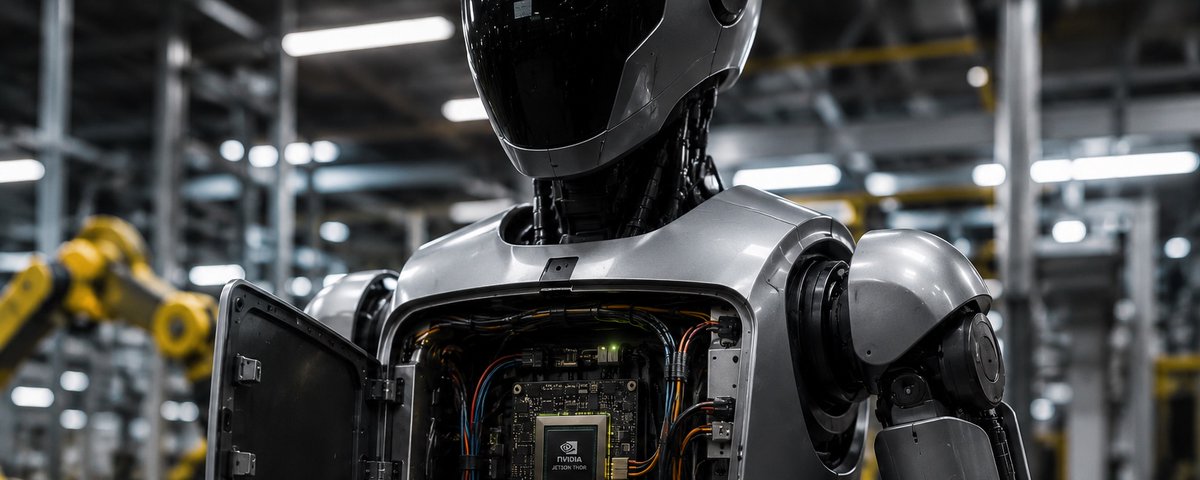
YOUR NEXT HOUSEHOLD HELPER COULD LOOK LIKE THIS.
Figure AI’s humanoid robot is demonstrating something much more useful than backflips: handling everyday objects around the home.
In this demo, it reaches for items on a coffee table and rearranges cushions on a sofa — tasks that require balance, coordination and precise control of its hands.
And that’s what makes this technology interesting.
A robot doesn’t just need to recognize an object. It needs to understand where to grab it, how much force to apply and how to move without knocking everything else over.
Figure’s Helix AI system is designed to combine visual perception and whole-body control so its robots can perform tasks in real time.
Imagine one machine that can tidy your living room, move objects, organize your home and eventually handle dozens of other chores.
We’re not at the point where you can trust a robot with every household task yet.
But the goal is clear: turn a humanoid robot from an impressive demo into something you can actually use every day.


THIS IS WHERE HUMANOID ROBOTS COULD BECOME MORE VALUABLE THAN EVER.
Forget folding laundry or serving coffee.
Imagine sending a robot into an industrial environment filled with extreme heat, dangerous machinery and molten metal — places where a single mistake can cost a human worker their life.
That’s the bigger opportunity for industrial robotics.
Steel production operates at temperatures above 1,500°C (2,732°F). A humanoid robot cannot simply walk into that heat unprotected, but specialized machines could eventually handle inspections, material handling and other dangerous tasks from safer positions.
The goal isn’t to replace every worker overnight.
It’s to take humans out of the most dangerous parts of the job.
Because the real breakthrough won’t be a robot that can dance.
It’ll be a robot that can do the work nobody wants to risk their life doing.
1
7
285
THIS IS ONE OF THE HARDEST “SIMPLE” TASKS FOR A HUMANOID ROBOT.
It’s Figure’s humanoid robot folding laundry.
Looks easy.
For a robot, it’s not.
A towel has no fixed shape. It can wrinkle, fold, slip or get tangled — so the robot has to constantly adjust where and how it grabs it.
Figure’s Helix system learned to pick towels from a mixed pile, change its folding strategy depending on how the towel is positioned, recover from mistakes and finish the fold fully autonomously.
And this is the crazy part:
The same AI system was also demonstrated doing logistics work and household tasks.
Figure 02 previously ran 10-hour shifts at BMW, loaded 90,000+ parts and contributed to the production of 30,000+ BMW X3s.
Today it’s folding your laundry.
Tomorrow, the same kind of robot could be doing the job of an entire household assistant.
5
235
BOSTON DYNAMICS’ ATLAS IS NOW DOING FACTORY WORK WITHOUT A HUMAN HOLDING ITS HAND.
In this demo, Atlas autonomously moves a large industrial container/cart, positions itself and handles the task without someone remotely controlling every movement.
This is the important part:
Atlas is no longer just a robot doing backflips for YouTube.
The production version is built for actual industrial work — material handling, part sequencing, machine tending and order fulfillment. Boston Dynamics says Atlas can carry up to 50 kg instantly and 30 kg continuously, with a 1.9 m body and 56 degrees of freedom.
And the price?
Boston Dynamics still doesn’t publish one, but reported estimates put early units around $130K–$140K in production cost, while another report placed the intended price ceiling around $320K .
A $200K + humanoid walking around a factory sounds insane.
Until it starts doing the work humans were hired to do.
4
14
651
THIS $200,000 ROBOT IS CLEANING RIVERS WITHOUT A HUMAN DRIVER.
It looks like a tiny futuristic boat, but its job is much more practical:
collecting floating trash and debris from the water.
The machine can navigate across the surface, detect obstacles and use its front collection system to pull waste out of the water.
Some autonomous water-cleaning robots can collect around 50 kg of waste and cover several hectares of water surface in a day.
And the bigger idea is even more interesting.
Instead of sending workers onto polluted rivers, lakes and reservoirs for hours, you can send a machine that keeps working while humans supervise it from shore.
A robot like this can cost around $200,000.
$200K to clean the water.
Sounds expensive — until you compare it to the cost of doing the same job manually for years.
The future of cleaning might not need humans in the water at all.

THIS $100,000 ROBOT IS LITERALLY LAYING THE FLOOR FOR YOU.
This isn’t a humanoid robot.
It’s a dedicated construction machine designed to lay floor tiles — picking up large panels, positioning them and placing them with high precision.
And the numbers are already crazy.
Some modern tile-laying robots can handle up to 120 m² per day, work for around 10 hours, and move tiles weighing up to 47.5 kg.
Some systems are designed for tile-joint accuracy around ±0.5 mm and can reduce manual labor requirements by more than 60%.
A machine like this can cost around $100,000.
That sounds expensive.
But if it can replace hours of repetitive lifting, positioning and alignment every single day, construction companies may eventually see it as equipment — not a robot.
Today, it lays floors.
Tomorrow, machines like this could automate entire parts of construction.
CHINA JUST PUT HUMANOID ROBOTS ON STAGE — AND THIS LOOKS INSANE.
Dozens of full-size Unitree humanoid robots performing live alongside human dancers.
They’re not just walking or doing simple demos anymore.
They’re synchronizing movements, dancing in formation and performing in front of a massive audience — in real time.
This is what makes humanoid robots so interesting.
The technology is moving from “look what this robot can do” to “let’s put 20+ of them on a stage and make a show.”
Today it’s entertainment.
Tomorrow it could be factories, logistics, restaurants, construction and homes.
We’re still early — but the transition is already happening.
IT’S NOT PERFECT YET — AND THAT’S EXACTLY WHAT MAKES THIS SO INTERESTING.
Robots can already walk, carry bags, interact with people and even play football.
And then… they fall.
A lot.
They’re still far from being fully reliable workers. If development keeps moving at this pace, we could still be 10 years away from robots that can genuinely work alongside humans without constant supervision.
Right now, we’re watching the awkward phase.
They’re learning to walk before they learn to work.
And honestly, watching them fall today might be the most important part of getting them right tomorrow.
3
10
761
THIS IS WHAT A ROBOT WORKER LOOKS LIKE INSIDE A BMW FACTORY.
This isn’t a lab anymore.
BMW already tested Figure 02 on a real production line in Spartanburg.
For 10 months, it worked 10-hour shifts, moved 90,000+ parts, took around 1.2 million steps and contributed to the production of 30,000+ BMW X3s.
And now BMW has moved on to the next generation.
Figure 03 is being tested for more complex logistics tasks — moving parts, pulling carts and coordinating its entire body while working.
Figure was only founded in 2022.
In just a few years, it went from a startup building humanoids to putting them on a BMW production floor.
The price of these robots isn’t public yet.
But the robot workforce has officially left the lab.
ROBOTS ARE STARTING TO SEE WITH THEIR EYES — AND FEEL WITH THEIR FINGERS.
The next generation of humanoids isn’t just about better walking.
It’s about sensing the world like we do.
Cameras can tell a robot what an object looks like.
Tactile sensors can tell it how hard it’s holding it, where it’s touching it, and when it needs to adjust its grip.
That combination could completely change what humanoid robots are capable of.
Today, these systems are still expensive prototypes.
But if costs eventually fall toward $50K–$100K, we could see robots that don’t just look human…
but actually interact with the physical world like one.
BOSTON DYNAMICS JUST GAVE ATLAS A HAND UPGRADE THAT CHANGES EVERYTHING.
The new hands have 13 degrees of freedom and tactile sensing, giving Atlas much more control over how it grips and manipulates objects.
And that matters because hands are one of the biggest problems in humanoid robotics.
Walking is impressive.
But picking up a small part, holding a tool, turning something, placing an object precisely, and doing it thousands of times without getting tired is a completely different challenge.
Boston Dynamics has been developing Atlas for more than a decade.
Now the goal is becoming much clearer:
Not just making a robot that can do insane backflips.
Making a robot that can actually work.
If humanoid robots eventually fall toward the $50K–$100K+ range, companies could start looking at them as machines that work 24/7 instead of hiring for repetitive physical tasks.
The crazy part?
Atlas is starting to look less like a robotics experiment…
and more like the beginning of a robot workforce.
WE’RE GETTING WAY TOO COMFORTABLE WITH MACHINES DOING THIS.
At first, it just looks like a robotic arm moving a cup around.
Then you realize what you’re actually watching.
A machine is performing a task that normally requires a person to constantly control their hands, movements and timing.
No human hand reaching in.
No one physically guiding the cup.
Just a machine repeating the kind of tiny movements we normally make without even thinking about them.
And this is the part of robotics that I think people are going to underestimate.
We keep waiting for the insane stuff.
Robots running.
Robots walking.
Humanoid robots doing backflips.
But the real revolution might be much quieter.
Machines learning how to do the boring little things humans do every single day.
Make a drink.
Prepare food.
Move objects.
Clean.
Sort.
Serve.
One task doesn’t sound impressive.
But give a machine thousands of these abilities and suddenly you’re not looking at a cool robotic arm anymore.
You’re looking at something that could actually replace parts of a human job.
And honestly…
that future feels a lot closer than it did a few years ago.
THIS COULD BE ONE OF THE BIGGEST UPGRADES FOR HUMANOID ROBOTS.
A new vision system lets a humanoid robot track a person’s face and movements in real time — much closer to how humans naturally follow someone with their eyes.
It sounds simple.
But this is what could make future robots feel far more alive and human-like.
Better vision → better reactions → more natural interaction.
And as these systems move into new generations of humanoid robots, that $50K–$100K machine in your house might not just see you…
It might actually follow you.
4
16
2,191
CHINA REALLY PUT A ROBOT IN THE MIDDLE OF TRAFFIC.
This isn’t a concept video.
Robot traffic officers are already being deployed in Chinese cities to direct cars, detect violations and give voice warnings.
One Hangzhou model stands 1.88m tall, weighs 98kg, uses cameras + radar, and can perform 8 different traffic-control gestures synchronized with traffic lights.
15 robots were deployed in Hangzhou in May 2026.
The future of traffic police just got weird.