

Interested in Big Picture, Great Powers, Military History, Technology & Poetry. Focus on demystifying China and its Army..Can speak Chinese..可以听懂,读,说中文..
India
Joined March 2013
- Tweets38.6K
- Following88
- Followers913
- Likes13.2K





Pinned Tweet
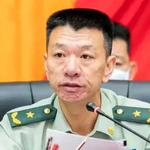
In January 2026, Major General Chen Yuan (陈源) took over as Garrison Commander of Beijing Garrison. Chen comes from People's Armed Police (PAP) background and he was earlier Commander of PAP in Shanghai since 2023.
Beijing Garrison Commander is responsible for security of capital city. Its a position which is typically held by a PLA Officer of Major General rank. To my knowledge it is the first time that a PAP officer has been assigned such an important responsibility.
Its important to underline that post Theaterisation of PLA only three static formations were allowed to retain direct command of troops. These are Tibet Military District, Xinjiang Military District & Beijing Garrison. While TMD & XMD were made Deputy Theatre Grade Organisations (commanded by Lieutenant General rank officers), Beijing garrison continued to remain a Corps grade Organisation (commanded by Major General rank officer) like other military districts.
Its also noteworthy that PAP has been under unified leadership of Central Military Commission (CMC) since 2018 and there have been earlier instances wherein PAP officers have held PLA billets at this level. But it remains rare. Thus considering the importance of Beijing garrison, Chen's appointment is rarest of rare.
In my view, its impossible not to see this appointment as a sign of lack of trust in PLA higher leadership. We already know about sacking of hundreds of PLA General officers in last few years.
Some links confirming the appointment
1- Caixin Report dated 04 February 2026
china.caixin.com/2026-02-04/…
2- A report on dissident overseas Chinese media website
wenxuecity.com/news/2026/02/…

ALT A Picture of Major General Chen Yuan (陈源)
Absolutely delighted to read this acknowledgement. I would argue that similar is the case with Indians studying about China..many gaps remain
Mainly because of linguistic barriers and lack of people to people contacts..I would add a third ask, that of easing of Chinese social media access for Indian people

#Opinion: Many gaps remain in the Chinese public’s knowledge of #India, and vice versa, leaving considerable scope for greater understanding through exchange. If we want our neighbor to understand us better, we must give its people opportunities to see the society as it really is.
globaltimes.cn/page/202610/1…

News from Chinese media,
1- On 22 October, a 7.0-magnitude earthquake struck Baqen County of the city of Nagqu in Tibet. As per reports on 24 October, the quake left 16 people dead and 76 others injured. It also damaged or destroyed 339 homes and 20 livestock sheds.
2-As per reports, shortly after the disaster, the PLA Western Theater Command activated its emergency response mechanism. By 4 p.m. Friday(24 October), over 400 PLA and People's Armed Police personnel alongside more than 50 vehicles had been deployed to treat the injured, erect tents and relocate locals.
3-Global Governance Initiative is one of the four global initiatives of China which was started in September 2025. The 2026 edition of Global Governance Forum commenced in the Xiongan New Area of Hebei Province on October 23, 2026
4-As per a report released by the China Academy of Information and Communications Technology (CAICT), Prices for Chinese artificial intelligence (AI) large model token services have doubled from the second half of 2025, while usage amount has tripled. The average daily token use reached about 500 trillion in June 2026 - nearly four times the level in December 2025, as per the report.
5-On UN Security Council reforms, a report in Xinhua underscores that China prefers establishing regional rotating seats rather than increasing permanent and non-permanent seats.
6-China's top legislature will deliberate on the draft law on Antarctic activities and environmental protection during its upcoming session, marking the third review of the draft law. The enactment of the law was listed on the legislative plan of the National People's Congress (NPC) Standing Committee for 2026(2-6 November). The previous two reviews took place in December 2025 and June this year, respectively.
Wrote this long back about limits of Chinese power..I have more points to add to this list now..
Perhaps a list specifying limits of Chinese military power vis-à-vis India will be useful..
I can straightaway think of “oxyzen” and “fuel”..a detailed list later :)

Chinese power vis-à-vis US is constrained in ‘far’ theatres vis-à-vis ‘near’ theatres..it’s because China built there Power prioritising first Island Chain and Taiwan in particular as the first aim..
We have already seen that China can build Artificial Islands and bully militaries in South China Sea where US ‘responds’ by Freedom of Navigation Patrols..so China was forcing US to fight on ‘ground of its own choosing’
The US flipped the coin by testing Chinese power in far theatres..and attacked Chinese interests in Iran and now Venezuela..
What is the difference in US and Chinese Military Power.. I think there are 8 differences I can spot as of now..
1-‘Reach’ meaning Global Military Bases
2- ‘Global Connectivity’ meaning a foolproof system parallel to ‘Starlink’
3- ‘Sea Lift and Air Lift Capability’- meaning ability to quickly reach theatre of conflict- US has approximately 4 times higher Strategic Air Lift Capability. In sea lift China does have an edge in Amphibious Ships but it lacks Military Sea Lift capability when compared to US
4-‘Air and Sea Control’—For Force projection..and due to lack of bases..Air and Sea Control is essential..due to higher number of Aircraft Carriers and Fifth Generation Fighters plus their basing US has the ability to constrain Chinese move to distant Theatres
5-‘Alliances’ - Chinese do not have a stated military alliance..compared to US..which has multiple military alliances, forward basing, common equipping and training
6-‘Resources’ - Chinese are moving fast on renewables because chokehold on ‘Oil’ that US can exercise..
7-‘Influence Operations’- China has excluded itself from Western Influence Zone by the Great Firewall..but arguably it still doesn’t have the global influence similar to US
8-‘Cyber & Electronic Warfare’ - Chinese arguably have near comparable strength
Part I of Correspondence Between PM Nehru and Chinese Premier Zhou En Lai on Boundary Dispute (14 September 1956-21 March 1960)
The “Compilation of Correspondence Between China and India on the Question of Relations Between the Two Countries in the Tibet Region of China, the Sino-Indian Boundary Question and Other Questions : August 1950—April 1960 (中国和印度关于两国在中国西藏地方的关系问题,中印边界问题和其他问题来往文件 :1950 年 8月 –1960年4月), published by Ministry of Foreign Affairs of the People’s Republic of China, gives Chinese version of diplomatic correspondence between both nations.
Here i am sharing two of the 16 letters that were exchanged between PM Nehru and Premier Zhou,
newreckk.substack.com/p/corr…
What a delightful read..about waxing and waning of Máotái (茅台) alongside intensifying anti-corruption campaign affecting more and more sectors under Chairman Xi..


In a letter to Prime Minister Nehru, written on 08 September 1959, Chinese premier Zhou En Lai provided details of Chinese position on boundary issue. About Chinese position of boundary in Ladakh region, he wrote,
"The map titled "The Punjab, Western Himalaya, and Adjoining Parts of Tibet"—drawn by John Walker under the orders of the East India Company’s Board of Directors and included in the book *Ladakh*, authored by Major Alexander Cunningham and published in 1854—depicts this section of the boundary in a manner quite similar to that shown on maps published in China."
"英国人约翰·克根据东印度公司董事会的命令所画的“旁遮普、喜马拉雅山西部以及同西藏接壤部分”图(这个地图附在1854年出版的英国人亚历山大·克宁汉少校所著的“拉达克”一书之内),对这段边界的标法,同中国出版的地图相当接近。后来英国和印度的地图把大片中国领土划入拉达克境内,这是既无法律根据、又不符合双方历来行政管辖的实际情况的."
I am attaching screenshots of map under reference by Zhou below - for those who can, a copy of map can be purchased at link given below :-
swaen.com/listing/map-of-the…

ALT Northern Part

ALT North of Pangong Tso

ALT South of Pangong Tso

ALT Southern Part
“后来英国和印度的地图把大片中国领土划入拉达克境内,这是既无法律根据、又不符合双方历来行政管辖的实际情况的."
This part of statement has erroneously not translated in tweet above, it means,
“Later, British and Indian maps included large swathes of Chinese territory within Ladakh, which had no legal basis and did not conform to the actual administrative jurisdiction between the two sides.”
That makes an interesting story. From the description it appears that Master Sergeant of Rocket Force was retiring after serving 16 years at age of 33..
As far as I know, salary of a Major with 11 years of Service (in 2022) was roughly 11000 RMB as per his payslip shared on Chinese social media, few years ago..so accordingly an educated guess can be made about salary of the NCO.
Happy to hear a mention of bride price (caili 聘礼) system..wherein the groom pays a fixed amount to bride before a marriage can be fixed…maybe you could tell us more about this..do also share views about Hukou (户口-hùkǒu ) system, as applicable to soldiers..
I have also been reading about local community arranged matchmaking events because of the difficulties that soldiers face while trying to find a match since they’re are mostly posted to distant places from their hometowns.
Soldiering as a stepping stone to government service is a good initiative. However the issues regarding pay, leave, marriage and family remain.
While soldiers and officers deployed in Central and Eastern China, still have avenues to have a social life due to similar populations and system of weekend leave that PLA follows, for those deployed in Tibet and Xinjiang..even weekend leave hardly provides them with any social life..
Lastly regarding pensions, compared with PLAs partially self-funded pensions, Indian soldiers and officers don’t make any contribution towards their pensions. it’s fully government funded.
I take your point regarding additional financial burden on state due to provisioning 50 percent of last pay as pensions as well as due to One Rank One Pension decision, but it does make a happier soldier.
All in all, I strongly believe, Indian soldier and officers are better off when compared to PLA..

I want to supplement a few points that were overlooked in the previous discussion.
You’re entirely correct. Even though the PLA has continuously improved soldier compensation, when comparing a soldier’s pay to national average and median wages, the compensation for PLA conscripts remains lower than that of Indian Army soldiers. PLA conscripts generally retire after two years, which, broadly speaking, does not disrupt their life trajectory—they can seamlessly re-enter the civilian workforce. If the state were to draft me into service, I would step forward without hesitation, because I would be entering a far more meritocratic and equitable environment, which would work greatly to my advantage. Conscripts do sacrifice a degree of time and income, but this is a mandatory obligation they owe to the nation. Crucially, that sense of a fair and level playing field leaves them with little reason to complain about lower entry-level pay.
However, the true backbone of the PLA is its NCO (Sergeant) corps. In field armies, NCOs account for 65% to 80% of total personnel, and their compensation is remarkably high. By my calculations, their income-to-average-wage ratio comes quite close to that of the Indian Army. As for the leave system you mentioned, PLA personnel indeed enjoy less leave compared to their Indian counterparts. The root cause lies in the PLA's strict regulations on military marriage: with a higher proportion of single service members, leave allowances are naturally more restricted. This is also a key area targeted for future PLA reform. Regarding the shift from lump-sum severance payouts to monthly retreatment allowances, a vital factor is the Chinese marriage dynamic, where the groom’s side is expected to pay a bride price—whereas in India, the dynamic is reversed. Because military retirees held substantial lump-sum payouts, they often became prime targets for extortionate bride-price demands. Furthermore, those who served in isolated military environments were prone to reckless investments upon returning to civilian life. Stripped of their financial cushion—and possessing formidable military skills—they risked becoming a destabilizing element in society. (India harbors similar concerns regarding its Agnipath scheme.)
As for pensions, I believe your estimates are somewhat inflated. Unlike the Indian Army, China's social security framework (which encompasses pensions) operates on a co-contribution model—partly paid by the individual and partly by the government. Since PLA service is a high-paying profession, their contribution bracket should sit at the highest tier. To my knowledge, government public servants follow a contribution structure where roughly 22% to 23% of gross salary is deducted for social security funds (covering medical care, pensions, unemployment, workplace injury, maternity, and the Housing Provident Fund), leaving net take-home pay at about 77%. The government then contributes an additional 36% to 37%. In other words, their social security contribution divided by total labor cost comes out to roughly 43%.
Currently, pension benefits across China exhibit a wide disparity: ordinary citizens receive around 2,000 to 3,000 RMB per month, whereas many retired government officials draw between 10,000 and 20,000 RMB. The Chinese government is actively working to narrow the wealth gap, which will eventually compress the pension divide between regular citizens and officials. Consequently, this also implies a prospective decrease in expected top-tier pension rates.
However, when I speak of 'benefits,' I am referring far more to the predictable upward mobility available to service members rather than mere base salaries, allowances, or pensions. This is why, from the very beginning, I focused on the trend of military compensation rather than raw, isolated figures. China has consistently sought to construct a system where people believe that as long as they work hard, success is within reach. Even if base wages are lower, there are generous severance packages; even if academic qualifications are modest, soldiers can acquire skills in short supply within civilian society; and even if academic performance was poor, sufficient military tenure can still grant entry into official state institutions. This predictable upward mobility is the core driver. For many young Chinese individuals, enlisting in the military is less about serving in a fair, competitive environment—though that is a welcome secondary benefit—and primarily about securing a gateway into government agencies. What it would imply if a similar dynamic played out in India goes without saying.
In short, the PLA's distinct advantage lies in transforming a portion of its compensation model into non-fiscal expenditures, using low monetary costs to ignite the internal drive of young people. To borrow a famous European adage: it manages to 'pluck the maximum amount of feathers with the minimum amount of hissing.'
To wrap up, I’d like to share an encounter I had last October. I was at an electronics market custom-building a PC (RTX 5080 + i7-265K CPU, 32GB RAM, 4TB SSD, 4K 320Hz monitor) when I met a Rocket Force NCO stationed in Hunan. Naturally, out of courtesy, I refrained from asking any sensitive military details; our conversation revolved mostly around daily life. Like me, he hailed from a rural background. His computer build was nearly identical to mine—if anything, slightly superior—and after realizing we played the same games, we struck up a deep conversation.
He mentioned that he enlisted at age 17 and had risen to become a Master Sergeant Third Class (三级军士长) in the Rocket Force, planning to retire this year. According to him, the higher the merit points a soldier accumulates during service, the better the government enterprise or agency they can be assigned to. Based on his accrued points, he expects to be placed at a top-tier state-owned enterprise (SOE) by next year and then get married. One of his close comrades plans to join a local police department; since his comrade's father serves as a police chief, leveraging both his military credentials and family background will allow him to rapidly advance to a police captain rank.
I asked if he was married yet, and he replied that he wasn't, though he was currently engaged. When I asked how he met his fiancée, he said it was through a matchmaking arrangement set up by his parents. Coincidentally, his fiancée works at my company. However, with several thousand employees at our firm, I didn't know her even after he mentioned her name. He explained that his posting was quite remote with minimal contact with the outside world, making opportunities to meet women his age exceedingly rare. He had initially hoped to remain in the military indefinitely, but now in his early thirties, he felt it was high time to marry. When I asked about his wedding timeline, he said his parents urged him to marry immediately and have a child by the following year. His parents had already covered the down payment on a home for him, and his Housing Provident Fund balance was more than enough to cover the monthly mortgage payments.
Before getting married, he wanted to build a high-end PC to indulge heavily in CrossFire—a game he was willing to spend handsomely on. It happened to be a game from my own youth as well, one into which I poured countless hours, making it a nostalgic topic for us both. He mentioned that this rig cost him roughly a full month's income. My build came out to around 18,000 RMB, while his was close to 19,000 RMB, as he chose a better mouse, keyboard, and case. I asked him if that month's salary represented actual net take-home pay, and he confirmed that it was. I couldn't help but feel a touch of envy.
Should he opt for a lump-sum severance package upon exit, it would amount to several hundred thousand RMB—though he declined to disclose the exact sum. His parents' strong preference, however, is for him to take up a government position. After all, here in Shandong Province, securing a government job is viewed as the pinnacle of stability and prestige; even if young people are reluctant, parents will exert every form of persuasion and pressure to push them down that path. I later looked up that state-owned company on my phone: even an entry-level employee's salary there was more than double mine, a fact that left me genuinely envious.
Thanks for a detailed reply. Some things to consider..
1-Tangible Service conditions for a soldier include pay, benefits, living conditions, leave and so on
2-Intangibles include cohesion of the military Unit/Sub-Unit, respect in society, social status and respect of soldier’s family in society and so on
Looking from point of view of tangible factors, Indian soldiers come across as far better placed,
1-The pay and pensions of Indian soldiers are decisively better than PLA. Even Agniveer’s have better pay/ discharge package compared to a PLA conscript. Do check out the discharge benefits of Indian military Soldiers of various ranks, everything is available online.
2-PLA follows a Theatre specialisation model wherein most of soldiers and officers continue to serve in the same Theatre throughout their service lives. So an average soldier or officer in TMD or XMD will remain there throughout his service life. Since most of the soldiers and conscripts come from Central or Eastern part of China, they have to stay far away from their families for their entire service lives.
3-As per my information, PLA leave rules permit a leave of 20-30 Days in a year. For conscripts it’s 15 days a year. Thus, leave of Indian soldiers and Agniveers is two to three times more than their counterparts in PLA. For a PLA soldier in TMD or XMD, who spends his entire service life there, this leave is simply inadequate in my opinion.
4-Indian military has a well established system of family stations and family accommodations wherein in case of PLA, there are very few family stations in TMD and XMD. In other deployment Camps of PLA, families can only come for a certain duration and the number of family accommodations are much constrained. All in all, PLA soldiers and officers, are getting paid less, getting lesser leave and are staying away from families for a large part of their career. In addition, family accommodations are only available to Field Officers and Senior NCOs.
5-PLA conscripts leave army after 2 years. NCOs can leave after 8 years, 16 years or after completing full service. Full pension is only admissible to those who complete full service. Similarly officers get discharged at 8 years, 15 years and 20 years with varying compensation. Discharge benefits of Indian military are decisively better than PLA. Except that Indian military doesn’t have an organised secondment to civilian vertical program for it’s a retirees.
6-I agree to an extent that PLA is better placed in Higher Defence Organisation of China. However India has made progress by creating Department of Military Affairs and appointment of Chief of Defence Staff. Hopefully we will see better integration in days to come.
7-About intangibles, I think both PLA and Indian Military are professional militaries. Both have a different system of leadership and both work. PLA’s dual leadership model seems impractical from an Indian military leaders point of view, but it works. Similarly Indian military’s hierarchical model may seem incomprehensible to You, but it works. So I would leave it at that.
8-One thing I am genuinely curious about is, why does PLA have so many officers in its Units and Headquarters? Would be interesting to read Your views on this subject.
I felt there was quite a bit to unpack here, so I spent a few hours writing a brief commentary in Chinese and translating it into English. If writing the whole thing directly in English would simply test my endurance too much.
I don't really view this as a formal article; it's more just a casual exchange of thoughts. Besides, I feel there are still multiple angles from which the gap between the Chinese and Indian militaries can be analyzed, and some of the paragraph transitions might not flow entirely smoothly. For now, capturing the core meaning I want to convey is all that matters.
xitter.cf/961957192q83556/status…
Anoop Singh retweeted

The VIF hosted a delegation from the China Institute of International Studies (CIIS) on 14 October 2026. The Director, VIF, Gen. Anil Chauhan, highlighted the changes in the international order and stressed that the world must be prepared to live with disruptions.
The discussions highlighted the vulnerability to supply chain disruptions, civilisational engagement, and leaders' interaction at multilateral formats such as BRICS/SCO. Building trust, strengthening people-to-people ties, and adopting a long-term perspective remain essential to stable, mutually beneficial cooperation.


Major issues being discussed on Chinese media..
1-Celebrations of 90 Years of Long March
2-Riots in France as an example of dual European problems of decreasing Social Stability & Economic Competitiveness. Which is leading to increase in right wing sentiment & social conflicts.
3-China has established China National Data Group, a new state-owned enterprise (SOE) directly administered by the central government to focus on Data in the age of Artificial Intelligence.
4-China has opened up to foreign nationals in a big way. Foreign nationals made 8.992 million visa-free entries into China in the third quarter of 2026, up 24.1 percent year-on-year and accounting for 77.5 percent of foreign entries.
5-China is working on an action plan to expand domestic market demand during 2026-2030. China will push forward three major tasks. Boost consumption by stabilizing employment and household income, upgrade purchases of new-energy vehicles and smart products, expanding supply of elderly care, childcare, cultural, tourism and sports services, and scrapping unreasonable consumption restrictions. Inbound consumption will also be further expanded.
6-An article of Global Times, republished in People’s Daily says,
China's ongoing push for high-end, intelligent manufacturing upgrading and continued opening-up of its services sectors have opened unprecedented new window of opportunities for India…these fields can easily become the core direction for India to cultivate new export growth points to China.
On PLA system of pensions..
“the “self-directed career transition” (自主择业) option no longer exists; it has been replaced by a system of “monthly retirement payments” (逐月领取退役金). You can think of this as a simplified version of the old system.
The key difference is that these payments are now issued by local authorities rather than the military, meaning they no longer increase in tandem with military pay raises. Furthermore, the amount received under this system is only 30% of one’s previous salary”
Military retirees from PLA have options to choose a monthly retirement payment (逐月领取退役金) or take a lumpsum payment and transition to civilian employment. Earlier they also had an option to opt for “self-directed career” (自主择业) path but this option no longer exist.
May read an interesting conversation on retirement options for PLA personnel as well as a story giving a snapshot of post-retirement life of personnel of Tibet Military District.
The story is worth a read because it tells that—while so much changes among soldiers from one country to another, so much also remains the same—
newreckk.substack.com/p/reti…
Anoop Singh retweeted

Indian startup Twitter just had another round of the “most deep tech is a grift” vs “foundational tech builds the future” fight.
Read @anmolm_ and Pixxel’s @awaisahmedna tweets to get the drift.
It gets sharper when you apply it to aerospace & defence. 1/n
As per 1954 Agreement, the existing presence in Tibet was expanded to include more locations. The arrangements for travel were flexible and acknowledged the close religious and trading relationship which existed in earlier years. Some details of 1954 Agreement below..
1-Three Trade Agencies each in Tibet(Yadong, Gyantse and Gartok) & three in India (New Delhi, Kolkata and Kalimpong) were to be established
2-Three markets of trade each in Tibet(Yadong, Gyantse & Phari) and three in India (Kolkata, Siliguri & Kalimpong)
3-Ten other places in Tibet were also opened as markets for trade namely (1) Gartok(噶大克) (2) Purang Dzong (普兰宗), (3) Gyuma Magar(姜叶马加尔果), (4) Gyuma Machakra(姜叶马查克拉), (5) Remre(热姆惹), (6) Dongbre(董不惹),(7) Poling Sandu(波林三多) (8) Nathu La(那不拉), (9) Shangtse (尚格齐)and (10) Tashigang(扎锡岗).
4-Matters of religion were also agreed upon in 1954. As per the agreement, Tibetan Buddhists were allowed to visit Banaras, Sarnath, Gaya and Sanchi while Indian Hindu’s and Buddhists could visit Mount Kailash and Lake Mansarovar.
5-A total of six places of transit on borders were agreed upon. These being, (1) Shipki Pass(什布奇山口), (2) Mana Pass (玛那山口), (3) Niti Pass (尼提山口), (4) Kungri Bingri Pass(昆里宾里山口), (5) Darma Pass(达玛山口) and (6) Lipu Lekh Pass(里普列克山口). The customary route along Indus Valley to Tashigong was also to remain open for travel.
6-Significantly traders and transporters needed only certificates to visit each other side. Border residents were allowed to enter each other’s side from any place along border(not just six agreed passes) for petty trade or meeting relatives.
7-This agreement was signed for a period of eight years with provision for expansion and it lapsed in April 1962 since no side wanted to renew it.
On 29 April 1954, India and China signed an agreement on a ‘new deal’ concerning Indo-Tibetan relations. I am calling it a new deal because prior to this period also India had enjoyed a number of privileges in Tibet. But after Chinese military (PLA) entered Tibet in October 1950, China consolidated its control on Tibet. Thus India had to deal with new Chinese government, directly controlling Tibet.
In this article, I am sharing extracts of 1954 India-China agreement as well as extracts of research by Claude Arpi, which covers relevant Indian perspective of Indo-Tibetan relations between 1947-62.
newreckk.substack.com/p/conn…
May see some details about Indian presence in Tibet prior to 1947 and years leading to 1954 Treaty
1-[In 1947] The [Indian] establishment in Tibet consisted of the Indian Mission in Lhasa, the Indian Trade Agencies in Gyantse, Yatung and Gyantse, and the military escort to which the ITA in Gyantse and Yatung were entitled.… [these] agencies functioning under the office of the Political Officer (PO) in Sikkim.
2-Gangtok office of the Political Officer (PO) who overviewed the Indian relations with Tibet, Sikkim, Bhutan and NEFA since Claude White, the first PO in 1890, till the merger of Sikkim in 1975.
3-The posting of an armed escort at Yatung trade mart was first discussed in connection with the opening of the trade mart in Tibet under the terms of the ‘Regulations regarding Trade, Communication and Pasturage of 1893’, appended to the Sikkim-Tibet Convention of 1890.
4-[There was a change in attitude of Tibetan government after independence of India] A trade boycott, enforced since several months by the Tibetan Government….was announced by the Lhasa Government in a truculent letter.‘Another outstandingly truculent’ letter denounced the British trying to reassert their legitimacy over….the Assam Tribal area (i.e. the McMahon Line area)...both communications meant a breach of treaty by the Tibetans, who had signed agreements with India in 1914 in Simla…..it indicated ‘an unfriendly Tibetan attitude’.
Source : Claude Arpi’s research. Can be accessed at
usiofindia.org/pdf/M-1-2023%…
On 29 April 1954, India and China signed an agreement on a ‘new deal’ concerning Indo-Tibetan relations. I am calling it a new deal because prior to this period also India had enjoyed a number of privileges in Tibet. But after Chinese military (PLA) entered Tibet in October 1950, China consolidated its control on Tibet. Thus India had to deal with new Chinese government, directly controlling Tibet.
In this article, I am sharing extracts of 1954 India-China agreement as well as extracts of research by Claude Arpi, which covers relevant Indian perspective of Indo-Tibetan relations between 1947-62.
newreckk.substack.com/p/conn…