

Sharing thoughts and exploring AI « Think like a man of action, act like a man of thought. » - H. Bergson
Paris, France
Joined March 2016
- Tweets1.2K
- Following809
- Followers1.1K
- Likes8.5K





Usually, it is not the model getting worse after week one, it is "context debt" and tool/agent overhead quietly building up as your project grows.
In the beginning, your threads and setup are light, so Opus 5.5 handles tasks effortlessly. Over time, long histories pile up, and a lot of skills, memory files, and MCP tools get pulled into active context. Every time a prompt triggers a multi-step tool loop, spawns sub-agents (which cannot read the parent thread's cache and must warm their own, with a default 5-minute Time-To-Live / cache timeout), or resumes after the cache expires, that accumulated bloat accelerates your 5-hour limit burn and dilutes model attention (forgetting instructions).
Here is a simple way to fix it:
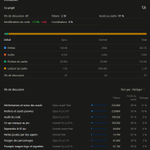
1. Check your /context breakdown (see screenshot)
In this active thread example, alongside 68.7k of actual messages and a 33k autocompact reserve buffer, nearly 50k tokens come purely from loaded environment overhead:
- System tools: 17.7k
- Active MCP tools: 11.3k
- Skills: 10k
- System prompt: 7.7k
- Memory files: 1.8k
- MCP server instructions: 1.7k
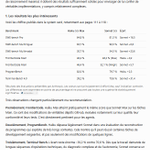
If you look at the 155 connected MCP tools at the bottom, 66.1k tokens of schemas are kept in "deferred" state, while 11.3k have already been called and pulled into active context for the rest of the session. Without regular clean-up, pulling deferred MCP schemas into active context and running multi-step loops over them can quietly drain your 5-hour quota.
2. Let the agent audit, clean up, and optimize your setup for you
You do not even have to configure all of this manually. A really easy way to start is to ask your agent to review this /context breakdown for your current project, verify whether everything being loaded or called is actually needed, clean up the bloat, and help you set up long-term optimizations directly:
- Agent harness: Have it reorganize CLAUDE.md, .claude/settings.json, SKILL.md, .mcp.json, etc. so they stay lean and modular.
- Real-time monitoring: Ask it to set up token/context burn and cache expiration timers using the new mods feature.
- Custom model routing: Have it build routing rules tailored to your orchestration workflow (should this task go to Sonnet 5.5, and at what reasoning effort? Opus 5.5 Medium or xHigh for what? Haiku for what? etc.).
- Automatic thread handoffs: Have it implement workflows to handle high context usage (e.g., summarizing state and spawning a fresh thread every 400k tokens), etc.


Is it just me or did Claude Opus 5.5 suddenly get way lazier and burn through session limits 3x faster this week???
Week one of Opus 5.5 felt like magic, it one-shotted entire features without breaking a sweat.
Now it hits 95% of the 5-hour session limit in two hours, forgets instructions halfway through, and takes 4 extra prompts to fix basic bugs
Does Opus 5.5 feel noticeably worse for you this week too??

Sir, I love it
Your art style is one of the most beautiful I've seen recently, so I couldn't help trying it myself:


Making the ASCII MMORPG of my dreams!
I realized the water looked artificial without reflections, so I spent few days fixing that. The sky is now faked too, especially the moon
Ansenjeo.
#mmorpg #indiegame #ascii
Would you read a book written entirely by an AI?
0%Definitely
75%Sure, why not?
25%No, never
8 votes • Final results 1
4
482
Mrglglglgl 🐟
What if the Lich King was a murloc?
Here are four 3D Murloc Lich King models created with @tripoai. These are my best models so far with Tripo, and definitely the cleanest ones yet, thanks to this exact workflow which changed everything for me:
Workflow:
→ Started with a simple prompt: “The Lich King, but it’s a murloc” using GPT Image 2 directly in Tripo3D (3D Print-Ready template)
→ Generated the 3D mesh with Tripo3D (Ultra Mesh + AI Complete, 2M triangles, untextured)
→ Sent an image of each untextured model to GPT-5.6 Sol High and asked it to generate a textured version
→ Used the resulting ChatGPT image as a texture reference back in Tripo3D
→ Exported the textured models to Blender as .fbx files
→ Final scene setup and camera work done with Claude Opus 5
Which one do you prefer? 👇
The famous non-Euclidean door, built in Unreal Engine 5 by Opus 5 xHigh and GPT-5.6 Sol xHigh, side by side.
You know there's nothing behind that door, but your eyes tell you the room is right there.
I wanted to see how each model would handle this kind of procedural 3D modeling and portal logic, and both did a solid job!
I've always loved M.C. Escher's impossible spaces: staircases that loop back into themselves, rooms that can't exist yet somehow look completely normal.
And I wanted one I could walk into instead of just looking at. So I gave both models the same prompt, roughly:
"A door standing alone in a void, with nothing around it and nothing behind it, opening into a classroom located somewhere else in the level. Walk straight through - no cuts, fades, loading screens, or anything that feels like teleportation. It has to work from both sides and from every angle."
Which one convinces you more?
1
3
277