

Lucy | ShoJosei/Joseimuke Mangaka and Illustrator | ENG/ESP🆗 | I tweet about LADS a lot 🐦⬛🐟🍎 Prev: IDW, MATTEL, HASBRO | NO AI ❌
New York, NY
Joined March 2017
- Tweets12.2K
- Following1.7K
- Followers14.9K
- Likes32.9K




Lucy🇩🇴 🔜 Making Josei Manga! retweeted
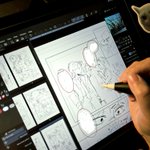
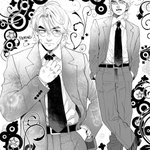
My upcoming oneshot will be a josei office romcom parody about the 2008 recession
Buisness Proposal x Devil Wears Prada x Pretty Woman x King The Land


Lucy🇩🇴 🔜 Making Josei Manga! retweeted

I wish everyone who says the manga romance genre needs more adults a very merry 𝐩𝐥𝐞𝐚𝐬𝐞 𝐫𝐞𝐚𝐝 𝐲𝐨𝐮𝐫 𝐟𝐢𝐫𝐬𝐭 𝐣𝐨𝐬𝐞𝐢 𝐫𝐨𝐦𝐚𝐧𝐜𝐞
THERE IS A LOT!!


Lucy🇩🇴 🔜 Making Josei Manga! retweeted

Just a bit about our two leads! Marielys and Valeria started out as inseparable during elementary, but middle school brought some changes… We’ll be sharing more about them and our other characters soon!
#indieanimation #puertorico #sailormoon #anime #kickstarter


Lucy🇩🇴 🔜 Making Josei Manga! retweeted

We're back. Sorry for the wait.
There is a lot to unpack, so I decided it was best to focus on why there's more space dedicated to manga compared to Western comics in bookstores like B&N as opposed to sales simply bc that's a separate & more involved discussion. 🧵
Lucy🇩🇴 🔜 Making Josei Manga! retweeted
Shojo and Josei manga I’ve been enjoying a lot lately that I FEEL are well paced and have compelling characters! 🧵
Disclaimer: I enjoy primarily slice of life, historical drama, and romcom stories
Lucy🇩🇴 🔜 Making Josei Manga! retweeted

reminder that "otaku vampire's love bite" is licensed in english so you can support it before the anime gets officially announced
it's a great manga for young girls who are passionate about their hobbies, they'll especially relate with hina for being an otaku


Lucy🇩🇴 🔜 Making Josei Manga! retweeted
Mágica Magia Mía DTIYS! To celebrate the launch of our Kickstarter, we want to invite artists to draw our protagonists, Marielys & Valeria. If you wanna participate, don't forget to tag us @magicamagiamia & use the hashtag #MMMDTIYS!🌺✨ #dtiys #drawthisinyourstyle #magicalgirls


Lucy🇩🇴 🔜 Making Josei Manga! retweeted

Calling all NYC artists — painters, filmmakers, poets, musicians and more! Did you know our city provides grants to support your work every year?
And this year, for the first time in nearly two decades, we're DOUBLING the amount — from $5,000 to up to $10,000 per artist!
Deadlines are approaching fast so don't wait. Go to nyc.gov/artistgrants to apply today!
Lucy🇩🇴 🔜 Making Josei Manga! retweeted
✅ Official Announcement: "Glasses with a Chance of Delinquent" confirmed Main Cast: Hiroto Shimizu × Suzuko Hara, in latest promo!
Broadcasting also confirmed for April 2027!
xitter.cf/otasukebu_anime/status…


Lucy🇩🇴 🔜 Making Josei Manga! retweeted

Shoujo yuri manga "Gansaku no Dai Juuban" is getting cancelled. The second volume will only be available in digital.
Ah I feel so sad. It truly is heartbreaking to see such a promising and intriguing manga getting cancelled.💔 I wish we could have more time with Leon and Miyako.


【お通夜会議報告】
残念ながら 打ち切り決定です!😂🙇♀️🙏
2巻は電子のみとなりますが発売します!
(大変大変申し訳ありませんが紙コミックスは出ません🙇♀️)
運が良ければ⋯3巻完結が出来ればなあ~というふんわり希望的観測です!(2巻の数字次第)
描けるところまで精一杯執筆致しますのでどうぞどうぞ
短いお付き合いとはなりますが【#贋作の第十番】を引き続き宜しくお願い致します!(梶本レイカ)
Lucy🇩🇴 🔜 Making Josei Manga! retweeted


Lucy🇩🇴 🔜 Making Josei Manga! retweeted

Entering the Japanese manga industry — Part 12
“Love Your Readers”
Several years ago, at the request of a studio, I met with several artists who had come to Japan from overseas.
I was asked to give them some advice, so I began by saying:
“If you are going to make manga in Japan, you should first try to understand Japanese readers—and love them.”
But at that point, one of them objected.
“I don't need to.”
I replied that an artist is someone who thinks for themselves and accepts the consequences of those choices, so I respected his opinion.
Looking back, I think I handled it rather well.
If it had been ten years earlier, I probably would have gotten angry and told him to get lost.
Later, the head of the company that had brought those artists to Japan apologized to me.
He said he was deeply embarrassed by what had happened.
He was someone who understood very well how manga is made and what responsibilities an artist has.
If you have no intention of loving your readers, then no one should take money and support from them.
I believe that loving your readers is a responsibility of the creator.
Otherwise, you are not loving people. You are loving money.
And someone who loves money rather than people should never create.
If we want to prevent the world from becoming hell, and if we want the value of human creativity to survive in every era, then creation must be a connection between human beings.
That connection is LOVE.
Among foreign mangaka and aspiring manga artists, there are some who want to work in the Japanese manga industry and sell their work to Japanese people, yet surprisingly have little love for—or even interest in—Japan or the Japanese people.
I have seen quite a lot of this.
Do you think it only happens with Koreans?
No.
It happens in many parts of the world.
If there are Japanese manga fans who feel betrayed by what I am saying, perhaps you have had this thought before:
Japanese manga is now sold all over the world.
Many Japanese mangaka probably want to sell their manga overseas.
But do the Japanese manga industry and Japanese mangaka love readers around the world?
Do they make an effort to understand them?
Do they read history books, try to understand different cultures, and, when possible, visit those places so they can experience the lives of the people there?
I imagine that many people in the Japanese manga industry do these things.
But Japanese manga fans probably also understand that there are others who do not.
If you think, “That's too much. Is all of that really necessary?” then the reverse is true as well.
If you are working in the Japanese manga industry, why should you have to read history books?
Isn't it enough to simply work hard at making manga?
Do you really have to love Japan and its readers, too?
But you do.
This post is not about expanding Japanese manga overseas.
I am simply trying to say that even rudeness can sometimes be understood.
If there are people who want to work in Japan and enjoy all the benefits that come with it, while neither loving Japan nor trying to understand Japanese readers, then that is rude.
But there is room for understanding.
And that room for understanding comes from recognizing that a person may simply never have thought deeply about something.
Yes. In most cases, they simply had never thought about it.
They had never thought that loving your readers and making an effort to understand them are responsibilities.
That these things are part of what makes you worthy of being a creator.
That you should not have run away during the March 11, Great East Japan Earthquake.
They simply never thought about it, and no one had ever told them.
That is why I am writing this.
Of course, there are also people who reject it even after they are told.
There is nothing you can do about that.
An artist is someone who thinks for themselves and accepts responsibility for those choices.
As for me, just for a moment, let me say this:
As I keep saying, I do not know Japan, Japanese readers, or Japanese manga all that well.
I only keep trying to understand them.
And I certainly love them deeply.
I think love is not the amount of knowledge you possess, but the desire to know.
Having a great deal of knowledge means you are intelligent.
Wanting to know and wanting to understand—that is love.
People do not ask me how much I love Japan.
Thankfully, perhaps they simply assume that I must.
I am deeply, deeply grateful for that.
I suppose that love comes through in my work.
Thank you.
But if someone were to ask me just how much I love Japan, I would answer:
“As much as I love my homeland, South Korea.”
I love Japan as much as I love my homeland.
And just as I love Japan, I will continue to love my homeland—now and in the future.
To be continued...
Lucy🇩🇴 🔜 Making Josei Manga! retweeted

『漫画』と一口に言っても、
エッセイ、4コマ、少女漫画、少年漫画、格闘技、
ファンタジー……
本当にいろんな漫画がある。
それを描く人たちを、みんな『漫画家』と呼ぶ。
でも、
『漫画家とはこうである!』
とひとくくりにしてしまうと、
なかなか全員には当てはまらない。
絵も違う。
技法も違う。
物語の作り方も違う。
当たり前だよね😆
漫画家は、
それぞれが唯一無二。
頑張っていきましょー♪
64歳の元漫画家
#ワイの漫画レシピ
noteにて公開中〜🙌
Lucy🇩🇴 🔜 Making Josei Manga! retweeted
Entering the Japanese manga industry — Part 11
“Drawing Skill”
In the past, Korean artists who entered the Japanese manga industry generally had strong drawing skills and placed great importance on their artwork.
European artists who came to Japan then were much the same, as were Chinese artists.
And drawing skill had one important commercial advantage.
From the perspective of Japanese publishers, there was an appeal in being able to think, “We can hire an artist with this level of drawing ability and productivity, but pay them at the rate of a newcomer.”
It was also a time when Japanese readers placed much more importance than they do today on drawing ability and the dedication put into the artwork.
Simply having strong drawing skills and being diligent in your artwork could, at the very least, give you a chance to make your debut and get your first serialization.
Today, the times have changed in many ways.
In many areas of manga, drawing skill isn't as important as it used to be.
Instead, understanding how manga communicates and expresses itself is becoming increasingly important.
This is because the techniques used to express things visually in manga keep advancing.
In other words, “You just need to be good at drawing” is no longer enough.
You need to understand manga.
In fact, Japanese manga editors of the past sometimes had a misconception about foreign artists.
They assumed, “If someone can draw this well, they must understand manga, too.”
But some artists had simply developed their draftsmanship without developing an understanding of manga—especially an understanding of direction and visual expression.
Some had barely read any manga at all.
And, perhaps most surprisingly, there were even mangaka who looked down on manga itself.
They would say things like, “Japanese manga is all about characters with huge eyes.”
That kind of dismissive attitude existed in the West as well.
Anyway, when editors saw someone with exceptional drawing skills, they sometimes assumed that the person must understand manga and decided to give them a chance.
Only to discover that, in reality, the person did not know how to make manga.
I once attended a gathering where I met one French comics artist alongside the great Japanese manga master.
I saw him sitting there drawing only his own pictures.
He was trying to impress one of the waitresses at the restaurant with his drawings.
I suppose he thought he was very good at drawing.
And that being good at drawing was enough.
Yes, I still believe that drawing skill has value.
But what is more important is understanding manga and understanding how to express things through it.
This includes visual direction and staging, the use of techniques, the ability to convey emotion, and the ability to communicate a story smoothly and clearly—which is different from direction and staging.
When manga industries begin to emerge in countries around the world, drawing skill tends to become less important in their early stages.
This is something worth paying attention to.
On the other hand, if global manga platforms emerge around the world, drawing skill will become far more important than it was in the past.
This is what Hollywood developed in the 1990s under the idea of “well-made” entertainment.
A mangaka's life is long, just like our own.
Over that lifetime, there will be many changes in the times, and many changes in manga itself.
Whatever changes may come, having strong drawing skills can never be a bad thing.
Drawing skill is like strong timber. It helps a mangaka's life withstand the waves of changing times.
And drawing skill influences a manga artist in much the same way that technology influences human beings.
Drawing is like a way of seeing the world. It is one of the ways human beings understand the world.
And through the effort to develop drawing skills, you also gain many things that help you understand manga.
Well, not everything, but many things...
I also think a mangaka should have an attitude like this:
“You don't have to draw perfectly, but you should always try to draw better and better.”
This is a feeling you have for your readers, and a feeling you have for manga itself.
The heart is not in reaching the destination.
It is in the effort to get there.
