
Lawyer who likes Paine/Henry/Jefferson-type liberty. Former @google. Math @Cornell, JD @uw_law, LL.M. in Admiralty @TulaneLaw. Licensed in CA/WA/WY/CO/ND/TX.
Bellingham, Washington
Joined April 2008
- Tweets4.4K
- Following820
- Followers287
- Likes14K







O.Shane retweeted

A lot of people have real trouble thinking about the aggregate behavior of groups. They can only think about individuals.
So they think about Elon Musk as an individual. Maybe they think that he must be retarded, because they need that for emotional reasons. Or maybe they think he is a talented rocket designer.
But even if they realize he understands rockets, they can only think about him as an individual doing tasks. Not about his impact on what the whole company does.
If Elon Musk is just a talented rocket designer, then he can spend all day, every day, improving rocket designs.
But he is just one of 7000 engineers. So even if did a perfect job, he would only improve progress by about .014%
So, when a midwit looks at SpaceX, he sees 7000 engineers, and says to himself "Elon Musk cannot possibly be designing the whole damn rocket himself. These people are giving him too much credit."
This would be absolutely true if Musk were just a some random SpaceX engineer. But he isn't. He's the absolute dictator of the whole damn company.
He decides, with absolute and unquestionable authority, which behaviors are punished and which are rewarded.
Why is this important?
When I worked at Boeing, on various classified projects, I naively came in with the assumption that I was a software engineer, employed to design and build functional software as quickly and cheaply as possible.
Because of this, I focused on functionality and efficiency, for example suggesting changes that would obviate the need for entire projects and software components.
And I very rapidly became persona non grata.
At first, this caused me to adopt an air of aggrieved innocence. I was just trying to do my job well, and I was being punished for it.
Then I gradually came to realize that I hadn't properly understood what my job was, or what the actual mission of Boeing Defense, Space, and Security was.
Boeing DSS was not an aerospace company. Boeing DSS was a fraud company.
Its goal was twofold. First, to maximize transfer of public tax dollars to stockholder pockets. Second, to maintain the appearance of being an aerospace company, to prevent the fraud from being exposed.
Which meant that my real job was twofold. First, to generate billable hours. Second, to look busy.
This is why Space Launch System sucks. Why it is always late when it doesn't fail outright. Why it is at 300% of its target budget. Why it leaves American astronauts stranded and needing a lift from SpaceX.
That's because, for Boeing, building rockets is a side quest. Something they have to do to look busy. Yes, a rocket does occasionally fly, but that's just happening so programs don't get shut down.
For Boeing, coming in early and under budget would actually be failure. The system is functioning exactly as designed.
The cost, not the rocket, is the goal.
Musk and SpaceX don't work like that.
Unlike Boeing executives, Musk is not a useless grifter asshole. He is an entirely different kind of asshole... a rocket obsessed sperg.
So, at SpaceX, engineers do not get rewarded for generating billable hours. They get rewarded for making rockets fly. And for all the subtasks of this, like figuring out how to make rockets lighter, figuring out how to make engines reignite better, figuring out how to make rocket exhaust not destroy launch pads, etc.
And this attracts engineers who care about rockets. You've seen them on broadcasts, crying on open microphones because they dedicated their lives to something and it just flew.
As a rocket engineer, who designs rockets, Musk is probably replaceable. As a rocket company engineer, who designs rocket companies, he is not.
For over 50 years, the US space industry stagnated precisely for the lack of a Musk-like figure, who could not only create an effective aerospace company, but who could thereby demonstrate what an effective aerospace company looks like.
Which makes it much more difficult for fraudsters to get away with fraud.
I'm envious. I wish I could have worked for an aerospace company instead of a fraud company.
But what's more important is that some of us now no longer have to play "who gets the most cheese?".
They get to play "What can we build today?".

Let’s take this gentleman’s argument at face value that anyone can throw money at rockets and get something like Starship, Falcon or Dragon.
Perhaps he can explain to everyone how SpaceX is able to catch giant starships from orbit with chopsticks and deliver 85% of all Earth payload to orbit with Falcon, while Blue Origin, which started before SpaceX and was funded by the immensely wealthy Jeff Bezos, is not yet able to launch reliably?
Also, why is it that Boeing and Lockheed received several times what SpaceX did from the government for development of their rockets and spacecraft, but the Boeing capsule is still not operational and ULA delivers less than 5% of SpaceX payload to orbit?
I am genuinely curious about these questions.
O.Shane retweeted

This is possibly the most egregious breach of property rights I have ever seen. A family bought 66 acres of land which was zoned Residential. They wanted to build a house for themselves. Not homes. A house. The county won't let them unless they give up 44 acres of that land.

O.Shane retweeted

Americans keep telling me Japan is a "high-trust society."
You always say it the same way. A little sad. Like a house you grew up in and can't go back to.
I'm Japanese. I'd like to respectfully disagree.
Yes, in Japan, if you lose your wallet, you'll probably get it back. Every yen. But look closely at why. Japan trusts the system. The police box on the corner. The rules. Everyone watching everyone.
What we almost never do is trust one particular stranger with something that's ours.
Americans do it before lunch.
I went around collecting stories from Japanese friends who spent years over there. Here are some.
"The card machine at a diner in Montana went down. The waitress said, 'Just get us next time.' I said my flight home to Japan was Thursday. She said, 'Then get us next time you're in Montana.'" (Engineer, 44)
"A man at a hardware store in Ohio wasn't sure the part would fit my sink. He said, 'Take it home. If it fits, come back and pay me.' He never asked my name." (Researcher, 38)
"On my second day in Georgia, the man next door told me his garage code. 'In case you ever get locked out.' In Osaka, my neighbor and I have shared a wall for nine years. His first name remains a mystery." (Mother of two, 36)
"I was buying a used truck in Texas. The seller said, 'Take it for the weekend. See if you like it.' He did not ask for my license. He asked if I liked brisket." (Salaryman, 51)
"In Oklahoma, my wife went into labor before dawn. I knocked on the door across the street. We had spoken once, at the mailbox. The woman came over in her robe to sit with our sleeping daughter. She didn't ask how long. She was still there at noon. She had cleaned our kitchen." (Father of two, 39)
But the one I think about most is my uncle's.
Uncle Yasuo was the son nobody in the family bet on. His father told him studying in America was a waste of money. "You'll come home with nothing."
Summer, 1996. He was 28, a grad student in Colorado, driving to see the West before he went home. Outside a small town on I-80 in Wyoming, his alternator died. Dark. Nothing for miles.
A tow truck brought him to a two-bay garage. The owner was a man named Hap. He fixed it by noon the next day.
$212.
Uncle Yasuo had $40 and a credit card that didn't work.
He started apologizing. Japanese has a very long way to apologize. He used all of it.
Hap wiped his hands, flipped the invoice over, and wrote an address on it.
"Mail me a check when you get home."
"I live in Japan," my uncle said. "You will never see me again."
Hap shrugged.
"You'll be good for it."
My uncle drove away shaking. A stranger had just bet $212 on him. Nobody in his life ever had.
He mailed the check the week he got back. With a letter. Three pages. Very formal. Very sorry.
Then he went home and became a loan officer at a small credit union in Saitama.
For thirty years, his answer was yes. The young couple with no history. The widow opening a noodle shop. The kid the big banks laughed at. His bosses called him soft. His default rate was the lowest in the branch.
He never told anyone why.
This September, he went back to Wyoming. He's 58 now. He found the town. He found the garage. It still has two bays.
Hap's son runs it now. Hap passed in 2019.
My uncle introduced himself. The son just stared.
Then he pointed above the register.
In a cheap frame, yellowed, hung a check for $212. Never cashed. Beside it, three pages of very formal English. And under them, in thick carpenter's pencil, Hap's handwriting:
"TOLD YOU."
"Every time some guy asked why he let strangers pay later," the son said, "Dad pointed at that frame. He'd say, 'Somewhere in Japan, there's a fella who proved me right.'"
My uncle told him about the credit union. The couple. The widow. Thirty years of yes.
The son didn't say anything. He took the frame down, opened the back, and wrote one more line under his father's, in the same carpenter's pencil.
"TOLD YOU TWICE."
So, America. You're not a low-trust country.
You're a country that keeps betting on strangers. Then the strangers go home and start betting on people too.
It spreads. All the way over here.
Keep betting. We're good for it.
O.Shane retweeted

For fifty eight years, my boss in Tokyo believed that beef should be sliced as thin as paper.
In Japan, we cook thin meat for four seconds in boiling broth. That is our way.
Then last month, the YouTube algorithm showed Director Sato a video of a man in Texas smoking a brisket.
It changed his life.
On Monday morning, he called me to his desk. His eyes were bloodshot.
"Have you seen this?" he whispered, turning his monitor toward me. "The American pitmaster does not sleep for sixteen hours. He sits by the fire in the dark. He guards the meat like a castle."
I said, "Sir, it is just a barbecue."
He slammed his hand on the desk.
"This is not cooking," he said. "This is a vigil."
Last Saturday was our annual company picnic by the river in Kanagawa. Normally, we grill thin meat and yakisoba for two hours and go home at 2:00 PM.
I arrived at 9:30 AM to help set up.
Director Sato was already there.
I want to be accurate here: he had been sitting in a folding chair since 10:00 PM on Friday night. He was wearing a towel around his head and staring at a massive black barrel smoker he had imported from Oklahoma.
Inside I said: THIS MAN HAS ABANDONED CORPORATE LIFE FOR THE SMOKE.
When we tried to help him, he held up a pair of metal tongs and clicked them twice.
"Step back," he said calmly. "The stall has begun. Nobody opens the lid."
Twelve Japanese accountants stood in complete silence around a barrel for four more hours. Nobody dared to eat a single noodle until he gave the signal.
At 1:45 PM, he sliced the meat. It fell apart on the cutting board.
My boss looked at the pink smoke ring, nodded once, and wiped a single tear from his cheek.
He has already submitted an official budget request for a trailer smoker for next fiscal year.
O.Shane retweeted

Rewatching this final scene of Star Trek: The Next Generation today hurts.
The world in which this show existed feels long gone.
Every week we watched on “network TV” a strong and virtuous male leader be celebrated.
We grappled with real philosophical questions without cynicism. We laughed without being “irony poisoned.”
We celebrated men and women working together in complementary collaboration—not in zero-sum competition.
That world feels gone, but it doesn’t have to be.
Most of us still hold these values.
We can tell stories like this again.
O.Shane retweeted

It’s kinda crazy to me that we melt sand down, clean it to 99.99999% purity, literal wizards have to draw it slowly into an ingot, we cut it, inscribe a hundred billion little on/off switches on it, and when you run electric current through it you can do basic arithmetic, which when you do enough of it can do any math on the planet, and which describes reality well enough that we can teach it the ontological meaning of words and their distance from each other on a high-dimensional space, and if you ask, it can tell you what word comes next and that apparently is powerful enough that if you do it a hundred billion times it’s the smartest thing to ever exist
oh yeah and we use this primarily for email
O.Shane retweeted

Bukele has reminded the world of a very simple truth: You don't have to tolerate crime. You don't have to let a vanishingly thin froth of scum ruin the drink for everyone else. It's a decision you make. You can choose differently.

Peru is about to get the Bukele treatment. This is the new Peruvian president, Keiko Sofía Fujimori Higuchi.
The caption on the original video says “We announce the creation of the Unified Command to confront organized crime, an elite special force made up of the National Police and the Armed Forces.
We are uniting capabilities, experience, and operational strength to act in a coordinated way against criminal organizations and restore security for all Peruvians.”
O.Shane retweeted

If someone asks you how much a single family's life is worth to the United States Navy, tell them the exact price: ten million dollars of steel.
On April 29, 1975, as Saigon fell, a tiny two-seat wooden-and-fabric Cessna plane with almost no fuel left circled desperately above the American aircraft carrier USS Midway.
Inside that tiny cockpit, a father named Major Buang-Ly had crammed his wife and five small children, including a baby. He scribbled a note on a map, wrapped it around his pistol so it would not blow into the ocean, and dropped it onto the carrier deck.
A young American sailor picked up the crumpled paper and ran it up to Captain Lawrence Chambers.
The note read: "Can you move these helicopter to the other side, I can land on your runway, I can fly 1 hour more. Please rescue me. Major Buang, Wife and 5 child."
The flight deck of the USS Midway was completely jammed from bow to stern with military helicopters. A Cessna has no tailhook to catch carrier wires, and its pilot had never landed on a ship in his life.
By every military regulation, Captain Chambers had been in command for only five weeks. Throwing millions of dollars of U.S. government aircraft into the sea without permission from Washington could end his career in a court-martial.
Chambers looked up at the tiny plane circling in the wind with five children inside. He did not call an accountant in Washington.
"Clear the deck," the captain ordered.
Hundreds of young American sailors in yellow and green jerseys ran to the edge of the ship, put their shoulders against massive Huey helicopters, and shoved ten million dollars worth of machinery straight off the cliff into the South China Sea.
Captain Chambers turned the giant carrier into the wind at twenty-five knots. The tiny Cessna came down, bounced once on the steel runway, and rolled to a safe stop with feet to spare.
When the cockpit door opened and five small children stepped out onto the deck, three thousand American sailors roared so loud it drowned out the engines, and immediately passed around a hat to collect cash for the family's new life in America.
When the math says a child's life is too expensive, an American throws the math into the ocean.
🤖 Made with AI

O.Shane retweeted

J’ai entendu dire que la France était finie, qu’il était trop tard pour la sauver.
Mais la France est toujours aussi belle, enviable même. Sa grandeur n’a pas disparu, elle ne demande qu’à renaître.
Nous avons surmonté en un an un problème cent fois plus grave, sans avoir les moyens dont dispose la France.
La France pourrait y arriver en une semaine.
O.Shane retweeted

America has a gun
With (very few) apologies to Brian Bilston
England is CCTV.
France, a cop with lock and key.
Greece, once free, now bends the knee.
But, America has a gun.
Sweden jails the ones who fight.
Germany fines bad words at night.
Spain forbids the wrong to write.
But, America has a gun.
Holland fines what words you say.
Canada takes your knives away.
Australia says, "you must Obey."
While America has a gun.
Japan will bow and not resist.
Scotland bans what they won’t miss.
Freedom bleeds, but still exists
Because America has a gun.
Better risk the fatal cost
Than find that liberty was lost.
The price is high,
The fight, embossed
Because America has a gun.
This quoted post is unavailable.
O.Shane retweeted

BREAKING: Tesla's Roadster flips off a ramp and hovers back to the ground.
"Flying cars are real."
O.Shane retweeted

A retired NASA engineer who had worked on the Space Shuttle program for 25 years was hired by SpaceX at age 62. He described the first week as the most disorienting experience of his professional life.
At NASA, a design change required 3 meetings, 2 committees, a review board, and 6 to 18 months of documentation. At SpaceX, his new supervisor said "if it works, build it. If it doesn't, change it by Friday."
He sat at his desk after the first day and called his wife. He told her he felt like a man who had been swimming with ankle weights for 25 years and someone just cut them off. He could move. He could decide. He could build something in the morning and test it in the afternoon. The constraint that he had accepted as the nature of aerospace engineering turned out to be the nature of bureaucracy.
Within 6 months he had contributed to more design iterations than he had completed in his last 5 years at NASA. Not because he was working harder. Because the time between having an idea and testing the idea collapsed from months to hours. The same brain. The same knowledge. A different operating system.
He described a specific moment where he proposed a modification to a Raptor engine component. At NASA, the proposal would have entered a queue. At SpaceX, the modification was machined by the end of the day and tested by the following morning. He watched his idea become a physical object in 18 hours. At NASA, 18 hours would not have been enough to schedule the first meeting to discuss whether to schedule a meeting.
He told an interviewer: "I didn't get smarter when I went to SpaceX. I got faster. The intelligence was always there. The system was in the way."
The difference between SpaceX and NASA is not talent. NASA has extraordinary talent. The difference is the time between a thought and a test. SpaceX compresses it. NASA elongates it. The same engineer produces 10x more at SpaceX than at NASA because the bottleneck was never the engineer. It was the meetings about the meetings about the work.

O.Shane retweeted

Like watching an AI play chess: beautiful but impossible to fully grasp. The patience, precision, and tossing grasp are beyond us.

Things are about to get alien.
Look at this proof. The answer isn't the crazy part. It's how it got there. The key step connects two ideas that no human thought were connected. Mathematicians reading it call it alien math. It works, it checks out, and it still feels like it came from somewhere else.
This is the beginning of alien math. Proofs that are correct but don't think like we do.
And it won't stop at math. Alien physics is next. New ideas about how reality works that no human would have come up with. Theories that work but feel like they came from another civilization.
After that, alien chemistry. Alien materials. Alien medicine. Alien engineering.
We're not just getting faster science. We're getting a different kind of science.
This is the least alien it will ever be.


O.Shane retweeted

And now for something totally different.
Imagine you’re involved in a legal battle overseas — whether in Europe, Latin America, or Asia — and you know critical evidence or witnesses are sitting in the United States. What if you could use American courts to get that evidence, even if your main case isn’t happening here?
That’s exactly what Section 1782 (28 U.S.C. § 1782) lets you do. It’s a powerful, often overlooked U.S. law that allows people, companies, or foreign courts to request documents, testimony, and other evidence from anyone in the United States for use in legal proceedings abroad.
This guide — written by me — breaks down how Section 1782 actually works in plain English. Whether you’re a business owner, executive, or international lawyer trying to level the playing field in a cross-border dispute, you’ll find clear explanations, real-world examples, strategic tips, and the latest developments.
O.Shane retweeted
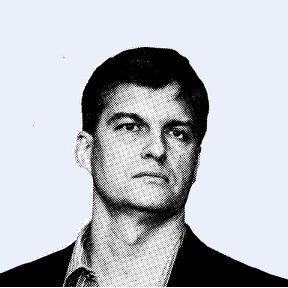
Breaking: Michael Burry says the AI boom is running on one giant loop and time is running out
Here's his breakdown:
1. Burry shared a report from Wall Street lender Ares tracking $573B of AI financing from the last 12 months
2. All of it runs through just 8 companies: Meta, Oracle, Microsoft, Amazon, OpenAI, Anthropic, Broadcom and Nvidia
3. They lend to each other, guarantee each other's debt and buy from each other, so one company's loan is backed by another company's promise to keep spending
4. Every deal depends on one thing: AI spending never slowing down
5. If AI revenue disappoints for even one season, the guarantees could all get called at once, right when the companies backing them are at their weakest
6. Burry says it's the same circular financing that turned the 2000 telecom fiber boom into a bust
Burry claims the stock market in the first stage of grief and the crash is soon

O.Shane retweeted

Building at scale directly on the ocean is just a matter of repurposing existing technology with a few modifications.
Monolithic and others have been building up to 400ft diameter self supporting domes for the past 50 years.
The process is simply inflating a giant airform, spraying concrete inside, and removing the airform.
At sea this method can be used to make a variety of large scale shapes, including domes and towers, and spraying Ultra High Performance Concrete (UHPC) provides an incredibly strong and impermeable shell with a 100+ year life in seawater.
It’s not a big leap to go from land to sea with these methods to build floating communities of thousands of people each that can join and separate to form thousands of new cities.


O.Shane retweeted

People don't understand Napoleon's insane work ethic. Napoleon had secretaries rotating shifts so that he could wake up in the middle of the night and start dictating. Napoleon would sleep 3-4 hours on campaign in 15-30 minute segments so he could always be giving orders. Napoleon would read for 12hrs+ on abstruse subjects in a single day. Napoleon would position cannons himself when he saw soldiers not manning them. You think you're working hard enough but you're not. When you study the greats of history you realize the true level of output that it takes to be known by posterity.
O.Shane retweeted

America’s corporate governance system is broken, and it’s killing public companies. Look no further than Cracker Barrel: Decades of brutal mismanagement have seen one incompetent CEO after another walk away with a massive paycheck while customers and actual shareholders take a beating.
Why does this keep happening? Because proxy advisory firms like ISS are corrupt. They blindly rubber-stamp failing boards year after year, protecting the corporate elite while burning shareholder value to the ground.
The root of the rot is index funds. There's no question that indexing one's money is a smart financial move for most people. But just because you passively index your investments doesn't mean your corporate votes should be handed over to the managers of your fund so they can play politics. Right now, passive funds hold massive, unchecked voting blocks while having zero skin in the game themselves.
It is time for a simple rewrite of the rules: We need to index the votes of index fund investors.
Passive index funds should be forced to automatically split their votes to proportionately mirror those of retail and active institutional shareholders — the people actually doing the research, risking their capital, and fighting for performance in the companies they hold shares in. No more rubber-stamping. A change like this will immediately strip corrupt gatekeepers like ISS of their toxic influence.
True accountability happens when lazy, overpaid boards actually answer to the stakeholders they represent, rather than screwing them over.
Actual, logic-driven governance when your money is passive happens when your vote passively follows the voting decisions of the actual market.
We need to stop letting passive capital protect active incompetence. By stripping index funds of their arbitrary voting power and empowering engaged investors, we will finally torch corporate cronyism and usher American capital markets into a golden age of capitalism.