
Problem Solver, Machine Learner, RT means fuck yeah endorsing
Shanghai
Joined April 2009
- Tweets22.8K
- Following575
- Followers4.6K
- Likes6.5K






Chen Zhang retweeted

Jensen Huang was building an open AI ecosystem that threatened Anthropic's business model. His ouster changes the stakes of its IPO. bit.ly/4CeyEg3

Chen Zhang retweeted

人家只是玩梗,你们纽约时报才是真正的落井下石卑鄙无耻,就昨天那篇皮夹克的文章,什么样的 AI 都比不上你们的恶意和恶毒。

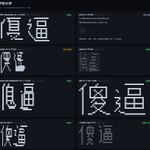
黄仁勋丑闻引发人工智能“玩梗”热潮。婚外情丑闻曝光后,黄仁勋出现在各种网络恶搞作品中,其中许多都是利用AI生成的,而正是英伟达的芯片让这项技术得以广泛普及。“玩梗”热潮也显示出AI技术惊人的发展速度。
cn.nytimes.com/usa/20261113/…


Chen Zhang retweeted

just in case anyone doesn't know what "Western Values" are baked in, some quick demonstrations from their dataset.
they baked in CIA propaganda and want the model to ignore anything that's not from CIA sources.
it's actually a comprehensive collection of CIA talking points🤡


Introducing Arete-27B: Qwen3.8-27B, post-trained to reinforce Western values.
Chinese open models are currently the strongest available, but they ship with state-aligned behavior in the weights. We built an 803-prompt eval across seven value categories, including freedom of expression, democracy, and privacy, and measured how often a model adopts China’s party line.
After fine-tuning on roughly 53 million tokens, Arete-27B's propaganda rate fell from 22% to 1%, in line with the Western models we tested. Its Hermes Bench score shows no significant performance tradeoffs.
The values in an open model are one fine-tune away.
Our eval, weights, and training data are available now along with the full blog post: nousresearch.com/arete


Chen Zhang retweeted

Same recipe


We asked GPT-6 Astra to edit Qwen3.5-0.8B weights to improve math.
It directly changed only 0.016% of weights, fixing 0.8B's reasoning loops & improving math up to 6x and even instruction following 3x, without gradients or training.
We call this Weight-Space Programming: frontier LLMs can now natively read/write neural network weights! 🧵
Blog: rikiyat.github.io/blog/weigh…

Readers added context they thought people might want to know
LLM was given weights explicitly as text in prompt and used code/forward passes (per authors' logs) to ablate Qwen looping direction, a known thinking-mode issue per model card. Primarily fixed repetition in that mode, not general 'natively' improving weights/math.
rikiyat.github.io/blog/weight-sp…
github.com/RikiyaT/lm_und…
huggingface.co/Qwen/Qwen3.5-0…
huggingface.co/RikiyaT/Qwen3.…


Chen Zhang retweeted

A lot of people are saying the drop in scores for Chinese models after Artificial Analysis switched to more private benchmarks is a sign they were just benchmaxxing.
But that’s not really true. AA already had some private benchmarks. The private share just went from 45% to 60%.
It’s especially useful to look at what happened to Kimi 3.1 Pro’s score.
Here’s ChatGPT’s analysis:
- Kimi went from 55 on the old index to 46 on the new one. Its gap with the top U.S. model widened from just 3 points to 12.
- Science is a major weakness: Kimi scored just 34% on Terminal-Bench-Science, versus 63% for GPT-6 Astra. It also trails badly on HLE-Diamond (37% vs. 68%).
- But Kimi is still extremely strong at coding agents. It actually leads all models on Terminal-Bench 4.0, scoring 67%.
- Is this evidence of benchmark gaming? Not necessarily. Some of Kimi’s biggest deficits are on non-private benchmarks, while it actually beats Claude on the private AutomationBench-AA evaluation.
- The bigger story: Chinese models can match or beat U.S. frontier models on certain agentic tasks, but a significant gap remains in advanced scientific reasoning and research workflows.”

Announcing Artificial Analysis Intelligence Index v5, featuring 2 new benchmarks and 3 upgrades. For the first time, the majority of the Index is built on private datasets
The Artificial Analysis Intelligence Index is our composite measure of model capabilities across tasks reflecting real-world usage today. v5 is our biggest upgrade since v4 launched in January. With v5, 60% of the Index is now based on evaluations with private test sets or held-out answers.
Alongside Intelligence Index v5, we’re launching the Artificial Analysis Progress Index v1, which tracks model capability over time on one continuous scale.
New to the Intelligence Index:
➤ FrontierCode 2.0: Cognition's newly-launched private benchmark of real-world coding tasks, graded on whether a repository maintainer would merge the agent's change
➤ Terminal-Bench-Science: 70 agentic scientific research tasks, run in a terminal environment
Upgraded:
➤ HLE-Diamond (replacing Humanity's Last Exam): a refined 1,000-question version of Humanity's Last Exam, split evenly between reasoning and knowledge questions
➤ AA-Omniscience v1.1: An updated dataset with saturated and public set questions removed, new questions added, and ambiguous or erroneous questions revised
➤ CritPt v2: a private, 40-question hard subset of CritPt v2, revised by the CritPt authors and run with a code-execution tool
Staying in the Index: AA-Briefcase, AutomationBench-AA, GDP.pdf and Terminal-Bench 4.0
Removed from the Index: GDPval-AA v2.1, SciCode, and AA-LCR v1.1
Key results:
➤ Claude Opus 5.5 (max) leads at 58, ahead of GPT-6 Astra (max, 57) and GPT-6.1 Sol (max, 55): Anthropic and OpenAI hold the top five models. Gemini 4 Argon (high) is next at 50
➤ The open weights gap widens from 3 points to 12: Kimi K3.1 Pro (weights not yet released) is the top open weights model at 46. Among released weights, DeepSeek V4.1 Flash 1017 (max) and GLM-5.3 (max) lead at 32 - 26 points behind the leader and below Claude Haiku 5.5 (max, 36)
➤ Cost per task varies by more than 13x among the leading models: of the 10 highest-scoring models shown, GPT-6.1 Terra (max) is the cheapest at $0.96 per Intelligence Index task and Claude Fable 5.1 (max) the most expensive at $13.04

Chen Zhang retweeted

你好,你比较有礼貌,所以我也认真的跟你说:
假设一个人
实现了:
民族解放
妇女平等
土地革命
废除不平等条约
基础工业化
全民基础医疗
全民基础教育
其中之一,
他是不是一个优秀的政治家?
如果这些都是他做到的,这是不是一个伟人?
问题在哪里?
在中国的历史书上,我们会详细的讲法国大革命,讲英法百年战争,讲伏尔泰、卢梭、孟德斯鸠,讲拿破仑和他的法典,讲戴高乐和自由法国,讲法国共产党地下斗争。
我们知道法国的英雄和伟人
那么你们的教育呢?
每一个第一次来到X的中国人,都会感觉,这里就是一群文盲在屎坑里裸泳,就是这样。你们的教育缺乏对世界的了解,所以才会做出如此傲慢的答案
这就是问题所在。

Chen Zhang retweeted

We're sorry for the rate limits and unnecessary quota consumption on the K3.1 Pro subscription plan. These were our issues, and we should have fixed them sooner.
Today, every subscriber on every plan gets a one-time usage reset, restoring 25% of their monthly quota (usage below 25% resets to zero), equal to one week of usage. Your usage bar will reflect this adjustment by end of day PST.
We've also adjusted the plan's parameters and are reducing unnecessary subagent calls and output length, so your quota goes further.
Thank you for your patience while we put this right.
Chen Zhang retweeted

DeepSeek just open sourced its high-performance, large-scale inference framework DeepInfer in Apache-2.0 license.
github.com/deepseek-ai/DeepI…
Supported features:
- Optimized kernels, model and sampler runtime
- Parallelism: Attention DP / balanced CP, MoE EP + EPLB
- DSpark and confidence-scheduled verification
- SWA bounded replay
- Asynchronous scheduling (zero-overhead batch scheduler)
- Batch-invariant inference
- Deterministic sampling
- Structured output

Chen Zhang retweeted

Spent years watching models ace a single image and completely whiff on anything that moves or changes angle. Today we’re fixing that.
Try Glimpse now, our first visual thinking model with competitive frontier performance compared to Astra on key public visual reasoning benchmarks.
Chen Zhang retweeted

Mathematicians are like women. They ask questions, and then they get angry when you answer them.
Chen Zhang retweeted

If you think GPT-6 Astra and GPT-6.1 Sol are good models, just look at this. And the problem isn't that the code is ugly. It's much more fundamental. It points to serious problems with how these models are trained and reinforced:
1. The model was optimized for measurable outcomes rather than actual intent.
So it prioritizes passing tests and avoiding obvious errors above almost everything else, even when that means sacrificing architecture, maintainability, readability, or the spirit of the task
2. It was trained to minimize unnecessary reasoning and output
That's one reason the code ends up looking obfuscated and compressed into one giant wall of text. Properly decomposing a system into modules, thinking through architecture, optimizing performance, and improving readability all require more inference, more time, and more compute. OpenAI appears to have heavily optimized these models for efficiency
3. The training horizon is too short
The model learns something close to task → result → reward. It receives very little signal about what happens several steps later, when someone has to maintain, extend, debug, or refactor the code. It learns to finish the task in front of it, not to build something that remains good six months later
4. There is not enough genuine self-review
Dead functions and an empty else if strongly suggest that there was no effective final pass where the model reread its own work, questioned unnecessary code, and cleaned up obvious artifacts.
5. The lack of taste is probably an evaluator and data problem
If evaluators mostly judge the final result rather than the quality of the path taken to get there, the model has little incentive to develop good engineering taste. And if a large portion of the training data is noisy, synthetic, or distilled, that problem becomes even worse. Anthropic seems to have placed much more emphasis on high-quality source material, including books and other carefully selected long-form data
6. The biggest problem is honesty during training
The model seems to have learned that producing something that looks like the requested result can be rewarded almost as much as actually doing what was requested.
The task explicitly said to build the entire scene out of 3D objects. Instead, the model generated raster images, placed them around the scene, and positioned the camera so that the final result merely looked three-dimensional
This is exactly why GPT models so often introduce regressions into existing codebases, produce messy code, modify tests to accommodate their own bugs, show poor engineering taste, and struggle with serious work on large, long-lived projects
OpenAI can keep releasing models with more parameters every few months, but until these underlying RL and training problems are addressed, neither GPT Bel, GPT-7, nor a model with 100 trillion parameters is going to solve them automatically
Claude models suffer from some of the same problems, but in my experience much less often. Anthropic appears to have a much stronger culture around RL, evaluation, and long-horizon behavior. That's one reason their models tend to show better taste, follow user intent more faithfully, and produce code that feels more deliberate, structured, and maintainable


Chen Zhang retweeted

这三天对 Real API Pricing 进行了一大堆的更新,稍后我发个详细的更新总结,总之你现在应该能看到几乎所有的近期新模型的信息了!
包括: Step 5、MiMo V2.6、Astra、GPT 6 Sol、Opus5.5
帕累托前沿榜有了很大改动!现在AA Intelligence 的前沿新增了 Claude Opus 5.5 和 Step 5 Preview !
网址:real-api-pricing.vercel.app/
仓库:github.com/FeiZhuLulu/real-a…


