





Peter Felsmann retweeted

There is never a good
enough reason to take away
your loving. ~ John-Roger, DSS ~
Peter Felsmann retweeted

Thomas Sowell – The Man Who Asked for the Evidence 📚
He was born in 1930 in North Carolina, in a house without running water. His father died before he was born. He grew up in Harlem, left school at sixteen, delivered telegrams, worked in a machine shop and served in the Marines. Then he went to Harvard, Columbia and Chicago.
He started as a Marxist. Books did not cure him. A summer job did.
In 1960, at the U.S. Department of Labor, he studied the minimum wage in Puerto Rico's sugar industry. Each time the wage was raised, employment fell. He proposed a simple test to find out why. Nobody in the building wanted it run. The department's budget depended on the law being good; whether the law was good was not its business. That summer, he understood that an institution has interests of its own, and that the truth is rarely among them.
Everything else followed from there. For sixty years, he has asked the three questions that no ideology survives: compared to what, at what cost, and what hard evidence do you have?
He put the whole of economics in one line, observing that there are no solutions, only trade-offs. And he put the whole of politics in another, noting that it is hard to imagine a more dangerous way of making decisions than putting them in the hands of people who pay no price for being wrong.
He gave the planners their true name: the anointed. People who judge themselves by their intentions and everyone else by results, and for whom every failure of their policy is proof that it was not tried hard enough.
He was a black man from Harlem who said that culture matters more than grievance, and that the policies made to help the poor had hurt them most. For that, the people who claim to speak for the poor never forgave him. He kept writing anyway – more than forty books, without a single slogan in them.
He is ninety-six. He has never held power, never led a movement, never raised his voice.
He only asked for the evidence. In the age of the Lie, that turned out to be the most radical thing a man could do.
—
America has one honor that fits: the Presidential Medal of Freedom, its highest civilian award. 🏅🇺🇸
He should receive it now, while he can still walk up and collect it. 🗽


Hayek finished the job of obliterating the entire socialist project in 1945 with one devastating insight: the knowledge needed to run an economy does not exist in any one place.
It is scattered across millions of minds – the farmer who knows his field, the shopkeeper who knows his street, the engineer who knows his machine – and only prices can gather it. No planner can collect it, because most of it cannot even be written down. The socialists spent the next eighty years building bigger ministries to collect it anyway.
And yet here we are, watching politicians explain that this time it will work, because now they have data, experts and algorithms. They cannot tell you how many nurses a single hospital will need next winter – how exactly are they going to know what three hundred million people want, need and can make, every day, in every town?
Every Soviet shop with left shoes only, every empty Venezuelan shelf, every five-year plan fulfilled on paper was just Hayek being proven right. He left the planners one sentence to hang over their desks: "The curious task of economics is to demonstrate to men how little they really know about what they imagine they can design." But sure, let's give the committee a supercomputer. What could go wrong?

Peter Felsmann retweeted

I don't know if you realize what just happened.
Elon Musk is completely bypassing the State.
For 100 years, we've been told the problem is capital. That it must be captured, taxed, redistributed. With an army of intermediaries standing between those who create wealth and the people: ministries, agencies, commissions, bureaucrats.
Musk is doing the opposite. He's taking his capital and giving it directly to the people. One SpaceX share to every kid in America. Not a handout. Not a subsidy. A piece of the machine that's taking humanity to Mars.
And he says it himself: this is the first of many.
Mises understood this back in 1944: the bureaucrat creates nothing. He administers what others created, following rules that have no connection to the value produced. The day value flows directly from the one who creates it to the one who receives it, the bureaucrat has no function left.
That's what's being born right now. A new liberal world order, where the very concept of the State will make less and less sense.
The world we're entering is a world of abundance. AI, robots, energy, space. And that abundance won't come through the State, for one simple reason: we have a century of proof that it doesn't work.
Redistribution was version 1.0. Direct distribution of capital is 2.0.
While France is still debating how to tax builders even more, America is handing stock to its kids.
Pick your side.


Peter Felsmann retweeted
Envy – the Engine of Socialism.
Envy is not wanting what your neighbor has. That would be desire – and desire built most of the world.
Envy is wanting him not to have it.
Envy is the pain you feel at someone else’s good. Not your loss – his gain.
Envy is Schadenfreude: the small, warm, shameful joy when the neighbor’s business fails, when the brilliant colleague stumbles, when the one who rose too high comes down.
Envy is close. Nobody envies a king. We envy the cousin, the classmate, the colleague at the next desk – the one who started where we started and went further. Aristotle saw it: we envy those nearest to us.
Envy is admiration that refused to become effort. It looks at excellence and, instead of climbing toward it, decides to pull it down.
Envy is a mirror nobody can bear. His success asks a question: if he could, why didn’t I? There is only one way to silence it – make him guilty. He must have cheated. He must have stolen. Every theory of exploitation begins here.
Envy is the only sin nobody confesses. It never calls itself envy. It calls itself fairness, justice, equality. It goes to the barricades in the costume of virtue.
And envy is never satisfied. Tocqueville saw the trap: when everyone is nearly equal, the smallest difference becomes unbearable. Level everything, and the last remaining difference burns brighter than all the old ones did. Equality never cures envy. It feeds it.
That is why envy is strongest where the stakes are smallest. In academia, professors fight viciously for the tiniest, most insignificant advantages – the old joke says the politics are so bitter precisely because the stakes are so low. And in socialism, where everyone had almost nothing, a slightly bigger flat was enough to make a neighbor write a denunciation.
Few people envy when everyone around them is doing great things. When everyone is climbing, nobody has time to pull anyone down.
Now scale it up. Envy is the cheapest fuel in politics. Promise to take from the few and give to the many, and the crowd forgives you everything. It costs the politician nothing – the bill goes to the successful. Then the successful leave, or stop trying, and the bill comes back to everyone. In Soviet villages, a "rich" peasant was often a man with two cows. Liquidating them gave nobody a cow. It gave everybody the famine.
The Greeks knew there were two kinds of rivalry. One makes the potter work harder because the other potter is good. The other burns down the other potter’s workshop.
A free society does not abolish envy. It converts it: you may have what your neighbor has – by doing what he did. Socialism converts it the other way – into policy.
The cure is old and simple: gratitude for what you have, and the ambition to build what you don’t.

The Seven Deadly Sins – at the Scale of a Civilization.
More than fourteen centuries ago, Christian monks drew up a list of seven sins. Not laws – a map of the human heart. Envy. Pride. Wrath. Sloth. Greed. Gluttony. Lust. It is still pretty much the most accurate psychology anyone has written.
The monks were looking at one soul at a time. Look at whole systems instead, and you find the same seven. A vice that stays private ruins one life. Scaled up, it becomes an institution: a tax, a ministry, an ideology, a budget line.
People will always have vices. The question is who pays for them.
Adam Smith noticed that we owe our dinner not to the butcher’s kindness but to his self-interest. A free market does not abolish greed – it puts it to work: you get rich only by serving others, and you go bankrupt if you don’t. The vice pays its own bill. Bad systems let the vice send its bill to someone else – the taxpayer, the next generation, the innocent.
A good civilization does not abolish sin. It sends the bill to the sinner.
So here is what comes next, one sin at a time:
1. Envy – the engine of socialism. If I can’t have it, nobody should.
2. Pride – the planner’s conceit, from Plato’s philosopher-king to the Brussels directive.
3. Wrath – vengeance without trial, from the guillotine to cancel culture.
4. Sloth – comfort as a political program, from bread and circuses to the empty cradle.
5. Greed – the one everybody expects us to defend. We won’t: crony capitalism, the bailout, private profit and public loss.
6. Gluttony – debt. Eating the future.
7. Lust – pleasure cut off from its consequences, and from children.
And then the cures: the four old virtues – prudence, justice, temperance, fortitude – and the institutions that make them stick.
The monks thought sin was a matter for the confessional. They were half right. It is also a matter for the budget.
Show me a country’s budget, and I will tell you which sins it subsidizes.
First up: Envy.
Envy – the Engine of Socialism.
A genie appears to a peasant: "I’ll grant you one wish." The peasant thinks for a long time. His neighbor has a goat. "Kill the neighbor’s goat."
That is envy. Not wanting what someone else has – that’s ambition, and it built most of the world. Envy is wanting him not to have it. Even if you gain nothing. Even if you lose.
Every other sin at least promises pleasure. Envy promises only that someone else will have less. And it is the one sin nobody ever confesses – because it never calls itself envy. It calls itself fairness. Justice. Equality.
Socialism is envy at scale: not lifting the bottom, but cutting the top. Thatcher caught it in one sentence in Parliament: her opponents would rather the poor were poorer, provided the rich were less rich.
In experiments, people will pay out of their own pocket to destroy money belonging to others. Whole countries do the same: the tax that raises little but drives away the people it targets, the school that abolishes the advanced class because not everyone can take it, the rule written to bring down whoever got ahead.
In Soviet villages, a kulak – a "rich" peasant – was often a man with two cows. Liquidating the kulaks did not give anyone a cow. It gave everyone the famine.
That is envy’s bill. Envy aims it at the successful. But the successful leave, or stop trying – and the bill comes back to everyone. Kill the goat and you get no milk. Neither does anyone else.
The Greeks knew there were two kinds of rivalry. Hesiod wrote that the potter competes with the potter, the craftsman with the craftsman – and that this strife is good, because it makes everyone work harder. The other kind only destroys.
A free society does not abolish envy. It converts it: you may have what your neighbor has – by doing what he did. Socialism converts it the other way, into policy, so that nobody has the goat.
The cure is old and simple: gratitude for what you have, and the ambition to build what you don’t.
Next: Pride.

Peter Felsmann retweeted
Gluttony – Eating the Future.
Gluttony is not enjoying food. The feast is civilization itself: the wedding table, the twelve dishes of Wigilia, the long Sunday lunch with three generations around it.
Gluttony is consuming more than you need – now, at the expense of later, and of others.
Gluttony is the third helping taken while someone at the same table has none.
Gluttony cannot wait. It cannot leave anything for tomorrow.
Our ancestors knew the rhythm: the feast, and then the fast. Carnival, and then Lent. Gluttony is the feast with no Lent – the party that never has to end, because someone else will clean up.
Gluttony is never alone at the table. Someone always pays for it: the next meal, the next season, the next generation.
Today it has a business model. The scroll, the snack, the purchase on credit. We even named a product after it: buy now, pay later.
Now scale it up.
A deficit is a meal eaten by one generation and paid for by the next. Rome debased its coin to keep the banquet going, until prices told the truth. France has not balanced a budget since 1974 – half a century of feasting on borrowed bread.
The pension promises are the same dish: made by people who will not be there when the bill arrives, paid by children who were never asked. The perfect person to send the bill to is the one who cannot vote, cannot protest and has not yet been born.
Socialism goes further still. It eats the seed corn – the factories, the savings, the capital that earlier generations built – and then wonders why there is no harvest.
The Greeks carved the cure into the temple at Delphi: nothing in excess.
A free society does not abolish appetite. It converts it: enjoy as much as you like – of what you have earned, at your own expense. The borrowing state does the opposite: it feasts today and sends the bill to the children.
The cure is old and simple: temperance. Eat what you earn. Leave the future its own bread.
Next: Lust.

The Seven Deadly Sins – at the Scale of a Civilization.
More than fourteen centuries ago, Christian monks drew up a list of seven sins. Not laws – a map of the human heart. Envy. Pride. Wrath. Sloth. Greed. Gluttony. Lust. It is still pretty much the most accurate psychology anyone has written.
The monks were looking at one soul at a time. Look at whole systems instead, and you find the same seven. A vice that stays private ruins one life. Scaled up, it becomes an institution: a tax, a ministry, an ideology, a budget line.
People will always have vices. The question is who pays for them.
Adam Smith noticed that we owe our dinner not to the butcher’s kindness but to his self-interest. A free market does not abolish greed – it puts it to work: you get rich only by serving others, and you go bankrupt if you don’t. The vice pays its own bill. Bad systems let the vice send its bill to someone else – the taxpayer, the next generation, the innocent.
A good civilization does not abolish sin. It sends the bill to the sinner.
So here is what comes next, one sin at a time:
1. Envy – the engine of socialism. If I can’t have it, nobody should.
2. Pride – the planner’s conceit, from Plato’s philosopher-king to the Brussels directive.
3. Wrath – vengeance without trial, from the guillotine to cancel culture.
4. Sloth – comfort as a political program, from bread and circuses to the empty cradle.
5. Greed – the one everybody expects us to defend. We won’t: crony capitalism, the bailout, private profit and public loss.
6. Gluttony – debt. Eating the future.
7. Lust – pleasure cut off from its consequences, and from children.
And then the cures: the four old virtues – prudence, justice, temperance, fortitude – and the institutions that make them stick.
The monks thought sin was a matter for the confessional. They were half right. It is also a matter for the budget.
Show me a country’s budget, and I will tell you which sins it subsidizes.
First up: Envy.
Envy – the Engine of Socialism.
A genie appears to a peasant: "I’ll grant you one wish." The peasant thinks for a long time. His neighbor has a goat. "Kill the neighbor’s goat."
That is envy. Not wanting what someone else has – that’s ambition, and it built most of the world. Envy is wanting him not to have it. Even if you gain nothing. Even if you lose.
Every other sin at least promises pleasure. Envy promises only that someone else will have less. And it is the one sin nobody ever confesses – because it never calls itself envy. It calls itself fairness. Justice. Equality.
Socialism is envy at scale: not lifting the bottom, but cutting the top. Thatcher caught it in one sentence in Parliament: her opponents would rather the poor were poorer, provided the rich were less rich.
In experiments, people will pay out of their own pocket to destroy money belonging to others. Whole countries do the same: the tax that raises little but drives away the people it targets, the school that abolishes the advanced class because not everyone can take it, the rule written to bring down whoever got ahead.
In Soviet villages, a kulak – a "rich" peasant – was often a man with two cows. Liquidating the kulaks did not give anyone a cow. It gave everyone the famine.
That is envy’s bill. Envy aims it at the successful. But the successful leave, or stop trying – and the bill comes back to everyone. Kill the goat and you get no milk. Neither does anyone else.
The Greeks knew there were two kinds of rivalry. Hesiod wrote that the potter competes with the potter, the craftsman with the craftsman – and that this strife is good, because it makes everyone work harder. The other kind only destroys.
A free society does not abolish envy. It converts it: you may have what your neighbor has – by doing what he did. Socialism converts it the other way, into policy, so that nobody has the goat.
The cure is old and simple: gratitude for what you have, and the ambition to build what you don’t.
Next: Pride.
Peter Felsmann retweeted
Pourquoi la majorité des Français reste bloquée dans la médiocrité, et comment en sortir.
Je vais être brutal, parce que la gentillesse n'a jamais sorti personne d'un seau.
La France n'est pas médiocre par manque de talent. On a les meilleurs ingénieurs du monde, des mathématiciens à chaque génération de médailles Fields, des écoles que la Silicon Valley vient piller. La France est médiocre par choix mental. Une majorité de gens ont installé dans leur tête un logiciel qui les condamne à stagner, et ils le défendent comme une vertu.
Ce logiciel a trois noms. La pensée à somme nulle. Le panier de crabes. Et la mentalité gauchiste, et je ne parle pas d'un parti : je connais des électeurs de droite qui l'ont en eux jusqu'à l'os.
Le diagnostic d'abord.
En 1965, l'anthropologue George Foster décrit "l'image du bien limité" dans des sociétés paysannes : tout ce qui a de la valeur existe en quantité finie, donc si ton voisin gagne, c'est qu'il t'a pris. Soixante ans plus tard, c'est le fond de l'air français. Le patron qui gagne a "exploité". Le créateur qui réussit a "eu de la chance". Le riche a "volé". Celui qui lève des fonds "va se planter". Personne ne se demande comment la valeur a été créée, tout le monde se demande à qui elle a été prise.
Ce n'est pas une intuition. Stefanie Stantcheva et ses co-auteurs à Harvard ont montré que la pensée à somme nulle est fortement liée à l'histoire de mobilité des familles : quand ta lignée n'a pas vu l'ascenseur social fonctionner, tu finis par croire que le monde est un gâteau fixe. Benjamin Friedman l'avait écrit dès 2005 : les sociétés en croissance deviennent ouvertes et généreuses, les sociétés stagnantes deviennent rancunières et obsédées par la répartition.
Ajoutez à ça un État qui pèse autour de 57 % du PIB, l'un des niveaux les plus élevés du monde développé. Quand la moitié de la richesse transite par un guichet, la manière la plus rentable de s'enrichir n'est plus de créer, c'est de se placer au bon endroit dans la file de redistribution. La politique devient une guerre pour les miettes. Et une société qui se bat pour les miettes produit exactement les gens qu'elle mérite : méfiants, jaloux, et persuadés d'être lucides.
Tocqueville l'avait vu il y a deux siècles. Les peuples démocratiques ont une passion pour l'égalité plus ardente que pour la liberté. La France a poussé ça jusqu'à la caricature : on préfère que tout le monde stagne ensemble plutôt que voir un seul d'entre nous s'envoler.
Résultat : le pays le plus doué d'Europe exporte ses meilleurs cerveaux à Londres et à San Francisco, et garde ceux qui expliquent pourquoi ça ne marchera pas.
Maintenant, le guide pour en sortir. Rien de tout ça ne demande une réforme de l'État. Ça commence dans ta tête, ce soir.
Arrête de regarder l'assiette des autres. Chaque minute passée à commenter la réussite d'un autre est une minute volée à la tienne. Celui qui compte les likes des autres n'a jamais construit quoi que ce soit qui mérite d'être liké.
Remplace "il a eu de la chance" par "comment il a fait". C'est la phrase la plus rentable de la langue française. La première te rend amer, la seconde te rend compétent. Le jaloux et l'apprenti voient la même chose, seul l'un des deux progresse.
Comprends que la richesse se crée. Google n'a rien pris à personne : il a fait apparaître des centaines de milliards de valeur qui n'existaient pas. Paul Graham appelle l'erreur inverse "the pie fallacy". Tant que tu crois que le gâteau est fixe, tu passeras ta vie à négocier ta part au lieu d'en cuire un.
Arrête de demander la permission. La mentalité de guichet t'apprend à attendre qu'une institution valide ton existence : un diplôme, un concours, un statut, une subvention. Les gens qui changent les choses n'attendent pas. Ils construisent, ils publient, ils vendent, et la légitimité arrive après.
Fais la paix avec l'échec, pas avec la médiocrité. En France, se planter est une honte et ne rien tenter est respectable. C'est exactement l'inverse de ce qui fonctionne. Un échec, c'est des données. L'inaction, c'est de la décomposition lente.
Produis plus que tu ne consommes. Écris, code, filme, vends, lance. Chaque jour où tu crées quelque chose, tu sors un peu plus du seau. Chaque jour où tu ne fais que consommer et commenter, tu t'y enfonces.
Change d'entourage s'il le faut. Tu deviens la moyenne des gens qui t'entourent. Si ton cercle ricane à chaque ambition, il ne te protège pas, il te garde au fond. Trouve ceux qui disent "vas-y" au lieu de "t'es sûr ?".
Félicite. Sincèrement. Quand quelqu'un réussit, dis-le. Pas par politesse, par intérêt bien compris : un écosystème où les gens réussissent est un écosystème où toi aussi tu peux réussir. À San Francisco, on présente des inconnus, on aide des concurrents, on investit dans des gens qu'on vient de rencontrer. Ce n'est pas de la naïveté, c'est de l'arithmétique à somme positive.
Assume l'ambition, publiquement. Le Français moyen cache ses rêves pour ne pas être moqué. Résultat, il ne les réalise jamais. Dis ce que tu veux construire, et laisse les crabes ricaner. Leur avis ne vaut que ce qu'ils ont eux-mêmes construit.
La vérité qui dérange, c'est que personne ne viendra te sortir de là. Ni l'État, ni ton patron, ni le prochain président. La médiocrité française n'est pas une fatalité imposée d'en haut. C'est la somme de millions de petits renoncements quotidiens, de ricanements, de "pour qui il se prend", de "ça ne marchera jamais".
Le pays changera le jour où assez de gens arrêteront de tirer les autres vers le fond et commenceront à grimper.
Trois mots pour commencer : "Félicitations, apprends-moi."


Check out this article: cnn.com/2026/08/02/politics/…

47
Peter Felsmann retweeted
If you are not willing to kill or die for your own most treasured values, you should think carefully before welcoming in migrants who would do both for theirs.
Peter Felsmann retweeted

🚨While the US increases its presence in #Venezuela, we should pick-up thug Diosdado Cabello and bring him to justice so he can stop impeding the distribution of aid to those impacted by the earthquake.

Peter Felsmann retweeted

A large search and rescue team from England & France with equipment for detecting people under rubble, is stuck at Madrid Airport
Colombia’s Avianca is the only airline willing to fly them to Venezuela but says the Venezuelan dictatorship wont allow them
Peter Felsmann retweeted

🇻🇪 La Federación Samaritana de Trabajadores de Austria informó que el equipo médico internacional que se preparaba para viajar a Venezuela para atender a las víctimas del terremoto finalmente no pudo ingresar al país.
Según el comunicado, la misión formaba parte de un Equipo Médico de Emergencia (EMT) liderado por ISAR Germany y contaba con 41 especialistas voluntarios en atención de desastres, incluidos 15 expertos de respuesta rápida de la organización austriaca.
De acuerdo con la organización, pese a que la asistencia médica internacional había sido solicitada y el despliegue ya estaba en marcha desde el aeropuerto militar de Wunstorf, en Alemania, las autoridades venezolanas no autorizaron el ingreso sin visado del personal.
Ante esta situación, el contingente austriaco regresó a Viena y la ayuda continuará enfocándose en el envío de insumos humanitarios y apoyo a través de organizaciones aliadas. #VPItv

Peter Felsmann retweeted
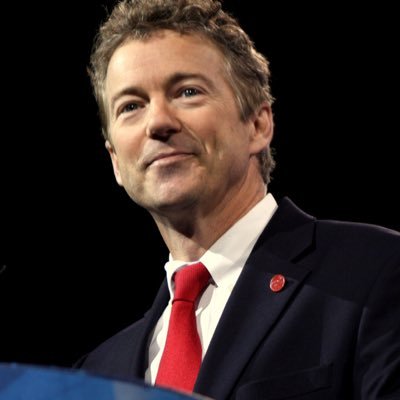
The Fourth Amendment was written for a reason. The founders lived under a government that searched homes, seized papers, and invaded private life without justification. They built a wall against it. Washington has spent decades quietly tearing that wall down, one surveillance program, one secret court order, and one warrantless data purchase at a time.
My Fourth Amendment Restoration and Protection Act rebuilds it. Government exists to protect your rights, not trade them away to the highest bidder or the most powerful agency.
Peter Felsmann retweeted

ARREST ANTHONY FAUCI!
If you believe you should get involved and you should, please REPOST this.
I am tired of waiting for "someone" to hold FAUCI accountable!
We The People can all file a complaint against his license. It’s fast, it’s free and all complaints must be investigated.
Please read this short missive below and please consider reposting.
Thank you @DNIGabbard

I made a promise to the first Soldier of mine, who died from the COVID vaccine!
Anthony Fauci, M.D., holds an active medical license in Maryland (license number D0004034).
Here is a link to file a complaint against the medical license of a doctor in Maryland.
mbp.state.md.us/mbp_complain…
Maryland Medical Practice Act (Health Occupations Article, Title 14), which lists grounds for disciplinary action, including “immoral conduct” and “unprofessional conduct” in the practice of medicine.
Key Statutory Grounds (Health Occupations § 14-404)
A disciplinary panel may reprimand, probate, suspend, or revoke a license if a physician:
• Is guilty of immoral conduct or unprofessional conduct in the practice of medicine.
• Is professionally, physically, or mentally incompetent.
• Engages in other prohibited acts (e.g., fraud, patient abandonment, substance abuse, overutilization, false reports, etc.).
“Unprofessional conduct” is evaluated on a case-by-case basis by the disciplinary panel. It is not rigidly defined in statute but includes failures to meet standards of care, ethical violations, or behavior that harms patients or the profession.
Did the medical recommedations and guidance given by Dr Fauci acting in his offical capacity as the Director of the National Institute of Allergy and Infectious Diseases (NIAID) brake your trust in the profession of medicine? Public health? The safety of vaccines?
Were you or your loved ones harmed by SARS-CoV-2 (gain of function bioweapon)?
Were you or your loved ones harmed by the COVID vaccine-bioweapon?
Did the health of you or your loved ones suffer because of proffesional medical opinions and guidance given by a medical professional acting in his/her offical professional medical capcity?
Did your business close because of the fabricated medical advice like 6 ft safe and masking?
Did your grandparents or parents die alone in a hospital because of the deadly Remdesivir protocol and or social distancing?
Did your mental health suffer from social isolation and stress?
Did your children struggle with depression, anxiety, and suicidal ideation secondary to the medical recommendations (social distancing, masks, school by Zoom, etc.) because of the "expert medical opinions and guidance" of a man acting in his official capacity for NIH?
Do you think it is "professional" for a medical doctor to use their position and taxpayer money to fund the development of a more lethal, more transmissible virus?
Do you think it is "professional" to lie to congress?
Do you think it is "professional" for a doctor to lie to the President of the United States about Public Health issues and measures?
Do you think it is "professional" for a doctor to spread lies about a vaccine's safety and efficacy that directly results in substantial harm to the health and readiness of our entire Armed Forces?
Actions have consequences—and incompetent/corrupt leaders— are deadly!!
My last conversation with the first soldier that died from the vax, he said, "I know the vaccine did this to me. I felt that poison go through my body. I was about to retire, and they took everything from me and my family. Make sure they are held accountable for what they did to me. Please make sure my wife is taken care of."
I have had conversations most in the military can't imagine. When "leaders" do things that kill my men and women...I take it personally. These men and women did NOT take an oath to be Fauci's "lab rats."
WHY DOES ANY DOCTOR INVOLVED IN THIS GLOBAL DECEPTION STILL HAVE A MEDICAL LICENSE?
@BrianneDressen
@GenFlynn
@samosaur
@SenRonJohnson
@SecKennedy
@SenRandPaul
@React19org
Peter Felsmann retweeted
The DOJ has ONE WEEK left to charge Anthony Fauci for the worst cover-up in modern medical history.
He lied to Congress about funding gain-of-function research in Wuhan. Millions died. Trillions were spent. And Fauci walked away with book deals and fawning media coverage instead of handcuffs. I re-upped my criminal referral to the DOJ because the evidence is overwhelming, and justice has been delayed long enough.
RT if you’re ready to see Fauci behind bars.


Peter Felsmann retweeted
It's that time of the month. No, not THAT time of the month. I usually post this video once a month or so because it's that good. If you've seen it before, don't just watch it again, study it. If you've never seen it before, you're in for a treat.
Wondering....what can you learn from this video which you can apply to your biz and personal life? ツ
#gratitude #appreciation #lifeisbeautiful
youtu.be/Cbk980jV7Ao?si=XL0x…

Sign the Philadelphia Declaration — a commitment to truth and freedom go.studentsforliberty.org/ph…
32