

Médico Internista infectólogo U. Chile, intensivista, en una UCI de Hospital Público de Santiago y Ciclista ... 😃 🚲😅🏨
Santiago, Chile
Joined May 2011
- Tweets6.7K
- Following1.1K
- Followers628
- Likes4.5K






J Arancibia 🦠 retweeted

Population aging is pushing up Chile’s crude cancer death rate, even as age-adjusted rates are falling.
In Chile, the annual number of cancer deaths as a share of the total population has been rising for decades. From this, it would be easy to assume that cancer is getting worse. But the chances of dying from cancer at most ages are lower than they used to be. The missing piece is that the country’s population is changing quickly, and older people now make up a much larger share.
That’s what the chart shows. The crude cancer death rate, in red, counts registered cancer deaths per 100,000 people of all ages. This metric has been going up, reflecting the fact that cancer risks increase steeply with age, and the population has grown much older.
The blue line, by contrast, shows the age-adjusted rate. This metric removes the effect of aging by holding the age structure constant.
This line has been falling for decades, which means that Chileans at almost every age are now less likely to die from cancer than people of the same age were in the past.
The pattern we see in Chile is happening in many other countries, too, and is visible in the global estimates.
(written by @EOrtizOspina)

J Arancibia 🦠 retweeted

Por primera vez en 30 años, muere un niño de sarampión en nueva york (no vacunado). Por primera vez tb , podemos decir que la responsabilidad recae en un gobierno y su ministro de salud que ha hecho campaña CONTRA la vacunación. Lamentable.
nytimes.com/2026/11/02/nyreg…


J Arancibia 🦠 retweeted

The ICU ID consult in a critically ill pt where the consulting team is asking for:
- help finding a source
- options for broadening therapy
... should not result in our saying "Stop antibiotics now" — except under truly extraordinary circumstances.
Medical Consulting 101.

if your ID department has both antibiotic-maximalists and antibiotic-minamilists, it needs to be broken into TWO different services so you can ask for what you need:
ABX-minamilist service
- consult them when someone with nonpurulent cellulitis is put on three antibiotics
- everything is treated wih either PO amoxacillin or PO doxy
- keep the patient’s neutrophils busy
ABX-maximalist service
- consult them when patients are getting worse and you’re scared
- everyone gets $10,000 worth of PCRs & fungal antigens
- they agree on using the CDC’s reserve of 10th-generation cephalosporin alongside meropenem-avibactam with a side of IVIG and isavuconazole
J Arancibia 🦠 retweeted

🌟Excellent editorial
Extensive data from patients with C bacterial septic shock suggest that even an hour's delay until appropriate antibacterial therapy is associated with increased mortality, but whether the same is true for Candida septic shock is less clear!
Candida Septic Shock: If Every Hour Matters, Who Requires Empiric Therapy? #IDXposts
journals.lww.com/ccmjournal/…

J Arancibia 🦠 retweeted

The spread of gram-negative antimicrobial resistance is driven by human, environmental, and other factors. Pranita D. Tamma, MD, reviews clinically important pathogens, mechanisms driving resistance, and strategies for treatment.
Read the Review Article “Gram-Negative Bacterial Resistance”: nej.md/4yIbmfe

ALT An illustrated diagram from the Review Article "Gram-Negative Bacterial Resistance" that shows a representative gram-negative bacterial cell and the principal mechanisms of antibiotic activity and resistance. Panel A is labeled "Antibiotic Mechanisms against Gram-Negative Bacteria." Panel B is labeled "Gram-Negative Bacteria Resistance Mechanisms against Antibiotics."
J Arancibia 🦠 retweeted
🆕💥🔴Case series
Successful management of histoplasmosis with "novel" triazole antifungals(posaconazole and isavuconazole) #IDXposts academic.oup.com/jac/article…

J Arancibia 🦠 retweeted
🔥Next week, CDC will release the 2026 update to the Antimicrobial Resistance Threats in the United States (AR Threats Report) which will provide comprehensive data on the impact of drug resistance on human health in the United States
Subscribe to be the first to hear when it’s live:🔥 bit.ly/3S4sc3s

J Arancibia 🦠 retweeted

WHERE SHOULD YOU PLACE THE LVOT DOPPLER SAMPLE?
Calculating aortic valve area using the continuity equation requires an accurate LVOT velocity-time integral (VTI).
But a few millimetres can make a difference.
1. Start in the LVOT
Use pulsed-wave Doppler and position the sample volume below the aortic valve.
2. Move toward the valve
Advance the sample volume gradually toward the aortic valve, observing the spectral waveform.
3. Identify the optimal position
As the sample enters the flow acceleration zone, spectral broadening appears. This indicates that the sample is too close to the valve.
4. Move slightly apically
Withdraw the sample until spectral broadening disappears and a clear, laminar LVOT signal is obtained.
Why does this matter?
If the sample is too close to the valve, the measured LVOT VTI may be falsely elevated, causing the calculated aortic valve area to be overestimated.
If it is too far into the ventricle, the measurement may not represent the appropriate LVOT flow velocity.
Clinical pearl: Correct LVOT sample positioning is essential for reliable grading of aortic stenosis.
Reference: ASE recommendations for echocardiographic assessment of aortic stenosis; 2025 ESC/EACTS Guidelines for the Management of Valvular Heart Disease.

J Arancibia 🦠 retweeted
🔥It's published 🔥
The first ever RCT combination therapy for Stenotrophomonas maltophelia infections
Efficacy of combination therapy with minocycline for treating Stenotrophomonas maltophilia infections
🔺Adjunctive minocycline did not significantly reduce 28-day-mortality (n = 24/55[43.6%] vs n = 22/57[38.6%], P = 0.590) #IDXposts @drgabx
academic.oup.com/jacamr/arti…

J Arancibia 🦠 retweeted

A Curva da Felicidade.
O economista David G. Blanchflower analisou dados de 132 países para investigar a relação entre idade e bem-estar subjetivo. O trabalho reuniu 109 conjuntos de dados e encontrou evidências de uma curva em U em todos os países analisados.
A curva sugere que:
- Na juventude: o bem-estar tende a ser relativamente elevado.
- Na meia-idade: a satisfação com a vida diminui, em média.
- A partir de aproximadamente 47 a 48 anos: o bem-estar tende a se recuperar, segundo as estimativas médias do estudo.
Créditos: IG / longevitydaily_
J Arancibia 🦠 retweeted

Oral #Fosfomycin for Pyelonephritis & cUTI: Time for Evidence Over Eminence?
Thanks to @BradSpellberg for leading an international group to make a case (#fosfomycin for #cUTI) that may serve as basis for a revolution in #guidelines development.
academic.oup.com/cid/advance…

J Arancibia 🦠 retweeted

🧵 Presented today at #LIVES2026:
Among patients with #SepticShock undergoing surgical source control, intraoperative dobutamine plus norepinephrine reduced new-onset or worsening #AcuteKidneyInjury within 7 days after surgery compared with norepinephrine alone. These findings support consideration of this intraoperative hemodynamic strategy for reducing postoperative kidney injury in this surgical population.
ja.ma/4dF23oY

J Arancibia 🦠 retweeted
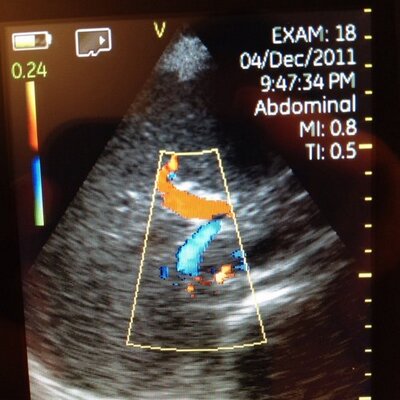
How do you CRT?
Microscope slide vs. manual pressure?
🧐 No direct comparison in the literature
🧐 ANDROMEDA-SHOCK used slides, but the use of manual pressure has been investigated more rigorously and in greater detail (studies by Ait-Oufella et al)
🧐 Either is probably fine; manual pressure seems less clunky to me (until proven otherwise)
How to measure elapsed time?
⏱️ Most literature & data is based on using a stopwatch
⏱️ A wristwatch with a chronograph function may be the easiest to use
How many measurements?
🔁 Precision increases by repeating CRT 2-3 times (vs a single measurement)
🔁 But this is time-consuming and tedious
I'd be super interested to hear exactly how people do this. We talk about CRT a lot, but my guess is that everyone is doing it a bit differently.


J Arancibia 🦠 retweeted

#DivulgaciónSEIMC | ¿Es realmente la habitación del paciente anterior una fuente importante de transmisión de Clostridioides difficile? 🦠🏥
En esta ocasión, el Dr. @micromunidad nos trae un estudio publicado en @CIDJournal analiza esta cuestión mediante secuenciación del genoma completo (WGS).
🔎 Los investigadores estudiaron a pacientes que ocuparon habitaciones previamente contaminadas o utilizadas por personas con infección por CDI. A pesar de que este tipo de exposición fue frecuente, ningún caso de CDI asociado a la asistencia sanitaria pudo vincularse genómicamente con dichas exposiciones.
Los resultados ponen en cuestión el papel que tradicionalmente se ha atribuido a la habitación previamente ocupada por un paciente con CDI como vía relevante de transmisión.
Un interesante ejemplo del valor de la secuenciación genómica para estudiar las cadenas de transmisión y revisar rutas que, aunque biológicamente plausibles, pueden no tener el peso epidemiológico que se les presupone.
📄 Estudio completo: academic.oup.com/cid/advance…

J Arancibia 🦠 retweeted

dantescas escenas de ciclistas agrediendo gente desde el @parquemetminvu
J Arancibia 🦠 retweeted
Este video lo dice todo. Hay algunas caídas de ciclistas por malas maniobras y/o por pavimento mojado, tal vez algunas pocas por exceso de velocidad ¿De qué forma imponer uso de chaleco reflectante empadronado evita este problema?

J Arancibia 🦠 retweeted

Ninguno de los accidentes del video fue por velocidad o se hubiese evitado por portar un chaleco reflectante, pero T13 tiene que empujar la agenda Podujiana
J Arancibia 🦠 retweeted

Ir en bici al trabajo 🚲 reduce un 47% la mortalidad, un 24% las hospitalizaciones cardiovasculares y el 51% la mortalidad por cáncer. Caminar 🚶♀️ reduce un 9% hospitalizaciones totales y 10% las cardiovasculares. Ambos reducen problemas de salud mental (bici, -20%, caminar, -7%).

J Arancibia 🦠 retweeted

#ICU News:
Recarbrio is disappearing from the U.S. market.
Not because it failed. Not because of a safety signal. Not because resistant bacteria disappeared.
Merck is discontinuing it as part of a portfolio decision. I guess “portfolio decision” is the code name for “not profitable drug.”
And that should make every intensivist, ID physician, and pharmacist uncomfortable.
Recarbrio is the trade name of imipenem/cilastatin + relebactam. The FDA approved it in 2019 for complicated infections in adults with limited or no alternatives. In 2020, it was approved for hospital- and ventilator-associated bacterial pneumonia. And in 2025, its indication expanded to children ≥ 2 kg.
Why did we need it? Because relebactam inhibits important β-lactamases -including KPC and AmpC-helping restore imipenem activity against some extremely difficult Gram-negative infections.
And here is where the story gets interesting.
Drugs like this are supposed to be used **selectively**. That's good antimicrobial stewardship. But it creates a difficult economic model.
Recarbrio launched at roughly $268/vial, summing up to roughly $10,000 for a 10-day course. More recently, wholesale list pricing reached approximately $8,141 for 25 vials, or about $326/vial.
Hospitals are supposed to reserve antibiotics like this for patients who truly need them. So the better we steward the antibiotic, the less frequently we use it. And the less frequently we use it, the smaller its commercial market.
**That is the antibiotic paradox.**
We need new antibiotics to be valuable enough to develop but rarely used enough to preserve their effectiveness. Recarbrio isn't the first warning. And it won't be the last if we continue expecting critical antibiotics to survive on a conventional “sell more doses” business model.
One important detail: This does not appear to be a global withdrawal. Recarbrio remains authorized in Europe. So, at least for now, this appears primarily to be a U.S. market exit.
Will this leave us defenseless? No. Other agents cover many of the same resistant organisms.
But that's not really the point. The point is what happens when we finally develop another weapon against multidrug-resistant bacteria and discover that the economics reward selling antibiotics often, while stewardship requires us to use them rarely.
Maybe Merck has a better explanation. I’d genuinely like to hear it.
Antibiotic resistance is accelerating. Our antibiotic business model is moving in the opposite direction.
#medtwitter #idtwitter #foamed
