







R. Chi retweeted

Gandhi is taught in Western schools for a reason.
Not because nonviolent resistance is the only thing that works. Because it is the only thing the system is comfortable including in its curriculum.
Teach Gandhi.
Don't teach the Mau Mau. Don't teach the FLN. Don't teach the Việt Minh.
Don't teach the conditions that made those movements inevitable, the specific brutalities that nonviolent petition had already failed to address for decades before people concluded that petitioning had a ceiling.
The lesson they want you to take from Gandhi is: change comes from asking politely with great moral dignity.
The lesson they don't want you to take from the full history is: the British left India because the empire was no longer sustainable, economically or militarily, after the Second World War, and the independence movements across the empire made continued colonial control more expensive than it was worth.
Gandhi mattered. Gandhi was extraordinary.
He was also operating within a specific set of historical conditions that made nonviolent resistance viable in ways it is not always viable.
The system teaches you the tactic without the conditions.
So you apply the tactic in conditions where it was never going to be enough.
And then it tells you that you failed because you didn't have Gandhi's moral purity.

ALT Mahatma Gandhi, Indian Congress Leader and representative of the Indian Nationals, leaves the Friends' Meeting House, Euston Road, after attending the Round Table Conference on Indian constitutional reform, London, September 12, 1931.
R. Chi retweeted

Peller’s Wedding Guests: Foreign Espionage And African Entertainment
When influencers and "foreign guests" collide, as is the case here, we are not watching a wedding but a social engineering operation
It is very clear here that the rise of our internet sensations is often engineered. When foreign money starts flowing into our digital spaces, it is time to start asking who is really behind the screen and what they’re buying with those "gifts." It’s time for Africans to stop being spectators to our own subversion.
R. Chi retweeted

Can those who know this lady ask her which developed country in the history of mankind went from where South Africa is and successfully fought off unemployment using the reforms she proposes here?
(Hint: none)
Busisiwe Mavuso and Business Leadership South Africa advocate for things like electricity market liberalisation, rail unbundling, port concessions, visa reform and more private-sector participation, which sounds nice if you’re into that sort of thing.
But in the real world, every country that successfully combined economic growth with declining unemployment did the opposite of what Mavuso and her organisation are pushing for.
Take South Korea, for instance. They did not begin with liberalisation. They first used land reform, industrial policy, state-owned development banks and protection of domestic industries.
Only after becoming an industrial power did they liberalise many sectors, and most importantly, they were only able to do this because they had a strong state, not one that’s openly implemeting policies to disempower like Mavuso is imploring the South African government to do.
Similarly, Taiwan started its industrialisation path with land reform and industrial policy, not by liberalising its economy.
In any case, Mavuso and BLSA present their proposals as some modern, forward-looking reform agenda, when in reality it’s a refinement of the status quo that has defined South Africa for decades.
Opening up sectors is not new for SA. For example, the country opened its trade borders before its local industries were competitive, resulting in factory closures and the loss of low-skilled industrial jobs. Even then, people were using the same language Mavuso is using here.
In reality, these exhortations to open up the electricity grid and shipping ports only serve to make South Africa’s highly existing economic system run more smoothly without ever creating the millions of industrial jobs required to solve 32% unemployment.
In the end, the core of BLSA’s membership represents corporate institutions, and their advocated reforms are designed to make big business efficient and more profitable.
They just throw in “make a dent in unemployment” because saying what they really mean could become awkward real quick.

If the economy is to grow at the rates we need to make a dent in unemployment, current production capacity will be insufficient and without genuine competition, businesses and consumers alike will not benefit from competitive pricing. blsa.org.za/thought-leadersh…

R. Chi retweeted
In the video below, anti-Apartheid activist Teko Manong explains what led to the 1959 potato boycott.
A 1952 Drum Magazine investigation by Henry Nxumalo had revealed how Black farm workers in Bethal, Mpumalanga were held in slave-like conditions of locked compounds, beatings and forced labour.
For years, farms in Bethal were infamous for housing workers in overcrowded, prison-like compounds, enforcing brutal discipline and subjecting workers to normalised physical violence.
Farmers were found to have compelled their workers to dig up the potato harvest with their bare hands, and those who could not keep up, or became exhausted, were sjamboked unmercifully.
As Teko Manong briefly alludes to it, the men and women who died, either from the beatings or the cruel manual labour, were buried out in the open fields, with members of their own families sometimes having to load their bodies into the earth themselves.
A 1958 article titled “Bethal Case-Book” by Ruth First traced this phenomenon through decades: There was a 1929 case of a farmer flogging a labourer to death, fatal beatings in 1944 and into the 1950s. Ruth First reported that these events recurred “as regular as the phases of the moon”.
Ruth First argued that the root cause of this problem in Bethal was the chronic labour shortage as the town was far from any Bantustan.
So, because the area intensively farmed maize, wheat and potatoes, White farmers needed large numbers of workers, so they had to rely on foreign contract labourers, then increasingly on convict labour via “private jails” and finally on abducting and smuggling pass-law offenders into farm contracts under threat of prosecution.
Ruth First documented the case of Nelson Langa, a municipal worker arrested despite having proof of employment, forced onto a farm, and released only after a legal application, which exposed an official government circular describing the state’s knowledge of the abduction scheme in explicit terms.
First concluded that the enslavement system persisted because the pass laws gave farmers a built-in mechanism to convert the unemployed into coerced labour.
These farm labour scandals in the Bethal-Delmas-Kinross district recurred for decades after Ruth First’s piece, with further exposés appearing in the 1970s, illustrating First’s central point that these were not anomalies but central features of how Apartheid’s labour-control system worked.
R. Chi retweeted
Anglo American started divesting from South Africa in the 1990s when the ANC government adopted the GEAR policy which relaxed exchange controls in an attempt to show the world they were “good people”.
This made it legally and financially possible for conglomerates like Anglo American, Old Mutual and SABMiller to move their primary listings to overseas.
They may give a litany of reasons, but it’s important to emphasise that capital could only leave at that scale because the ANC opened the door.
Capital took flight because the ANC made it easy for capital to leave. Simple and plain. All that talk of “policy uncertainty, operational challenges, infrastructure failures, and regulatory burdens” is just capitalist gaslighting for something they fought hard for.
It’s also not a coincidence that they started clamouring to get out right when Apartheid ended. Because before the ANC ushered them out, South African corporations were trapped by international sanctions and strict exchange controls and were forced to re-invest domestically.
Moving primary listings to London, Vancouver and Sydney allowed these companies to access international capital and transform into global multi-commodity players rather than remaining single-country miners. Something they cajoled the ANC to give long before there was any hint of loadshedding.
Of course, now they’ll pretend they started leaving because “Blacks can’t govern”, because, again, corporate gaslighting.

R. Chi retweeted
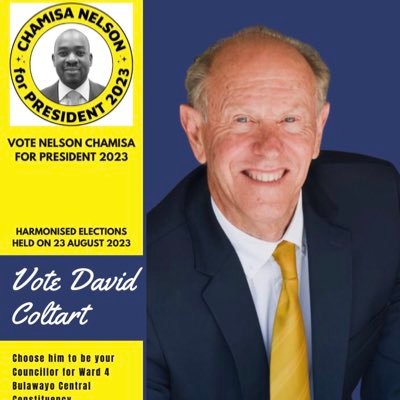
This has now gone beyond what is acceptable. Harare has been allocated all the Zimbabwe versus India matches and now all the Australia matches.
I am outraged that Queens in @CityofBulawayo has not been allocated a single match out of the 6 which will be played.
Please would @ZimCricketv advise how this is deemed acceptable. I trust that @ZimbabweSrc will investigate this.

🇿🇼 vs 🇦🇺 | IT’S ON!
For the first time in 12 years, Australia return to Zimbabwe for a three-match ODI series this September! 🔥
📍 Harare Sports Club
🗓 15, 18 & 20 September
⏰ 09:30 CAT
Don’t miss it!
#ZIMvAUS #VisitZimbabwe #ODISeries #RoadTo2027


R. Chi retweeted
Serious industrial nations don’t take accountants as seriously as South Africa does.
In industrialising nations, like Vietnam and surrounding states, for instance, the most prestigious roles are found in engineering or industrial management because the economy is physically building things.
Meanwhile, in South Africa, SAICA’s CA(SA) is viewed as the ultimate golden ticket.
But it’s not only in developing/industrialising nations where accountants take a back seat. In the US, Germany and Japan, CEOs are generally product people or engineers, while in South Africa, a massive percentage of JSE-listed CEOs are chartered accountants.
The reason for this is that the South African economy has been deindustrialising for decades, so the existing companies don’t grow by inventing new things or expanding production. They “grow” through the financial engineering of mergers, acquisitions, cost-cutting, and “tax optimisation”.
The consequence of this is that if you compare SA to an employment-dense industrialiser like Vietnam, you find that the latter focuses on vocational excellence. Over there, an accountant is just a back-office functionary who supports the factory. The hero is the plant manager who meets a production quota.
But South Africa, to its detriment, is obsessed with compliance excellence. The factory, if it even exists, is a “risk” to be managed, and the chartered accountant is the high-priest who tells the board if that risk is acceptable.
By taking accountants this seriously, South Africa has perfected the art of measuring value, but has neglected the art of creating real tangible value.
The worship and adoration of the CA(SA) is a symptom of a services-led economy that has skipped the labour-intensive industrialisation phase, and this is primarily why the unemployment epidemic cannot be resolved.

The first Black Chartered Accountant at the University of Fort Hare, Professor Wiseman Nkuhlu, inspired many students, including the speaker, to enter the profession. His presence broke barriers and opened doors for future CAs. Dr Sizwe Nxasana with @lavidanota
R. Chi retweeted

Do you know that French-speaking countries in Africa take $500 million in loans every year just to buy school books from France?
Not laboratories, not research centers, not teachers’ training: poor quality school books filled with caricatured faces of Africans and racial slurs. Borrowed money, disbursed directly to French publishing houses, in exchange for textbooks written in Paris, printed in Paris, and shipped to African children who will spend their entire education believing this is normal. According to French state media @lemondefr in an article published 12 years ago, the same French parent company, Hatier and its subsidiary Hachette, controls roughly 95% of the school manual market across “Francophone” Africa.
And how do we fund such purchases annually through loans from the World Bank. And again, am not making up. It is clearly explained in the article published by Le Monde. Our nations do not even touch the money. The $500 million are disbursed directly as loans from the World Bank on behalf of our countries to the French publishing company annually to produce and print in France poorly written, racist school books that are shipped to our countries. We are the only enslaved people on the planet that take loans with interests to subsidize our own enslavement.
I am telling Angola this because Angola just made French compulsory in its primary schools from age ten. And I want to be precise about what it has joined, because imprecision is exactly what keeps these arrangements alive. Two years ago, Macron stood in front of cameras and presented a government memo laying out exactly how Paris intended to arrest its accelerating loss of influence across Africa. The remedy prescribed was linguistic and cultural penetration of non-Francophone countries. Angola and Ghana were designated priority targets. João Lourenço and Nana Akufo-Addo were identified as men whose cooperation could be secured. France came bearing curricula, resources, and a check. Both men apparently found the terms reasonable although may be luckily for Ghana, it is yet to be deployed.
Here is what is worth understanding about that check: France is not being generous. France is being desperate. The survival of French hegemony depends, structurally and existentially, on maintaining influence in Africa. 70% of all French speakers on earth live on this continent, concentrated in some of the poorest countries in the planet. Without Africa, the “Francophone world” is a provincial club with a prestigious accent and a shrinking membership. France does not “invest” in African language education because it loves Africa. It does so because without Africa, France is a medium-sized European country with a permanent UN Security Council seat it would struggle to justify.
And Angola, a country whose economy is now robust enough that Portuguese nationals emigrate there looking for work, decided that the gift it would give its ten-year-old children is access to a linguistic corridor that covers less than 8% of global scholarship and connects them to none of their SADC neighbors. South Africa, Zimbabwe, Zambia, Tanzania: all English-speaking. The pragmatic choice, setting aside entirely the more principled argument for an African language, was obvious.
The saddest part is not that France keeps trying. France’s self-interest is consistent and entirely predictable. The saddest part is that some of our leaders keep making it so effortless for Paris to buy our dignity.


R. Chi retweeted

Since we are in the mood to Amend the Constitution, how about we amend the recall clause on Members of Parliament under Section 129 to allow the people of 🇿🇼 to recall their non-performing MPs from @ParliamentZim.
Right now, under the Constitution of Zimbabwe, MPs can effectively be recalled mainly through party mechanisms.
Here is a proposed draft clause: Right to Recall a Member of Parliament.
Right of Recall
Registered voters in a constituency shall have the right to recall their elected Member of Parliament before the expiry of their term of office, in accordance with this section.
Grounds for Recall
A recall may be initiated on any of the following grounds:
(a) Gross misconduct or abuse of office;
(b) Failure to perform parliamentary duties, including persistent absenteeism without reasonable cause;
(c) Violation of the Constitution or any law;
(d) Loss of confidence by the electorate, demonstrated in accordance with subsection (3).
Initiation of Recall Petition
A recall process shall be initiated by a petition signed by not less than [20%–30%] of registered voters in the constituency.
Verification and Referendum
(a) The electoral body shall verify the petition within a prescribed period;
(b) Upon a successful verification, a recall referendum shall be held within [60–90] days;
(c) The Member of Parliament shall be recalled if a majority of valid votes cast support the recall.
Limitations
(a) No recall petition shall be initiated within the first 12 months or last 12 months of a parliamentary term;
(b) A member of Parliament shall not be subjected to more than one recall process within a 12-month period.
Vacancy
Where a Member of Parliament is successfully recalled, the seat shall be declared vacant, and a by-election shall be held in accordance with electoral law.
As it stands there is an ongoing survey to measure people's perceptions on this, see below👇🏾
docs.google.com/forms/d/e/1F…

R. Chi retweeted

His country was one of just 3 to vote against today's UN resolution to recognise the Transatlantic slave trade and chattel slavery of Africans as a historical crime against humanity.
They just voted against our ancestors, but they care about us you see🥹
Whenever you wake up...


Christians in Nigeria continue to face brutal violence and death at the hands of radical Islamic terrorists.
The government in Abuja must step up and protect their citizens in the Middle Belt.
It's past time to decentralize police authority so state governments can protect their citizens and stop this horrific persecution.
R. Chi retweeted
All dominant civilisations and empires rise and then fall, this is a law of nature.
But somehow, the West believes that it can prevent this from happening to itself by “studying history” and “learning” from the past.
Westerners genuinely hope that if they can just learn to not repeat the mistakes made by past empires, their hegemonic dominance can somehow last indefinitely.
Unfortunately, the reality is that the very things that make a civilisation great, eventually become liabilities, and there’s no opting out.
Take the United States, for example. It became a global hegemon through the dollar being the reserve currency. The problem is that when your currency is the global reserve, capital markets become your primary export, finance becomes more profitable than making things, talent and investment flow accordingly and the industrial base hollows out over decades.
America’s deindustrialisation caused by the dollar is now eating the US and the country cannot reindustrialise without losing its hegemony; but at the same time, continuing down this path of financial short-termism will guarantee loss of the hegemony. Rock and hard place.
Trump’s tariff agenda is an attempt to escape this trap through pure political will and essentially ignoring the financial consequences. The early evidence suggests the trap is real and the financial markets will not cooperate.
This is because to reindustrialise, the US would need a weak dollar to make exports competitive. But a weak dollar ends the reserve currency status. Ending the reserve currency status means the US government can no longer finance its military or social stability with mountains of cheap debt.
The underlying point is that all dominant civilisations wither away because the structural conditions that enable their dominance eventually become liabilities.
Rome didn’t lose dominance because Romans made avoidable errors, as many Westerners like to believe. Instead, Rome was trapped by its military system.
Roman legions were the source of dominance, but funding them required taxation that strangled the provincial economies that produced the tax base. Every attempt to cut the military weakened the borders, while every attempt to maintain it weakened the interior. Catch and 22.
So, the decline of empire is not about mistakes. The US didn’t necessarily err by making the dollar the reserve currency. The dollar system solved real problems such as rebuilding post-war Europe, and for the US, allowed it to expand its own economy and empire astronomically.
In this sense, the eventual decline of the American system was built into the success from the beginning. So, “learning from history” is doomed to fail. The West’s insistence that it can “learn from the fall of Rome” is a coping mechanism against a physical inevitability.
There’s nothing to learn, because there was never a fork in the road where a wiser choice was available.
R. Chi retweeted
Libya negotiated.
Let's be precise about what happened to Libya.
In 2003, Muammar Gaddafi made a strategic decision to abandon his weapons programs, open his country to international inspectors, and normalize relations with the West.
He paid reparations for Lockerbie.
He dismantled his nuclear program.
He cooperated with Western intelligence against Al-Qaeda.
He did everything that was asked of him.
He negotiated. He complied. He normalized.
In 2011, NATO bombed Libya for seven months.
His own military turned against him with Western backing.
He was captured in a drainage pipe.
A mob sodomized him with a bayonet while Western officials watched via satellite feed.
Hillary Clinton laughed about it on camera.
"We came, we saw, he died."
The man who gave up his deterrent in exchange for promises of security and normalization died in a drainage pipe while the people who made him those promises laughed at the footage of him being sodomized with a bayonet.
And Libya, which had the highest GDP per capita in Africa, free healthcare, free education, housing subsidies, and a functioning welfare state, became a failed state with open slave markets within three years.
This is what negotiated security guarantees look like.
This is the documented outcome.
Not a fringe case. Not a misunderstanding.
The most complete, unambiguous illustration possible of what your weapons are worth the moment you give them up.
The lesson is not complicated.
The only deterrent is a deterrent you still possess.
The moment you negotiate it away, you have nothing left to negotiate with.


R. Chi retweeted

I will keep my thing brief.
Teach your kids your language, they will learn English in school!

R. Chi retweeted

When you start dating women who actually like you, you'll realize that women have airtime, transport and also the ability to start a conversation 👍🏽🤝🏾
R. Chi retweeted

Same way we call white people living abroad in the Global South “expats” and non-whites abroad in the Global North “immigrants.”
This quoted post is unavailable.
R. Chi retweeted

NEOCOLONIALISM IS NOT A VICTIMLESS CRIME
Samuel, a 19‑year‑old scavenger in Lagos, is introduced as an emblem of youth crushed by poverty in the Global South. A viral act of individual charity appears to change his life, but this story is misleading if treated as a solution because with over half of young Nigerians under‑ or unemployed, charity can only ever touch a tiny fraction of those in need. Only the state has the power to transform society at scale, as shown by China’s mass poverty reduction through planned, state‑led development.
In most of the Global South, states cannot play this role because they are not truly sovereign. Instead, they are neocolonial structures run by “puppet” elites serving foreign capital. Extreme global wage inequalities and value transfers are evidence of a system that enriches the North through cheap labour and shortens lives in the South by deliberate design.
Post‑independence anti‑colonial land movements were crushed and replaced by comprador elites who, under IMF and World Bank “reforms”, imposed austerity, privatization, and land dispossession. Public services, especially education and health, were gutted, pushing millions like Samuel out of school. Instead of funding social schemes to help young people like Samuel, Nigerian wealth siphoned off through corrupt schemes tied to foreign interests.
This is not random “corruption” but a deliberate neocolonial order that blocks the South from using the same tools of development once used by the North. Export‑oriented monocultures, sanctions, political interference, and even war and destabilisation keep countries locked into supplying cheap raw materials. Local leaders who accept this role become the “middle management” of empire.
This global imperial structure is not invincible. Recent popular revolutions, such as in Africa's Sahel region, are proof that when seized and utilised, national sovereignty can redirect resources toward national development. Ultimately, recognizing poverty as the product of imperial design—not fate or individual failure—is the first step toward dismantling the system that shapes the lives of millions of impoverished people across the Global South.
@VoxUmmah @venanalysis @qiaocollective @ProgIntl @KawsachunNews
@OrinocoTribune @blkagendareport @SoberaniaPod @DavidHundeyin