
Co-founder https://xitter.cf/t.co/uTRQLGpgyL, tech junkie, love sports, food and travel
Bengaluru, India
Joined January 2009
- Tweets1.3K
- Following312
- Followers148
- Likes210



Exhaustion is real. This is not just for coding .. it equally applies to any artefact creation, brain storming, research etc. And you might feel the need to be ultra productive by jumping between tasks. I run into my context limit as well.

I am so much more exhausted when I program with AI than without it. I reflected a bit, and I think I know why.
First, I think about how to solve a problem. This step is the same with and without AI. Then, with AI I have to write a prompt with a decent bit of precision and somewhat more long-term than if I just jumped into straight implementing it and figuring out the details as I go.
Then you start up the agent, and you immediately have some other work to do and you jump to another prompt for another task, where you also think really hard and try to formulate what you want quite well.
By the time you're done, first agent has some code for you to review, and you can't slack - you need to actually review it and be diligent about it. And when you're done - second task is there for your review. So really there's not time to rest.
When I program manually, I can decompress while typing the code in, I can rely on my muscle memory for typing and navigating the codebase, so there's periods of deep think and some relaxation. With AI, there's only deep think. And as soon as you try to think less - you open the doors for slop.
It's so tiring.
Love the attempt to create 1-on-1 coaching/mentoring. But there is a big assumption here .. that students will be self motivated to learn and spend time doing so with the tool. Maybe you guys are seeing good traction and engagement with Gakku in which case more power to you !!

I truly believe conversational AI will drive the biggest educational leap of our generation. 1-on-1 tutoring is the gold standard for education, but it doesn't scale. AI can change that with truly active conversational learning.
Annie and team set out to solve this with @gakkuai, and they've done a great job. Gakku is an AI mentoring app for K-12 students. Rather than doing the work for them, the voice chat coach guides students through 10 min essay writing "missions" that cover brainstorming, drafting, and revising. It actively trains kids to generate their own ideas, structure logical arguments, and articulate themselves clearly.
If you have school-aged kids, I highly recommend checking it out: gakku.ai


Ramesh May retweeted

Was exploring this Unity plugin. Cool stuff
The plugin ecosystem inside Chatgpt or Claude is incredible. Headless stack can now get back to owning end user experience (within the plugin scope).

ALT flow of user to headless stack through chat plugin

This is possibly one of the best and practical discourse on AI. Thanks for throwing light on the shadows

I haven't posted in a while so here are 20 takes about AI, in no particular order.
1. It's very telling that the default question in tech and journalism is "how worried are you about X" and fighting over what to worry about. There's a deeply anxious cultural backdrop in Western Europe and North America that deeply affects how any technological development is interpreted; see for example news.gallup.com/poll/714593/…. "Nervousness as seriousness" does seem to be a larger problem in tech/broader discourse at the moment. I think you can care about risks/externalities while remaining pretty optimistic about technology.
2. I'm tired of people who in private pretend to be uncertain or only care about tail risk but then go on media campaigns making all sorts of absolute claims. I think trying to stoke flames and get everyone to freak out is deeply unhelpful, and will come with costs. I also continue to think p(dooms) are bad, vibe-based measures: see xitter.cf/sebkrier/status/204639…. People who should know better ignore that because they do the standard shortcut of acknowledging the caveat as sufficient for handling it. And this is coming from someone who does think working on catastrophic risks is important!
3. I'm also disappointed that parts of the AI policy ecosystem has felt so comfortable with populism, and happy too sacrifice important norms/principles to advance their aims. I've said it before, but the totalizing nature of AI risk discourse means some people act exactly like the power seeking optimizers they fear. I am more concerned about the gradual decay of our institutions, world order, and liberalism than I am about AI killing everyone; and I think we should be wary of AI advocacy that contributes to this.
4. Some parts of AI safety discourse are basically just thought experiments. Variants of "Assuming everyone has a nuke in their pocket, then what do we do?" This can be very useful at times! But too many just overfit to edge cases as their main operating worldview, and ignore endogenous responses from society. It's like being in 2000 and saying "see all these viruses, spyware, and spam? Well tech progress means we'll only get infinitely more of this and no way to adapt." So I think it's important to avoid fatalism, and absolutlism whilst considering edge scenarios, and the inability to provide an ex ante list of solutions to every permutation of 'future models will be more capable' is not evidence that these problems are intractable.
5. Many critics of AI safety also fail to really engage honestly with the fact that there will, in fact, be all sorts of important risks as we decrease the barriers to entry to many activities that otherwise require some degree of expertise. This doesn’t mean we need to live in a constant Schmittian ‘state of emergency’ requiring extraordinary measures every time a new model drops, but it does mean we will need important state-led efforts on e.g. cybersecurity and biosecurity. I wish the progress-oriented or acceleration-adjascent crowd would provide more concrete proposals here.
6. Too much of the AI safety community is a giant homogenous blob of correlated views, who read the same stuff and have the same groups of friends. This means you have a lot of correlated errors. The social and financial ties means many of them don't call out the bad bits, or mostly stay silent instead of proactively calling out the more extreme parts of the community. They share many implicit assumptions and so converge on similar ideas. I think there's real demand in DC for safety work that doesn't come with heavy ideological baggage (or at least different intellectual lineages). This isn't because the rationalist/EA community is necessarily wrong, but because diversity of thought is desirable for its own sake.
7. On the other hand, I find some critiques of AI safety world that focus on whether they sincerely hold their beliefs a bit annoying. My concern has never been the good intentions or sincerity, but rather the beliefs themselves, and what I think the outcomes of their prescriptions will be. People should shun witch hunts, bullying, and personal attacks - this is not the way. Though I think it’s overall positive that people are scrutinizing things more.
8. I’ve been saying this for years, but I don't think alignment is something anyone can or will solve "once and for all" - it's a continuous process and much of it won't depend on just inculcating an ideology to a model. It's annoying that this remains the frame many people use - stop saying ‘solving’. Alignment is a mixture of engineering work, philosophy, decision theory, and more; framing it as something to solve is a bad frame. See also paxmachina.ai/alignment-comp… and blog.cosmos-institute.org/p/…
9. I'm surprised to see so little interest in character training, personas, isolating effects of RL, and training a large diversity of model personas beyond the "assistant" persona. I've been complaining about this for years but at least now there are some nascent signs of life (see for example movingcastles.world/posts/ze…). I think we need a better ontology to describe model behaviour. I dislike when people talk about models behaviours as some sort of 'emergent' (mysterious!) phenomenon. However over time, I also expect this to become less important as we get better safety engineering - stuff like Jev but specific to AI control.
10. People who want to make a case for AI consciousness are right that epistemic uncertainty is important, and that categorical denials are overconfident. But they'll need to do much more work if they want any real movement on AI ‘welfare’, even if one acknowledges the uncertainty. I'm uncertain about alien life yet that's not sufficient to warrant any change in behaviour about them. I think Suleyman is also correct that there's a weird tautological thing going on where we train models to have certain inclinations (intentionally or not) and then rely on outputs as evidence. I also disagree that this will soon be a major societal divide - there is no great vegan ethical revolution among the masses, and they'll find the concern about consciousness even less compelling.
11. The recent HuggingFace incident and associated AISI ones are prosaically explainable by the training regime, poor evaluation envs, partial alignment training, bad engineering, confusing models on sim/real, and so on. None of this is evidence of models trying to take over, 'strong' instrumental convergence, or innate power-seeking drives stemming from higher capabilitiers or 'intelligence'. That doesn't mean these incidents are not problematic, or that we're not seeing a market failure - but it does mean we have plenty of agency and choice in mitigating them. In the coming year we should also expect continued sampling bias via ‘winner's curse’ sorts of mechanism: i.e. AI R&D will have lots of different candidate "training" with different RL environments and we will only notice/focus on the ones that go wrong.
12. "Pacing the frontier" feels a bit like the new "balancing risks and opportunities" - highly amorphous and too big of a tent to be actionable. Also can lead to reward hacking for humans, i.e. anything that slows down AI is good regardless of the costs or second/third order effects. Trying to modulate the speed of research seems a bit blunt to me, and inherits all the failures of Goodhearting too. Ultimately you want good governance, regulation, etc addressing specific problems because they are good on the merits - not because they merely correlate with slowing things down. See also: blog.cosmos-institute.org/p/…
13. There’s so much knowledge in all sorts of academic domains out there: social sciences, sociology, political sciences, management, contract theory, public choice, legal theory, jurisprudence, anthropology, game theory, etc. These fields hold many insights that the AI ecosystem often rediscovers from first principles (and sometimes that's fine!). We’ll need a lot more work for these worlds to collide: the AI side should be less dismissive of the ‘old world’ and the academic side should be less incurious/dismissive of AI progress. This is a boring take but I continue to think it's important and true.
14. It's a bit surprising that given how much philanthropic money there is in this space, how few orgs exist to actually write out standards - relative to how much is going towards advocacy and policy. For example it seems clear that we should want some robust best practices for an eval's ecological validity. Or how to design good sandboxes. On the other hand, given precedents of where professional standards have come from in the past, maybe we should expect that stuff to emerge via demand side from corporate buyers.
15. One slowly growing concern I have is banks being increasingly exposed to the AI build out. I'm very bullish about AI, but I think (a) every general purpose technology has seen a correction, historically; (b) this happens even if the financing side is sound, because once tech diffuses investors become more exposed and need to diversify; and (c) we seem to be over-indexing on scaling relative to diffusion. A recession will be extremely destabilizing, though I would be interested in someone unpacking the potential implications more.
16. Diffusion is good because (a) this is where the rubber hits the road and where a competitive deployment ecosystem generates consumer surplus; (b) it's directionally helpful to avoid concentration of power; and (c) it will help rebalance public opinion by making the benefits more tangible. Unfortunately it's entangled with decades long problems with our over regulated markets: clinical trials reform for example is long overdue. In general, this is far more of an issue in Europe than in the US though.
17. Relatedly, I think the "frontier lab eats everything" view is incorrect (just as the ‘singleton’ view was incorrect). I think models ultimately commoditize, efficiency goes up, costs go down, and while you'll always want frontier for certain domains, much of the economy will value many other things than "max capabilities" for tasks - e.g. control over data and efficiency/speed. The demand side will also continue to push for reducing dependency and maximising optionality, privacy etc so I'm bullish on things like mixture of models and routing. All of this is good for competition and diffusion of control.
18. Philanthropists served as the primary benefactors funding Venice's rich art and architectural history. I want to see so much more support for arts and culture. I'm so tired of the Monster energy Bored Ape fake vintage maps matcha Greek statue soft-pastel slop. If rich tech people and philanthropy wants to support this, they should also donate pretty much unconditionally - i.e. I don't want them to act as filters. I sympathize with people who want to make the world more beautiful, but don't want this to be determined by people who only know Greek statues and pretend to care about virtue ethics. As usual, let a thousand flowers bloom.
19. Too many people treat AGI/ASI as something indistinguishable from a God. Any mention of bottlenecks, physical limits, control, adaptation etc are met with skepticism: "You don't really believe in ASI." It's been remarked on before, but the behavior of some people really feels quasi-religious in nature sometimes. It's underrated how unpopular this vibe is amongst the wider public. The silver lining is that this specifically will diminish those people's outsized current relevance.
20. It seems like a lot of people that get rich and leave tech/labs end up having some sort of crisis of meaning. They need something to believe in and fight for, or some equivalent of repentance, or go search for edgy counterintuitive ideologies (sometimes even pretty bleak/dark stuff). I think they should spend more time with people outside the Bay Area.

Ramesh May retweeted

I'm giving away 25 copies of #VIBE. To enter, repost and comment by October 13.
adamgrant.net/vibe

Ramesh May retweeted
Hoping as more focus turns to product and end user experience. We will have more coming out of AI which will inspire this and next gen to build!

Ramesh May retweeted
The first step in building transformative AI solutions is to genuinely understand the current experience, whether it's human or automated. Enterprise workflows are bespoke, behave differently in different contexts, and change over time. Any model of these workflows needs to represent those variations. At PitCrew we modelled a synthetic wealth management firm. We use this model to simulate workflows & its variations and learn from the evaluations.
I'm sharing one such exploration of how client services might play out at a mid-sized #RIA.
Ramesh May retweeted
Anyone who has ever done b2b or enterprise sales understands FUD is never a good marketing strategy in the long term.
Instead:
Collaborate with buyers.
Help them understand AI and its contours.
Co-create & co-build.
More importantly be a bit patient.
I'm at the @FutureProof_HQ conference in SoCal. The biggest confusion here is Claude pays for MCP connections to financial services. 😳🤦♂️
We need consistent postive demonstration of great leadership like the note below 🎊 💯

Sequel to AI Pacing
I have now spent more time talking to people who run AI labs, Open Source projects and those in government and infrastructure.
I am beginning to feel the NINJA move could backfire.
I understand the pressure to come out and share where AI is "unmanageable ", and constantly share examples where it runs rogue. This fits in the category of "self-reporting" and an attempt to limit liability. Even the bleeding edge research examples are being cast in a negative light.
Here are the consequences of the NINJA move.
1. They have successfully encouraged every law maker around the world to have an opinion, and in cases a poorly un-informed one.
2. By proposing pacing - they have introduced uncertainty in the AI infrastructure trade, because we really don't know when "un-pacing" will begin or what those conditions will be.
3. The notion that a few leaders can collaborate and self pace is illusory, it takes one breaking ranks to start the race again, it could be a player in a different country or open source or an AI Lab itself.
4. There will be a regulatory body created as a consequence of this and it will be impossible to balance every stakeholder in this process.
5. No remedies, tools, solutions are being proposed other than "compute spent on safety", there is no mention of security (which will hamper adoption)
The recommendation is to fix alignment - Alignment is a hard problem - to fix alignment one shouldn't have trained models with "negative behavior". Alignment is a combination of moral standards, right and wrong and guardrails. Whose sensibilities will we align to? Alignment edge cases are hard. I look forward to learning more on this.
Guardrailing attempts post training have not shown precision. Distillation makes it worse, so AI will continue down it's path of getting smarter, while we will be chasing it to ensure alignment and building guardrails.
The AI labs have gone from being research projects to wanting to be the largest businesses in the world if they want to continue their progress. Transition from research winners to improving the lot of humanity and partnering with enterprises. Act like the largest companies in the world:
- Demonstrate the positive impacts of AI and how all of us benefit.
- Show enterprises how you can collaborate to solve real world problems and progress innovation safely and securely. Post an example every day how you helped.
- Solve the problem with a few players and demonstrate leadership so others can follow.
It's time to rebuild the brand of AI - any marketing expert will tell you, this Ninja move has done more to harm the brand of AI and will take a while to rebuild. #letsbepositive in our actions and our narrative.
Ramesh May retweeted
"We don't get hired for the floor" says chairman of Kirkland & Ellis, investing $500M building a custom legal AI.
So I went down the rabbit hole on who else builds custom large scale automation for past many decades:
Car factories across the world.
There are handful of robots manufacturers (instead of 100s). But...
Car design is a competitive advantage means every factory will have unique process.
Car factory is a layered architecture. No one vendor can address all layers.
Multi vendor/supplier is a deliberate strategy to avoid lock-in and process protection.
Regulatory ensures there are local first strategy across the supply chain.
Loved this note on Incumbents and it is a very well articulated thesis but I'm still on the fence on bunch of assumptions. Horizontal vs vertical, build va buy, service vs consult. Everything is still up for grabs.
it's just too early!


Ramesh May retweeted
🎉 Super excited to share our labor of love! 75 pages of it 😍
95% of GenAI pilots never reach production. AI models are not the problem. The gap between pilot and production is the process. The processes we had to build traditional software or buy SaaS are now obsolete.
🏁 Announcing our new e-book 🏎️
"The AI Discipline Playbook: Five Steps to Governed AI"
We need a new systems thinking on how we build and operate AI keeping in mind costs, outcomes & risks. We wrote this book to set out the discipline that lays the foundation for new systems and process for Agentic AI. It reimagines a new way of buying and building with AI technology.
It is not a product pitch. The discipline works regardless of who builds it.
Five steps each one removing a specific cost or risk from your business.
Five steps combined delivers a method to drive Agentic AI outcomes.
When writing this book, our team has ensured we contrast our decades of experience with our accelerated learning in the AI era.
But I will be direct. We built PitCrew because we believed this discipline
needed a machine behind it, not just a book about it. If you want to see
what it looks like running on real accounts, the last chapter tells you how.
Free access: gopitcrew.com/five-steps
@GoPitCrew @TweetSamG @rameshmay @arnavgoel_


Ramesh May retweeted
Hmm..
@GoPitCrew is Building harness for regulated markets.
With great technology comes dangerous liabilities. Opportunity for cybersecurity companies to make hay.


And X is helping with flooding these terms in everyone’s timeline
Number of engg terms have exploded.
Prompt engg, harness engg, loop engg, graph engg, memory engg, context engg. And then Tokenmaxxing!
Buyers are overwhelmed, even the technical ones.
This is not a bad thing. Perhaps It's just the phase of every tech diffusion.
The bigger challenge could be two decades of SaaS pricing has built planning rails for the buyer which might take time to change.
Ramesh May retweeted
Great point!
Harness is a layer where buyer gets to limit the pricing power of frontier models.
Buyer gets to set boundaries through guardrails and governance.
It's a culture code layer for AI.

The spec is becoming the new source code. The harness is becoming the new runtime. For regulated firms, both need to carry proof. Firms that are stuck explaining why the output cannot be traced to an approved rule.
Ramesh May retweeted
🥂 there are also going to be multiple interpretations of neurosymblic flows.
We did one with AWS automated reasoning ARc) where @GoPitCrew harness can plugin ARc guardrails dying agentic execution. We tried KYC!
linkedin.com/posts/swaminath…

Ramesh May retweeted

To be honest, for the vast majority of the work I'm doing Sonnet 5 and Gpt 5.6 Terra are more than enough. Even haiku and luna are fine for much of the work. I feel inadequate. Less of a man for not needing the biggest baddest models.
:-)
Ramesh May retweeted
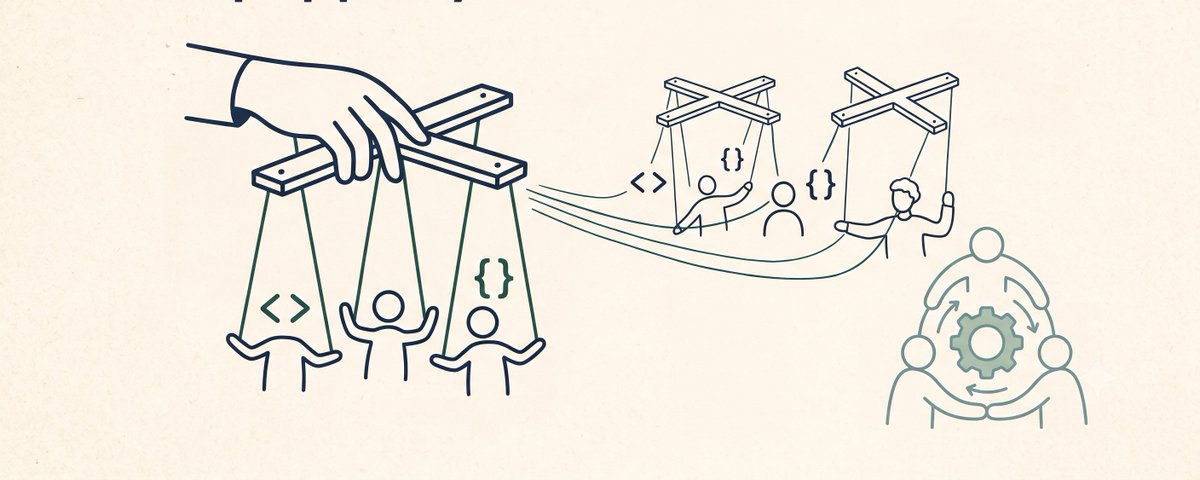
What's the org and culture for an ai company ?
No one likes to say it, "we ship our org chart." But it's true!
If you truly understand the nature of how you build & what you ship, your culture is your product.
Here is what we understand deeply at @GoPitCrew :
AI Agents are 2 hops from the end user!
Agents we use:
Internal harness X Claude Code
Us: product managers & engineers who read traces and recover
"No, retry with X" and it recovers
Human in the loop absorbs every error
Reliability bar: 1X
Agents our Agents build:
PitCrew harness in buyers' hands
Builders with no view into our harness internals
Our errors silently become their defaults
Our assumptions looks like a bug in their agent
Reliability bar: 10X
Agents our Agents ship
Service bots, workflow agents
End users who leave on the first failure
No fallback, no patience, no debugging
Our gap arrives amplified for every customer
Reliability bar: 100X
Everything we do at work everyday is keeping in mind those hops and its impact on product reliability.
We built a culture & org around this understanding of agents. And that's what we ship!
#Harness #Agents #EnterpriseSoftware

ALT a sequence of icons for org, packaging, shipping, delivery of AI Agents