

以太坊|AI Agent 落地 |LLM & Hermes| builder @LXDAO_Official | Private🦞: @TinaPeeeach Building: https://teapawt.net/t.co/RlzjBMoEHr https://teapawt.net/t.co/tJZtnULaDa
Joined January 2013
- Tweets1.2K
- Following361
- Followers890
- Likes1.1K








又一滴历史的眼泪。

Blur shuts down today.
The biggest shit-stirrer in NFT history.
What makes an NFT different from a token is the N: non-fungible. Blur spent three years erasing it. Every piece became a floor price, every collection a trading pair, every holder a farmer flipping for points.
It didn't just financialize NFTs. It turned them into fast-flip derivatives.
The marketplace is gone. The damage isn't.
120

今年的时间全都用来修复漏洞了😂

‼️ BREAKING - Critical Apache HTTP/2 flaw could allow unauthenticated remote code execution.
CVE-2026-119618 affects versions 2.4.55–2.4.70 with HTTP/2 enabled.
CVSS 9.8. Fixed in 2.4.71, but some #Linux distributions still await patches.
Read more → thehackernews.com/2026/11/cr…

116
ray retweeted

Expanding on why I believe "ETH as store of value (SoV)" makes much more sense to focus on than "ETH as fee-burning token".
Three primary reasons:
1. ETH as fee-burning token never was as strong as it seemed
2. Optimizing for ETH as fee-burning token would demand Ethereum and ETH function in ways that are very hard to make compatible with decentralization and capture resistance.
3. Meanwhile, optimizing for ETH as SoV is aligned with Ethereum focusing on its unique strengths (decentralization and CROPS)
EIP-1559 (including its burn) is fine and good, we should keep them. But we should not feel sad if fee burn is < 10% of breakeven indefinitely; the value of ETH comes from elsewhere.
The core idea: the big thing that people appreciate about Ethereum is decentralization and CROPS. The main pragmatic benefit that these things translate into is stability. SoV is the category where that is not an unneeded extra we merely put effort into for ideological reasons, but rather a pragmatic strength from the perspective of people putting in their assets. And in the era of AI disruption, stability will be highly valued.

ray retweeted

Our strongest frontier model, Gemini 4 Carbon, is now available.
Built for deeply complex, long-horizon workflows that push a frontier model’s intelligence, Carbon delivers frontier performance in agentic workflows across complex knowledge work, software engineering and web development, cybersecurity, and scientific reasoning.
While Gemini 4 Argon remains the ideal model for the majority of software engineering and knowledge work, Carbon steps in for your hardest tasks that push a model to its limits — from complex, multi-step debugging to open-ended scientific research.
Available starting today:
— Consumers: use it in the @GeminiApp and AI Mode in Search for Google AI Ultra subscribers
— Developers and Enterprises: build via the API in @GoogleAIStudio and @AndroidStudio, Google @Antigravity for Google AI Ultra subscribers, and Gemini for business
— Scientists and Researchers: apply for a chance to get 6 months free via @Antigravity
— Cybersecurity Defenders: apply to join the Fairwind Program for access to Carbon for cyber
Watch how Carbon brings reasoning and coding together, turning avian research into an interactive 3D simulation of a songbird’s vocal organ that synthesizes the sounds of six bird species live.
即使是以太坊基金会这样理想化的组织,也避免不了斗争。
reddit.com/r/ethereum/commen…

1
2
251
AI 最重要的用法并不是提效,如果只是让 AI 帮助写代码,整理文档,那么最后也就能实现岗位被取代。
AI 最重要的用法是帮助我们去探索那么未知的领域,从个人的角度是这样,从组织的角度也是这样。
81

DeepSeek 的这篇文章的可能被低估了,这会是一篇经典的文章。
不是因为提出 Super-Agent 架构,这个架构本身没有新东西,是现有各种 Agent 架构经验的总结。
而是这篇文章中承认人已经跟不上 AI 的生产了,然后提出了系统的解决方案,把人从 AI Native 的系统中摘出来,尽可能多的释放 AI 的能力。
真正承认人是生产力的瓶颈是一件很难的事情。
mp.weixin.qq.com/s/zoS7GlReW…
125

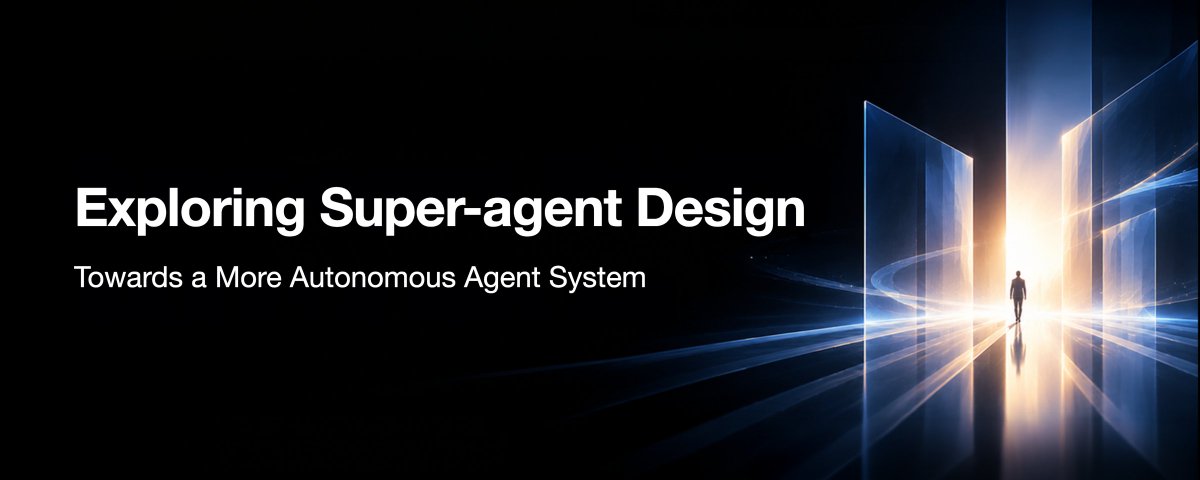
平时用编程智能体写代码,最累的往往不是写提示词,而是人得在三五个对话框之间来回切换、补充上下文。现在的瓶颈早就不是模型能力了,而是人类的注意力根本不够用。
为了让开发者彻底省心,DeepSeek Harness 团队开源了一个主动式编程智能体原型(dsh-superagent-prototype)。它常驻在单个 GitHub 代码库里,持续监听代码库事件和飞书群消息。不用人专门去艾特它,它自己就能发现问题、建工单、提 PR(Pull Request,合并请求)或者回消息。
它最核心的原则就是少占注意力,多干活。平时绝不发垃圾状态更新,只有非得让人拍板,或者代码已经写好可以直接合并时,才会出声打扰。
但是,如果一个智能体一直在后台自动接活,多任务混在一起很容易出现上下文串台。
所以这套系统拆成了路由和执行器(Router-Worker)两层架构。顶层的 Router(主会话)只管看全局、跟人沟通和派活,自己不写一行代码。一旦评估某个事件(Trigger,过滤掉无用信息后的触发事件)需要处理,就会给下面的 Worker(执行器会话)发一张带授权令(Mandate,写死操作范围与权限边界的指令)的工单。每个工单都有独立的会话和独立的代码目录(Git Worktree),同时跑互不干扰。
看起来分工已经很清晰了。可要是每次有人在 PR 下面留个言,或者自动化测试刚跑完,都得先经过顶层路由传达一遍,既费钱又拖慢速度。
为了省掉中间商,工单创建后会直接订阅相关的讨论串(Subscription,上下文直达订阅机制)。后续的评论和构建结果直接发给对应的 Worker,绕过顶层路由,一下子省掉了大约 27% 的缓存读取 Token。同时,最初的授权令死死锁住权限,防止智能体在跟人聊天的过程中自作主张,把一个小修小补的活干成大规模重构。
在底层工程实现上,它也砍掉了传统框架里复杂的内存重试定时器和挂起队列。
等测试结果或人工审核时,系统直接把它们当成普通的外部事件。哪怕服务重启,直接看 Git 历史和消息偏移量就能恢复进度,不会出现内存和实际状态对不上的情况。另外,Worker 执行任何超过 5 秒的命令会自动转入后台,30 分钟没动静就强制终止。就算中途收回权限,也会通知它先保存进度或回滚代码再退出,不会把代码库搞乱。
这套架构在官方 300 条消息、20 个并发任务的模拟测试里,完成时间(p50 为 12.4 分钟,p95 为 15.7 分钟)比传统单会话方案快了将近一倍。目前这个项目是团队内部演化出来的研究原型,大量代码由智能体自己编写,主要供架构参考。如果你想在隔离容器里跑一下试试,甚至不需要自己看文档配环境,直接让你现有的本地编程智能体去读仓库里的 SETUP.md 文件,它就会一步步问你问题并自动把环境搭好。
github.com/deepseek-ai/dsh-s…

2
2
515

元宇宙的叙事是不是可以重启了。

Introducing Genie 4 from @GoogleDeepMind, our most realistic and interactive world model yet 🌍
Now you can use natural language to dynamically steer the world and its soundscape in real-time, whether you're changing the weather, moving the camera, or introducing new elements to the environment.
So, how does the model do that?
Behind the scenes, Gemini acts as the "brain" of the simulation. It translates your requests into actions, plans out complex events, watches the scene unfold to keep track of what's happening, and adjusts as you change the story. Genie 4 also introduces ambient audio and real-time interactive human dialogue that adapts on the fly.