

Research Account.
Joined February 2022
- Tweets101
- Following281
- Followers87
- Likes173



Shohan Mukherjee retweeted

A memorable extract from a memoir by @NKSingh_MP that tells us why Japanese are from another planet
Via @EconomicTimes

Shohan Mukherjee retweeted

Gary Becker also wrote this great paper also perhaps relevant for social media...
… I recall when beta-delta and temptation "behavioral" models came around Gary told me he was open to these approaches but just emphasized how lots can be learned with standard rational case.


Gary Becker had a great line: economists talk about constraints all the time (income, prices, technology), but the deepest one is just… the daily flow of time.
That hits way harder now that social media is basically competing for the same 24 hours.
His must-read piece is “A Theory of the Allocation of Time” (1965).
Shohan Mukherjee retweeted

Let me explain why I believe modern economics is such a powerful tool for understanding the world. I’ll do this by discussing a great paper by Simone Cerreia-Vioglio, @UncertainLars, Fabio Maccheroni, and Massimo Marinacci, “Making Decisions Under Model Misspecification,” published in the Review of Economic Studies a few months ago.
Imagine I want to drive from UC San Diego to UCLA, but I’ve never driven that route before. I need to build a “model of the world” to guide me, which we usually call a map. Maps are simplified representations of reality. They can’t include every detail if they’re to be useful. Borges, in his short story On Exactitude in Science, makes this point beautifully. (In practice, I don’t draw the map myself—I use an app—but someone still had to make it.)
Because maps simplify, I can’t fully rely on them. Maybe last night’s storm knocked down a tree and closed a street, or there’s construction and the ramp off the highway in LA is shut down.
This uncertainty matters. Suppose I’m driving to UCLA for an important talk at 11 a.m. If the ramp is closed, I might need 15 extra minutes. When should I set my alarm to arrive on time, while still getting enough sleep to give a good talk?
The problem is that I can’t assign precise probabilities to all these contingencies. How likely is the fallen tree? Or new roadwork? Even the best traffic apps can’t capture every disruption, and some might happen after I’ve already left.
In economic terms, my “model of the world” (the map) is misspecified—and no matter how hard I try, I can’t fully fix that.
But sitting down and crying about misspecification doesn’t answer my basic question: when do I set the alarm? Too early, and I’m exhausted. Too late, and I’m late.
Simone and his co-authors offer a way to think about this. They start from the idea that we often hold several structured models of an economic phenomenon, grounded in theory. For example, a central bank might use a standard New Keynesian model and a search-and-matching model of money.
Yet, aware that each model is misspecified by design, the bank adds a protective belt of unstructured models—statistical constructs that help it gauge the consequences of misspecification.
The beauty of the paper is that it provides an axiomatic foundation for this protective belt (and even generalizes it to include a Bayesian approach). It shows that if a decision-maker’s preferences meet certain conditions —reflecting both rational and behavioral features— then those preferences can be represented by an augmented utility function that formally accounts for misspecification.
Crucially, we don’t assume that augmented utility function; we derive it. We start with general, plausible properties of preferences and prove that they imply such a representation.
That’s real progress. Instead of writing endless critiques of expected utility or rational expectations (as many have done for decades, with little to show), we now have a formal way to reason about misspecification—precise definitions, clear boundaries of validity, and awareness of what we still don’t know.
Take, for instance, a brilliant Penn graduate student on the market, Alfonso Maselli
economics.sas.upenn.edu/peop…
His job-market paper pushes this frontier further. He studies cases where a decision-maker not only faces model misspecification but is also unsure which model best fits the data and can’t assign probabilities to them—what we call model ambiguity. In my example, the central bank is unsure whether the New Keynesian or the search-and-matching model fits better, and it worries that both might be incorrect.
If you read Simone et al. or Alfonso’s paper, you’ll see how misguided—and, frankly, cartoonish—many of the recent criticisms of economics on X have been.
First: the idea that economists don’t understand math or have “physics envy.” The math in these papers is subtle and advanced—utterly different from what physicists do (neither better nor worse, just distinct). An engineer transitioning into economics would find these tools unfamiliar.
Second: claims of ideological bias are unfounded. I have no idea about the political views of the authors, and I’d be surprised if anyone could infer them from the analysis—beyond vague guesses about typical academics.
Third: This has almost nothing to do with what one learns as an undergraduate, or even in first-year graduate school. If your knowledge of economics stops at an intro textbook, it’s best not to pontificate on the field’s frontiers.
Fourth: Is this science? Debating that word’s boundaries is pointless; every definition of “science” breaks down somewhere.
The Germans solved this long ago with the idea of Wissenschaft—the systematic pursuit of knowledge, whether of nature, society, or the humanities. By that measure, modern mainstream economics is clearly a Wissenschaft: a disciplined, cumulative, and highly useful effort to understand how the world works. Simone and his co-authors have demonstrated that beyond any reasonable doubt.

Shohan Mukherjee retweeted

RIP Daniel W. Stroock (1940–2025): en.wikipedia.org/wiki/Daniel…
He was a fundamental contributor to Malliavin calculus and the theory of diffusion processes.
[h/t Barry Simon]
Shohan Mukherjee retweeted

BREAKING NEWS:
The Royal Swedish Academy of Sciences has decided to award the 2022 Sveriges Riksbank Prize in Economic Sciences in Memory of Alfred Nobel to Ben S. Bernanke, Douglas W. Diamond and Philip H. Dybvig “for research on banks and financial crises.”
#NobelPrize

Shohan Mukherjee retweeted

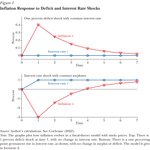
It is widely believed that good monetary policy must satisfy the “Taylor Principle” (i.e., that nominal interest rates should rise more than one-for-one with inflation). In important cases, I think this is a misconception. 1/
Shohan Mukherjee retweeted

With few exceptions, you should NEVER start generating new ideas in a group - always start with people writing ideas alone and only then move to a group setting. (We've known starting with groups is worse for 50 years, but people still keep doing it since it feels more creative)


Shohan Mukherjee retweeted

I find animations useful to teach metrics to undergrads. I believe it improves understanding to see what goes on. Here is a thread with my favorite GIFs, most of them are re-makes of stuff from #EconTwitter.
