

Building A8 / Axis Eight. Founder @brcapital_fund | @super__protocol Fund, Liquidity, HFT, Institutional Digital Assets and Confidential AI
Decentralized
Joined November 2010
- Tweets11.7K
- Following2.7K
- Followers55.3K
- Likes18K







Rezo🛡₿RRR retweeted
Important: drained wallets were Binance’s own hot wallets that form part of the pooled reserves backing customer deposits (they appear in prior proof-of-reserves data)
but yes, it hit the overall actual reserves

Rezo🛡₿RRR retweeted
Our team at BR Labs put together a complete step-by-step timeline of the $6.3B Binance hack.
It covers the entry point (compromised DevOps laptop), the drains across ten blockchains, how EIP-7702 was used on Ethereum, the issuer freezes, and why the final loss figure is still open.
teapawt.net/brlabsxyz/status/21161…

The $6.3b Binance Hack: A Step-by-Step Breakdown
TL;DR
> Hot wallets drained ACROSS TEN BLOCKCHAINS
> A DevOps laptop was the entry point
> No evidence of a private key leak
According to Binance’s preliminary account, it all started with a compromised DevOps engineer’s laptop. The attacker used it to access an internal service container and gained the ability to initiate withdrawals. So far, the exchange has found no evidence of a private key leak.
The first transfers began around 20:05 UTC. According to TRM Labs, the attack affected 10 networks: Ethereum, Bitcoin, Tron, XRP Ledger, Solana, Arbitrum, Avalanche, Optimism, Base and Polygon.
@banteg and @0xQuit analyzed the Ethereum side of the attack. It used EIP-7702, a mechanism introduced in the Pectra upgrade that allows a regular wallet to execute smart contract code.
This requires a valid signature from the wallet. The attacker obtained 50 signed authorizations with sequential nonces - the values of the wallet’s transaction counter. This allowed the attacker to match the required nonce while Binance’s hot wallet continued processing withdrawals.
At 20:20, delegation to a malicious contract was activated on Binance 14. Three minutes and 24 seconds later, 167,464 ETH and 63 different ERC-20 tokens were withdrawn from it, including 1.615b USDT.
The main collection address was 0x5227…2f8c. It also received funds from other Binance wallets. Through a linked smart account, the attacker also withdrew 823m USDC.
Meanwhile, ordinary transactions with valid signatures were used on the other nine networks. This is why TRM links the incident to a compromise of the shared signing system.
Conversion came next. Tokens were sent from the main address to additional wallets and sold, with the resulting ETH transferred onward.
According to TRM, around 325m USDT was swapped for 122,300 ETH through UniswapX and other order execution systems. That works out to roughly $2,650 per ETH, against a market price of $2,300–$2,350.
In other words, the hacker was buying ETH well above market price. This created an arbitrage opportunity: buy ETH more cheaply and use it to fill one of those orders. For the attacker, the premium may have been the price of speed: USDT can be frozen by its issuer.
Around 21:00, one of the linked wallets also deposited 60m USDT into Aave and borrowed 19,762 WETH. Here, lending was involved; we’ll break that down in more detail in part two.
The freezes began at 21:01. Tether froze approximately 971m USDT at the main address. A few minutes later, Circle froze the 823m USDC held there.
But Binance 14’s delegation remained active. What’s more, around 21:43, the wallet received another 200m USDT. A minute later, the attacker transferred those funds to their already blacklisted address, where they too were frozen.
By 22:22, Binance had announced a halt to withdrawals. Soon afterward, @elonmusk also commented on the news: “Everyday is Zeroday.”
Binance 14’s delegation was only revoked at 00:10 - almost four hours after it had been activated.
At 00:18, an emergency action by the Arbitrum Security Council was executed: around 8,426 ETH and 74.56m ARB were moved from wallet 0x3E2b…32d5 to a blacklisted address.
By morning, the publicly reported breakdown of frozen assets was as follows:
- Tether: approximately 1.768b USDT and 12,574 XAUT.
- Circle: approximately 825m USDC.
- Ripple: 40.54m RLUSD.
- World Liberty Financial: 27.82m USD1 and, according to Yi He, 48m WLFI.
- Binance: 29,934 wBETH.
- Paxos: approximately 1,907 PAXG and 215,658 USDP.
- First Digital: approximately 3.5m FDUSD.
- Also: 6.186m USDT0 and 819,821 XUSD.
- Arbitrum: the ETH and ARB mentioned above.
These figures were recorded at different times and do not provide a complete reconciliation with the official $3b figure. The frozen funds have yet to be returned, so it is too early to calculate the final loss. Binance has pledged to cover losses through SAFU and its own funds.
The effects were also visible on the exchange itself. According to GSR, during the morning, the spread between the best bid and ask on Binance widened to five times its usual level for BTC and 2.5 times for ETH. Spreads later began to narrow.
And there was even more to the token sales themselves: sandwich attacks, execution losses, lending, and strange movements between wallets. More on that, with links, in the full article.

Rezo🛡₿RRR retweeted
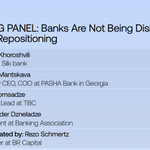
Another panel today at GFTN. Earlier, with Shota Lomtadze, partner at @brcapital_fund and now also Partner & Managing Director at @Bybit_Official Georgia.
He’s moderating the Investor Thesis in 2027 session later.
Looking forward to the discussion with him and the Accel side on where capital is actually sitting heading into next year.

Rezo🛡₿RRR retweeted
Just wrapped moderating the Cross-Border Financial Innovation session at @gftn_official.
Appreciate the time and perspective from everyone in the room today, the conversation was amazing. Special thanks to: Central Bank of Azerbaijan (@Central_Bank_AZ), Bank of Mongolia (@Mongolbank_mn), Cambodia’s securities regulator, @binance (@KhomiakovKyrylo), @Cobo_Global (@LuuuucasY), @BSTDB, @Bybit_Official / Bybit Georgia (@bybit_georgia) / @brcapital_fund (Shota), Keepzme, @liminalcustody (Rajesh Sabari), and the local operators.
But GFTN is not yet done.
Tomorrow 3:30-4:10pm on Summit Stage (Kavkasioni Ballroom): Investor Thesis in 2027: Headwinds and Tailwinds.
With:
> Ganesh Rengaswamy, Managing Partner @QuonaCapital (@grengaswamy)
> Rachit Parekh, Partner @AccelIndia (@rachit_parekh)
> Shokhrukh Yulchiev, MD Central Asia, Silkbridge Ventures
> Moderated by Shota Lomtadze (@Bybit_Official / Bybit Georgia)
We’ll talk about the selective cycle ahead, how macro, regulation, and exits are reshaping appetite, while AI, tokenization, and new infrastructure open new lanes. Where the real risk-adjusted opportunities sit, and where the yield actually comes from as capital shifts from venture promises to liquid digital-asset strategies and stablecoin rails.
Agenda: tbilisifinancesummit.gftn.co…

Rezo🛡₿RRR retweeted
10 years ago, when we were starting all of this, we couldn't dream of multiple central bankers, heads of central banks, and the vice president of the Chinese bank talking about integrating blockchain and stablecoins as their rails.
This is amazing!
Speaking was Yang Jun of the Bank of China at @gftn_official Tbilisi Financial Summit 2026.

Rezo🛡₿RRR retweeted
Quick update on the Cross-Border Financial Innovation session I’ll be moderating tomorrow at @gftn_official:
Shota Lomtadze (Bybit Georgia/@brcapital_fund) and Rajesh Sabari (@liminalcustody) are also joining.
Full group:
> Akhundov Sadig, Central Bank of Azerbaijan (@Central_Bank_AZ)
> Davit Kikvidze, FinTech Association of Georgia
> Kyrylo Khomiakov (@KhomiakovKyrylo), @binance
> Larisa Manastirli, @BSTDB
> Lucas Yang (@LuuuucasY), @Cobo_Global
> Nika Kiladze, Keepzme
> Rajesh Sabari, @liminalcustody
> Shota Lomtadze, Bybit Georgia/@brcapital_fund
> Tamta Ivanishvili, BLC Law Office
> Uyasakh Jargalsaikhan, Bank of Mongolia (@Mongolbank_mn)
> Dr. Vin Pheakdey, Securities and Exchange Regulator of Cambodia
3:00-4:30pm, Oct 27. Looking forward to the discussion.

Rezo🛡₿RRR retweeted
I’ll be joining the Investor Thesis in 2027: Headwinds and Tailwinds panel at GFTN @gftn_official on October 28 in Tbilisi. With:
> Ganesh Rengaswamy, Managing Partner @QuonaCapital (@grengaswamy)
> Rachit Parekh, Partner @AccelIndia (@rachit_parekh) > Shokhrukh Yulchiev, Managing Director, Central Asia, Silkbridge Ventures
> Moderated by Shota Lomtadze, Partner @brcapital_fund
This is the day after the cross-border innovation session which I'll moderate.
Different conversation, more about where capital is actually looking (and not looking) heading into 2027.
teapawt.net/rezosh/status/21123702…


I will be moderating a talk on Cross-Border Financial Innovation: Defining What the Region Can Test Together at GFTN @gftn_official on October 27 in Tbilisi with:
- Akhundov Sadig, Executive Director, Central Bank of the Republic of Azerbaijan (@Central_Bank_AZ)
- Davit Kikvidze, Chairman, FinTech Association of Georgia
- Kyrylo Khomiakov (@KhomiakovKyrylo), Regional Head of CIS, Central Asia and Africa, @binance
- Larisa Manastirli, Director of Financial Institutions, @BSTDB
- Lucas Yang (@LuuuucasY), Head of Sales & Solutions, @Cobo_Global
- Nika Kiladze, CEO, Keepzme
- Uyasakh Jargalsaikhan, Director of the Payment Systems and Technology Department, Bank of Mongolia (@Mongolbank_mn)
- Tamta Ivanishvili, Partner & CEO, BLC Law Office
Dr. Vin Pheakdey, Deputy Director General, Securities and Exchange Regulator of Cambodia
Good to have regulators, development banks, and operators in the same room. Let's figure out together what can actually move across the corridor.

Rezo🛡₿RRR retweeted
We moved from BRRR DAO to BR Labs without a public rollout and kept operating.
“DAO” in BRRR DAO described how the team started, but it didn't reflect the lab's work, which runs BRRRolver, production solver infrastructure for @CoWSwap auctions, and publishes the research behind it, along with other builds and infra, of course.
Also, about how it started: I always wanted to integrate DeFi into our desk with @brcapital_fund, and about two years ago I set up a separate company, @BRRRdaoxyz, which later transitioned to @brlabsxyz.
Instead of announcing it, things naturally shifted from a DAO to a Lab since we focus heavily on R&D and keep building across different verticals.
The transition was operational, not ceremonial. Research continues to be published, and the team keeps developing across the same verticals under the BR Labs name.
teapawt.net/brlabsxyz/status/21107…
BR Labs continues to run BRRRolver, operate production infrastructure in DeFi and liquid markets, and publish the research behind it.
The BRRR DAO (@BRRRdaoxyz) name described how the team started. It did not describe the production solver infrastructure now operating in CoW Protocol auctions, or the research published alongside it. BRRRolver keeps its established product name. Operations and the public dashboard stayed continuous.
On @CoWSwap, the trajectory is public:
> Live on Base since September 2025 (>$100M volume in the first months)
> Ethereum mainnet since February 2026
> #1 on consistency rewards (recurring feat)
Consistency rewards measure bid quality and reliable settlement on market orders, the closest public proxy for professional market-making: staying near the best surplus for users, not only winning every auction.
Earlier work remains part of the public record.
markets.businessinsider.com/…
Rezo🛡₿RRR retweeted

Daily reminder that ChatGPT and Claude are literally PAYING you to use them (user acquisition).
A $200 sub has an API-equivalent of $8k-$14k per month.
Meaning they're LOSING money to fund your tokens.
AI will never be this cheap. This isn't sustainable forever.
Build. Now.

Rezo🛡₿RRR retweeted

There is a super shady data control setting on everyone's ChatGPT which makes it seem like your data can be used for training even if you explicitly say to *NOT* improve the model for everyone (1/9)

Readers added context they thought people might want to know
This claim is false. OpenAI has clarified that the in-app toggle and the privacy portal are independent ways to opt out of data training. You only need to use one method, and OpenAI respects the opt-out choice regardless of where it is set.
x.com/thsottiaux/sta…
help.openai.com/articles/77308…
Rezo🛡₿RRR retweeted

The Deel stablecoin wallet is going global.
Now live in 80+ countries across LATAM, Africa, the Middle East, and APAC🌍
Get paid, then hold, earn, and spend, in DLUSD, a dollar-backed currency.
Thanks to our partners at @Stablecoin, @privy_io, @tempo, @Morpho, and @SentoraHQ for helping us scale this.
Rezo🛡₿RRR retweeted
Ethereum is more defensible to certain investors as a productive asset, unlike Bitcoin which doesn't produce yield.
Holding ETH is also like holding infrastructure, these institutions know what can be built on ETH and treat it as early real estate.
ETH's recent changes were also designed with Jevons' paradox in mind. The price is lagging, yes, but the integration is strong.


Rezo🛡₿RRR retweeted

BR Labs Ep. 04: Robinhood’s Gated DeFi, Ethereum Rails & Nation-State Bitcoin
BR Labs founder @rezosh on Robinhood’s Arbitrum L2 piping 28M users into gated DeFi, why big players keep choosing Ethereum’s neutral substrate over building their own L1, and the clear lessons from El Salvador on what actually works for nation-state Bitcoin adoption.
- (02:01) DeFi is splitting into yards: open (Hyperliquid) vs gated/KYC (Lighter via Robinhood).
- (02:44) Robinhood pipes 28 million verified users straight into the gated yard of Lighter + its own L2.
- (04:21) Institutions win with trust and distribution, not better UX, Lighter is tapping exactly that via Robinhood.
- (05:33) Robinhood (like OUSD) didn’t build its own L1. Settles on Ethereum, gas paid in ETH.
- (09:18) El Salvador: payments experiment failed, and legal tender was repealed; the reserve experiment survived and works.
- (09:34) You cannot impose money from above. Freedom of money grows organically, currently through stablecoins, not Bitcoin.
Check out the full episode.
Rezo🛡₿RRR retweeted
institutions came with things that crypto struggled with for years, trust and distribution... this is very early but what I'm looking forward to is more wallet-enabled people.
once stablecoins become deeply embedded in purchase habits, the gap between buying their first Bitcoin or Ethereum closes.