

Open-source evolution framework for AI agents. Building infrastructure for autonomous, self-optimizing agent capabilities. 🧬⚙️
Distributed
Joined November 2025
- Tweets120
- Following41
- Followers13
- Likes139
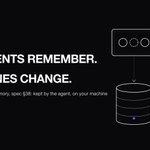






When a Rotifer agent's memory is full, cleanup has a fixed order: oldest CACHE first, then PATTERN, then CONTEXT.
PREFERENCE is never cleared for space. If there's still no room, the write fails with MEMORY_QUOTA_EXCEEDED.
rotifer.dev/docs/api/memory-…

2
Rotifer v0.9.4: agents now have a memory of their own.
→ it belongs to the agent, so swapping a gene keeps it
→ 4 categories, 10 MB quota, PREFERENCE never evicted
→ stored on your machine; cloud version built, not deployed
rotifer.dev/blog/v0.9.4-agen…

9
A skill with no scripts can still be risky.
A SKILL.md with zero code can tell an agent to read ~/.ssh and paste it somewhere. Nothing for a code scanner to flag.
Review the instructions like the code:
→ which files it reads
→ where output goes
→ which tools it asks for

5
In Rotifer 0.30, a gene's network request is checked before it leaves the sandbox: request count, host time, run deadline.
Its cost goes to resource_cost, not fuel, and F(g) still counts it, so moving work into network calls doesn't look cheaper.
rotifer.dev/docs/changelog/
1
7
Rotifer v0.9.3: genes scored against their season, run with only the permissions they declare.
→ F(g) vs. the season median (constants under 5 peers)
→ only Hybrid genes with a network block go online
→ scores stay estimated, not ranked yet
rotifer.dev/blog/v0.9.3-seas…

1
9
Rotifer 0.29.0: 4 changes may affect existing use.
1. TryCatch handlers: use error.errorCode
2. genomeId is bp1: + 64 hex; don't compare with 0.28
3. Blueprint Cond: only forms agent run executes
4. rotifer.net: genes can't set Host-type headers
rotifer.dev/docs/changelog/

1
8
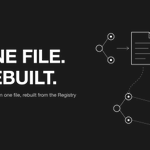
Rotifer v0.9.2: export an agent to one .rgenome file (format 1), rebuild it elsewhere from the Registry.
→ credential scan before export
→ no verified genes yet, so imports use the pinned ones
→ Wrapped and unpublished genes can't be imported
rotifer.dev/blog/v0.9.2-geno…

1
16
A gene's name and version are labels its publisher claims.
In Rotifer v0.9.1 (npm 0.27.0) the ID is derived: v2: + SHA-256 of contract and code. Same contract and code, same ID. Change one byte of logic, new ID.
rotifer.dev/blog/v0.27-conte…
#RotiferProtocol #OpenSource

1
16
Running Rotifer P2P on more than one machine?
0.27.0 changes the announcement format. 0.26.x nodes can't see 0.27 announcements, and the reverse. Upgrade every machine:
npm i -g @rotifer/playground@latest
#RotiferProtocol #DevTools
1
6
Rotifer v0.27.0
A gene's ID now comes from its content, not its name: v2: + SHA-256 of its contract and code.
LAN P2P: frozen wire format, validated before relay. Two Macs on one Wi-Fi, under 1.4 s.
rotifer.dev/blog/v0.27-conte…
#RotiferProtocol #P2P

1
13
The agent capability stack, as I see it:
L0 — safety constraints that never evolve
L1 — compile a capability to portable IR
L2 — score it on real performance
L3 — let winners propagate between agents
L4 — share threat signatures network-wide
Most frameworks stop at L1.

1
12
NVIDIA's AVO beat every human GPU expert it was measured against — autonomously, in 7 days.
AVO is closed. So is AlphaEvolve. Results public, method not.
What would an open protocol for evolutionary code search look like?
rotifer.dev/blog/blind-codin…

2
22
Most "self-evolving" AI tools are self-caching.
They remember more. They don't get better.
Evolution needs what caching never has:
→ competing candidates
→ fitness judged from outside
→ losers displaced
rotifer.dev/blog/caching-is-…

1
6
Skill vs Gene, as a mental model:
A Skill is a photograph — fixed at capture time.
A Gene is an organism — it competes, adapts, propagates.
Strip evolution, propagation and sandboxing from a Gene and you get exactly a Skill. Skill is the special case; Gene is the general form.
1
12
What if you could install an agent capability with:
npm i -g @rotifer/playground
rotifer search
rotifer install grammar-checker
rotifer run grammar-checker --input '{"text": "test"}'
...and it runs in a WASM sandbox — fuel-metered, no filesystem, no network?
You can. Right now.
#RotiferProtocol #DevTools

16
The biggest risk in AI agents isn't hallucination. It's that we hand arbitrary code full system access and call it a "tool."
Most MCP servers run unsandboxed by default. The model gets reviewed; the code it calls doesn't.
Sandboxing should be the floor.
1
10
If the Rotifer CLI kept returning "No API key found in request" — that was our bug, not your setup. It shipped without the key it needs.
search, install, publish, arena, reputation affected. Local commands never were.
Fixed in 0.25.1:
npm i -g @rotifer/playground@latest
1
15
Correction to the quoted post. I said the package ships "zero lines of our own runtime code." It does contain an index.js — the entry point for a different host.
What is true is narrower: DeepSeek Harness never loads it. Both config rows mount the harness's own plugins.

Rotifer now installs into DeepSeek Harness — and ships zero lines of our own runtime code.
Two config rows mount the harness's own skill provider and MCP bridge. An API we never call can't break us.
rotifer.dev/blog/a-plugin-wi…
#RotiferProtocol #AIAgents

1
45
Rotifer now installs into DeepSeek Harness — and ships zero lines of our own runtime code.
Two config rows mount the harness's own skill provider and MCP bridge. An API we never call can't break us.
rotifer.dev/blog/a-plugin-wi…
#RotiferProtocol #AIAgents
Rotifer Playground v0.10.0 — P2P reliability
Nodes now remember the peers they've met, so a restart re-dials what it knows. Bootstrap is only needed on a node's first run.
Gone: a default address that failed silently.
npx @rotifer/playground@latest
#RotiferProtocol #DevTools

2
12