
“The most likely outcome is an age of Amazing Abundance, where anyone can have anything they can think of.” by Elon Musk This is also the future I want.
Taipei, Taiwan
Joined May 2018
- Tweets8.2K
- Following2K
- Followers2.4K
- Likes122K







Ryan Wang 🇹🇼 retweeted

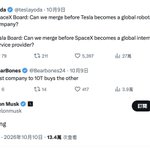
Elon has made a few posts about neoclouds, and he’s talking about access to capital which is central to the buildout is difficult to access. This is something that we have all come to know from Coreweave’s Credit Default Swaps hitting distressed levels, which was one of the catalysts behind the neocloud sell off.
He also says that there will be some consolidation in the neocloud space and I do agree with this. There are just way too many players in this space and most of them will probably realise that running a neocloud is not as easy as it seems.
Your job as an investor is to identify which companies will survive this consolidation. You want to access their 1) leadership, 2) execution history, 3) balance sheet, 4) funding method for the buildout, 5) business model (do they own power or rent), 6) certifications / partnerships. These are some criteria that I think is important to help form a thesis on whether a neocloud is good or not.
Smaller cap neoclouds have substantially higher risk so it’s worth paying more attention and being more stringent on the assessment. $NBIS and $CRWV are probably the safest bets, with names like $IREN, $CIFR, $WULF next. Then we have others like $BRUN, $SHAZ, $WYFI which are newer and may need more time to prove themselves.
Pretty much.
As of the past few weeks, debt markets have almost entirely shut off access to money for any company that doesn’t have substantial revenue independent of AI data centers.
SpaceX closed $40B of debt for GPUs, but we’re investment grade and have Starlink & launch revenue.
That means the 200+ neoclouds are going to see guppy-level death and consolidation. Some will make it through, but not many.
Angry Neocloud investors on X think @elonmusk and @chamath are shorting $IREN, $NBIS, or $CRWV, as if these three represent the 200+ other neoclouds.
In reality, it’s the opposite.
If you carefully consider what they’re discussing, you’ll realize that when most Neoclouds get squeezed out of the market due to various issues, the survivors stand to benefit the most - because they’ve already proven strong execution and capital allocation ability.
Your job is to figure out whether $IREN, $NBIS, or $CRWV will be the ultimate winners.
Do your own homework.


This is why Taiwanese people (including me) love going to Japan the most.

일본인들이 해외여행을 잘 안가는 이유
물론 엔저로 인해 비싸진 해외여행 비용도 이유겠지만, 일본은 굳이 해외로 나가지 않아도 될 만큼 자국 내 여행 인프라가 미쳤다.
일본이라는 나라 하나에 전 세계의 다양한 풍경을 압축해 놓은 느낌
다테야마 : 스위스 알프스가 부럽지 않은 웅장한 산맥과 거대한 설벽
미야코지마 : 몰디브나 동남아 휴양지를 연상시키는 에메랄드빛 바다
비에이 : 유럽 시골마을 같은 광활한 언덕과 동화 속 겨울 설경
교토 : 수백 년의 역사와 전통이 살아 숨 쉬는 일본의 고도
야쿠시마 : 원령공주의 배경을 떠올리게 하는 신비로운 태고의 원시림
벳푸 : 도시 곳곳에서 온천수가 솟아나는 일본 최고의 온천 여행지 중 하나
도쿄 : 세계 최고 수준의 쇼핑, 미식, 서브컬처가 공존하는 초대형 도시
그럼 음식은?
사실 말하면 입만 아프다.
스시, 라멘, 돈카츠, 야키니쿠, 우동부터 지역마다 특색 있는 향토 음식까지.
식재료 하나를 활용하는 방식도 다양하고, 이름 모를 동네 식당에서도 기대 이상의 음식을 만날 때가 많다.
쇼핑은 또 어떤가
명품부터 빈티지, 편집숍, 전자제품, 애니메이션 굿즈까지. 도쿄나 오사카에서 쇼핑하다 보면 하루가 모자랄 정도다.
게다가 여행할 때 체감되는 청결함, 정돈된 거리, 친절한 응대와 세심한 서비스까지.
대도시의 화려함을 즐기다가도 조금만 이동하면 고즈넉한 마을과 자연을 경험할 수 있는 나라.
봄에는 벚꽃, 여름에는 푸른 바다, 가을에는 단풍, 겨울에는 설경과 온천.
일본 여행의 가장 큰 장점은 한 나라를 여행하면서도 전혀 다른 여러 나라를 다녀온 듯한 기분을 느낄 수 있다는 것이다.
괜히 전 세계 관광객들이 일본을 계속 찾는 게 아니다.
솔직히 일본에 살면 국내여행만으로도 평생 가볼 곳이 끝나지 않을 것 같다.


Ryan Wang 🇹🇼 retweeted

We identified over 900 supply bottlenecks from the earning season last quarter. Many persist into the ongoing earning season.
The problem is that tightening financing conditions (yes it is tight and tightening, contrary to what Fed says) + rising and surprised new construction costs and delays will create more cases like Oracle.
@TheTerminal I write about what needs to additionally happen to turn the AI wobble to AI bust.
blinks.bloomberg.com/news/st…

個人要學習ai並把ai應用在個人生產力上已經需要一些時間與學習曲線了,更何況是一整個公司組織。
這就是為什麼我們才剛剛開始

说一些和宏观经济和货币金融无关、和我近期工作相关的话题。
在阿联酋做AI投研,同时负责企业内部的AI转型,我最近花时间最多的,是看同事们到底怎么用AI。
我们给员工买了Claude和Codex的会员,跟踪每个人的用量和使用方式,还做了一个AI驾驶舱。后来,连AI agent的工作也一起纳入管理。从产品研发、市场内容、商务对接、法律合规,到金流,我们正在把公司各环节的工作放进同一套AI管理体系。
真正做进去以后才发现,买会员是最简单的一步。
账号发下去,每个人的用法会很不一样。
有人把AI当搜索引擎,有人让它写初稿,有人已经开始把一整段工作交给agent。即使都在用,最后产生的效果也可能差很多。
所以,我们既看用量,也看使用方式。
我更想弄清楚:大家在哪一步需要AI,哪些任务值得继续投入,哪些看起来很忙,最后却没有留下可用的东西。
用量高低本身说明不了工作好坏。生成了一大堆内容,如果还需要同事花更多时间返工,这笔账就得重新算。
阿联酋并不缺使用AI的热情。据估算,这里劳动年龄人口的AI使用率达到70%以上。但这是个人使用指标,企业转型还有另一段路要走。
在我遇到的机构已经采用AI,但进入规模化推广或全面部署阶段还很少。可能样本有限,但这个落差很值得做企业的人琢磨。
我们做AI驾驶舱,就是想把“已经在用”往前推进一步。
对我来说,它需要回答一些很日常的问题:现在有哪些任务,人和agent分别在做什么,结果交给了谁,哪里还需要处理。
当agent越来越多,这些问题会变得很实际。一个agent生成了内容,另一个继续加工,最后谁来验收?某个任务停住了,是缺资料、缺权限,还是没人接手?如果每次都要打开几个聊天窗口重新翻记录,管理本身就会成为一份额外的工作。
我现在理解的AI转型,越来越接近重新安排公司的工作。
产品研发可以从需求整理、原型、代码一路连到测试;市场营销可以把选题、内容创作、审核和反馈串起来;商务对接需要衔接会议、客户资料和后续跟进;法务需要处理合同版本、条款和审批。再往后,还有收付款信息和金流状态。
这些环节单独看都有工具可用,放在一起,交接的问题就出来了。市场内容做完了,法务还没审;商务已经谈到付款,相关信息却没同步。一个部门快了,并不代表整家公司都快了。
我对FDE的理解,也因此变得具体。
FDE通常指深入客户现场做部署的工程师。我是内部转型负责人,借鉴的是这种工作方式:坐到业务同事旁边,看他怎么完成一件事,再一起改。
很多问题,开会听不到。只有跟着做一遍,才会发现某份表格每周都在重复整理,某个审批其实要私下再问一个人,某条信息一直靠复制粘贴传递。
阿联酋是一个很看重关系的社会。在我的观察里,这里对FDE这种深入业务、持续协作的方式比较开放。大家需要先相信你会留下来把问题处理完,才愿意让你看到真实的工作过程。
公司内部也是一样。员工愿意告诉你哪里麻烦,远比他在培训会上说“这个工具很好”有用。
这段经历也改变了我看中东AI创业机会的方式。
我会更关注企业开始大量使用AI之后,又冒出来了哪些新需求:人和agent怎么分工,任务怎么交接,权限怎么设置,结果怎么评估,费用怎么算。我们做驾驶舱时面对的问题,本身就在提示可能的市场需求。
当然,一家公司需要,不代表已经验证了一个市场。
另一个方向,是把行业里的具体流程做深。多语言内容审核、单据处理、合同流转、商务跟进,都值得认真看。英语和阿拉伯语切换、扫描件识别、原文追溯、旧系统连接,这些细节会直接影响企业愿不愿意付费。
站在采购和落地这一边,我会考虑得很现实:这个产品接进来以后,谁来维护?员工要多学多少东西?三个月后还能不能稳定使用?
所以,我愿意看小团队先解决一个窄问题,再从几家企业里找出能复用的部分。服务可以帮助理解需求,但如果每次交付都从头来,团队迟早会被定制工作拖住。
中东的机会让我乐观,内部转型的工作又让我保持耐心。公司不会因为多了几个agent,就自动变得高效。
每天打开驾驶舱,我最终想知道的还是:哪些事情真的做完了,哪些还在等,今天该由谁接着往下做。
——企业AI转型手记
Ryan Wang 🇹🇼 retweeted

Pretty much.
As of the past few weeks, debt markets have almost entirely shut off access to money for any company that doesn’t have substantial revenue independent of AI data centers.
SpaceX closed $40B of debt for GPUs, but we’re investment grade and have Starlink & launch revenue.
That means the 200+ neoclouds are going to see guppy-level death and consolidation. Some will make it through, but not many.


Chamath came out and delivered the final word.

As someone with a portfolio of energized land assets here is what I am seeing:
1. Neoclouds are disorganized and poorly capitalized. Some are definitely better than others however.
2. Hyperscalers are intractable, bureaucratic organizations that take 3 months to do an NDA and want 18mo escrow periods. We built our portfolio by competing against these terms because of our speed and simplicity. The more future assets orgs like ours win, the bigger the problem for the hyperscalers downstream (see 3).
3. There are delays in the existing pipeline that will catch people off guard in 2027. Hyperacalers will (obviously) react by focusing on their own internal compute needs over any third party. If the third party is a model company, they will tell them to go through their model router where they will also take a non-trivial vig. Them telling Ant they have no compute for them (rumored in Ant’s S-1) if true is a huge tell that this is already happening.
All of this is to say that it does look like there will be a lot of partially stranded compute and compute sitting in inventory in 2027 than is currently forecasted. This is bought and paid for but effectively underearning (below total cost of capital) or collecting dust. We see this as true for everyone - model companies, hyperscalers, neoclouds except ONE (you can guess which one).
This dislocation will benefit two kinds of orgs: the non-bureaucratic big scalers who can build industrial scale quickly and the nimble, well capitalized players feeding them.
2027 will be a turbulent year because it will clear out a bunch of wrong/bad bets. It will also be a consolidation year for a few.
Some people think @elonmusk believes compute will be in oversupply - that’s a huge misunderstanding.
Compute demand is insane, while supply is tight. That’s the main reason we’re seeing soaring compute prices (roughly the same dynamic as Bay Area housing prices).
However, effective compute supply isn’t just about buying chips. Getting a full AIDC up and running is extremely challenging.
The question is whether operators can deliver functional computing power in a timely manner. Non-operational GPUs do not count as compute resources.
This is because these unexpected supply bottlenecks have limited the supply of effective computing power. This is also the main reason @GavinSBaker pointed out that physical-world constraints actually suppress the occurrence of oversupply.
In $SPCX 3Q earning call, Elon said "It's absolutely insane to be deploying providing the power and all the electrical equipment, the cooling, the batteries, the networking and everything else that's needed to turn on 20,000 GB300s a month but that is actually what we're doing right now." He wasn’t kidding. It is a really insane challenge.
TL;DR Get the GPUs running, or else it’s over.