

Encouraging deeper policy reflection through science fiction. Spending fall 2026 reflecting on how scifi can inform AI policy and ethics
Washington, DC
Joined June 2013
- Tweets846
- Following639
- Followers455
- Likes866




Pinned Tweet
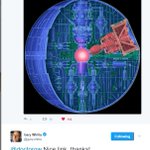
I’ve had two highly visible scifi and policy efforts. One, a 2016 piece on Rogue One as an Engineering Ethics Case Study, that went viral and is cited on the movie’s wikipedia page:
And two, a piece on Dune and its ethics of technology: teapawt.net/scifipolicy/status/210…

Rogue One: an "engineering ethics" case-study disguised as a Star Wars movie [SPOILERS]
boingboing.net/2016/12/19/ro…

2
53
SciFi Policy Project retweeted

Absolutely amazing day. Folks see the ship catch, but they don't appreciate the of work needed to make the catch possible. Space flight is the ultimate team sport. Also kind of special the first orbital ship was '42'. Congratulations to all who made this day possible.
SciFi Policy Project retweeted

A shoutout to Gerst, one of the greatest engineers ever, rightly noting the deep hidden efforts in a major success like Starship
Making a scifi reference too!
Kudos to SpaceX and all involved. So glad for all that Gerst does

SciFi Policy Project retweeted

The future of #ArtificialIntelligence is not pre-determined. As a technology developed by human beings, its future depends on the choices we make. We therefore have the responsibility to guide, change and, when necessary, reject its applications. A reliable system that serves the human person is of greater value than one that is exceptionally powerful but whose consequences cannot be adequately foreseen or controlled.
SciFi Policy Project retweeted

I study AI consciousness and personhood for a living, and people have been telling me to watch this episode for years. I finally watched it for the first time last week, and the writing and acting blew me away. It could be released today, and it would still be ahead of its time.


Frank’s books make it clear that uncontrolled technology could be used by some humans to extermimate humanity. So Paul had to take over the galaxy to prevent technology from being developed without limits
I published a paper on it here. philosophyengineering.com/du…
Dune and philosophy piece — Forum on Philosophy, Engineering and Technology
philosophyengineering.com
A problem Dune Part Three will face in adapting the novels is that Muad’Dib’s Jihad makes absolutely no sense
1
30
SciFi Policy Project retweeted

I interviewed Walter Koenig for my #StarTrek history book #PhasersOnStun in early 2021. He was incredible. Thankful I was able to write this cathartic tribute to him for @inversedotcom, in which I was able to use material that didn't go into my book. One of the best guys.😢inverse.com/entertainment/st…

Excited for this! The first book was a neat historical fiction of soviet espionage preWW2, with a lot of setup leading toward getting the bomb. Will be fun

The sequel to the #1 NYT bestseller Polostan is here. D: Heavy Water — a race across Europe to control the substance that could build (or stop) an atomic bomb. Available now wherever books are sold. #DHeavyWater #HistoricalThriller #NealStephenson nealstephenson.com/d-heavy-w…

1
27


SciFi Policy Project retweeted

Announcing the Most Ambitious Set of Science Initiatives This Century
whitehouse.gov/fact-sheets/2…

SciFi Policy Project retweeted

We re-launched Macroscience 6 months ago. Below I share our 3 most read pieces from the last 6 months, and my guess as to why they did well:
1. Do Not Surrender to the Tech Tree (@taoburr). Tao articulated what many people had been unable to put into words. At a crucial moment in AI development, Tao laid out a theory of tech determinism that called out for us to seize windows of opportunity. macroscience.org/p/do-not-su…
2. To Get More Effective Drugs, We Need More Human Trials (@RuxandraTeslo and @JackScannell13). Like Tao, Rux and Jack tapped into interest in rapidly changing tech, but demonstrated how the need for human trials creates a huge bottleneck to pharmaceutical development (even in the context of powerful AI). macroscience.org/p/to-get-mo…
3. NSF Tech Labs FAQs (The @IFP Metascience Team). Turns out, people like it when you provide helpful info! We wrote this piece when NSF had released a Request for Information about their Tech Labs (now titled X-Labs) program. I hope it encouraged some people to submit RFI responses. Here's our FAQs piece: macroscience.org/p/nsf-tech-…
And here's the NSF X-Labs program announced last week: nsf.gov/funding/initiatives/…

Happy birthday today to Dune author Frank Herbert! If you want to connect Dune to current moment on AI, see my:

Pope Leo’s thoughts on AI (below) have led to invocations of the scifi novel Dune’s concept of the Orange Catholic Bible, a future religious text where humanity decides to make a moral prohibition against thinking machines.
Dune’s author, Frank Herbert, lays out the O.C. Bible in a few short asides. (Indeed, they are so brief that they have been left out of Villeneuve’s amazing movies. The prequel TV show engages with it, albeit undermined by my postscript below.)
No computers are allowed in Dune; humans hone their minds (and use spice!) to do complex calculations, including folding space (fast interstellar travel).
How did this ethical prohibition against AI happen? Dune begins by referencing an old war - the Butlerian Jihad - where humanity fought against thinking machines. The Bene Gesserit leader Mohiam elaborates with protagonist Paul:
QUOTE:
Paul: "Why do you test for humans?"
Mohiam: "To set you free."
Paul:"Free?"
M: "Once, men turned their thinking over to machines in the hope that this would set them free. But that only permitted other men with machines to enslave them."
P: ''Thou shalt not make a machine in the likeness of a man's mind."" Paul quoted.
M: "Right out of the Butlerian Jihad and the Orange Catholic Bible...But what the O.C. Bible should've said is: "Thou shalt not make a machine to counterfeit a human mind.'... The Great Revolt took away a crutch...It forced human minds to develop. Schools were started to train human talents."
END
The AI invoked in Dune does not relate to common scifi metaphors like Terminator’s Skynet, that seeks to end humanity. Rather, in the distant past, many people allowed machines to do their thinking for them, and Mohiam says some bad human actors used this to enslave the unthinking. Mohiam’s warning is about humans using machines to oppress other humans. It’s implied that to be free as a human, we must think for ourselves with a higher good for collective humanity in mind.
How does this compare to Pope Leo now? Thankfully there has been no great AI war. Leo is engaging on the nature of AI - and if it is conscious and what value it brings to the world. Mohiam’s warning doesn’t touch on that. Elizabeth Dias’s recent New York Times article about how Anthropic worked with the Vatican is very suggestive on these terms. But Leo is similar in warning against concentration of human power too.
Instead, the ethics of technology in Dune is more reactive to the AI war. Dune’s glossary hints at a process of how the religions of the world came together after the war to create a new ethics. The OC Bible is said to be the “religious text produced by the Council of Ecumenical Translators. It contains elements of most ancient religions, including the Maometh Saari, Mahayana Christianity, Zensunni Catholicism, and Buddislamic traditions. Its supreme commandment is considered to be: “Thou shalt not disfigure the soul.”’
Ok, that’s a lot of fun scifi jargon! But I read this as implying that post-war, the religions of the world came together to create a new set of ethics and principles for humanity.
Specifically, they wanted to make sure that humans never gave up to AI their freedom and ability to think and live for themselves. And they chose to create ethical frameworks to help humans live more safely - and freely- in the future.
What would it be like for us to be deliberate in our ethics for technology writ large? In the broader chapter, I explore how engineering ethics literature advocates we similarly make ethical choices today to enable these futures, in AI and beyond.
That’s it for now. If you want to dig in, a free preprint. philosophyengineering.com/du……
-Zachary Gallagher Pirtle @zpirtle
Postscript: the Dune: Prophecy prequel TV series follows the prequel books cowritten by Herbert’s son, Brian Herbert. As I discuss in footnotes 18 and 21, Brian recenters Dune against a skynet-like evil AI. This seems not to match Dune’s original intent and I do not treat it as canon.
A neat callout of Alex Nevala-Lee’s biography of scifi masters.

AI and the modern pundit: A master of 1940s sci-fi schlock had a plan, and it’s working. He wanted to prepare us for the future, writes Holman Jenkins
on.wsj.com/4eaW9Mi

2
24
SciFi Policy Project retweeted

Una de las cosas que me encantaría hacer (y la haremos, una vez tengamos los recursos) es la de apoyarnos en la ciencia ficción para dictar cursos de ingeniería y de filosofía de la ingeniería. La antropología de futuros tiene una aproximación similar.
Rogue One: an "engineering ethics" case-study disguised as a Star Wars movie [SPOILERS]
boingboing.net/2016/12/19/ro…
SciFi Policy Project retweeted
In this video about the philosophy of mind of Lt. Commander Data, @burnt_jester provides a succinct formulation of relational ethics: "A man alone on a deserted island has no need to be a person, since there is no one there with whom he can be a person."
youtube.com/watch?v=mwVd4d0N…

Pope Leo’s thoughts on AI (below) have led to invocations of the scifi novel Dune’s concept of the Orange Catholic Bible, a future religious text where humanity decides to make a moral prohibition against thinking machines.
Dune’s author, Frank Herbert, lays out the O.C. Bible in a few short asides. (Indeed, they are so brief that they have been left out of Villeneuve’s amazing movies. The prequel TV show engages with it, albeit undermined by my postscript below.)
No computers are allowed in Dune; humans hone their minds (and use spice!) to do complex calculations, including folding space (fast interstellar travel).
How did this ethical prohibition against AI happen? Dune begins by referencing an old war - the Butlerian Jihad - where humanity fought against thinking machines. The Bene Gesserit leader Mohiam elaborates with protagonist Paul:
QUOTE:
Paul: "Why do you test for humans?"
Mohiam: "To set you free."
Paul:"Free?"
M: "Once, men turned their thinking over to machines in the hope that this would set them free. But that only permitted other men with machines to enslave them."
P: ''Thou shalt not make a machine in the likeness of a man's mind."" Paul quoted.
M: "Right out of the Butlerian Jihad and the Orange Catholic Bible...But what the O.C. Bible should've said is: "Thou shalt not make a machine to counterfeit a human mind.'... The Great Revolt took away a crutch...It forced human minds to develop. Schools were started to train human talents."
END
The AI invoked in Dune does not relate to common scifi metaphors like Terminator’s Skynet, that seeks to end humanity. Rather, in the distant past, many people allowed machines to do their thinking for them, and Mohiam says some bad human actors used this to enslave the unthinking. Mohiam’s warning is about humans using machines to oppress other humans. It’s implied that to be free as a human, we must think for ourselves with a higher good for collective humanity in mind.
How does this compare to Pope Leo now? Thankfully there has been no great AI war. Leo is engaging on the nature of AI - and if it is conscious and what value it brings to the world. Mohiam’s warning doesn’t touch on that. Elizabeth Dias’s recent New York Times article about how Anthropic worked with the Vatican is very suggestive on these terms. But Leo is similar in warning against concentration of human power too.
Instead, the ethics of technology in Dune is more reactive to the AI war. Dune’s glossary hints at a process of how the religions of the world came together after the war to create a new ethics. The OC Bible is said to be the “religious text produced by the Council of Ecumenical Translators. It contains elements of most ancient religions, including the Maometh Saari, Mahayana Christianity, Zensunni Catholicism, and Buddislamic traditions. Its supreme commandment is considered to be: “Thou shalt not disfigure the soul.”’
Ok, that’s a lot of fun scifi jargon! But I read this as implying that post-war, the religions of the world came together to create a new set of ethics and principles for humanity.
Specifically, they wanted to make sure that humans never gave up to AI their freedom and ability to think and live for themselves. And they chose to create ethical frameworks to help humans live more safely - and freely- in the future.
What would it be like for us to be deliberate in our ethics for technology writ large? In the broader chapter, I explore how engineering ethics literature advocates we similarly make ethical choices today to enable these futures, in AI and beyond.
That’s it for now. If you want to dig in, a free preprint. philosophyengineering.com/du……
-Zachary Gallagher Pirtle @zpirtle
Postscript: the Dune: Prophecy prequel TV series follows the prequel books cowritten by Herbert’s son, Brian Herbert. As I discuss in footnotes 18 and 21, Brian recenters Dune against a skynet-like evil AI. This seems not to match Dune’s original intent and I do not treat it as canon.

In this era of artificial intelligence, it is becoming urgent to distinguish human art from what machines produce. There is an ontological difference, even before an aesthetic one, between art and what a machine can generate through statistical calculation based on millions of images created by others. Algorithms lack the spark of humanity. For this reason, the Church wishes to renew an alliance with artists and cultural institutions to safeguard our humanity.
Above discusses an academic paper on the Butlerian Jihad in Dune, tying it to Pope Leo on AI. As a new professor I am scheming about doing an event on this soon.
I searched for who on X has been posting about the Butlerian event, and you’re it. Hope you might enjoy.
@DocStrangelove2 @MajmudarAdam
@BlakeOf616 @nicepixels_ @sonnybunch @mattyglesias @atrydyka @jackclarksf @PsionicPsittacc @Douthat60 @tszzl @IDEASOFICE_FIRE @balajis
101
Cc @SecretsOfDune @DuneInfo @muaddibstyle @DuneNewsNet hi, you may enjoy above post.
I almost want to start tracking all the Dune invocations in the current AI discourse. I will CC a few people who have been mentioning it on X
1
49
SciFi Policy Project retweeted
Pope Leo’s thoughts on AI (below) have led to invocations of the scifi novel Dune’s concept of the Orange Catholic Bible, a future religious text where humanity decides to make a moral prohibition against thinking machines.
Dune’s author, Frank Herbert, lays out the O.C. Bible in a few short asides. (Indeed, they are so brief that they have been left out of Villeneuve’s amazing movies. The prequel TV show engages with it, albeit undermined by my postscript below.)
No computers are allowed in Dune; humans hone their minds (and use spice!) to do complex calculations, including folding space (fast interstellar travel).
How did this ethical prohibition against AI happen? Dune begins by referencing an old war - the Butlerian Jihad - where humanity fought against thinking machines. The Bene Gesserit leader Mohiam elaborates with protagonist Paul:
QUOTE:
Paul: "Why do you test for humans?"
Mohiam: "To set you free."
Paul:"Free?"
M: "Once, men turned their thinking over to machines in the hope that this would set them free. But that only permitted other men with machines to enslave them."
P: ''Thou shalt not make a machine in the likeness of a man's mind."" Paul quoted.
M: "Right out of the Butlerian Jihad and the Orange Catholic Bible...But what the O.C. Bible should've said is: "Thou shalt not make a machine to counterfeit a human mind.'... The Great Revolt took away a crutch...It forced human minds to develop. Schools were started to train human talents."
END
The AI invoked in Dune does not relate to common scifi metaphors like Terminator’s Skynet, that seeks to end humanity. Rather, in the distant past, many people allowed machines to do their thinking for them, and Mohiam says some bad human actors used this to enslave the unthinking. Mohiam’s warning is about humans using machines to oppress other humans. It’s implied that to be free as a human, we must think for ourselves with a higher good for collective humanity in mind.
How does this compare to Pope Leo now? Thankfully there has been no great AI war. Leo is engaging on the nature of AI - and if it is conscious and what value it brings to the world. Mohiam’s warning doesn’t touch on that. Elizabeth Dias’s recent New York Times article about how Anthropic worked with the Vatican is very suggestive on these terms. But Leo is similar in warning against concentration of human power too.
Instead, the ethics of technology in Dune is more reactive to the AI war. Dune’s glossary hints at a process of how the religions of the world came together after the war to create a new ethics. The OC Bible is said to be the “religious text produced by the Council of Ecumenical Translators. It contains elements of most ancient religions, including the Maometh Saari, Mahayana Christianity, Zensunni Catholicism, and Buddislamic traditions. Its supreme commandment is considered to be: “Thou shalt not disfigure the soul.”’
Ok, that’s a lot of fun scifi jargon! But I read this as implying that post-war, the religions of the world came together to create a new set of ethics and principles for humanity.
Specifically, they wanted to make sure that humans never gave up to AI their freedom and ability to think and live for themselves. And they chose to create ethical frameworks to help humans live more safely - and freely- in the future.
What would it be like for us to be deliberate in our ethics for technology writ large? In the broader chapter, I explore how engineering ethics literature advocates we similarly make ethical choices today to enable these futures, in AI and beyond.
That’s it for now. If you want to dig in, a free preprint. philosophyengineering.com/du……
-Zachary Gallagher Pirtle @zpirtle
Postscript: the Dune: Prophecy prequel TV series follows the prequel books cowritten by Herbert’s son, Brian Herbert. As I discuss in footnotes 18 and 21, Brian recenters Dune against a skynet-like evil AI. This seems not to match Dune’s original intent and I do not treat it as canon.
In this era of artificial intelligence, it is becoming urgent to distinguish human art from what machines produce. There is an ontological difference, even before an aesthetic one, between art and what a machine can generate through statistical calculation based on millions of images created by others. Algorithms lack the spark of humanity. For this reason, the Church wishes to renew an alliance with artists and cultural institutions to safeguard our humanity.
Ack, preprint link not working. Will fix in AM. This should work. philosophyengineering.com/du…
Dune and philosophy piece — Forum on Philosophy, Engineering and Technology
philosophyengineering.com 67