

High Energy Physics 5 Optical Fiber Patents | Dark Matter and Dark Energy |•| Astrophysics
USA
Joined November 2011
- Tweets64K
- Following74
- Followers1.6K
- Likes23K




Dr Michael Reidinger retweeted

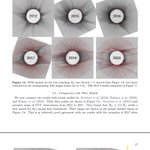
🥇🚨 Gold alert - IceCube observation of a high-energy neutrino candidate event at 2026/09/19 06:52:15 UTC. Find out more at: gcn.nasa.gov/circulars/45645.
#IceCubeAlert

ALT A diagram of an IceCube track-like event in the gold alert stream.
Dr Michael Reidinger retweeted

@km3net’s strings of photodetectors anchored to the seabed off the coast of Sicily have detected the most energetic neutrino ever observed, smashing previous records
cerncourier.com/a/cosmogenic…

Dr Michael Reidinger retweeted

To the world, J. Robert Oppenheimer and Edward Teller were renowned physicists. To their children, they were simply “Dad.”
See how Los Alamos’ two most famous fathers made room for family in The Vault from our National Security Research Center👇 ow.ly/w2Qx50UO6ZS


Dr Michael Reidinger retweeted

Image of the Week: Glass into Glass
A 405-nm laser is shone through the marble ball from a Codd-neck bottle of the Japanese soft drink Ramune, which focuses the beam into a glass table.
Read more here: bit.ly/3Uj2QCf
[2024 #OPNPhotoContest Third Place Tie]

Dr Michael Reidinger retweeted

We're proud of our work with our ST40 spherical tokamak, which is the highest magnetic field and most advanced of its kind in the world. A recent paper published by @PhysicsNews @IOPPublishing provides an overview of results from our 2022-2023 campaigns, all of which are focussed on building the confidence, understanding and technology that supports the spherical tokamak as the optimal route to commercial #fusionenergy.
In 2022, we achieved a record plasma ion temperature of over 100 million degrees Celsius, demonstrating that #fusion relevant temperatures can be achieved in a compact, high-field spherical tokamak. More recently, we’ve explored high performance, high confinement (H-mode) plasmas, solenoid free start-up, plasma exhaust, and non-inductive scenarios.
Our work is supported by a first-of-a-kind private-public partnership with @doescience, enabling scientists from @ORNL and @PPPLab to actively participate in ST40 research.
This shared research is directly informing the design of the next generation of fusion pilot plants that will demonstrate grid-ready fusion energy. Energy that we believe will be delivered by governments and industry working together.
Read the full paper here:
👇
iopscience.iop.org/article/1…
#FusionForAll #CleanEnergy #EnergyTransition


Dr Michael Reidinger retweeted

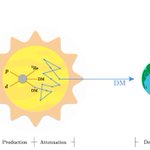
Dark matter could consist of particles so ultralight, they behave more like waves.
symmetrymagazine.org/article…
Dr Michael Reidinger retweeted

LZ Experiment Sets New Record in Search for Dark Matter
interactions.org/LZ-Experime…

Dr Michael Reidinger retweeted
#ICYMI: Physicists are preparing for the next generation of #darkmatter experiments.
symmetrymagazine.org/article…
Dr Michael Reidinger retweeted
First measurement of a nuclear recoil signal from solar neutrinos with XENONnT
interactions.org/press-relea…

Dr Michael Reidinger retweeted
🚨Reminder: Our neutrino physicists are answering your neutrino questions on our Instagram tomorrow!

It's almost Neutrino Day! And we can't wait to celebrate our favorite particles. 🙌
Join us on our Instagram (@fermilab) on July 9, at 12:00 p.m. to 1:00 p.m. to have your questions about these elusive particles answered by our scientists. #neutrino #NeutrinoDay #fermilab

Dr Michael Reidinger retweeted
The LHCb collaboration has reported the first search for the decay of the neutral strange B-meson to a pair of muons and a reconstructed photon — such rare radiative decays can be powerful probes of new physics in virtual loops
cerncourier.com/a/lhcb-targe…

Dr Michael Reidinger retweeted

Gravitational-waves provide a unique way to study black holes
This Orrery (by @actualdrdoctor) illustrates the diverse black hole binaries and neutron star black–hole binaries from our O3b run. More massive binaries are shown as orbiting more slowly
#BlackHoleWeek
Dr Michael Reidinger retweeted

DESI has released a new 3D cosmic map of the universe, showing the universe's expansion history over 11 billion years! This data shows something surprising about dark energy, the elusive force that accelerates the universe's expansion and comprises 70% of its contents.
Preliminary data shows a better fit to a model where dark energy evolves and gets weaker, rather than remaining constant as predicted by the standard ΛCDM model. This could refine our understanding of how the universe evolves. For example, it could lead to a Big Crunch, where the universe expands to a maximum and then contracts into a crunch. Or it could lead to a cyclic universe, with the universe expanding and contracting from a Big Bang into a Big Crunch over and over again!
However, as it currently stands, the data only shows a slight deviation and agrees relatively well with ΛCDM. As DESI gathers more data, we'll get a better understanding of the nature of dark energy and learn whether dark energy, in fact, evolves over time!
Images from DESI. – at Toronto, Ontario


Dr Michael Reidinger retweeted
A collaboration of scientists working on the Broadband Reflector Experiment for Axion Detection recently released their first results in the search for dark matter, narrowing the constraints for where it might be.
@UChicagoNews @UChicago
news.uchicago.edu/story/firs…
Dr Michael Reidinger retweeted
🔔📜 IceCube paper submitted to PRD!
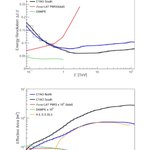
We present an analysis using a new dataset consisting of starting track events. For the first time, we identified muon neutrinos at energies well below 100 TeV that are classified as cosmic in origin.
Read more ➡️ icecube.wisc.edu/news/resear…

ALT The astrophysical neutrino flux is shown as a function of energy per flavor. The black points are the flux measurement from this new analysis. The SPL measurement is shown as a gray shaded line from 3-550 TeV. A broken power law energy spectrum was tested using this data, shown in blue, but did not reveal any preference for this model. Previous IceCube measurements are shown for direct comparison to this new measurement
Dr Michael Reidinger retweeted
A new measurement from the Dark Energy Survey uses the remnants of sound waves present during the early #universe to measure cosmic expansion with greater precision than previous measurements.
🔗 Read more: news.fnal.gov/2024/02/new-me…
#cosmology #astrophysics #DarkEnergySurvey
Dr Michael Reidinger retweeted

I gave a talk on the bubble misalignment mechanism at the CAU-PNU Beyond the SM workshop. Here is the link. indico.cern.ch/event/1360177…
Dr Michael Reidinger retweeted
Recently passing an impressive milestone of 50,000 downloads, one of the most important scientific papers in our company’s history was published exactly nine years ago. ‘On the power and size of tokamak fusion pilot plants and reactors’, published in Nuclear Fusion, confirmed the potential of more compact and hence potentially lower cost fusion power plants.
“We set out to answer the question, how small can we make a #fusion pilot or power plant?”, says Peter Buxton, one of the paper’s authors. “We found two important results. Firstly, increasing the size of the tokamak hardly changes the fusion gain, meaning that from a plasma physics perspective, fusion plants could be much more compact than traditionally thought. And secondly, the spherical tokamak geometry is more efficient than the conventional tokamak geometry, leading to potentially even more compact machines.”
At @TokamakEnergy we completed initial construction of our ST40 compact, high-field spherical tokamak in 2017, and then in 2022, following a series of upgrades, we achieved a world record plasma ion temperature of 100 million degrees Celsius, the threshold for commercial fusion. We also achieved the highest triple product of any private fusion company; a key measure of plasma temperature, density and confinement time.
These achievements support the spherical tokamak as the optimal route to clean, affordable and globally deployable fusion power, and it’s now the basis for #fusionenergy programmes around the world.
We’ve also made great progress on the key technological limitations to compact fusion identified in the paper - #superconducting #magnets, divertor power loading, and neutron shielding - developing advanced High Temperature Superconducting (HTS) magnet technology, novel divertor technologies such as flowing liquid lithium and next-generation neutron shielding materials.
“The technological and organisational transformation at Tokamak Energy has been an inspiration”, says Peter. “We have designed, constructed, and operated three tokamaks as well as numerous test beds. Advancing fusion technology on all fronts towards a fusion power plant.”
iopscience.iop.org/article/1…
#Fusion #FusionEnergy #EnergyTransition #CleanEnergy

Dr Michael Reidinger retweeted
The Deep Underground Neutrino Experiment is a leading-edge, international experiment for #neutrino science. The DUNE Science Collaboration is made up of over 1400 collaborators from over 200 institutions in over 30 countries plus CERN! 🤝

Thank you @CERN for hosting another successful DUNE collaboration meeting! #dunescience

ALT DUNE collaboration group photo