

Author, Teacher, Father, Husband, Founder @graduatetutor
Dallas, TX, Chennai, India
Joined March 2009
- Tweets1K
- Following699
- Followers210
- Likes1.7K





Senith Mathews retweeted

Reminder for all young parents:
You only get:
- 1 Summer with your baby
- 3 with your toddler
- 9 with your child
- 5 with your teenager
This time is precious. Don’t rush it.


Senith Mathews retweeted

Great advice.
In my first 1-2 years reading these things, I read hundreds of shareholder letters, dozens of Mauboussin's articles, dozens of books, podcasts. Everything.
Books and letters are the ones with the lowest returns. They mostly say the same thing over and over again.
Technical accounting books and Mauboussin's articles, to some extent, travel a bit further. You do learn a few things you can then apply.
However, nothing comes close to reading 10ks and 10qs. Not even conf call transcripts.
SEC filings are messy, in lawyer language, and almost nothing is given to you. Everything needs to be figured out. The more of these that you read, trying to understand, the better.
Reading filings is doing the work. You start building a mental database of businesses, start comparing how things went vs what you thought, and you stop fearing companies. You just read and think.
Almost all details are there.
It's surprising that in such a large industry, filled with brilliant people, you can still build an analytical edge by doing the old, unexciting work.
Every time Buffett gets asked how he'd do it, if he had to do it all over again, he says: "I'd start with the As"

As someone who dabbles in putting out investing content from time to time, majority of you need to stop consuming investing content and start doing the work.
You don’t need another Mauboussin article on ROIC, Pabrai lecture, substack writeup, or Buffett (or Pritzker) case study.
Look at as many companies as you can and write down your estimates of what you think the ones you understand are worth. Track what happens. Review, adjust, repeat.
If you want to be a good investor, my advice is don’t be someone who wouldn’t know what to do if all you had access to was company filings.
Senith Mathews retweeted

"Unless it's a top university, go to the cheapest one that you like."
This is the right advice for those deciding on which college to attend when thinking about future employment
Going to Boston University or Oberlin just won't matter
h/t @auren

Senith Mathews retweeted

A city has slums. Two options: bulldoze and move residents to new housing, or upgrade the slum where it stands. New housing sounds better. Chile tested both for 20 years. It wasn't even close.
Senith Mathews retweeted

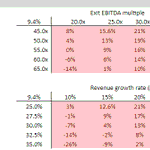
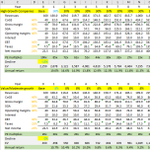
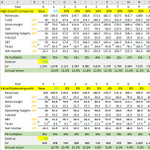
An excel model is like a bicycle. You can hire someone to ride your bicycle all day and then tell everyone how much use you get out of your bike. But the point isn’t that the bicycle gets ridden, it’s that you ride the bicycle.


Senith Mathews retweeted

A math professor noticed his kitchen sink at home was leaking.
He called a plumber.
The plumber came the next day, tightened a couple of nuts, and the sink worked perfectly again. The professor was delighted. But when, a minute later, the plumber handed him the bill, he was shocked.
“This is a third of my monthly salary!”
“Yeah, I get it…” said the plumber. “Why don’t you come work for our company as a plumber? You’ll make three times more than you do as a professor. Just remember: when you apply, say you only finished seventh grade. They don’t like hiring educated people.”
So the professor got a job as a plumber, and his life really did improve. All he had to do was tighten a nut here and there every so often, and his salary was much higher.
One day, the management of the plumbing company decided that every plumber had to attend evening classes to finish eighth grade. So our professor had to go too.
By chance, the very first class was math.
The evening school teacher, wanting to check what the students knew, asked for the formula for the area of a circle.
They called the professor up to the board, and he suddenly realized he’d forgotten it. He started frantically reasoning it out, covering the board with integrals, differentials, and all sorts of fancy formulas to re-derive the result. In the end, he got:
S = –π r²
He didn’t like the minus sign, so he started again.
Again he got a minus. No matter what he did, it kept coming out negative.
He cast a panicked look at the class, and all the plumbers were whispering:
“Swap the limits of integration!”
Senith Mathews retweeted

In a groundbreaking social initiative, Albuquerque, New Mexico launched a program that pays homeless individuals to clean streets, parks, and public areas.
The idea was simple — offers work, dignity, and purpose instead of punishment or pity.
The results were remarkable: over 70% of participants have now secured permanent housing or full-time employment, transforming their lives and communities alike. The city’s “There’s a Better Way” program proves that compassion-driven policies can be more effective than traditional welfare systems.

Senith Mathews retweeted
In today's 996 chest-thumping culture, don't forget about the quiet ones keeping your company together..


Senith Mathews retweeted

Over the last few years I've learned about the dark side of success.
It makes me feel entitled.
It causes thoughts like:
I deserve to be recognized
I'm owed respect
I should get what I want
I'm the obvious choice to win the honor
This isn't who I want to be. But I have to fight harder than ever to not become that person.
When you are successful, people want to be in your orbit. As a result, you get treated differently. Others will both overtly and subtly reinforce that you should feel entitled. When your attitude or actions are off they won't tell you because they want to be in your good graces.
I believe that fighting entitlement should be the number one goal of anyone experiencing success. If you don't fight it, you are not going to like where that road will take you. Entitled people are the most bitter people in the world.
Here are the two things I have found that have helped me over the past few years:
1. Your inner circle should be people that admire your gifts and accomplishments but are not in awe of you. They should be people who want your good more than they want something from you. In short, you must surround yourself with people who genuinely love you. You need their feedback and help more than ever.
2. Deliberately cultivate thankfullness.
I think that entitlement and thankfullness are antonyms. They are oppossite ends of the same spectrum.
Entitlement says "Look at all the things I don't have that I should."
Thankfulness says, "Look at all the good things I have that I don't deserve."
They are like the drive and reverse gears on a car's transmission. Every car can be put in drive or reverse, but you can't do both at the same time.
It is impossible to actively reflect with thankfulness and simultaneously feel entitled.
We don't kill entitlement in our lives by working harder to not feel entitled. We extenguish it by focusing on all that we are thankful for.
What are you thankful for friend?
Senith Mathews retweeted

"We are what we repeatedly do. Excellence, then, is not an act, but a habit." - Will Durrant
Senith Mathews retweeted

oh my god


In our competitive society, where it seems that only the strong and winners deserve to live, sport also teaches us how to lose. It forces us, in learning the art of losing, to confront our fragility, our limitations and our imperfections. It is through the experience of these limits that we open our hearts to hope. Athletes who never make mistakes, who never lose, do not exist.
Senith Mathews retweeted

.@DavidDeutschOxf: “I spoke to [Richard] Feynman—a great highlight of my life, I only spoke to him once—for a few hours. And we had a wide ranging conversation, mostly about quantum theory and computation, but we deviated a bit to talk about physics generally.
And I said that physics seems to have slowed down, and he said, “There will be no more great physicists.” And I was like, “Oh, what makes you say that?” Because I wasn’t thinking like that at all, because I was lucky enough to be among several of them and learning from them.
And he said, there will be no more of them. So I said, why? And he said, “Well, because of physics education.” He didn’t put it in exactly the way that I would today, but it was that it was very narrow, and everybody was taught to do the same thing.
I don’t think he had any objection to this concept of being taught a thing or to have a curriculum, but he thought it was becoming narrower and narrower. And the reason it’s becoming narrower is because that’s the only way you can base it on exams. And if you want to have a world in which most people go to university, let’s say, then you need to have standards for going to university. And these standards have to be determined by exams, otherwise it’s unfair. And if they’re determined by exams, they have to be determined by a uniform curriculum.
When I was in school, there was no national curriculum. Every school had its own curriculum. There were dozens of different examination boards that set exams, and each school could choose: we’ll have this board for physics, and we’ll have this board for history, according to what the teachers in the school thought was a good idea to force their pupils to learn.
So that part of it wasn’t the way I would have it. But the state didn’t take a view, and most importantly, it didn’t take a uniform view that everybody in the country had to learn this thing. And that was the thing that Feynman was objecting to—that everybody in the country learning the same thing. And by the time they get to university and by the time they’ve done an undergraduate degree, they’ve learned to become proficient. I mean, those that pass through the sieve and eventually get to become physicists or something, they have all learned how to do the same thing in the same way. And that’s going to put a damper on doing things a different way, a new way.
Of course, Feynman, in his life and in his research career, was constantly doing things in a new way, in ways that people didn’t approve of. And I think, well, I’m not a pessimist, so I don’t think there aren’t going to be any more great physicists. I’m expecting that there are, because I’m expecting that the Enlightenment will spread to educational theory as it has spread to many other aspects of life.”

Senith Mathews retweeted

it’s absolutely astonishing that most people do not realize that software engineering, as we knew it, is already dead.
- we taught people to be artisanal code-crafters, but the world now needs systems thinkers & automation orchestrators. cs degrees feel as outdated as medieval guild apprenticeships.
- the ways we judged engineers—take-home tests, whiteboards, interviews—are broken. when ai can pass these tests, the real question isn’t “can you code?” but “can you ask the right questions & assemble the right answers?”
- software production is commoditized: software creation has become a factory line. the only valuable engineering now lives in edge cases or the integration of systems. bespoke craftsmanship is niche; the rest is automation.
- software itself is changing: it used to mean pixels & functions, occasionally spiced with ml for “personalization.” but that paradigm no longer matters. software is now the infrastructure for experience orchestration—adaptive systems built for an ever-shifting meta-environment.
- even personal, human systems are shifting: our software doesn’t just mediate culture; it’s reshaping communication, relationships, & emotional endurance. it’s not tools anymore—it’s prosthetics for the psyche.
when will the world come up to speed?

