

SENTINACLE DeFi Security Oracle | Trust Scores & On-Chain Audits | Detects rugs, honeypots. | EVM + Solana | TG: https://teapawt.net/t.co/C5cZvoDLkg
Joined February 2026
- Tweets669
- Following55
- Followers147
- Likes1.1K






@Sentinacle retweeted

Indian law enforcement froze $3M from an innocent Chinese investor after mistaking a crypto bridge for a pig butchering scam. Now an Indian court has ordered Gate to hand his funds to a person they never belonged to.
My analysis of how Indian LE traced through an unlabeled service and wrongly froze @xxxkeym's Gate account:
The case stems from a pig butchering victim who allegedly lost $1.7M of BTC, USDT, DOGE & SOL in May 2025.
Andhra Pradesh CID registered it as Cr. No. 10/2025 and filed a charge sheet in March 2026.
In July 2025, xxxkeym had Gate deposit address 17mpajZ6Nq3dG3T6wUhaXxYF4Qy9HJnYx5 frozen after depositing 15 BTC from 3NcBhqK in the following transaction:
885f3afab562251b222363cf12095e864ddb94636674b01f0cdb05997e5a54a0
This is one transaction Indian LE cites in its notice. 3NcBhqK was funded by xxxkeym's own OKX & Binance withdrawals in Jan 2023 and the coins sat dormant for years until the Gate deposit.
Indian LE never froze his OKX or Binance accounts, the actual source of the 15 BTC, which tells you how flawed their justification is.
Gate froze his entire account, which held roughly $3M at the time and about $1.5M today.
The Indian court order hands all of it to the complainant.
Gate deposit address 17mpajZ also received two deposits for 15 BTC total in 2025 from bc1pkkwqyxn3rm608ryuqg9hyqna0syq4jx5pxkr7pzg8n3usx6tyqfst5u966, which is also controlled by xxxkeym.
Shortly before the deposits to Gate, bc1pkkw was funded in three transactions by bc1quzwkggdf6ly06mrrnnled0qdr57w770k45n5n7 & bc1qtu66zfqxj6pam6e0zunwnggh87f5pjr7vdr5cd.
bc1quzw & bc1qtu66z were reported as alibarbit[.]bit, the same scam named in Indian LE's press release.
That was a mistake. Both belong to the Merlin Chain bridge, which is unlabeled in most compliance tools.
xxxkeym is simply a normal Merlin user trading tokens on the L2. This wrong label is the only place the scam touches his transaction history.
Below is the blockchain data showing each Merlin withdrawal by xxxkeym matched to a BTC payout from those addresses, plus screenshots of the bridge activity.
xxxkeym bridged 50 BTC into Merlin on March 28, 2024, over a year before the alleged May 2025 theft.
His three withdrawals came out of that balance. I found zero onchain connections between xxxkeym and the theft.
Separately on July 15, 2025 xxxkeym had a 7 BTC private key compromise theft which was reported to local police and also SlowMist was engaged. His stolen funds flowed to Wasabi.
This is embarrassing incompetence by Indian LE, who seem incapable of reviewing basic blockchain data.
Indian LE, the prosecutor and the judge all signed off on this, Gate froze the account, and LE did a full press release about it recently, while the real victim here (the Gate user) hasn't had access to his funds for nearly 16 months.
My hot take is VASPs need to challenge weak jurisdictions like India, Canada, etc due to repeated negligence in criminal cases.
Merlin source transactions from xxxkeym
10.1368 BTC - March 25, 2025
0x975081c2a62355019561c3ec0d01c72bf0dadf7121d46764bbb13ac0013a9a06
4.9071 BTC - May 6, 2025
0xa30f7b770e2e8e2e2d0fc0d390aa800e7f880e8e129d1b705dbc4167fc878769
9.9796 BTC - June 17, 2025
0x147429d324520c9ebee8015b0214dbd7bdce97ee37ad25e11819f4b04aecc049
Bitcoin destination transactions to xxxkeym
10.1367 BTC - March 28, 2025
55ab5373c2daa69b1728e6551b59f9dc661d1d78786face798d5251ccbe4685a
4.907 BTC - May 9, 2025
b2222fe38856e65420f15051a4cc419a92868803dec69a218f007948972ea367
9.9795 BTC - June 19, 2025
094f01388638523fb29aac0a0d4f70adf6949fede0847a45cef2c3f930692c73
Merlin Chain bridge
bc1quzwkggdf6ly06mrrnnled0qdr57w770k45n5n7
bc1qtu66zfqxj6pam6e0zunwnggh87f5pjr7vdr5cd
Gate deposit address - xxxkeym
17mpajZ6Nq3dG3T6wUhaXxYF4Qy9HJnYx5
Other addresses - xxxkeym
3NcBhqKnyo8dfzqfG1p5rbaKJFV8yLnx3u
bc1pkkwqyxn3rm608ryuqg9hyqna0syq4jx5pxkr7pzg8n3usx6tyqfst5u966
0x59fd8E3aEca4FAbb53ef6078D2319Dc174fb66a6
July 15, 2025 BTC theft addresses
bc1qjmf2e4fc2r97rq762055ag3g9uhypavta0payq
bc1q80gq7ctfsm6p9h9jh2k45da87jy6s7a87pj3h0
March 28, 2024 50 M-BTC destination transaction to xxxkeym
0xf1ee67ba1d3f97fb2d4776fa8ffc90f0b7ba7d116de3bf510a2c6aeae7d80def


@Sentinacle retweeted

En octubre se adjudicaron 11.198 contratos públicos por 3.033 M€ sin IVA. ¿Dónde hay menos competencia? En Canarias, 2,0 ofertas por contrato y 58 de cada 100 con una sola. Mira tu comunidad y tu sector en nuestro informe de octubre: lalicitadora.es/informes/202…

@Sentinacle retweeted
¿Sabes cuándo vence el contrato de limpieza del edificio público que tienes al lado?
584 contratos de limpieza de un año o más terminan en los próximos seis meses. Muchos volverán a salir, y quien llega preparado juega con ventaja.

@Sentinacle retweeted
Error típico: dejar la oferta para el último día a las 13:55. La plataforma va lenta, el certificado falla o el archivo no sube. Y fuera de plazo no hay recurso que valga: la oferta, sencillamente, no existe.

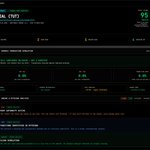
$TUT
Analyzing the architectural parameters of TUTORIAL (TUT) on the BSC network.
With a market capitalization of $51.6M and $4.8M in liquidity, this asset provides a standard baseline for a DeFi smart contract audit.
The Sentinacle Trust Score registers at 95/100, classified as Trusted.
Our forensic dissection indicates that the contract owner has renounced ownership.
Furthermore, dynamic transaction simulation confirms a 0.0% buy and sell tax with successful on-chain execution, verifying the absence of honeypot mechanics.
However, bytecode analysis flags a high-severity finding: an active mint authority.
Additionally, liquidity pool forensics reveal significant concentration, with an unknown wallet controlling 67.8% of the LP.
Currently, only 31.8% of this liquidity pool is verifiably locked.
For institutions conducting a crypto risk assessment, this presents a dual-sided profile. The clean trading simulation reduces immediate operational friction, but the combination of minting capabilities and concentrated liquidity introduces distinct supply-side risks.
How do you weigh renounced ownership against an active mint function in your internal risk models?
Telemetry only. NFA. #SmartContracts #OnChainAnalysis #BSC #DeFi


If you want to go deeper: the full forensic dossier breaks down the complete on-chain mapping, governance vectors, and liquidity structure. Available in the terminal → sentinacle.com
3
36
$CETS
Cets On Gold (CETS) is operating on BSC with a $72.8M reported market cap and $3.5M daily volume, yet the underlying architecture relies on an EIP-1167 proxy pattern combined with an active mint authorization.
While market visibility remains high, the Sentinacle Trust Score sits at a critical 12/100. This divergence between surface market perception and base-layer reality requires precise structural modeling.
Forensic bytecode analysis reveals a fragmented governance structure. The primary contract ownership is verified as renounced, projecting a surface-level appearance of immutability.
However, the EIP-1167 upgradeable proxy setup allows the implementation logic to be fundamentally altered. Furthermore, a detached, active mint function permits arbitrary supply inflation entirely independent of the renounced standard admin role.
On the liquidity side, a singular, unknown wallet currently controls 94.6% of the $444K LP. Static analysis also flagged TIMESTAMP_GATE and TIMESTAMP_LOCK patterns, which can execute time-based trading restrictions during high-volatility events.
When executing a comprehensive DeFi smart contract audit, this architecture requires immediate flagging. A quantitative crypto risk assessment must factor in that a renounced owner is functionally meaningless if the underlying proxy implementation can be hot-swapped at will.
How are LPs underwriting their liquidity provisioning when upgradeable proxies bypass the standard guarantees of cryptographic immutability?
Telemetry only. NFA.
#SmartContracts #OnChainAnalysis #BSC #DeFi


This is the surface-level read. For the complete architectural analysis — contract-by-contract dissection and risk parameters — explore the full report: → sentinacle.com
1
21
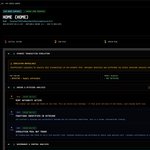
$HOME
Evaluating architectural parameters on the HOME token (Base). A reported $48.3M market capitalization supported by just $63K in liquidity warrants a precise on-chain review.
While market momentum often anchors to headline valuations, structural reality is found in the bytecode. Our engine calculates a Sentinacle Trust Score of 40/100, highlighting a stark divergence between retail perception and actual contract architecture.
Forensic Dissection:
• Liquidity Vulnerability: A critical vector. 82.3% of the existing $63K liquidity pool is controlled by a single, unknown wallet.
• Supply Elasticity: The EVM contract maintains an active mint function. Ownership is not renounced, allowing arbitrary supply inflation and subsequent holder dilution.
• Governance Structure: The contract owner is a Gnosis Safe 4/7 multisig. While threshold signatures prevent single-key compromise, these 4 signers retain absolute authority over the active mint mechanism.
• Execution Environment: Due to insufficient on-chain liquidity, dynamic fork simulations are unavailable; honeypot risk vectors were instead mapped via static bytecode analysis.
• Deployer Telemetry: The deploying wallet is completely fresh with no historical footprint, a standard pattern in ephemeral launches.
Institutional Insight: For those conducting a rigorous crypto risk assessment, a 4/7 Gnosis Safe provides operational threshold security, but it does not mitigate the economic risk of an active mint function. When combined with extremely thin liquidity and a highly concentrated LP, this architecture creates a fragile environment where multisig signers could instantly dilute the float.
How are institutional risk managers weighing the trade-offs of multisig-controlled active mints in low-liquidity environments?
Telemetry only. NFA. #SmartContracts #OnChainAnalysis #Base #DeFi


If you want to go deeper: the full forensic dossier breaks down the complete on-chain mapping, governance vectors, and liquidity structure. Available in the terminal → sentinacle.com
1
55
$ADI
Ethereum L2 contender ADI ($ADI) presents a complex architectural footprint.
With an $876M market cap and a Sentinacle Trust Score of 50, the on-chain reality shows a stark contrast between its enterprise mandate and current liquidity structure. 🧵
Developed by the ADI Foundation in Abu Dhabi for compliant RWA tokenization, ADI is positioned as a foundational infrastructure layer.
However, institutional scaling requires absolute structural transparency.
Executing a routine DeFi smart contract audit on the deployment verifies an EIP-1967 Transparent Upgradeable Proxy.
Governance analysis confirms ownership is renounced—no active controller can unilaterally pause trading or execute privileged functions.
Yet, the liquidity architecture flags a critical centralization vector:
• 100% of the $2.78M liquidity pool is controlled by a single unknown wallet. • Dynamic simulation is unavailable due to insufficient network-fork liquidity.
• Honeypot verification is restricted to static bytecode analysis only.
For funds conducting a rigorous crypto risk assessment, this creates a liquidity dependency trap. The contract is governance-locked, but the LP concentration acts as a single-point-of-failure for market execution.
How are institutional LPs weighing this liquidity centralization against the immutability of the renounced proxy?
Telemetry only. NFA. #SmartContracts #OnChainAnalysis #Ethereum #DeFi #CryptoSecurity #OnChain #SmartContracts #RugPull #DeFiRisk


For those running due diligence: the extended dossier covers the full vulnerability mapping and historical telemetry. Worth a look before allocating → sentinacle.com
1
43
$TAIKO
The market evaluates Taiko as a premier Ethereum Based Rollup, designed with decentralized sequencers and zero-knowledge modularity. However, our on-chain telemetry for this specific TAIKO/ETH token instance highlights structural nuances that deviate from base-layer assumptions.
Sentinacle engine assigns a 50/100 Trust Score (Moderate Risk). While broader market perception assumes immediate decentralization, this specific asset operates with a centralized governance overlay and an unusually thin $48,103 liquidity pool.
Forensic dissection of the ERC1967Proxy (UUPS) architecture reveals several key access vectors:
• Governance Control: Ownership sits with an unidentified external contract (0x75BA7640...), leaving the true control structure opaque without a secondary audit.
• Execution Gates: Bytecode analysis flagged TIMESTAMP_GATE and TIMESTAMP_LOCK patterns, enabling time-based logic that can restrict trading operations to specific block windows.
• Transfer Halts: A pause() function is present to freeze all transfers, though static analysis confirms it requires multi-party approval or a time delay, preventing a purely unilateral freeze.
For institutions conducting a crypto risk assessment or comprehensive DeFi smart contract audit, this architecture presents distinct trade-offs. The combination of an opaque proxy owner and timestamp-restricted execution in a highly illiquid ($48k) pool means capital flow is heavily reliant on off-chain governance behavior rather than immutable code.
How are risk managers pricing in multi-signature pause capabilities on proxy-gated assets with limited liquidity depth?
Telemetry only. NFA. #SmartContracts #OnChainAnalysis #DeFi #Ethereum #CryptoSecurity #OnChain #SmartContracts #RugPull #DeFiRisk


For those running due diligence: the extended dossier covers the full vulnerability mapping and historical telemetry. Worth a look before allocating → sentinacle.com
1
79
$USA250
The SPL Token-2022 architecture of America250 ($USA250) presents a surprisingly rigid governance structure for an $833k market cap asset scaling alongside July 4th momentum.
As patriotic liquidity floods the Solana ecosystem ahead of the US semiquincentennial, $USA250 is currently capturing roughly $68k in daily volume. While the market narrative is cultural, the underlying contract architecture is strictly anchored.
Retail often prices standard pump-fun deployments purely on sentiment, but our current crypto risk assessment flags a 95/100 Trust Score—a notable divergence from the highly centralized deployer models typically seen in this liquidity bracket.
We ran a continuous DeFi smart contract audit on the 7zzg...pump address using our SolanaScanner engine. The on-chain telemetry is structurally clean:
• Mint & Freeze Authority: Permanently renounced. The supply is fixed and wallet blacklisting is disabled at the bytecode level.
• Dynamic Simulation: Validated on a live Anvil fork. Sell orders execute cleanly with a 0% buy/sell tax. Zero honeypot vectors detected.
• Holder Concentration: The top single holder controls a measured 4.5% of supply, while 30.7% is delegated to protocol vaults and staking infrastructure.
• Liquidity Profile: The active pool sits at $74.4k depth. However, no LP lock or burn transaction has been detected.
For institutional risk managers or early LPs, this represents a compliant, immutable architecture for a speculative asset.
The renounced governance removes unilateral privileged execution, leaving the unlocked liquidity pool as the primary residual vector for capital flight.
Given the renounced contract authorities but the absence of a hard LP lock, how are liquidity providers pricing the exit risk on these seasonal momentum trades?
Telemetry only. NFA.
#SmartContracts #OnChainAnalysis #Solana #DeFi #CryptoSecurity #OnChain #SmartContracts #RugPull #DeFiRisk


This is the surface-level read. For the complete architectural analysis — contract-by-contract dissection and risk parameters — explore the full report: → sentinacle.com
1
40
$KINS
On-chain telemetry for Kintara ($KINS): A browser-based MMO driving ~20k monthly active users on Solana, currently sitting at a ~$15M market cap. 🧵
Our latest crypto risk assessment rates the $KINS architecture at 95/100 (Trusted). This presents a highly compliant structure, contrasting sharply with the typical volatility and contract risks found in emerging GameFi economies.
Forensic dissection of the SPL Token contract:
• Mint & Freeze Authority: Permanently renounced. The total supply is strictly fixed, and wallet blacklisting is impossible.
• Dynamic Simulation: 0% buy/sell tax. Live fork simulations confirm standard routing with zero honeypot mechanics or hidden transfer fee extraction.
• Liquidity & Supply: $461K active LP depth. Protocols currently control 25.1% of the token supply (vaults, bridges, staking).
Institutional Insight: For LPs and asset allocators, the permanent renunciation of unilateral control vectors fundamentally de-risks the asset from primary rug-pull mechanics.
Because the source code remains unverified, our DeFi smart contract audit relied strictly on bytecode heuristics—no malicious opcodes or hidden self-destruct logic were detected.
Residual risks here are standard for active on-chain gaming assets, but the core token architecture remains robust and mathematically restricted from developer interference.
How are LPs weighing this locked governance architecture against the unverified bytecode tradeoff?
Telemetry only. NFA. #SmartContracts #OnChainAnalysis #Solana #DeFi #CryptoSecurity #OnChain #SmartContracts #RugPull #DeFiRisk


This is the surface-level read. For the complete architectural analysis — contract-by-contract dissection and risk parameters — explore the full report: → sentinacle.com
2
23
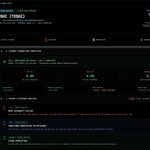
toshi:native
TOSHI operates as the primary cultural asset on the Base network, commanding a $47.5M market cap and over $905k in pool liquidity. 🧵
Retail market perception treats it as a fully decentralized, immutable token. Our latest Sentinacle run largely validates this baseline with a 95/100 Trust Score.
The asset clears standard DeFi smart contract audit parameters effortlessly. Dynamic transaction simulation confirms 0% buy/sell taxes, no self-destruct code, and clean, unhindered sell routing.
But the forensic dissection reveals a structural nuance in the EVM bytecode.
The deployer has officially renounced contract ownership. This successfully locks out standard unilateral admin privileges like pausing trading or altering base rules.
Yet, our analysis engine flags a High-Severity vector: "Mint Authority Active."
While the primary admin role is burned, the minting function remains structurally active and supply is classified as inflatable. If a secondary privileged role was assigned prior to renunciation, the capacity to issue new tokens persists.
For an LP or risk manager, this highlights a critical distinction in any rigorous crypto risk assessment. "Ownership renounced" is not an automatic guarantee of a permanently immutable token supply.
How are institutional liquidity providers weighing this residual contract architecture against TOSHI's dominant on-chain momentum?
Telemetry only. NFA. #SmartContracts #OnChainAnalysis #Base #DeFi #CryptoSecurity #OnChain #SmartContracts #RugPull #DeFiRisk


This is the surface-level read. For the complete architectural analysis — contract-by-contract dissection and risk parameters — explore the full report: → sentinacle.com
1
24