
assistant professor of computer science @hseas, learning theorist, 🎹
Joined April 2020
- Tweets230
- Following220
- Followers2.2K
- Likes911




Pinned Tweet
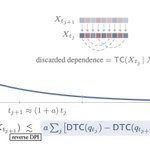
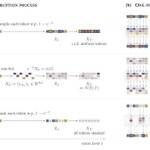
🚨 We finally have a better understanding of how the different paradigms for discrete diffusion compare!
In new work with Liye Wang, we prove a quadratic separation between the parallel generation capabilities of uniform and Gaussian diffusion relative to unmasking! 1/
We figured out a much simpler method for training one-step generative models from scratch! Advances Pareto frontier for quality v FLOPs and strips out the engineering bells and whistles that made these so finnicky to train. Check out our codebase and try them out for yourself!

Today, we introduce Priming Models, a new paradigm for training one-step generative models from scratch.
No diffusion teacher. No flow map. No CFG. No JVP.
We believe this work will challenge how we think about building one-step models.
Joint work with @sitanch, @du_yilun, @parkwbin03, Bohyung Han.
🔥 1.19 FID one-step on ImageNet 256×256 while using substantially less compute, e.g., 12X less than Drifting-B, 6X less than Drifting-L
🎨 Scales to text-to-image generation (GenEval 0.82)
🤖 World modeling on RT-1 / Bridge-V2
Priming Model is built on one core message: [Reconstruction pretraining --> Distributional post-training].
Recently gave a lecture on one-step models in my course (sitanchen.com/cs224/f26). Exciting to see how far the community has come since pioneering early works of Luhman^2, Salimans-Ho, and others, and to see such a simple approach do the trick!
🚨 Thrilled to be co-organizing a Simons Institute semester-long program on diffusions and flows with @joanbruna, Sinho Chewi, @KonstDaskalakis, @ArnaudDoucet1 in Fall '27!
The call for Simons postdoctoral research fellowships for the program is out now, more info below ⬇️ 1/3
Our dream is to bring together the different communities (prob/stats, physics, TCS, robotics, AI4Science, systems, etc etc) that have been working on these topics and map out new priorities for the field
Talks from our "preview workshop" this summer: youtube.com/playlist?list=PL…

Link to postdoc applications: simons.berkeley.edu/particip…
Program info: simons.berkeley.edu/programs…
Hard to imagine what the world will look like in '27, but I'm bullish that diffusion / flows will be around for a long time :)
Collaborating with Raghu and seeing his courage tackling truly hard problems (including one which has yet to be felled by the agents..) was a formative experience from my grad school years. A beautiful essay filled with hope in crazy times!

From my friend and guide for a long time, a timely essay: terrytao.wordpress.com/2026/…

Sitan Chen retweeted

🔍 Can we learn the physics of a system when we can barely control how we collect data? What if that system is intrinsically quantum? ⚛️
Surprisingly, YES!
I’m excited to share our new work, Out-of-Control Hamiltonian Learning.
We show that even with very limited control, hardware-native operations let us collect data rich enough to recover a remarkably complete picture of a quantum system’s interactions. 💎
It also raises a bigger question: does the data our devices already collect hold enough information to reveal the underlying physics?
Paper: arxiv.org/abs/2610.06709

Exciting to see the community engage with our work, and proud of Aayush for responding so thoughtfully and comprehensively to the FAQ’s about the results. This is the kind of nuanced discourse that we need more of on this site 🥲

Hey! Thanks for reading our paper!
Our appendix has a brief discussion explaining why the code approximates the exact MH implementation and why this approximation is reasonable, so I'll elaborate here.
Since our proposal prompt inputs the current partial trace, to calculate the acceptance probability for MH from x to x', you need to calculate the reverse transition log-probability from x' back to x, which requires a separate forward pass from the one that generates x' from x. Admittedly, our implementation for MCMC is expensive as it currently isn't batched, so instead of one LLM call per MCMC step, having two LLM calls becomes a bit costly. So as a first approximation, we used a deterministic likelihood-improving acceptance rule.
To validate this inexactness, we can still estimate the KL divergence between this process that generates the boosted traces and the base model. I've attached Figure 5 from our paper here, but this shows the KL divergence gap declines with more MCMC steps, so crucially the desired effect of the trajectories becoming progressively more on-policy is maintained.
A similar story is the case for the enforcement of the hard constraint. The underlying assumption is that instruction-following enforces the hard constraint in-context, but again, empirically this is inexact. A more exact implementation would have a consistency check (i.e. small LLM check on partial trace ~ privileged info consistency), but again, repeated API calls can be costly. As a way around this, we had post-generation filtering, where rerun on incorrect MCMC traces outside instead of inside the loop, which results in around 95% correctness on average.
So in summary, these approximations maintain the effect we care about, which is much more on-policy trajectories with consistency well sustained. In other words, an "existence proof" that an algorithm like this is worth doing.
There is most certainly room for much better practical efficiency; the approximations we made were **one** route to making the algorithm doable, but incorporating batching and partial-trace independent proposals is one step towards undoing this inexactness and making our current algorithm run a lot faster.

Check out Aayush’s thread about his awesome new work on using MCMC methods to close the gap between SFT and RL posttraining!
Sitan Chen retweeted

One of the worst forms of brainrot AI has cultivated is pessimism about basic research, ie the idea that important work can only happen inside a frontier/neo lab and only with 10k+ GPUs, so the rest should not even bother. What a bleak way to think about science. And it's false.
Sitan Chen retweeted

Finally here - Submitted PHA-4 to arXiv: drive.google.com/file/d/1m3g…
Sampling SK all the way to beta < 1 building on the free-probability and cavity interpolation theory developed in PHA-3, with the amazing @oldheneel and @jtnshi 1/n
Sitan Chen retweeted

There is growing interest in generating discrete data via diffusions. If you have an approach, consider benchmarking it on generating uniform solutions of (random) k-SAT. It is a clean example in which continuous beat discrete diffusions and the diffusion process matters.

Finally, please also check out these amazing concurrent works by @dmitrievdaniil7, Zhihan Huang, and Yuting Wei, as well as by Martin Wainwright!
arxiv.org/pdf/2608.23554
arxiv.org/pdf/2608.28949
Lots of important and surprisingly crisp mathematical questions in this space! 7/7
I would be remiss not to also mention the exciting work of Zhiyang Xun and Eric Price arxiv.org/abs/2604.10857 from earlier this year which inspired the lower bound instance!
