
Assoc. Professor. Interests: plant-microbe interactions, genomics, fungal genetics, effector biology, anthracnose, Colletotrichum, population genetics
University of Salamanca, Spain
Joined August 2012
- Tweets4K
- Following2.5K
- Followers1.7K
- Likes20.5K





Pinned Tweet
Its finally out!! In this new study we demonstrate how gene duplication facilitated the evolution and specialization of two key effectors from #Colletotrichum used to infect maize. sciencedirect.com/science/ar…
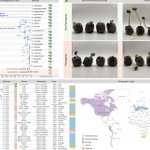
happy to share our new work. biorxiv.org/content/10.64898… we show that SV, TE, and lineage-specific pseudogenization are important features of genome evolution in #Colletotrichum graminicola. We also applied #machine_learning approaches to an agriculturally biological problem.

And here we go again.. teaching Plant Pathology and MPMI to our biotechnology master students. @investigausal. More #Colletotrichum fans.


Serenella A. Sukno retweeted

Finally our new preprint is out!
We explore how structural variation, transposable elements and lineage-specific pseudogenization shape #genome evolution in #Colletotrichum graminicola 🍄🌽 biorxiv.org/content/10.64898…

Serenella A. Sukno retweeted

📢 PhD opportunity in Málaga!
We are looking for candidates to apply for an FPU 2026 fellowship and join the Type3 Secretion Lab at IHSM-UMA-CSIC
We study the molecular mechanisms underlying plant–bacteria interactions
🔗 aei.gob.es/ayudas-fpu-2026
🔬 type3secretionlab.es
#PhD
Serenella A. Sukno retweeted

BREAKING: OpenAI might have stolen another major proof.
In a detailed Mastodon post, which I report in full in the comments, Andreas Thom presents several pieces of evidence suggesting that OpenAI may have trained Astra on conversations in which he and Gábor Kun were working on Gromov’s soficity conjecture, one of the ten problems OpenAI later announced Astra had solved.
I know Andreas. We met several times early in our careers. He is an exceptional mathematician, a leading expert on sofic and hyperlinear groups, and one of the most respected scholars in the field. He has spent two decades working on this problem.
If his account is correct, this is not a minor dispute over attribution. It would mean that unpublished human work was absorbed into a model and then presented to the world as a breakthrough by the model itself.
And if the allegations raised by Levent Alpöge, Tristan Buckmaster, and now Andreas Thom are all substantiated, we are no longer looking at isolated incidents.
We may be looking at one of the greatest intellectual scandals in the history of science.
AI is not discovering new mathematics.
AI is stealing human discovery.

Serenella A. Sukno retweeted

Two faculty searches at Berkeley Plant & Microbial Bio @PMB_Berkeley Submit applications by Sept 30
Plant Responses to Environmental Changes aprecruit.berkeley.edu/JPF05…
Plant-Microbe Communities aprecruit.berkeley.edu/JPF05…
Serenella A. Sukno retweeted

🚨 We are recruiting three PhD students to join EdeLab at Université Laval in summer 2027!
The projects will explore:
🧬 Evolution of ankyrin-repeat effectors in gall-forming plasmodiophorids
🦠 Microbiome-mediated insect adaptation to extreme environments
🍃 Leafhopper effectors at the plant–insect interface
Applications are welcome in English or French until September 15, 2026. Full details are available in the attached PDF.
Please share! 🔁
1/2

ALT description os position 1

ALT description os position 2

ALT description os position 3

ALT description os position 4
Avery nice paper! Recurrent Chromosome Destabilization Through Repeat-Mediated Rearrangements in a Fungal Pathogen academic.oup.com/gbe/article…

Serenella A. Sukno retweeted

The amount of basic research done in industry is nowhere near the amount done in universities.
At various times, there have been industry labs that had fundamental research activities and have made important scientific contributions.
Examples in information technology include Bell Labs, IBM Research, Xerox PARC, GE, Phillips, NEC, and several other. That disappeared in the 1990s.
Microsoft Research picked up the torch in the 2000s, followed (to some extent) by Google and then Meta (for about a decade until recently).
But their innovations almost always built on top of academic work, and certainly profited from the whole research ecosystem.
Serenella A. Sukno retweeted

“I sometimes think about how easy it is for a nation to slip into complacency and ruin after decades of basking in the sun. Since science is the engine of prosperity, nations that turn their backs on science and technology eventually enter a downward spiral.”
— Michio Kaku

Serenella A. Sukno retweeted

The Alonso-Stepanova lab at NCSU is hiring a postdoc to build a programmable, reversible transcriptional switch (SCRIBE) to control gene expression in plants 🌱
🔬 Project: nsf.gov/awardsearch/show-awa…
💼 Apply: jobs.ncsu.edu/postings/23284…
Please RT & share!

USDA accelerates plan to close its flagship scientific campus | science.org/content/article/…

Serenella A. Sukno retweeted

NICE study shows that some #Colletotrichum species can infect plants without melanised appressoria, revealing a previously unknown invasion strategy (NMAE) and redefining how these important fungal pathogens enter their hosts.
nature.com/articles/s41467-0…
#evolution #plantpathogen

A maize-associated Rhizobium miluonense fixes nitrogen in free-living conditions through an exopolysaccharide-dependent biofilm mechanism microbiologyresearch.org/con…

Cracking the wall: the fungal cell wall assembly protein ECM33 is a promising molecular target in powdery mildew fungi academic.oup.com/hr/article/…

Interspecies hybridization as a route of accessory chromosome origin in fungal pathogens | mBio journals.asm.org/doi/10.1128…
Serenella A. Sukno retweeted

📌 PhD Funded Position in Phytopathology and Plant Disease Epidemiology at INRAE–JKI, France & Germany 🇩🇪, See details at: wp.me/pbv48T-dPS

Serenella A. Sukno retweeted

A funded PhD position for studying wheat pathogen adaptation to climate factors is open in my lab @INRAE_France @UnivParisSaclay #BIOGER in collab.
@JKI_Bund (Germany), with a start planned for autumn2026 ▶️ eng-bioger.versailles-saclay…

Serenella A. Sukno retweeted

A year ago @Nature published a paper on the Neolithic Fujia cemetery in China. It became one of the strongest archaeogenetic arguments for ancient matrilineality. So what has appeared since then?
Fujia dates to about 2750 to 2500 BCE. Researchers studied DNA from 60 people buried in two cemeteries. Each cemetery almost perfectly matched a separate maternal line. In the northern cemetery everyone had the mitochondrial haplogroup M8a3. In the southern cemetery almost everyone had D5b1b. At the same time the male Y chromosome lines were diverse. In other words people seem to have been buried not by paternal descent but by maternal belonging. Radiocarbon dates suggest that this system lasted for about 250 years or at least ten generations.
Over the past year many new papers on ancient DNA and social organization have appeared. But most of them add to the picture of patrilineality. Male lines. Female exogamy. Status passed through the father’s line.
Still there is one important new example. Çatalhöyük in Anatolia. In a 2025 study researchers analyzed 131 genomes from 35 houses in this Neolithic settlement. They did not find clans like at Fujia. But they did find a stable role for maternal lines inside houses. Daughters probably stayed connected to the house more often. Adult sons may have left. Female child burials also received more grave goods.
At the moment it seems that matrilineality really did exist in the ancient past. And now we can see it not only through ethnography but also through DNA. But it does not look like a universal stage of social development. It looks more like a rare local and very interesting alternative to much more common patrilineal models.
nature.com/articles/s41586-0…
science.org/doi/10.1126/scie…
#aDNA #matrilineality #patrilineality #pedigree
