








Deep retweeted

Assessment of cerebral bood flow is one of the central pillars of my field of Neuroanaesthesiology and Neurocritical Care.
And where I work, we regularly use non-invasive methods like Transcranial Doppler and Near-Infrared Spectroscopy to try our best to find out how well the blood is flowing in the brain.
"Try our best to find out".
Anyone doing TCD, knows how difficult it is to even get a window to peep inside the brain with an USG probe.
And it still only measures the velocity and direction of the blood flowing in an artery.
Non-invasive accurate assessment of cerebral blood flow is still an area of active interest and research.
So when I see someone selling something that claims to give a picture of how blood flows inside the brain, I only wonder at the state of science and rationality in our society.
And at the consumer so gullible and blind to the scientific method, that anything fancy looking is automatically assumed to be accurate.
The sellers are just selling because there's a market.
The consumer needs to get smart first.

Dear Concerned Indian Doctors,
I see your rage against Temple on X. I have a few points
to make:
1. First and foremost, a business lesson: if Temple were a scam, and any of what we said weren't true, people would know it in just a few days of using Temple. We have 14-day, no-questions-asked returns (which even Apple doesn't offer in India). If the product doesn't work, it fails out of the gate and the company dies before recovering a tenth of its R&D.
2. We have already spent $30m building Temple, $20m out of which is my own money. Selling a few thousand devices recovers a small fraction of this investment. A scam that pays nothing is not a scam anyone would run.
3. I left the Eternal CEO role to chase purpose with Temple. This is not about money. I have enough of it to last for generations. My incentives are fully aligned with getting the science right. I am not staking a reputation earned over 20 years on making a quick buck.
4. Our employees bought into our round a few months ago. The round we're raising now is mostly our customers. Scams don't build that cap table.
5. Most wearable companies start with internal studies. Whoop shipped its band in 2015, and the first published validation followed a few years later. We hold ourselves to a higher standard; pre-prints are a step prior to peer reviewed publications, and they are coming up.
6. At some point you have to stick your neck out and say: we believe in our science, and the product is now valuable enough for people to pay for and use. We believe we are there. More validation continues in public.
7. We are confident that we are building something that the world is going to be positively astonished with. We stand by our science and our methods. Each of our claims is easily verifiable by individuals and institutions alike, and you will see a lot of independent studies come up on their own when the device becomes available to use.
Last but not the least, the most ground breaking features in Temple are not even public yet. And some of them, thankfully, have nothing to do with doctors 🤭
Hope this addresses some or all of your concerns. If not, keep raging 😘🤗
Deep retweeted

I'm a cardiologist. Something just happened today that I genuinely did not see coming — and it could change the future of preventive medicine more than anything I've written about on this platform.
Midjourney — the AI company that became famous for generating images from text prompts — just announced a medical hardware division and unveiled a working prototype of a full-body scanner unlike anything that's ever existed.
It's called the Midjourney Scanner. And it works like this.
You step into a shallow pool of water. You stand on a platform that slowly descends — about two inches per second — through a ring containing roughly half a million tiny ultrasonic transducers, each the size of a grain of sand. Every one of them acts as both a speaker and a microphone, sending ultrasonic waves through your body from every angle and recording what comes back.
60 seconds later, you step out. The scan is done.
No radiation. No magnets. No claustrophobia. No IV contrast. Just sound, water, and an almost incomprehensible amount of computing power — roughly 2 petaflops processing 17 gigabytes per second of raw acoustic data — reconstructing a 3D map of your entire internal anatomy down to half a millimeter resolution.
Organs. Tissues. Blood vessels. Bones. Muscle. Fat distribution. All segmented by AI in real time.
As a cardiologist who has spent months writing about how the standard screening playbook misses the majority of future heart attacks — this is the technology I've been waiting for without knowing it existed.
Here's why this matters for the future of your heart.
Right now, getting a detailed look inside your cardiovascular system requires either a CT scan (radiation), an MRI (magnets, claustrophobia, 45-60 minutes, $1,000+), or a coronary CT angiogram (radiation, IV contrast, limited availability). These are powerful tools. I order them regularly and they save lives.
But they're reactive. You get them when something is already suspected. They're expensive. They're uncomfortable. And for most people, they happen once — maybe twice — in a lifetime.
Imagine instead: a 60-second scan with no radiation that you could repeat monthly or quarterly. Tracking cardiac structure over time. Watching body composition shift. Detecting changes in organ size, fluid distribution, or vascular architecture before symptoms ever develop. Building a longitudinal dataset of YOUR body that AI can analyze for patterns no single snapshot would reveal.
That's what Midjourney is building toward.
The company plans 50,000 scanners worldwide over six years, with capacity for a billion scans per month. The first location — the "Midjourney Spa" in San Francisco — opens at the end of 2027 with 10 scanners alongside saunas, cold plunges, and a gym. The scan costs a few dollars. The experience is designed to feel like wellness, not medicine.
The technology is built on Butterfly Network's ultrasound-on-chip platform — 40 modules per scanner — combined with Midjourney's own AI segmentation and reconstruction stack. David Holz, the founder, claims the system aims for image quality comparable to MRI in many aspects but at nearly 100x the speed with zero radiation.
Now the caveats — because I'm a physician and the caveats matter enormously.
This is a Gen 1 prototype. About a dozen people have been scanned so far. Current scan time is actually closer to 20 minutes, not 60 seconds — the system is bottlenecked by bandwidth and reconstruction algorithms. The 60-second target is aspirational for future hardware generations.
It is not FDA-cleared for diagnostic use. Midjourney is starting with body composition maps — a category below diagnostic imaging in the regulatory hierarchy. The path from "beautiful 3D body scans" to "clinically validated diagnostic tool that your cardiologist can act on" runs through years of clinical trials, comparative studies against MRI and CT gold standards, and FDA review.
No independent clinical validation has been published. The imaging claims come from Midjourney's own demonstrations. Comparative data against established modalities does not yet exist.
And the privacy implications of full-body internal scans at planetary scale — a billion scans per month — is a conversation that hasn't even started yet.
So I want to be precise. This is not ready for clinical medicine today. It may not be ready for years. Many ambitious medical hardware projects have failed in the gap between prototype and product.
But.
The fact that a working prototype exists — producing real segmented 3D anatomy from sound waves and compute alone — means the physics works. The engineering works. The question is no longer "is this possible" but "how fast can it be validated and scaled."
And if it is validated — if the resolution holds up against MRI, if the AI segmentation proves reliable, if the regulatory path clears — then what we're looking at is the most significant new imaging modality in 50 years.
For my entire career, preventive cardiology has been limited by the fact that seeing inside the body is expensive, slow, uncomfortable, and infrequent. We catch disease late because we image rarely. We image rarely because imaging is hard.
A 60-second, no-radiation, spa-based full-body scan that costs a few dollars would demolish every one of those barriers.
I've written about AI detecting inflamed arteries. About gene editing curing cholesterol. About GLP-1 drugs rewriting metabolic medicine. About cellular reprogramming reversing aging.
This is the missing piece: the ability to see inside every human body, routinely, safely, and affordably — so all of those interventions can be deployed before the disease arrives instead of after.
The company that taught AI to generate images from imagination just built a machine that generates images from the human body.
The future of medicine showed up today from the last place anyone expected.


Deep retweeted

This speed reading training starts at 300 words per minute and end at 900 wpm.
Can you read them all?
teapawt.net/fluxfolio_/status/2011…


Deep retweeted
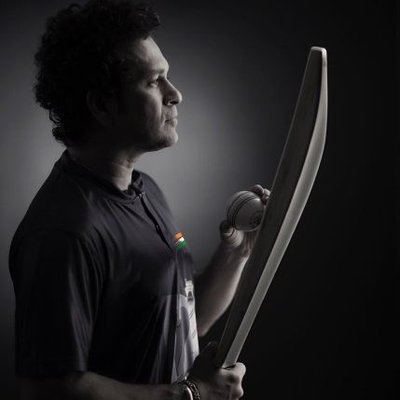
Operation Sindoor had a team of over 1.4 billion rising in unison. Strong resolve and measured restraint, Team India!
Remarkable teamwork across all levels led by tireless efforts of Hon. PM @narendramodi ji and his team and the three defence forces.
A special mention to the brave rakshaks and our citizens living in border towns and villages.
Jai Hind! 🇮🇳
@adgpi @IndiannavyMedia @IAF_MCC
@PMOIndia @HMOIndia @SpokespersonMoD @MEAIndia
#OperationSindoor


Deep retweeted
India demonstrated both the strength of its layered air defenses—many indigenously built, alongside Israeli and Russian systems—and its ability to penetrate Pakistan’s Chinese-made defenses like the HQ-9/P, LY-80, and FM-90.

A @makeinindia 🇮🇳 System.
The #Akashteer Air Defence System, an indigenous command-and-control platform developed by Bharat Electronics Limited, has proven mega impactful for India by neutralizing hundreds of Pakistani drones and missiles during the May 2025 India-Pakistan conflict, achieving a 99% interception rate with no civilian casualties across 15 targeted locations, including Jammu and Srinagar.
Its automated, multi-layered defense, integrating Indian Army and Air Force sensors with systems like Akash and S-400, showcases India’s technological prowess under the Atmanirbhar Bharat initiative, reducing reliance on foreign systems.
The system’s success in Operation Sindoor not only strengthened India’s deterrence along the Line of Control and International Border but also positioned Akashteer as a global export contender, with its “live expo” performance attracting international buyers and boosting India’s defense industry.
By ensuring regional stability and reinforcing India’s leadership in air defense technology, #Akashteer has become a cornerstone of national security in 2025.
@GoJammukashmir @elonmusk @alexisohanian @Benioff
@wolfryan @StockMKTNewz @KyleSonlin @SelfTSuccess @WOLF_Financial
@BillAckman @StealthMedical1 @JDVance @DefiyantlyFree @wcdispatch @vineetjain1101 @BJdichter @CESMII_SM @garrytan @GrantCardone @DavidSacks @chamath @Jason @balajis @SubramanianKri @ShamikaRavi @brockpierson @ChrisHarrisADG @zahacktanvir @thebritishhindu @zahacktanvir @ianmiles @bennyjohnson @DonaldJTrumpJr @BillAckman @SamridhJoshi @Cloudwatch199
Deep retweeted

Huge: Something that most people (including me) missed yesterday but spotted by @detresfa_—the IAF also struck an air defence site in Karachi’s Malir Cantt. This campaign just keeps getting bigger with more details emerging.


Deep retweeted

Tom Cooper is one of the most respected Combat aviation historians in the world. Austrian analyst, prolific author, and expert on air wars from the Middle East to South Asia.
So when he calls India’s air campaign a clear-cut victory — the World listens.
#OperationSindoor

Deep retweeted
War is always a test—not just of military hardware, but of actual combat effectiveness. In response to the April 22 terrorist attack in Kashmir, India launched Operation Sindoor, striking nine terrorist infrastructure targets in Pakistan. The operation didn’t just send a strategic message—it revealed a tactical truth: India’s domestically produced weapons worked. China’s did not.
India’s growing defense self-reliance, driven by the “Make in India” initiative, has led to a major leap in indigenous production—from 32% of the Army’s ammunition needs met domestically in 2014 to 88% in 2024. From missiles like BrahMos and Pinaka to radars and artillery systems, Indian-made equipment proved itself in live combat. That’s not just a national achievement—it’s a model of military readiness for any nation facing modern threats.
Pakistan, meanwhile, continues to rely heavily on Chinese-made systems like the HQ-9/P, LY-80, and FM-90—systems that repeatedly fail to stop or detect precision strikes. In a real fight, performance matters more than procurement deals.

🚨How @makeinindia Arms Production is key to 🇮🇳 and Global Security🚨
India primarily procures its arms from Russia, France, the United States, and Israel. Pakistan’s main arms supplier is China.
🇮🇳 While Russia has historically been a major supplier, India’s arms imports also include significant contributions from France, the United States, and Israel.
In the financial year 2023-24, India’s defense production reached a record ₹1.27 lakh crore (approximately $15 billion), marking a 16.7% increase from ₹1.09 lakh crore in 2022-23. This growth is driven by the government’s “Make in India” and “Aatmanirbhar Bharat” initiatives, which emphasize indigenous manufacturing to reduce reliance on imports. The defense sector produced a wide range of equipment, including artillery guns, tanks, missiles (e.g., #BrahMos, #Pinaka), aircraft (e.g., #Dornier-228), and radars, with 88% of the Indian Army’s ammunition needs met domestically in 2024, up from 32% in 2014.
🇵🇰 China is the primary arms supplier for Pakistan, accounting for a majority of its weapon imports.
@GoJammukashmir
@BillAckman @StealthMedical1 @JDVance @DefiyantlyFree @wcdispatch @vineetjain1101 @BJdichter @GrantCardone @DavidSacks @chamath @Jason @balajis @SubramanianKri @ShamikaRavi @brockpierson @ChrisHarrisADG @zahacktanvir @thebritishhindu @EYakoby @DrEliDavid @ianmiles @bennyjohnson @DonaldJTrumpJr @BillAckman @SamridhJoshi @Cloudwatch199 @major_pawan @Manik_M_Jolly @majorgauravarya @RDXThinksThat @ShirionOrg @AbhijitChavda @aravind @DrSonuBhaskar @SpencerGuard @khushsundar


Deep retweeted

A friend of mine, who majored in history, memorized all 500 LeetCode questions and just landed a software engineering job at FAANG. 😳
Deep retweeted

These are the 15 biggest tournaments in tennis.
Novak Djokovic has won each and every single one.
Meanwhile, Rafael Nadal is currently missing 3 and Roger Federer retired missing 3 as well.
It hasn’t even been a question for years now, Novak Djokovic is clearly the GOAT.

Deep retweeted

“@BillGates says a three-day work-week ought to be possible”. In other words, if Mr Gates and Mr Narayana Murthy sit down together and work out a compromise, we will end up exactly where we are, with a five-day work week!
hindustantimes.com/technolog…

Deep retweeted

In India, if you fall in the highest tax slab, you will roughly pay 33% as direct taxes.
Add another (roughly) 20% indirect taxes to it.
You will quickly see: that India becomes one of the highest taxed nations in the world.
We often compare this to Nordic countries, where the taxes are around 55%. But, you have to account for free healthcare, education and social security (this is availed by the rich, middle class and poor alike).
Now, the thing is that rich folks in India have options now:
Many countries (eg. Dubai, Singapore, Malta, Greece) are all offering better tax regimes.
Or benefits like stronger passports. For eg. Malta, their strength of passport allows 180+ countries without a visa.
Unless you want to sit in India and do political quid-pro-quo (via taking loans), there is honestly not much incentives for the rich to stay back.
The rich have ALREADY started to tax shop.
And, when they leave, the TAX burden falls on the people staying back.
Deep retweeted

🚀🌑 Cheapest Moon Mission
🇮🇳 ISRO Chandrayaan3: $73 Million 🤯
🇷🇺 Roscosmos Luna 25: $200 Million
🇨🇳 CNSA Chang's 3: $300 Million
🇺🇸 NASA Apollo 10: $2.9 Billion
@ISRO be like drinks on the house ☕️
(USD, Inflation Adjusted)

Deep retweeted

✈️ @IndiGo6E 🙏🏼 Rules are fine, but please have some exceptions.
An #Indian Army Jawan 🇮🇳 travelled to Gauhati via Kolkata from Nagpur by #Indigo flight 6E812 this morning. His checked in luggage was 4 kg more than permitted, while in hand baggage he just had his meal box, which means certainly less than 5 kg.
The Indigo ground staff at #Nagpur demanded ₹2200 charges for extra luggage, this Jawan pleaded that he has just ₹1000 that he'll require for travelling to his post from Guahati by bus & other expenses.
My friend CA Raju Sharma who happened to be at the Airport joined the Jawan in requesting Indigo staff to consider his situation as he doesn't have cabin baggage. They didn't allow him to take 4 kg luggage from main baggage in hand as staff said this will delay the flight. When Mr Sharma repeatedly requested staff to consider Jawan's genuine situation, the staff replied, "if you are so concerned, why don't you pay for him?".
Proud of CA Shri Raju Sharma 🫡 who paid from his pocket this charge of ₹2200 so that the Jawan boarded his flight.
Team Indigo - the purpose of this post is not for any action on Nagpur staff, but to have some policies considering such situations.
Every time a Jawan in such a situation may not find Raju Sharma to help.
🙏🏼🙏🏼🙏🏼 – at Nagpur, India


Deep retweeted

Tesla, $TSLA, to discuss factory plan for new $24,000 car with India commerce minister, per Reuters.