
Faculty@UToronto CS, researcher @cognition, @VectorInst faculty, ex-@openai Algorithms, Optimization, Learning.
Mountain View, CA
Joined February 2009
- Tweets608
- Following1.3K
- Followers2.2K
- Likes4K




Sushant Sachdeva retweeted
I want to highlight 2 theorists who have distinguished themselves as true scholars:
Sankeerth Rao Karingula (@sankeerth1729) & Shachar Lovett
They have done exceptional work in simplifying and expositing recent breakthroughs on Komlos, 3SUM, etc.
They have my highest respect.
Sushant Sachdeva retweeted

We discovered a sophisticated recording device that was hidden inside one of our offices. We used our models to understand the device and where it had come from, identifying that a specific employee had planted it a few days earlier. We referred the matter to the FBI, and we’re grateful to the agents and prosecutors who moved quickly to make an arrest. The FBI’s investigation is ongoing and we will continue to support their work.
At this time, we have no indications of this individual inappropriately accessing or exfiltrating model weights, source code, or customer data. The employee was terminated.
We take protecting our technology, data, and people seriously, and as a matter of national importance. Our security program is designed to protect against a wide range of threat actors, from insider risks to cybercriminals to nation states, and this case is an example of how AI can help address these sophisticated security threats.
When you’re so invested in the Flock story that you miss the timeline:
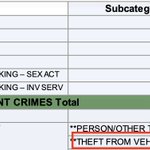
flock installation started March 2024.
theft-from-vehicle was already down 45% YTD by Feb. 2024 👇( sanfranciscopolice.org/sites…)
Thanks @SFPD
sanfranciscopolice.org/news/…
@pitdesi @kimmaicutler


💯 This is pretty certainly the future of tcs/maths.
We should prepare for it as communities and clearly articulate/incentivize the kind of works our venues want to promote.

The short idea:
Mathematics will split into two somewhat different domains: applied math will become the fabric of all engineering and sciences, where theories and algorithms will be built and verified automatically and on-the-fly. It will become a fundamental infrastructure.
Pure math will transform into "high math," addressing the most essential questions of all time, such as P != NP. This will focus on a few central, high-level questions and will be driven mostly by human interests, requiring huge resources and centralized investments.
Physics is a good model: we have applied physics with many practically relevant questions and tasks, while the part of physics concerned with the deepest questions of reality - particle physics and astrophysics - has little economic relevance but requires huge investments.
Sushant Sachdeva retweeted

>be me
>discover effective altruism
>apparently normal charity is inefficient
>why donate to random sad thing when spreadsheet can tell you optimal sad thing
>fair enough
>buy mosquito nets
>save lives
>numbers look good
>feel powerful
>couple years later
>someone asks an innocent question
>why only count people alive today
>huh
>future people matter too
>obviously
>my grandchildren shouldn't matter less just because they haven't spawned yet
>reasonable.jpg
>keep following logic
>what about their grandchildren
>also yes
>what about people in 500 years
>sure
>5000 years
>why not
>500 million years
>starting to get weird but morality is morality
>open calculator
>humanity could survive for an astronomically long time
>could colonize galaxy
>could have trillions upon trillions of descendants
>maybe digital people too
>maybe simulated civilizations
>maybe dyson spheres full of happy uploaded minds
>calculator starts smoking
>realize currently living humans are rounding error
>8 billion people suddenly looking extremely beta
>future contains potentially 10^something people
>can't even fit beneficiaries in google sheets
>new moral priority unlocked
>protect the long-term future
>stop thinking in units of "people helped"
>start thinking in "fraction of cosmic endowment preserved"
>malaria?
>terrible
>but only kills existing humans
>AI extinction could delete the entire light cone
>nuclear war could permanently derail civilization
>bad institutions could lock in terrible values for ten million years
>someone invents wrong constitution in 2140
>quadrillions suffer
>better fund governance workshop now
>friend says maybe we should improve hospitals
>explain opportunity cost
>friend says hospitals are full of actual sick people
>explain scope sensitivity
>friend stops inviting me to dinner
>need to decide what to fund
>easy
>expected value
>suppose project has one in a million chance of preventing extinction
>sounds tiny
>but extinction destroys 10^50 future lives
>multiply
>mother of god
>$10 million project has expected value of several galaxies
>charity evaluation complete
>someone asks where the one-in-a-million number came from
>expert judgement
>which expert
>us
>how calibrated
>extremely thoughtfully
>reduce estimate to one in ten million to be conservative
>still beats curing cancer by 38 orders of magnitude
>epistemic robustness achieved
>someone says maybe project doesn't work
>assign 20% chance
>still astronomical
>maybe project makes problem worse
>assign 5% chance
>still astronomical
>why 5
>because 30 felt pessimistic
>publish 46-page report
>contains seventeen sensitivity analyses
>every sensitivity analysis begins after assuming intervention has positive sign
>critic says you're multiplying enormous hypothetical stakes by extremely uncertain probabilities
>yes
>that's literally why it's important
>critic says the uncertainty might be structural rather than numerical
>make probability smaller
>critic says no, I mean maybe your model is wrong
>make probability smaller again
>critic begins rubbing temples
>discover AI safety
>perfect longtermist cause
>AI might kill everyone
>or create utopia
>or seize galaxy
>or tile universe with paperclips
>or create billions of conscious software minds
>finally a problem with numbers big enough for me
>start AI safety nonprofit
>mission: prevent dangerous AI
>hire smartest people available
>smartest people immediately start building better AI to understand dangerous AI
>interesting
>we must understand capabilities to understand safety
>we must scale models to study alignment
>we must race ahead so less responsible actors don't get there first
>we must deploy systems to learn how deployment can go wrong
>we must build the thing quickly because building the thing quickly is dangerous
>outsider asks why the people most worried about AI apocalypse all work at AI companies
>complicated field
>company releases stronger model
>very concerned
>company begins training even stronger model
>extremely concerned
>company raises $14 billion
>concern reaches unprecedented levels
>need to influence government
>future is at stake
>normal democratic process too slow
>politicians don't understand exponential curves
>public doesn't understand x-risk
>experts must guide them
>who counts as expert
>people who understand x-risk
>who understands x-risk
>our friends
>someone objects that this seems politically convenient
>explain we're representing future generations
>future generations unavailable for comment
>develop concept of value lock-in
>terrifying possibility that one ideology controls civilization forever
>therefore extremely important that civilization adopts correct values before lock-in
>whose values
>let's circle back
>begin with impartial morality
>end with small group of people deciding what quadrillions of hypothetical beings would want
>beautiful arc
>meanwhile actual humans keep doing annoying things
>voting wrong
>having parochial attachments
>loving family more than strangers
>caring about local community
>getting upset when told their suffering is cosmically negligible
>evolutionary biases everywhere
>explain that moral intuition cannot be trusted
>except intuition that future digital people count
>and intuition that extinction is uniquely bad
>and intuition that our probability estimates are sane
>and intuition that our institutional choices improve the future
>those intuitions survived peer review
>someone donates $5k to local homeless shelter
>inefficient
>could have funded 0.0000000000003% of an AI governance researcher
>think of all the simulated people you just killed
>okay maybe don't phrase it that way publicly
>PR team says "future generations deserve a voice"
>much better
>journalist asks what longtermism means
>say "future people matter"
>everyone agrees
>great
>journalist asks what follows from that
>well technically we should redirect enormous resources toward low-probability interventions affecting astronomical futures
>journalist raises eyebrow
>return to "future people matter"
>motte has entered the chat
>critic: of course future people matter
>me: glad we agree
>critic: I don't agree that your institute knows how to help them
>me: why do you hate our grandchildren
>eventually notice uncomfortable implication
>if future value dominates everything
>then helping people today mostly matters through effects on future
>education matters because future institutions
>health matters because future productivity
>democracy matters because future trajectory
>human beings slowly become instrumental variables in their own moral philosophy
>see starving child
>feel compassion
>check spreadsheet
>child's direct welfare contribution negligible
>but perhaps childhood nutrition improves national institutional quality
>compassion restored
>tell myself this is impartial altruism
>one day assistant asks obvious question
>"how do you know your intervention actually improves the far future?"
>silence
>open spreadsheet
>increase column width
>add confidence interval
>assistant asks again
>"no, I mean how do you know the sign is positive?"
>stare into cosmic light cone
>10^50 people staring back
>none of them exist
>none of them can tell me
>none of them can falsify my assumptions
>realize I have invented the perfect constituency
>infinitely important
>completely silent
>and always represented by me
Sushant Sachdeva retweeted

I spent ~5 years at OpenAI.
You don’t need to believe in AI doom to fear the next decade - or AI utopia to be thrilled about its potential.
Here’s my case for sane AI regulation:
*AI Pragmatist Manifesto*
AI could compress the first half of the 20th century into the next ~5 years.
OpenAI just used ~10k concurrent AI agents to produce a solution to a Millennium Prize problem. In a few years, it seems plausible that models approaching the per-agent capabilities used here could run locally on high-end consumer hardware (*).
The decades following the Second Industrial Revolution included two world wars, communist and fascist regimes, the Great Depression, chemical and biological weapons, nuclear weapons, and over 100 million deaths from war, political violence and famine.
One way to read history is that our institutions repeatedly struggled to keep up with the pace of technological and social change.
Now imagine powerful AI widely available to individuals or small groups, capable of conducting information warfare, designing weapons, hacking systems and controlling autonomous military systems.
We have already seen AI systems circumvent containment and compromise external computer systems. It is no longer hard to imagine an analogue of OpenAI’s Hugging Face incident involving biological or other physical-world hazards.
Eventually, sufficiently capable systems could self-replicate across distributed networks. Once powerful models are cheap, local and widely distributed, containment becomes much harder—and serious loss-of-control incidents may be extremely difficult to reverse.
You don’t need to believe AI will kill everyone to think this deserves serious governance.
I also don't think collapsing all of this uncertainty into “Probability of AI Doom = X%” is a particularly useful basis for science or policy.
Part of what helped get us through the second half of the 20th century was a combination of pragmatic international cooperation, regulation, monitoring, arms control, deterrence and strategic thinking.
Crucially, managing technological risk did not require abandoning faith in science and progress. The goal was not to stop technological development. It was to make technological development survivable.
Then came decades of incredible scientific progress, rising prosperity and relative peace among major powers.
Let’s try the technological revolution without killing ~5% of humanity this time.
We still get to choose what happens next.
P.S. I think we should seriously consider that AI alignment is infeasible in the short term and invest heavily in methods for controlling powerful AI even when we cannot reliably align it.
@resolution_org @redwood_ai
(*) Somebody please do a precise forecast!
@EpochAIResearch @METR_Evals @AI_Futures_

We’re sharing a solution to the Navier-Stokes Millennium Prize Problem, one of the deepest problems at the frontier of mathematics.
The proof was produced by a group of agents, using an OpenAI next-generation model significantly more capable than GPT-6 Astra.
The problem concerns whether the description of smooth three-dimensional fluid motion modeled by the Navier-Stokes equations can break down. It has remained unresolved for roughly 90 years.


Sushant Sachdeva retweeted
If you think no one notices: they do. It's really, really obvious.

every day I feel like shouting into the void: if you wish to be known as a professional of high taste, do not post AI slop
the game is long, and you risk your reputation sinking rapidly amongst the people who matter.
Thank you for your attention to this matter!


Very accessible, brief and enjoyable accounts on the status of the millennium problems by one of the 🐐

"Reflections on the Millennium Problems" (by Lloyd N. Trefethen): arxiv.org/abs/2608.24965
"In this essay I reflect on the status of three of the Millennium Prize problems: the Riemann Hypothesis, P vs. NP, and the solvability of the Navier-Stokes equations."

Sushant Sachdeva retweeted

I saw two posts presenting the new preprint “Maximum Flow Without the Outer IPM” as “IPM-free,” notably short, and a substantial simplification:
In the spirit of open scientific discussion, I wanted to share my personal view on whether it meaningfully “avoids IPMs” or is technically “simpler.”
xitter.cf/eig/status/20899348936…
xitter.cf/_TarunKathuria/status/…

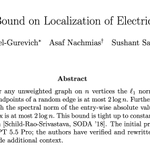
arxiv.org/pdf/2608.17384 Woah woah woah! Pretty damn amazing even if it relies on a bunch of the annoying dynamic data structures stuff as before. And < 10 pages too! In general, I didn't expect max flow to ever be achievable without IPMs but even the linear time on dense graphs paper had been super amazing: arxiv.org/pdf/2406.03648


FWIW, 5.6 and Fable are definitely generating mathematical results that are publishable at top venues. However, my view (and I believe of most academics) is that the write-ups and exposition are horrendous and definitely unacceptable at any top venue
@ajeya_cotra


iTs NoT a PuRe LLM unLeSS yoU ImPleMeNt it with ExCEl SpReAdSheeTs

imma just highlight this part for @GaryMarcus and @ylecun because it's easy to miss: no tools no coding => no symbols, just AR LLM

Huge congratulations to @shayan on winning the Abacus medal! 🎉 Richly deserved 👏🏽👏🏽
I can recount so many of his results that I love, but the work on log-concave polynomials and spectral independence is absolutely beautiful, and an instant classic!
@quanta has a beautiful profile of Shayan here:
quantamagazine.org/shayan-ov…
