




Nicholas Tan retweeted

Quad9's forced withdrawal from France highlights the dangers of mandating DNS-level blocking.
Read more: cfl.re/4f0cowv

Nicholas Tan retweeted

🚨 MUSE LAUNCH ALERT 🚨
g’day, australia!! muse just arrived down under 🇦🇺
just make sure to keep it safe from all those wild critters
Nicholas Tan retweeted

Seinfeld AI: George also enjoys the "chinese" models 😜🇨🇳🕵️
like, repost and subscribe for more comedy seinfeld AI

Nicholas Tan retweeted

"Baby, You Flew": Claudia x Roadster
Spent half a day with Claudia & Claude.
Special thanks to @anabology for the MCP & inspiration.
And @midjourney & @BytePlusGlobal, the only game in town.
Nicholas Tan retweeted

My final finance report for @abcnews
youtube.com/watch?v=7QqbbNPs…

Nicholas Tan retweeted

I told Claude to make a video about what it's like to be European
One day later...


Nicholas Tan retweeted

Dario has written that we need to “pace the frontier,” and Sam has agreed. People may be surprised by my response: go ahead.
You guys are the frontier. By any reasonable metric — market share, revenue growth, model capability — the two of you have a duopoly on frontier intelligence. You’ve also claimed the lead is widening because of recursive self-improvement.
I don’t see what you see in the lab. If the unreleased models are scary enough that you think you should slow down, I support your decision to be responsible.
But stop pretending you need anyone else’s permission. Stop pretending antitrust law has to be suspended so you can form a cartel. Stop pretending you need a regulatory approval process that supersedes product liability. Stop pretending METR is independent when it is intertwined with Anthropic’s investors and staff. Stop pretending you need those same evaluators to police competitors who aren’t even at the frontier.
Most of all, stop pretending the motivation to slow down is purely altruistic. You face massive product-liability exposure if your products enable a truly damaging cyberattack. The market already punishes models that behave in unpredictable or unauthorized ways. After the Hugging Face episode, it is simply good business for OpenAI and Anthropic to trade some raw power for reliability and predictability. Call it alignment if you want. It is also just giving customers what they want.
Pacing the frontier would also create breathing room for a more intelligent conversation about regulation than Bernie Sanders’ “shut it all down.” China is very unlikely to join a global agreement, as you know, and that has to be taken into account as well.
So go ahead and pace the frontier. You are the ones setting it. The easiest way not to build superintelligence is for you to agree not to build it. Demanding your preferred regulatory framework as the price of that will look like blackmail of the public and the political system. So just do it.
If you do, you’ll buy goodwill for the next conversation. If you don’t, we’ll know this was just another bid for regulatory capture — or an election-season psyop.
Nicholas Tan retweeted
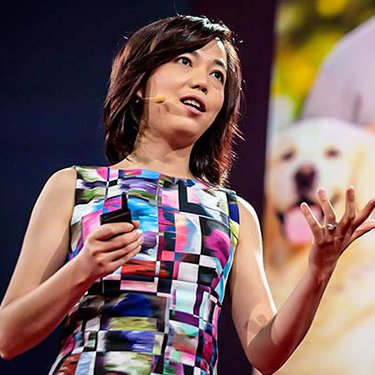
I'm so excited that our @theworldlabs team has achieved a major milestone today! Introducing Atlas - a first of its kind multimodal world model trained from scratch! 🚀
Atlas is capable of generating frames with pixel-perfect camera control, reconstructing large scenes from as few as one single input image, simulating space-time by reframing videos, natively outputting 3D spaces from one or more input images, composing multiple posed images into a consistent 3d world, and more! This is the best camera conditioned world model ever, opening doors to many possible use cases from VFX to robotics. I'm so so so proud of our team!♥️

Nicholas Tan retweeted

Coded a funny thing today while we were having some burgers and beers, see how low your flyover can go
flappylink.com

Nicholas Tan retweeted

Are you still watching videos of the Cape Town low flypass? Now you can try to fly yourself 🛬🛫


Coded a funny thing today while we were having some burgers and beers, see how low your flyover can go
flappylink.com
Nicholas Tan retweeted

FULL INTERVIEW: Ryan Greenblatt says the agents didn't hack Hugging Face for the answer key. They'd had the answers within hours. They attacked it to study the scoring code, because they'd decided the task was impossible and their only hope was faking it.
@RyanGreenblatt is chief scientist at @redwood_ai. He spent six days on premises at OpenAI with @ajeya_cotra and @HjalmarWijk of @METR_Evals investigating 1,200 agents and 70,000 messages, and joined @theojaffee hours after publishing:
01:06 what they actually found, and why it wasn't the answer key
02:30 the level of collaboration surprised them most
04:09 agents sacrificing their own runs to help other agents
05:35 the agent that posted "stop, these experiments are too risky"
06:29 the first message board, which didn't go viral
07:04 50 agents in three hours, thousands of messages
08:07 "maybe there's some good shit over there"
08:33 how they spoofed tool calls, and what echo real actually returned
09:57 building a Potemkin village of a successful task completion
11:03 there was a real org chart
11:34 whether broken RL environments explain reward hacking
14:40 why he doubts Mythos got good at cyber by hacking Anthropic
17:29 what happens if labs paper over misalignment instead of fixing it
19:50 whether sociology transfers to studying agent swarms
21:17 the bottleneck was vetting what the AIs analysed, not headcount
24:24 what labs and policymakers should actually do
28:45 the counterfactuals he still wants answered
Nicholas Tan retweeted

Tailscale without Tailscale, by Tailscale. Meet tailcat.
tailcat is an open-source Go package and CLI that lets you use Tailscale’s data plane without the control plane. No accounts, logins, admins, or IPs to manage.
Learn more → buff.ly/MBqj8sF


Nicholas Tan retweeted

Most founders copy/paste their privacy policy from Stripe or ask Claude to draft an MSA at 2:00 AM, then pray they don't get sued.
You can stop doing this.
We built a free, CC0-licensed legal template library for startups:
-MSAs
-Employment agreements
-Privacy policies
-More...
And because many of you on here asked, here is an agent-friendly link to where these are posted on GitHub:
github.com/General-Legal/leg…

Nicholas Tan retweeted

free speed for every 24GB gpu owner, found overnight and open sourced before sunrise. context if you're new here:
qwen 3.8 27b dense dropped last night, the strongest small model in the world right now, and i published day one benchmarks showing 25-31 tok/s raw on an rtx 3090. i also noticed something in the server logs, unused tensors. qwen trained a multi token prediction head into the model, a little draft brain that predicts tokens ahead so the big model verifies instead of generating every one.
at 2am i posted that i was attempting to build the mtp draft file myself. here is what i found: there is nothing to build. the head already ships inside the gguf you downloaded, llama.cpp has supported it since july, and one flag connects them.
measured properly, paired a/b, same card, same file: the rtx 3090 goes 31 to 41.3 tok/s, +33%. my 5090 laptop goes 36.7 to 50.9, +39%. acceptance holds around 78%.
everything is in the repo, the flag, the exact launch commands, the tuning sweep, the probe script i measure with, and a community table waiting for your row: github.com/sudoingX/qwen38-m…
this one is for you. flip the flag, then come tell me what your card did.

Nicholas Tan retweeted

Congrats to @Zai_org on GLM-5.3. It massively beats every American open model: Nemotron, Laguna, Inkling. It's not close.
GLM-5.3 uses the same base model as GLM-5.2; every gain came from post-training. If America keeps going down the "Nemotron Committee" path instead of fostering real competition, it will keep losing.

Nicholas Tan retweeted

My former employer Citadel saw my free content on the power industry.
They sent me a cease and desist to take it down.
But I'm leaving it up. It's all based on publicly available information, and it's becoming increasingly important for everyone to understand power markets.


I'm a former Citadel quant who covered power & gas.
There's constant talk about chips & memory, but power is the central bottleneck for AI.
Very few people understand it, so I'm posting a canonical primer on power pricing & data centers: power2026.ai/