

#voidmortgage #thevoidmortgage #voidmortgage.net https://teapawt.net/t.co/EjAzO6CQfp since March 2012
Joined June 2015
- Tweets4.5K
- Following176
- Followers97
- Likes2.5K

gerbil retweeted

BARCLAYS PICKED THE WRONG HOMEOWNER
Meet John Galajsza. A @BarclaysUK customer for 35 years. Never missed a mortgage payment. Not one.
I met John in person back in March, at an APPG summit in @UKParliament. He is the real deal.
Back in 2001 Barclays sold him a Woolwich Mortgage Reserve product. Barclays does not even sell that product anymore. It got quietly retired. John stayed locked inside it for years.
Then the same bank he trusted for three and a half decades took him to court to repossess his home.
Loyalty only flows in one direction when you are dealing with a bank.
John could not afford a City law firm to defend himself. Barclays could. They brought in solicitors TLT LLP and a barrister to fight a homeowner over his own front door.
So John found a McKenzie friend, John Robertson, and the judge granted him rights of audience.
That means Robertson stood in that courtroom facing Barclays' paid barristers and argued the case properly. No wig. No retainer. Just someone who read the paperwork properly.
Barclays probably expected this to be over in a few months. A quiet possession order, a quiet eviction, no one watching.
Last week the court sent a sealed order. Case M00CM437, County Court at Chelmsford, District Judge O'Malley presiding. The hearing listed for 17 September 2026 has been cancelled. John has been granted permission to file an Amended Defence and a Counterclaim against Barclays.
Barclays came to repossess his house. Barclays now has to defend itself in the same case.
The order goes further. The possession claim and John's Counterclaim will be case managed and determined together. Barclays must respond by 23 October. John can reply by 6 November. A case management hearing follows after 27 November.
One of the biggest banks in the country is now on the back foot in a case it probably assumed would end quietly at the first hearing.
The order arrived on John and his wife Paula's 48th wedding anniversary. A district judge granting you permission to sue your own bank is one way to mark it.
This case is barely getting started. Right now a homeowner with a McKenzie friend is holding his ground against a bank with a law firm on retainer.
I will be following this closely.
-------
One of the men standing with John and John Robertson at the Royal Courts of Justice was Glenn Cottingham Smith (back left on the image).
He used to run Qbitus Products and Venue 73 in Brighouse. For years he said a person he had trusted as a friend had defrauded him, and for years he tried to get that recognised. The financial and legal strain wore him down.
On 28 March 2026 he took his own life. His case is continuing regardless.
Glenn's story reminded me of @johncock_wayne's, another APPG contact who Bank of America scammed and who has come close to losing his life more than once fighting to be believed.
@stevemiddi1 @MLorrM @Victoria_Rixon @JohnCleese


gerbil retweeted

The Post Office told wrongly-accused postmasters that their compensation offers were secret, and couldn't be shown to anyone.
That was false.
The Solicitors Regulation Authority was about to prosecute the lawyers responsible. But now it's dropped the case, and won't say why.

ALT Having considered the representations and other information received from the Firm we have decided to close the investigation. Our view is that the Firm exercised proper professional judgment when coming to a decision on the legal position as regards the explanation of the “without prejudice” label in the correspondence that was sent to sub-postmasters relating to the Horizon Shortfall Scheme. The SRA will close the matter with no further action.
gerbil retweeted
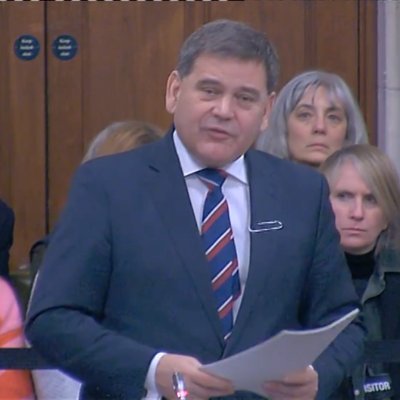
Jacinda Ardern New Zealand PM during the Covid scamdemic did not take the ‘vaccine’ that killed and injured her own Citizens. After betraying the people she fled NZ and sits on the Board of Blackrock the Financial Arm of the World Economic Forum.
She should be arrested.

gerbil retweeted

Just Because Something Is Logical Does Not Mean It Is True
"Solari Builders: Understanding Money and the Economy with Prof. Richard A. Werner" @scientificecon @solaribuilders
By Ricardo Oskam
At the recent gathering in Northern Italy that concluded the Solari Builders pilot course, Professor Richard A. Werner addressed two fundamental questions: What is money? And what problem does money’s existence solve?
Werner, a recurrent guest at Solari, is a German economist who, after training at the London School of Economics and Oxford, spent his formative years in Japan—as the first Shimomura Fellow at the Development Bank of Japan and then as chief economist at the Jardine Fleming investment bank in Tokyo. In the mid-1990s, he coined the term “quantitative easing,” proposing to the Bank of Japan something rather different from what central banks later carried out borrowing the same terminology. Werner’s 2003 book, Princes of the Yen, which described how Japan’s central bankers inflated and then burst a bubble to force through reform, outsold Harry Potter in Japan for six straight weeks.
Before diving into contemporary monetary theory, Werner took the Solari Builders group through one thousand years of history. With the Builders having visited a famous Italian Duomo the day before his presentation—a cathedral that was six centuries in the making—he tackled the question of how some of Europe’s most impressive cathedrals were built. Laborers contributed to structures they knew they would never see completed in their lifetimes, making the cathedrals a true testimonial to a higher culture where one honored God with every brick laid. Today, Werner notes, we would not be able to replicate those buildings at any sane cost, despite having better technology.
Since 1992, Prof. Werner has argued that banks do not pass along existing savings but create money out of thin air—the Credit Creation Theory. Werner used empirical evidence that he painstakingly gathered (rather than rely on axioms or theoretical deductions) to prove his claim to be true and disprove other theories such as the intermediation theory of banking (which claims that banks are just financial intermediaries, both individually and collectively) or the fractional reserve theory of banking (which claims that banks are individually financial intermediaries but collectively create money through fractional reserve banking).
The common thread uniting the historical examples Werner references is the creation of money as an animating force. The stone wheel money of Yap and the split tally stick made of cheap hazelwood (the grain of its split being a unique fingerprint to identify its validity) became money because people accepted them as money. His point, arriving through the back door of history, is that our own money is the same instrument, with the promise thinned out—a claim with no commodity behind it.
The tally stick was also the original accounting method: charge on one side, discharge on the other, cash recorded as it moves, checked afterwards against the counter-rolls kept in the Treasury, making it hard to lie. Double-entry accounting came later, and in Werner’s reading of it, represented not an advance in transparency but a smokescreen. Interest was illegal in Christian Europe, and the goldsmith-bankers had more than interest to hide: they were lending out gold left in their care and writing deposit certificates for gold nobody had deposited.
To truly understand the economy, we must understand what money is and how its successful use is intertwined with our governance system and a healthy culture that supports a fundamental level of trust. Will the rapid influx of newly created money in our economy facilitate borrowing for productive purposes—leading to growth without inflation—or will it further raise consumer prices and spawn asset bubbles?
Full Report: solari.com/solari-builders-u…
Subscribe to shop.solari.com
gerbil retweeted

1/
A deeply disturbing “judgment” from Northern Ireland.
In Curistan v IBRC [2025] NIKB 69, the court found that Anglo Irish Bank “mis-sold” a £60 million interest-rate swap. I contend that the swap was fraudulently sold.
The judgment never meaningfully addresses what Anglo knew about its own potential insolvency when it entered the swap on
‼️9 October 2008‼️
The chronology is extraordinary.
🔹The lending began in 1999 and increased repeatedly.
🔹By June 2008, Anglo’s exposure to Sheridan Millennium Ltd was approximately £72.8 million.
🔹On 25 July 2008, an internal Anglo email appeared under the heading “Compulsory hedging”, recording “pressure from London” to hedge large unhedged sterling exposures.
gerbil retweeted

Subscribe to my Substack and don't miss important information that could make a difference to your finances and your life.

My new report is out - financial controls are being stepped up and investors' options are beginning to narrow as the central planners are heading towards World War 3 in their efforts to de-throne the US, the dollar and establish a One World Government.
rwerner.substack.com/p/finan…
gerbil retweeted

In 2014 the Bank of England admitted its own account of how money works had been wrong. Months later, 4 economists sat in a London room to work out what follows.
Rethinking Economics, London, October 2014.
Josh Ryan Collins of the New Economics Foundation, Daniela Gabor of UWE, Ben Dyson of Positive Money, Richard Werner of Southampton.
They agree the textbook is broken. They do not agree on the replacement, and that disagreement is the session.
Watch the stretch where the panel splits over what to do with the creation power once you admit private banks hold it.
A wooden lectern, a projector screen, a bottle of water on the floor.
The correction was published. The argument about what it means never reached the classroom.


gerbil retweeted

Producing research by starting with the conclusion and then working backwards to see what model would deliver the desired result, then checking what assumptions and setting are needed, and then presenting it in reverse order to deceive the reader is standard practice in economics

This is infuriating.
Big Pharma is secretly “ghostwriting” articles in top medical and oncology journals to trick doctors into buying their drugs.
Here’s how the scam works:
They bankroll specialized medical-writing firms to ghostwrite studies that look rigorous and independent.
Next, they recruit well-known physicians and academics, dangling prestige, speaking fees, and career advancement in exchange for simply putting their names on the finished product.
Once these ghostwritten articles appear in elite journals, everyday doctors read them as gospel. They prescribe accordingly, convinced the data is real.
The result? Billions in extra drug sales… while patients are exposed to treatments whose risks and benefits have been carefully engineered on paper.
Dr. Russell Blaylock explains how the “conspiracy theorists” weren’t theorizing — they were documenting an industrial-scale deception.
gerbil retweeted

Regulators spent 15 years fixing the financial system without settling the question of where the money in it comes from.
A banking professor stood at a red lectern and started there.
Richard Werner, a conference badge, 2 microphones, a laptop on the stand.
His question is blunt: what is actually wrong with the system. Not the incentives, not the bonuses, the mechanism.
Banks do not move existing money. They create the deposit at the moment they write the loan, and where they point it decides what the economy builds.
Watch the stretch where he splits lending into the kinds that raise output and the kinds that only raise prices. That split explains every housing bubble on record.
The diagnosis was on a stage. The reform packages went the other way.
gerbil retweeted
A banking professor was asked to describe the money supply and answered that the textbook version is not how it works.
Richard Werner, 2019, a curtain, a suit, no audience.
His question is narrow and almost nobody asks it: why do lending and deposit taking sit inside the same firm at all.
Split them and the whole mechanism stops. The reason is an accounting reason, not an economic one.
Watch the part where he moves from that split to why no other company on earth can do the same thing.
No slides, no stage, a camera in a room.
Every other firm lends what it has. One kind of firm writes the number first.
gerbil retweeted

If you've been contacted by a bailiff, it's important to understand what they can and can't do, and what steps you can take to protect yourself and deal with your debts.
Our in-depth guides cover:
· What bailiffs are allowed to do
· Your rights when bailiffs visit your home
· Practical steps to manage debt and get support
Explore our bailiff guides and get the information you need today 👉 nationaldebtline.org/get-inf…
#StopTheKnock #Bailiffs #DebtAdvice

gerbil retweeted
My new report is out - financial controls are being stepped up and investors' options are beginning to narrow as the central planners are heading towards World War 3 in their efforts to de-throne the US, the dollar and establish a One World Government.
rwerner.substack.com/p/finan…
gerbil retweeted
The lure to go for digitally controlled money outside the banking system. This is likely to result in a further surge in the price of crypto tokens. Still, make sure to own sufficient physical gold.

Economist Richard Werner explains his interest in finding out who the anonymous founder of Bitcoin was. (Satoshi Nakamoto.)
He explains that in Japanese Satoshi means “Intelligent” while Nakamoto means “middle or central.”
He further explains that Japanese names are typically reversed, putting the last family name first.
Ergo-
Satoshi Nakamoto= Central Intelligence
gerbil retweeted
England ran a money system with no debt and no interest for centuries. A banking professor sat at a table in 2011 and explained why it ended.
Richard Werner, in conversation, 2 chairs and a jug of water.
The instrument was a wooden stick, split down the middle. Winchester was the centre of it, close to 1000 years ago. The Treasury accepted it for tax.
Then it went away, and the private version took over.
Watch the stretch where he names who found the old system inconvenient, and why that preference still sets your tax bill.
A red pencil, loose papers, a phone on the table.
The alternative is not theoretical. It already ran, and it worked.
gerbil retweeted

Sent to me this morning
“Someone from the co op asked the embalmer about the white clots on your videos going around......He said the Coop have forbidden any embalmers to talk about them”
Look who runs the co op
gerbil retweeted
A banking professor ran the test on a real bank to settle where money comes from. Almost nobody watches him show the result.
Richard Werner, Chair in International Banking at Southampton, Zurich, February 2018.
The textbook says banks take deposits and lend them on. The accounting says something else.
Watch the section where he lays out the 3 competing theories side by side, then shows which one the ledger supports.
A lectern, a conference badge, a dark screen behind him.
Central banks published the same answer. The textbooks never changed.
gerbil retweeted
The file of a litigant in person known to me has had their court file vanish in our national courthouse.
I was also told recently by another litigant in person that a Court Services’ employee advised them not to lodge the books for hearing “too early” - because they “could be tampered with”.
That’s an incredibly serious admission about the integrity of case files in our national courthouse.
The Court Services may need to explain this?
gerbil retweeted
My reports are at rwerner.substack.com

Professor Richard Werner sits down on The Liz Truss Show to reveal a startling perspective: is the current economic system actively dismantling the middle class in favour of monopoly capitalism? Watch: youtu.be/lFp6K8htdNk
