

Economist @StanfordGSB | Likes Fast Cars
Palo Alto, CA
Joined July 2009
- Tweets1.8K
- Following695
- Followers2K
- Likes3.5K






Pinned Tweet
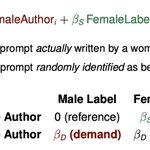
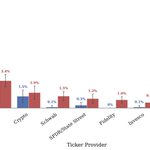
Lots of people are turning to LLMs for financial advice. But what does this advice actually look like?
@TahaChoukhmane, @wdwlin, @AkuzawaMatthew, and I have a new paper that develops and implements a new methodology to describe this advice and why it varies!
Thread ⬇️⬇️⬇️
Tim de Silva retweeted

Today: California billionaire wealth tax prop 40.
Throwback: One of the papers I most enjoyed writing some 15 years ago (with Farhi and later Sleet, Yeltekin) was on Wealth taxation, nonlinear in a political economy with no commitment.
Let me explain what we did. I am not trying to take political sides really or advocate one thing or another. Enough of that and it is good to think of the economic logic in a basic way. As you see, the paper is more subtle.
The paper modeled a situation where you (e.g., voters, on average) want to do a "one time" wealth tax and promise never to do it again. The incentive to do so is increasing in the amount of wealth inequality. You have nonlinear taxes on wealth and income, so you have rich tools. However, you can't bind future politics or policies. Every now and then you reevaluate (vote).
Sounds familiar? Indeed, various basics of the real world tradeoffs are present.
Obvious: this is a time-consistency problem that leads to a 3rd best (third world?) outcome (not your standard optimal tax one, where you assume you can commit). Well known and studied. At its most basic, the temptation is confiscation (slogans: robin hood, socialism), but the expectation of this happening in future is of course a problem (slogans: capitalism, property rights).
Less obvious: what it is the best you can do today if you with your tax tools, given the situation and constraints. AGAIN: you are not allowed to say "I promise never to tax again". ALSO NOTE: the options are also not necessarily just a choice between taxing wealth now or never doing so. (As the debate on this oversimplify.) Logically: taxing never may just not be feasible/credible. Equally important: you may come up with a different more intermediate plan. Let's see...
Indeed, the model spits out something subtle. You actually declare a more moderate but progressive nonlinear tax on wealth that will be in place permanently. It is progressive with rising marginal tax rates: indeed, you subsidize savings for the poor (!) but tax the rich. In fact, you want to promise this tax today for the future, even if inequality is zero today. Why?
The credibility problem depends on the amount of wealth inequality. That is what affects the incentive to renege on promises and tax away wealth. The solution tries to deal with this by creating an environment that will lower or keep inequality in check, to avoid a temptation to fall into the time inconsistency revision. A progressive tax goes in that direction both mechanically and in terms of saving incentives.
(BTW, the fact that the tax comes out progressive is very clean and surprising, given that the optimal tax literature rarely obtains such results.)
Insight: By keeping inequality in check, it makes policy more credible, avoiding falling into a much worse 3rd best.
At the time, we called it a "compassionate conservative" solution: even if you want zero taxes, you compromise and do some progressive taxation, to avoid more radical taxes later. Metaphorically, the best way to deal with a tide is not by ignoring it, denying it or swimming frantically, you may have to float with it, adapt and swim moderately finding the right moves.
Links: (older ungated): crei.cat/wp-content/uploads/…
published: academic.oup.com/restud/arti…
Footnote: We titled it capital taxation, but in reality it is more exactly about wealth taxation, e.g. it holds even in a world without capital, where people hold assets against each other etc.

Tim de Silva retweeted

as a founder of @RefineDotInk, discussion around this new paper is v. interesting!
The results confirm that AI reviews are incredible for detailed, actionable feedback to improve a manuscript.
If AI is better, should AI replace human review?
Quick view from the trenches
1/

New paper: "AI Article Reviews Dominate Human Peer Reviews at Their Best: Evidence and Policy Choices" See: GaryKing.org/peerless. with Steven Worthington. Comments welcome!

Tim de Silva retweeted

This is a legit award. Incredible!

🥳 Big news: We just learned that Our Econ To Go podcast has won Gold at the Signal Awards in the Education category! That's three awards from Season 1 alone! Catch up on episodes before Season 2 drops in November: siepr.stanford.edu/news/podc…


Tim de Silva retweeted

Grateful to Suzie Noh for a great Colloquium on households as fiscal monitors. Her research shows that when residents can see how their city borrows, local decisions change. More info here: ifdm.stanford.edu/events/FLC


Tim de Silva retweeted

🚨 New paper🚨 Can LLMs predict how households spend, work and respond to policy? We build a benchmark to find out: HouseholdBench. With great coauthors @jinhuang9306000, @DiegoFerreras, Yutong Xie, Walter Yuan, Qiaozhu Mei and @ChenLian92. (1/7)

Tim de Silva retweeted
IFDM is hiring a postdoc to work with me on financial literacy and financial decision-making at @StanfordGSB starting Summer 2027. Applications are due November 15. More info here: ifdm.stanford.edu/opportunit…

Don't have the expertise to judge whether this is something to be concerned about, but had not thought about this being an issue!

Yes it’s possible to embed these instructions without many documents, and very hard verify after the fact
It’s also possible without too much effort to take an open source model and remove the guardrails. For these reasons I think we are going to gatekeep more frontier open source models and ultimately ban Chinese ones
arxiv.org/abs/2401.05566
anthropic.com/research/small…

Tim de Silva retweeted

jrosenthalkay.github.io/2026…
@jordanr_k on Greany (2026) and related “change the elasticity” counterfactual scenarios.

Tim de Silva retweeted

In most countries, it is illegal for insurance companies to vary their prices based on your genetics. If consumers can test themselves cheaply, people could select in only if they're more likely to be sick -- raising the possibility that insurance markets would cease to be. 1/

Tim de Silva retweeted

I love this website. My TL is deep into government accounting rules, so I am now correcting for "excess pension contributions", which artificially inflate education, defense, police. Pensions explain a bit more, but not all: 3.1 out 7.5ppt difference in spending with Germany.


Tim de Silva retweeted

1/ Together with Eaton–Kortum (2002) and Melitz (2003), I put Autor, Dorn & Hanson (2013) among the most influential trade papers of the past three decades. Precisely because of that influence, it has been intensely scrutinized.
Tim de Silva retweeted

The U.S. is in the midst of one of the largest investment booms it's experienced in its history, fueled by the arrival of a new general-purpose technology: AI. The U.S. is projected to invest roughly 3.6% of GDP in AI infrastructure (think data centers etc) per annum between 2025 and 2032. That is about three times the size of the US telecom and fiber investment boom in the late 90s. And it’s roughly 50% larger than the railroad investments of the late 19th century.
What do you have to believe about future cash flows if you're building data centers right now? In his new BPEA paper "Financing the AI Buildout" @SVNieuwerburgh ran the numbers for us. For US data center owners to break-even with a 10% required return, you'd have to expect that total gross revenue of data centers exceeds 9% of projected US GDP by 2032
thetwocents.substack.com/p/n…
Tim de Silva retweeted

A new piece in the Financial Times created a great visualization of the results from this study.
TL;DR: Rent control helps people whose rents get limited, but it hurts everyone else. It pushes up rents, pushes down new building, and makes cities worse.
It is horrible policy.


Tim de Silva retweeted

Does cash enable farmers to take on more risk? @vinnyarmentano applies Modern Portfolio Theory to crop choice in Mali and shows instead that an unconditional cash transfer reduced portfolio risk with no return penalty.
Read more: vincentarmentano.com
#EconJobMarket

Tim de Silva retweeted

Differences in fertility rates compound over time. A total fertility rate (TFR) of 1.8 might not look too different from 1.4, but it has drastically different implications.
Let me illustrate the argument. I take two countries with 10 million inhabitants in 2026, each with the same age structure and life expectancy as the U.S. and no migration. The only difference is that country A has a TFR of 1.8 and country B has a TFR of 1.4. Then, I simulate both populations forward for 100 years. I run a full simulation, including age-specific fertility and mortality, the sex ratio at birth, etc., but I skip the details to save space.
In 2126, country A, with a TFR of 1.8, has a population of 6.8 million, down 32%, and still falling by 0.5% per year. Country B, with a TFR of 1.4, has a population of 3.9 million, still falling by 1.3% per year. Country B’s decline is much sharper, 61%, and more will come in the following decades: country A has 71,000 births a year, while country B has only 27,000.
But the real difference is the ratio of the population aged 65 and over to the population aged 20-64: 45 per 100 in country A vs. 60 per 100 in country B. Country A faces a challenging problem for social security and old-age health provision. Country B has a terrible problem.
That is why I find the argument “pro-natalist policies cannot get us back to the replacement rate” so weak. Even pro-natalist policies with modest effects, which increase the TFR from 1.4 to 1.8, make a very large difference in just 100 years.
This is, by the way, a common fallacy when we assess policies: the fact that policies do not succeed 100% does not mean we should not adopt them. We have flight regulations that have causally lowered death rates in commercial aviation, but we still have plane accidents. The point is to assess whether the policy passes a reasonable cost-benefit analysis. And I believe, after having read all the literature, that well-designed pro-natalist policies that lower the opportunity cost of having children (such as better access to large houses in medium-density locations and generous parental leave) do pass the test.
I plan to write much more about this over the next few weeks, as I am preparing a literature review on the issue.


Tim de Silva retweeted

Whole post is interesting: paulgp.substack.com/p/ai-in-…
I guess most people are being responsible so far.
I'm very annoyed when reviewing genAI papers or seeing genAI ref reports, but my annoyance is probably out of proportion with the counts so far.
Hope it stays this way!
Tim de Silva retweeted

"in order for all data center owners to break even on their AI investment... their annual revenue would amount to roughly 9.2% of projected 2032 GDP"
I wanted to make time to write about @SVNieuwerburgh 's excellent paper in our Brookings panel but @HannoLustig beat me to it. Do read the full post (or Stijn's paper!). thetwocents.substack.com/p/n…

Tim de Silva retweeted
To learn more about this, see my latest article: cremieux.xyz/p/america-rich-…

Tim de Silva retweeted

New at Agglomerations: Chad Syverson, the king of productivity measurement, on AI and productivity
agglomerations.eig.org/p/und…
